
Phonics understanding Worksheets for 4-Year-Olds
3 filtered results
Difficulty Level
Grade
Age
-
From - To
Subject
Activity
Standards
Discover our engaging phonics understanding worksheets designed specifically for 4-year-olds! These activities promote early literacy skills by helping young learners identify sounds, letters, and words through fun and interactive exercises. Our worksheets are colorful and age-appropriate, making learning enjoyable for your little ones. Each printable activity encourages comprehension and pronunciation, setting a solid foundation for reading success. With a variety of fun themes and formats, kids will love exploring phonics while developing their language skills. Perfect for home or preschool settings, these worksheets ensure your child develops a love for learning from an early age. Start their phonics journey today!
Favorites
With answer key
Interactive
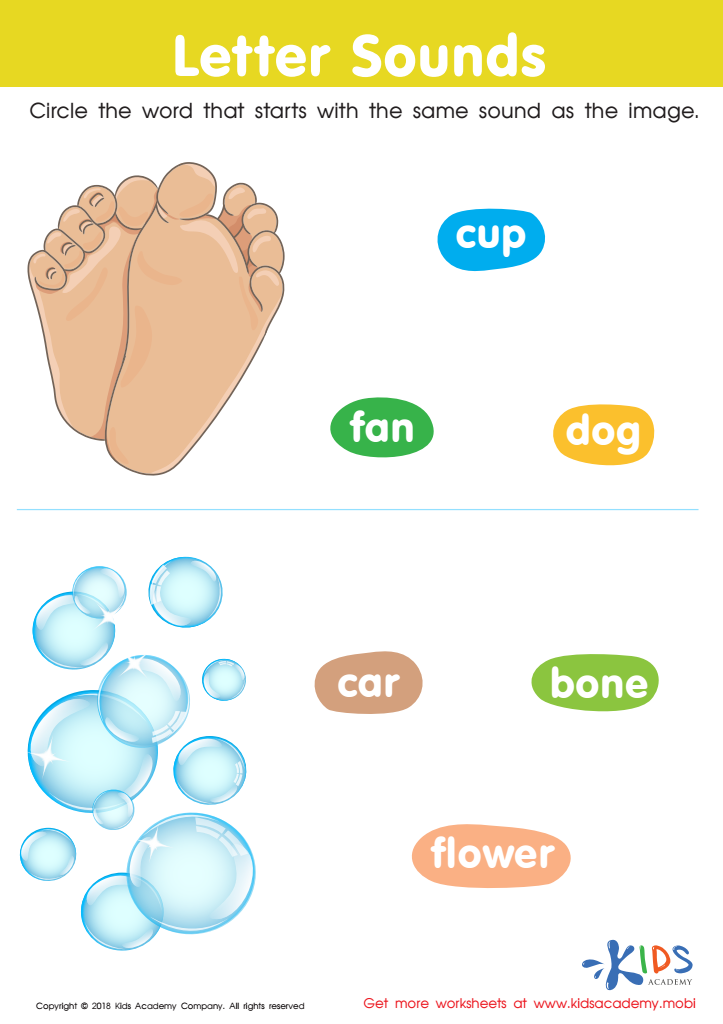
letter sounds Worksheet
Test your child's letter recognition skills with this worksheet. Match words to pictures and challenge them to say each image out loud and sound out the words beside it. Ask: Which word starts with the same letter as the picture? Then let them circle the right answer. Quick and easy!
 Assign to My Students
letter sounds Worksheet
Worksheet
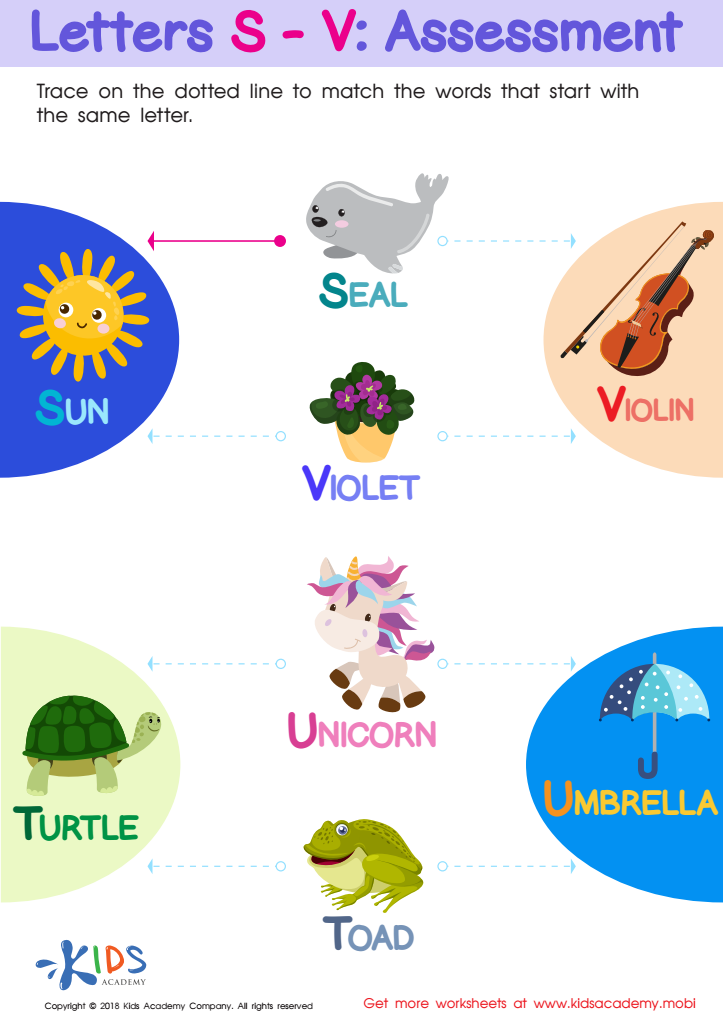
Letters S - V Tracing Worksheet
Kids can have fun learning phonics and reading with this PDF! Trace the lines of letters S-V to match words that start with the same letter. With easy directions and bright pictures, any young learner will love it!
Letters S - V Tracing Worksheet
Worksheet
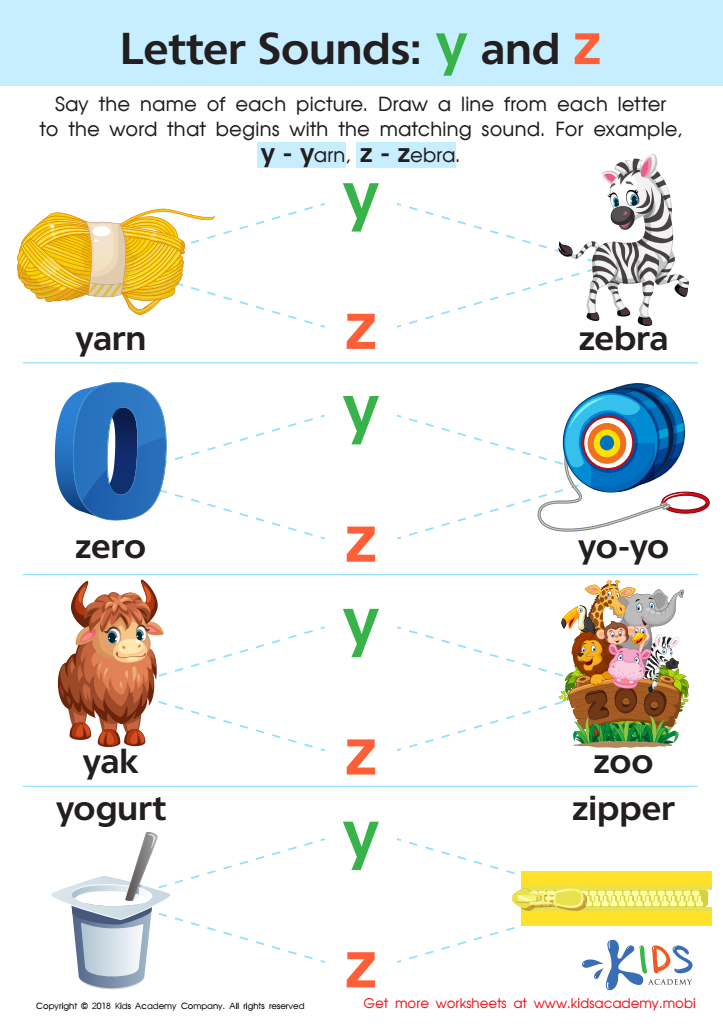
Letter Y and Z Sounds Worksheet
Y and Z can be tricky for kids to learn. Kids Academy has the answer with a great worksheet. "Yo-yo", "yak" and "zebra" help kids recognize, say and trace each letter. Plus, they can read the words and match them to images! Let your child try and help them master phonics at the end of the alphabet.
Letter Y and Z Sounds Worksheet
Worksheet
Join Kids Academy for Free
Who is primarily going to use this learning content?







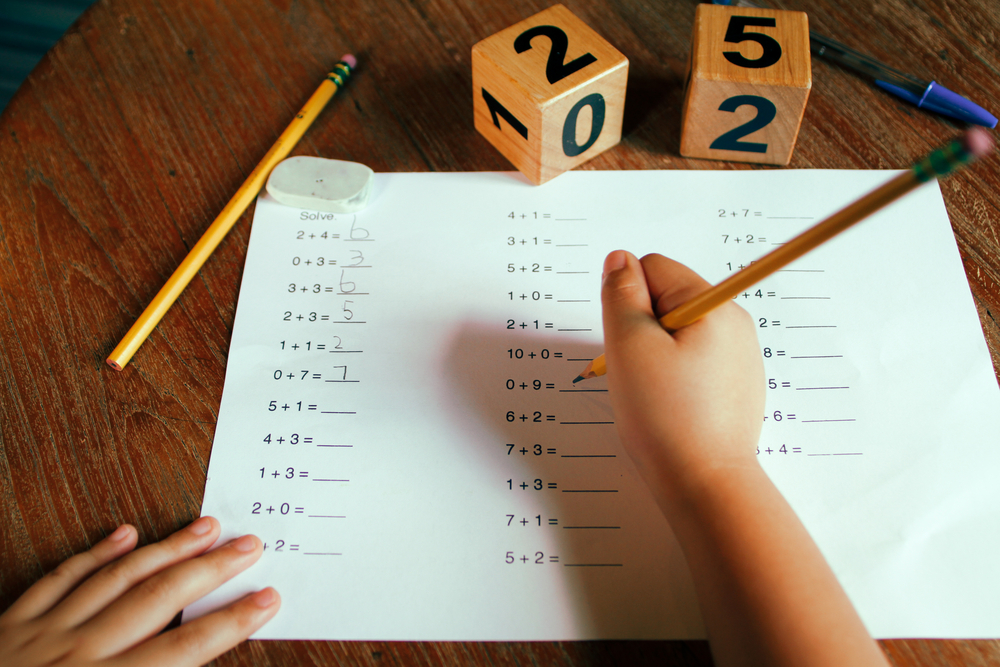
Phonics understanding is a crucial foundation for early literacy, making it essential for parents and teachers to prioritize it for four-year-olds. At this age, children are developing language skills and exploring their world through sounds and words. Phonics involves the relationship between letters and the sounds they represent, which aids in decoding written language. By grasping these concepts early, children can become more confident readers and learners as they progress.
Investing time in phonics helps children develop strong verbal skills, enhances their vocabulary, and promotes better comprehension. It lays the groundwork for successful reading instruction, making future learning more accessible and enjoyable. Furthermore, phonics engagement at this stage can spark a love for reading. When children are able to sound out words and understand the mechanics of reading, it empowers them to navigate books independently, increasing their interest in stories and learning.
Additionally, strong phonics skills can help reduce reading difficulties later on, ensuring a smoother transition into more complex literacy tasks. Overall, supporting phonics understanding in four-year-olds cultivates critical skills, promotes a lifelong love of reading, and fosters academic success. This focus benefits not only the individual child but enriches the wider educational community.








