Understanding plurals Worksheets for 4-Year-Olds
4 filtered results
-
From - To
Introduce your 4-year-old to the concept of plural words with our engaging set of "Understanding Plurals" worksheets. These fun and educational activities are designed to help young learners grasp the basics of singular and plural forms, turning learning into an enjoyable adventure. Each worksheet combines colorful images and simple exercises to reinforce the differences, making the learning process clear and entertaining. Perfect for early childhood education, our worksheets ensure foundational language development in a playful and effective manner. Set your child on the path to language mastery with our thoughtfully crafted resources.
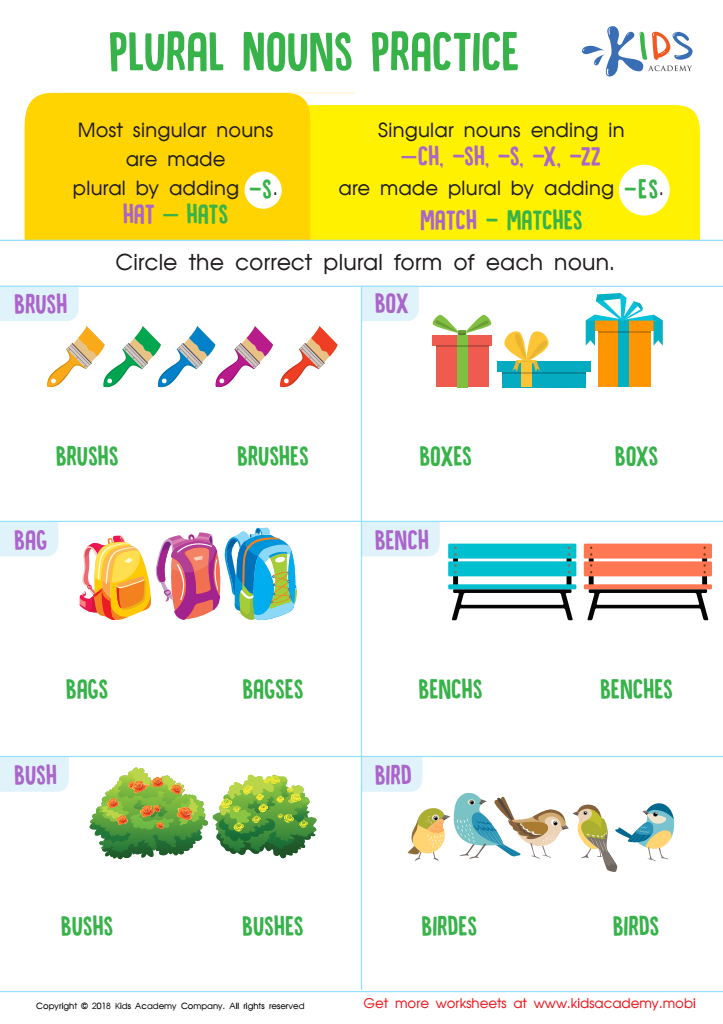
Plural Nouns Practice Worksheet
 Assign to My Students
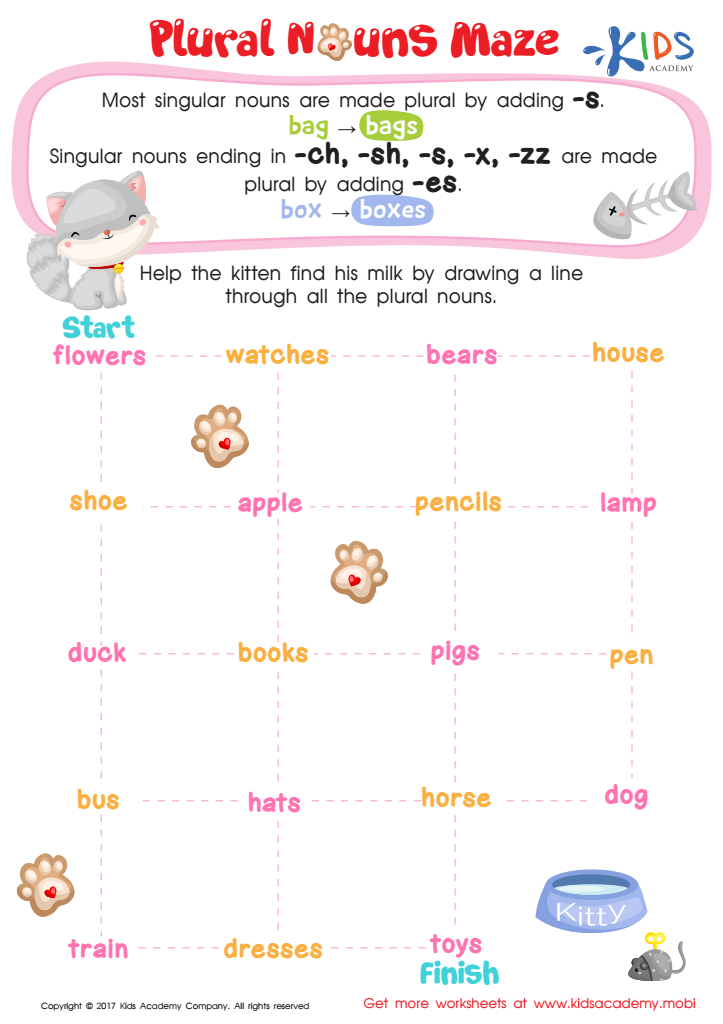
Plural Nouns Maze Worksheet
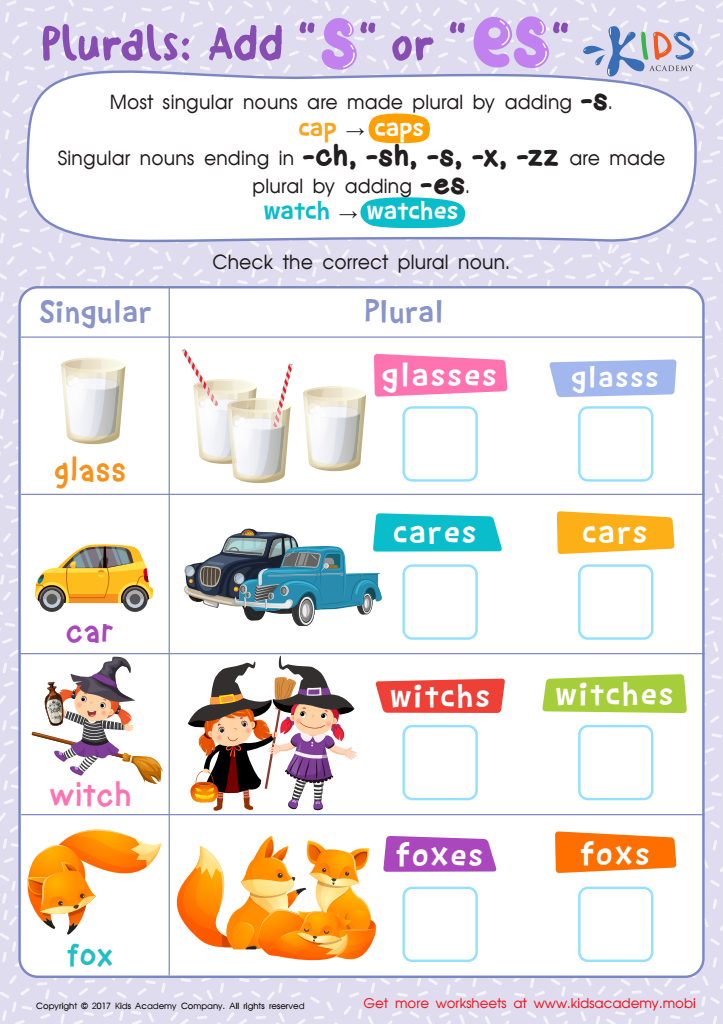
Plurals: "–es" or "–es"? Worksheet
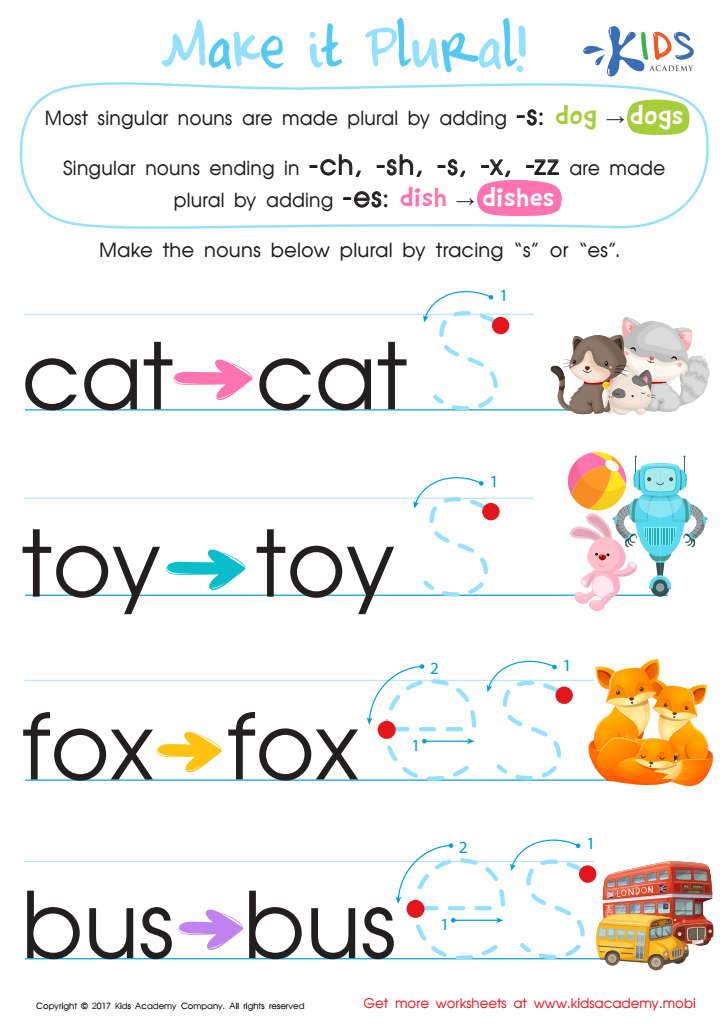
Make it Plural Worksheet



.jpg)




Understanding plurals is a fundamental aspect of language development for 4-year-olds that significantly impacts their communication skills and cognitive growth. At this age, children are rapidly expanding their vocabularies and developing the ability to express more complex ideas. Grasping the concept of plurals enables them to speak and understand quantities beyond singular objects, which is crucial for clear and effective communication.
Moreover, an understanding of plurals lays the groundwork for literacy skills. As children engage with books and written materials, they encounter numerous plural forms. Comprehending these forms allows them to understand and enjoy stories better, contributing to a positive attitude toward reading and learning.
From a cognitive perspective, learning about plurals enhances a child's ability to recognize patterns and regularities in language, which is essential for problem-solving and analytical thinking. Mastery of plurals also boosts their confidence in social settings, as accurate communication fosters better interactions with peers and adults.
For teachers and parents, focusing on plurals is part of a comprehensive approach to language development. It supports overall educational goals, setting the stage for a smoother transition to more advanced language and literacy skills. Thus, caring about and reinforcing the concept of plurals contributes significantly to a child's holistic development and academic success.








