Understanding sizes Worksheets for 4-Year-Olds
4 filtered results
-
From - To
Encourage your 4-year-old’s cognitive development with our "Understanding Sizes" worksheets. Specially crafted for young learners, these fun and engaging activities help children grasp concepts of big and small, tall and short, and more. By sorting, comparing, and identifying different sizes, kids enhance their observational skills and foundational math understanding. Our worksheets present everyday objects in a relatable way, making learning an enjoyable experience. Perfect for parents and teachers seeking valuable educational resources, these printables foster critical thinking and visual discrimination abilities essential for early childhood development. Start your child's educational journey with our comprehensive understanding sizes worksheets today.
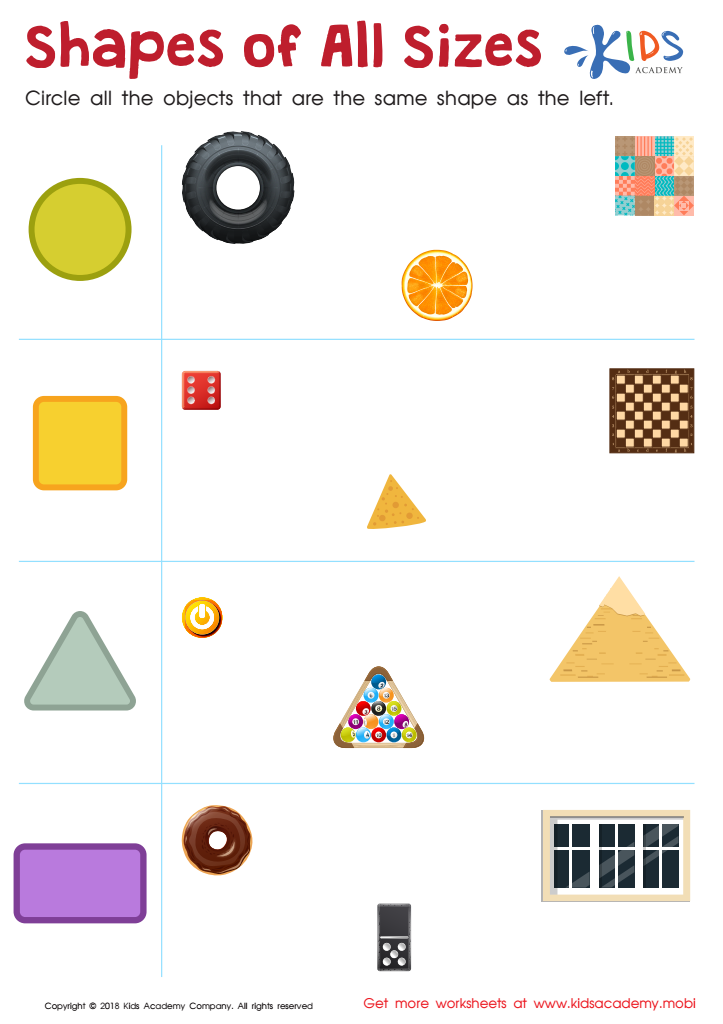
Shapes of All Sizes Worksheet
 Assign to My Students
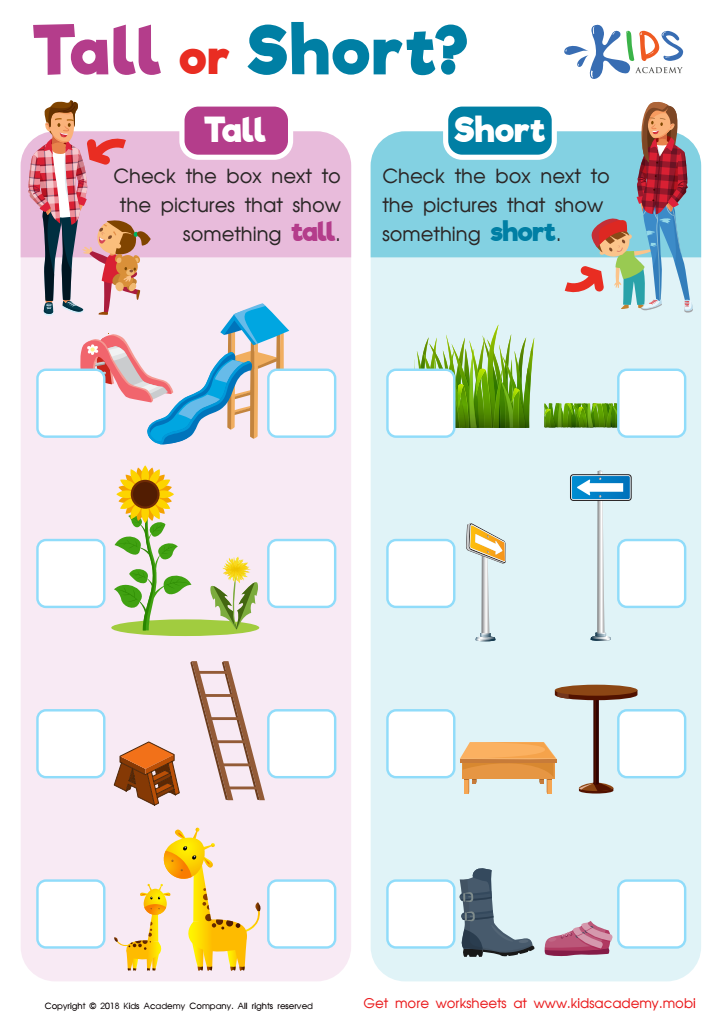
Tall or Short? Worksheet
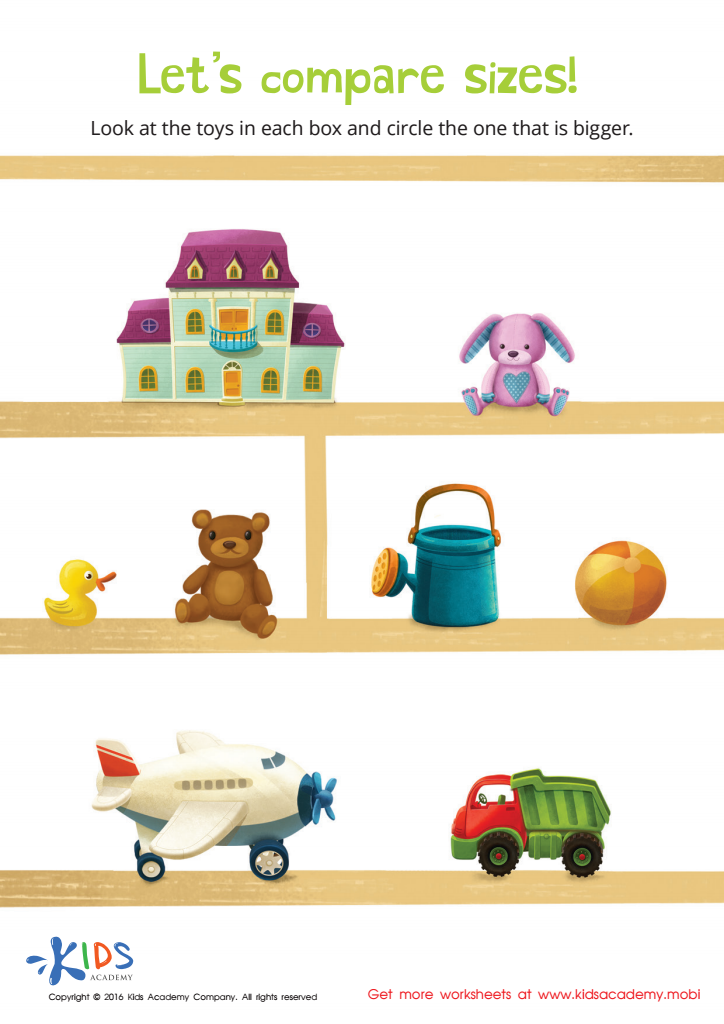
Classifying by Size Sorting Worksheet
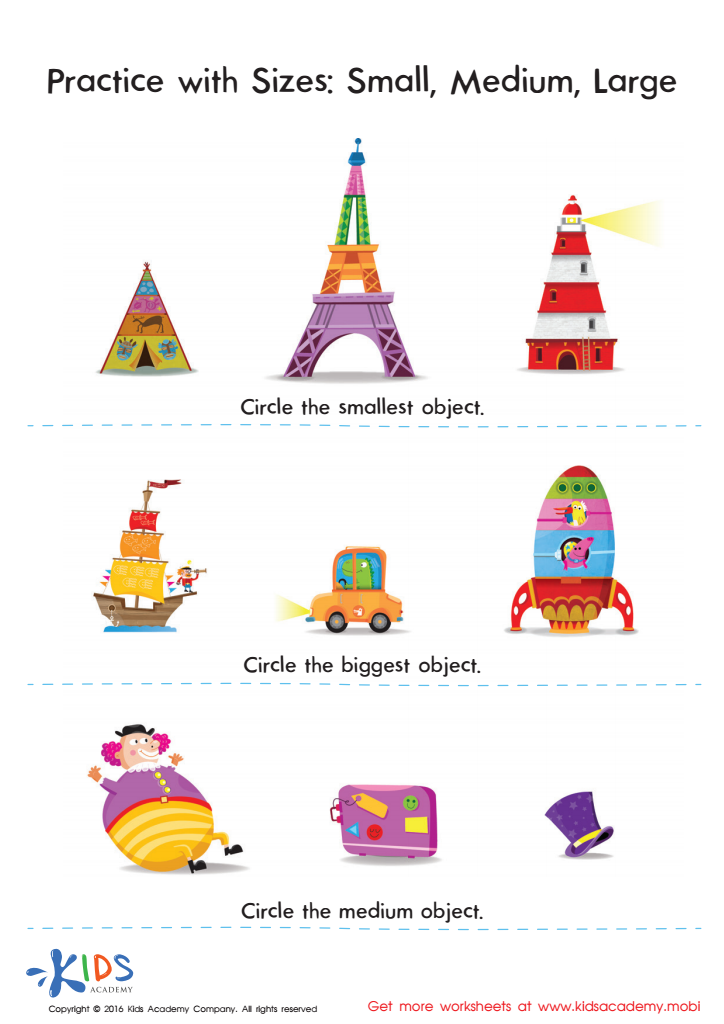







Understanding sizes is a crucial developmental milestone for 4-year-olds, and both parents and teachers should take an active role in nurturing this concept. Recognizing size differences helps children make sense of their environment, which is foundational for cognitive development. At age four, kids start sorting objects by size, making comparisons like big vs. small, or long vs. short, which underpins their mathematical thinking and problem-solving skills.
Grasping size concepts also plays a significant role in language development. Descriptive language, such as "tiny," "huge," "tall," and "short," expands a child's vocabulary, enhancing their ability to communicate effectively. It's a stepping stone for more complex prepositions and adjectives they'll use in everyday conversation.
Moreover, understanding sizes aids in developing fine motor skills. Activities like stacking blocks or categorizing toys require precision and hand-eye coordination, which are vital for tasks like writing. Socially, comprehending size helps children understand fairness and sharing, contributing to better interactions with peers.
For teachers, integrated lessons that involve sorting and organizing by size can captivate a child's interest. For parents, daily activities such as cooking, playing, or nature walks offer practical opportunities to discuss and explore sizes together. Investing time in this aspect of early childhood education sets a strong foundation for future learning experiences.








