Verb identification Worksheets for 4-Year-Olds
3 filtered results
-
From - To
Discover our engaging Verb Identification Worksheets designed specifically for 4-year-olds! These fun and interactive resources help little learners recognize and understand verbs in a playful manner. Through colorful illustrations and relatable actions, children will enhance their vocabulary and grasp the essential concept of action words. Our easy-to-follow worksheets encourage independent learning, making them perfect for both classroom and home settings. Tailored to foster curiosity and confidence, our verb worksheets inspire creative thinking and promote literacy skills. Equip your child with the foundations of language with these exciting activities that transform learning into an adventure! Explore and download our worksheets today!
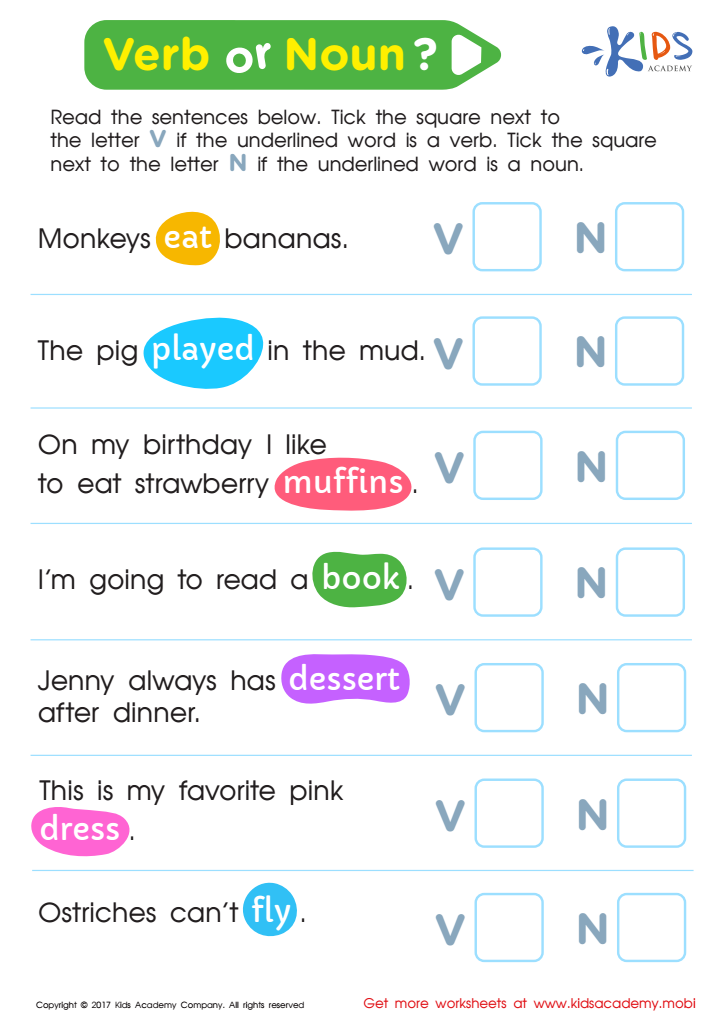
Verb or Noun Worksheet
 Assign to My Students
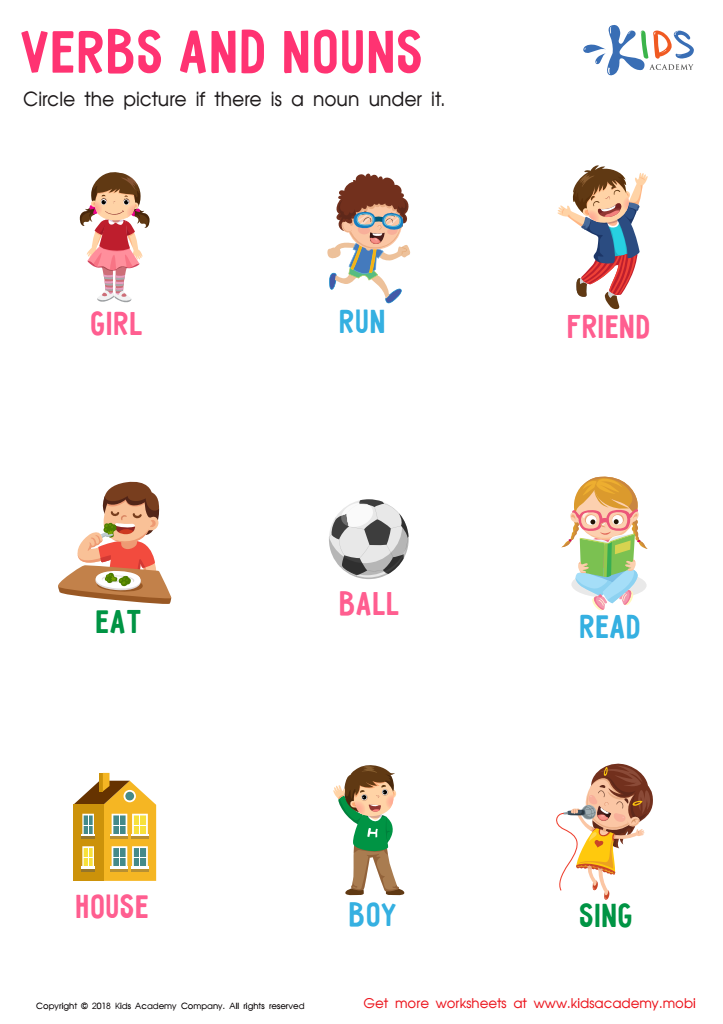
Verbs and Nouns Worksheet
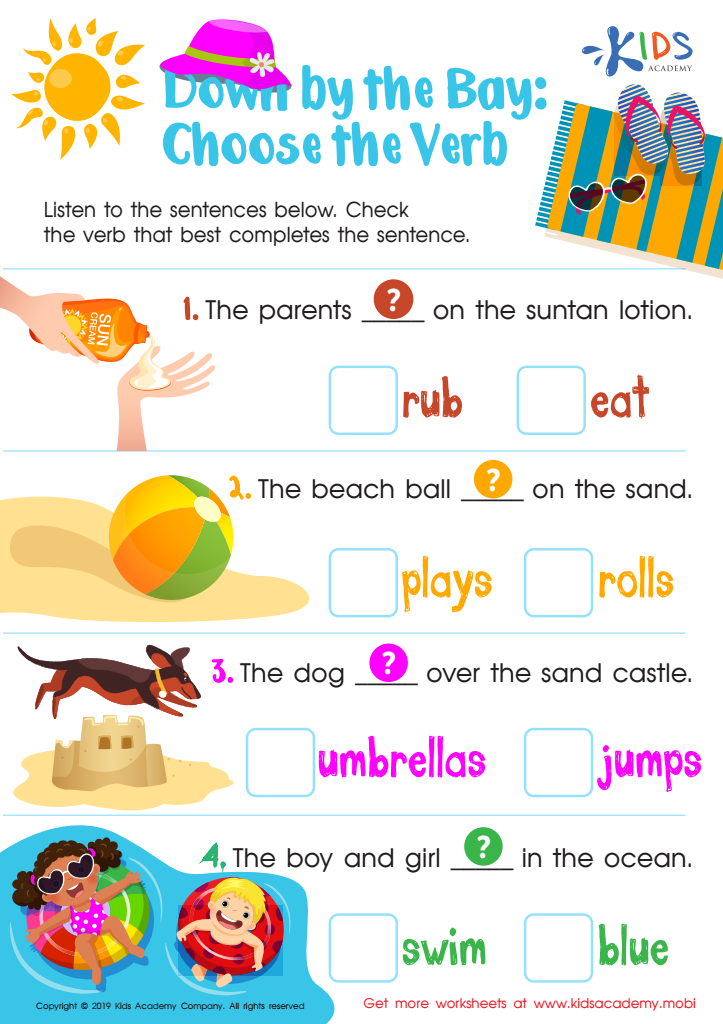
Down by the Bay: Choose the Verb Worksheet



.jpg)




Verb identification for 4-year-olds is crucial as it lays the foundation for language development, literacy, and cognitive skills. At this age, children are beginning to grasp the basics of language, and recognizing verbs helps them understand actions, which are core to communication. When children identify verbs, they also learn how to form sentences, express ideas clearly, and engage in conversations.
Additionally, verb identification fosters vocabulary expansion; the more they recognize and use action words, the more descriptive and nuanced their language becomes. This early awareness of verbs boosts reading readiness as children decode sentences and narratives with better comprehension and context.
Furthermore, engaging in activities that promote verb identification, such as storytelling, music, or play, enhances their overall cognitive development. It encourages them to think critically and develop problem-solving skills as they begin to analyze actions within different contexts.
For parents and teachers, emphasizing verb identification not only supports immediate language skills but also ignites a love for learning and communication, empowering children to express themselves effectively. Consequently, investing time in this critical area helps foster confident, articulate individuals who are better prepared for academic success and social interactions in the future.








