Weather identification Worksheets for 4-Year-Olds
6 filtered results
-
From - To
Introducing our engaging Weather Identification Worksheets designed specifically for 4-year-olds! These printable worksheets from Kids Academy help young learners explore different weather conditions through fun, colorful activities. Perfect for preschool and kindergarten-aged children, these worksheets help kids recognize sunny, rainy, snowy, and windy days, promoting early learning and observation skills. Discover easy-to-understand exercises that enhance vocabulary and cultivate a child's curiosity about the world around them. Whether for classroom use or homeschooling, these weather identification tools foster creativity and pave the way for future scientific learning. Let’s make learning about weather fun and interactive!
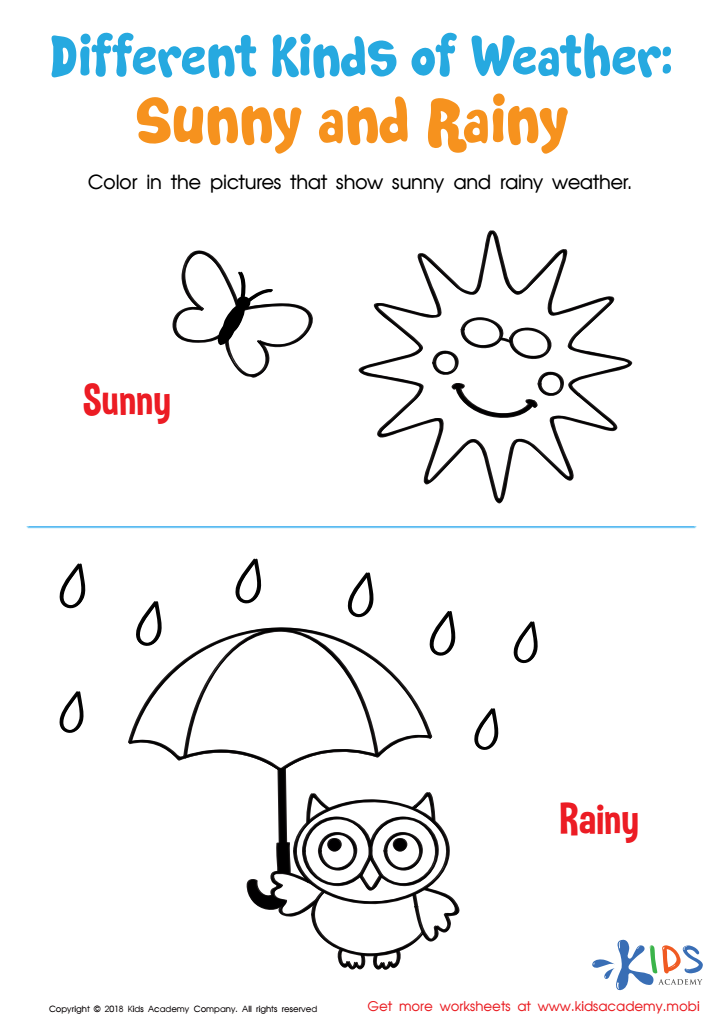
Different Kinds of Weather: Sunny and Rainy Worksheet
 Assign to My Students
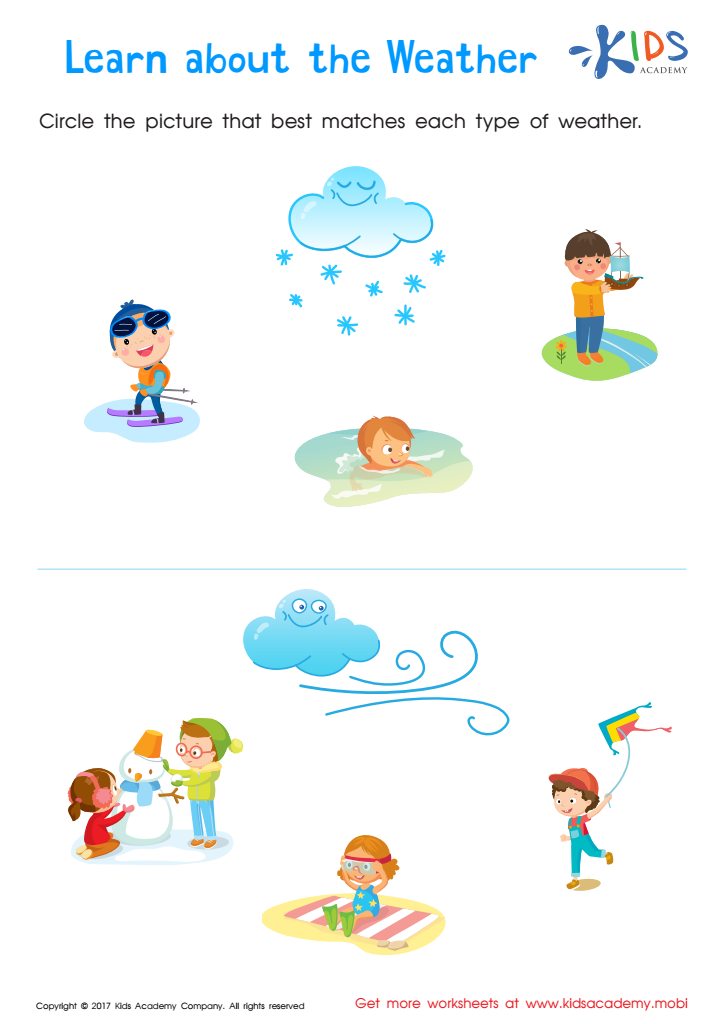
About the Weather Printable
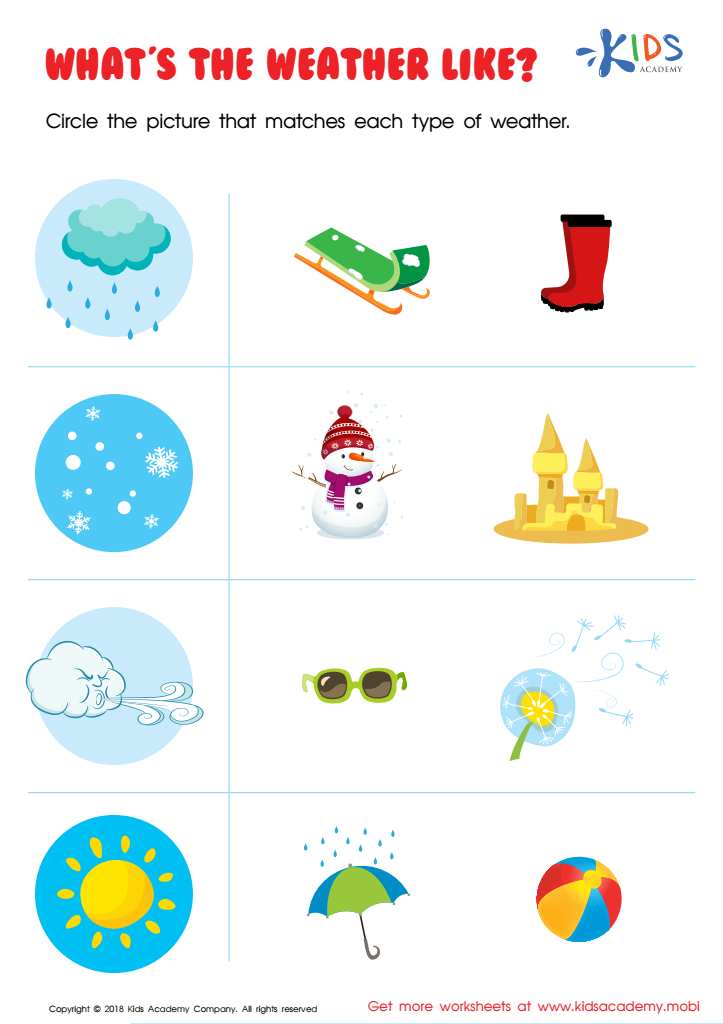
What's the Weather Like? Worksheet
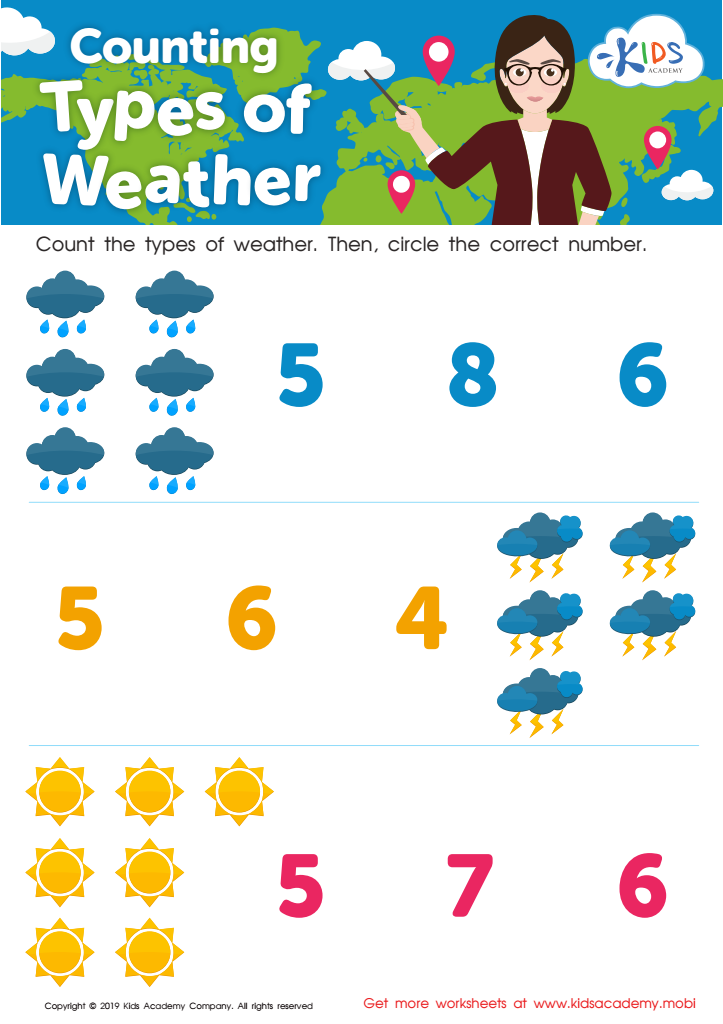
Counting Types of Weather Worksheet
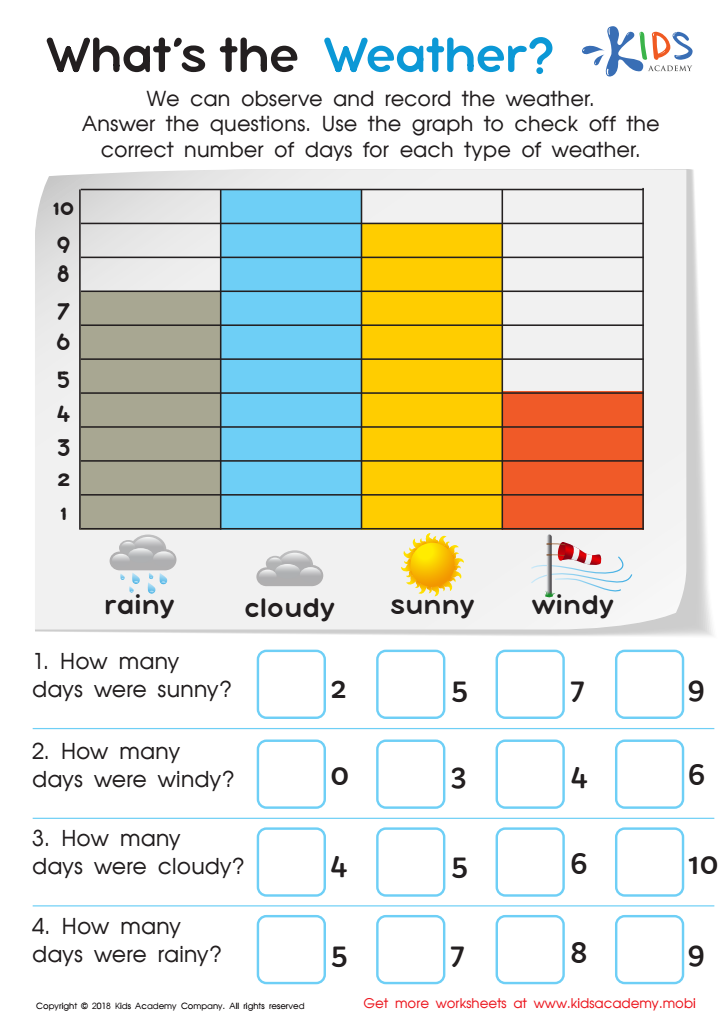
What's the Weather? Worksheet
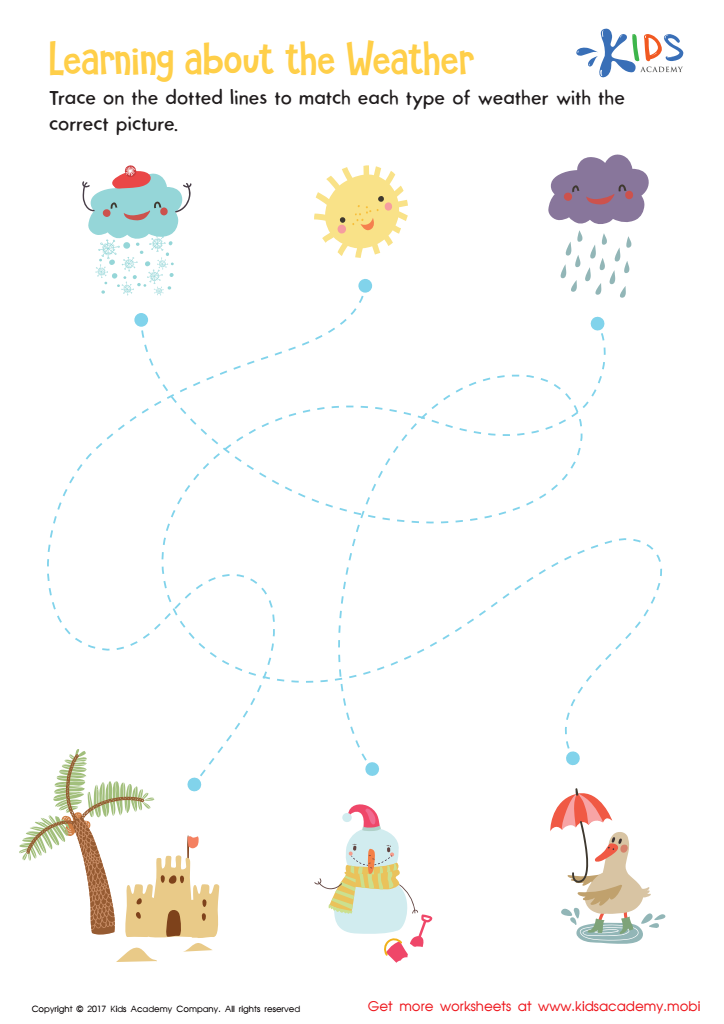







Introducing weather identification to 4-year-olds is crucial for several reasons. Firstly, it fosters curiosity and enhances their observational skills. Young children are naturally inquisitive, and learning about weather helps them engage with the world around them. They start noticing patterns, such as sunny versus rainy days, and this foundational awareness sets the stage for scientific thinking.
Secondly, understanding weather is fundamental to ensuring safety. By recognizing different weather conditions, children can learn basic safety measures, like wearing a raincoat in the rain or staying inside during a storm. It's an early step towards developing situational awareness, which will serve them well throughout their lives.
Additionally, weather discussions can be integrated into various learning areas. For instance, art projects about sunny skies or rainy days improve fine motor skills and creativity. Counting rainy days of the month introduces basic math concepts, and storytelling about different weather scenarios enhances language skills.
Moreover, weather identification nurtures emotional well-being. Calendars inclusive of weather conditions help create predictable routines, providing a sense of security. Understanding that rain is just temporary, for example, can help manage emotions and reduce fears.
Overall, caring about weather identification helps young minds connect academic concepts with daily life while building essential skills and emotional intelligence.








