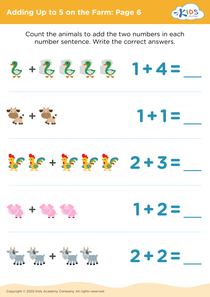
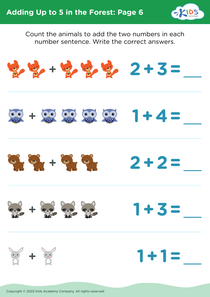
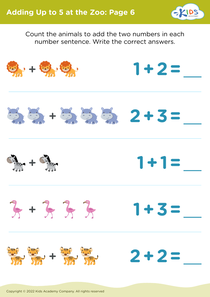
Basic addition practice Adding in the Sea Worksheets for 4-Year-Olds
3 filtered results
-
From - To
Dive into a fun learning adventure with our "Basic Addition Practice: Adding in the Sea Worksheets for 4-Year-Olds"! These engaging and beautifully illustrated worksheets are designed to teach young learners the fundamentals of addition in an exciting underwater setting. Featuring sea-themed visuals and easy-to-follow exercises, children will practice counting, adding, and problem-solving, all while exploring a vibrant ocean world. Perfect for preschoolers, these worksheets make learning math concepts enjoyable and rewarding. Foster your child’s numerical skills and spark their curiosity with this delightful underwater math journey! Ideal for home or classroom use.
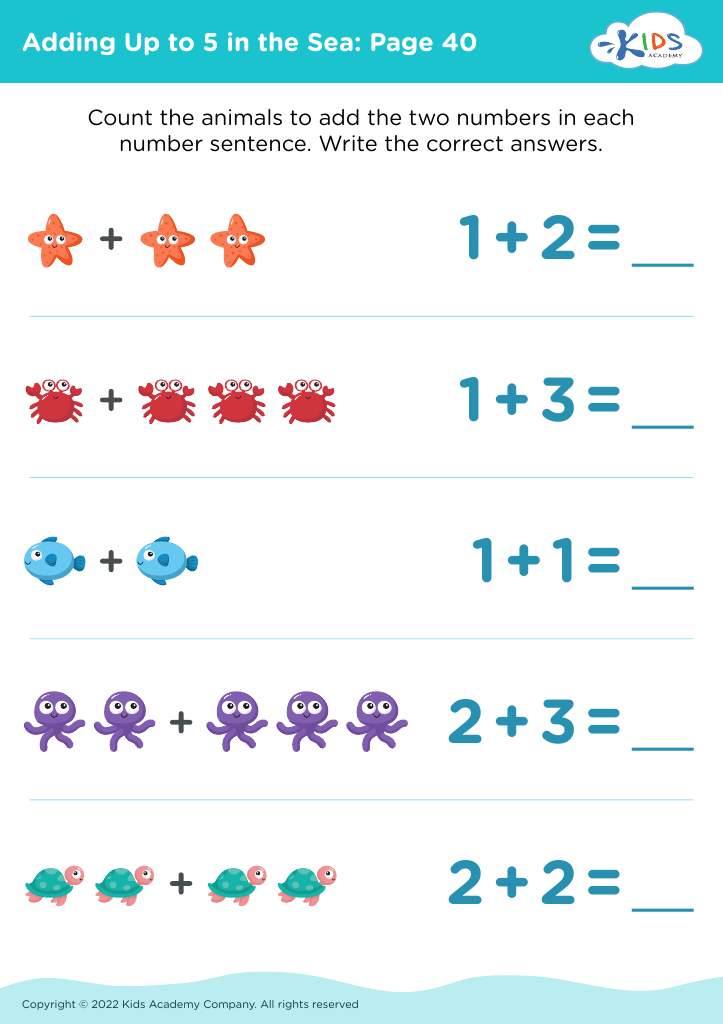
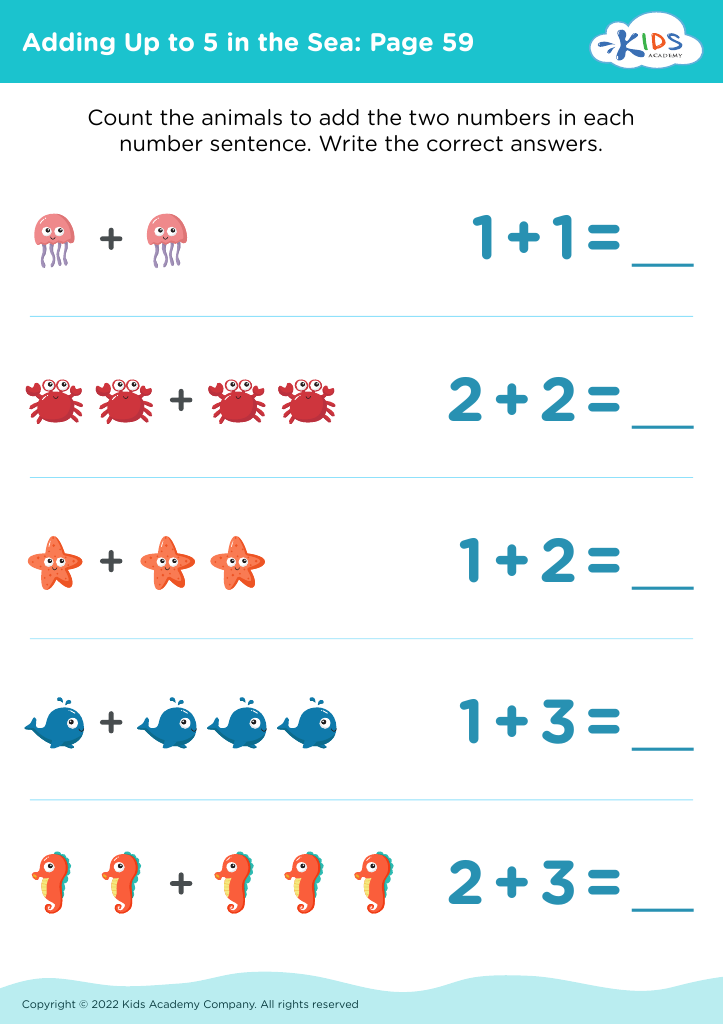
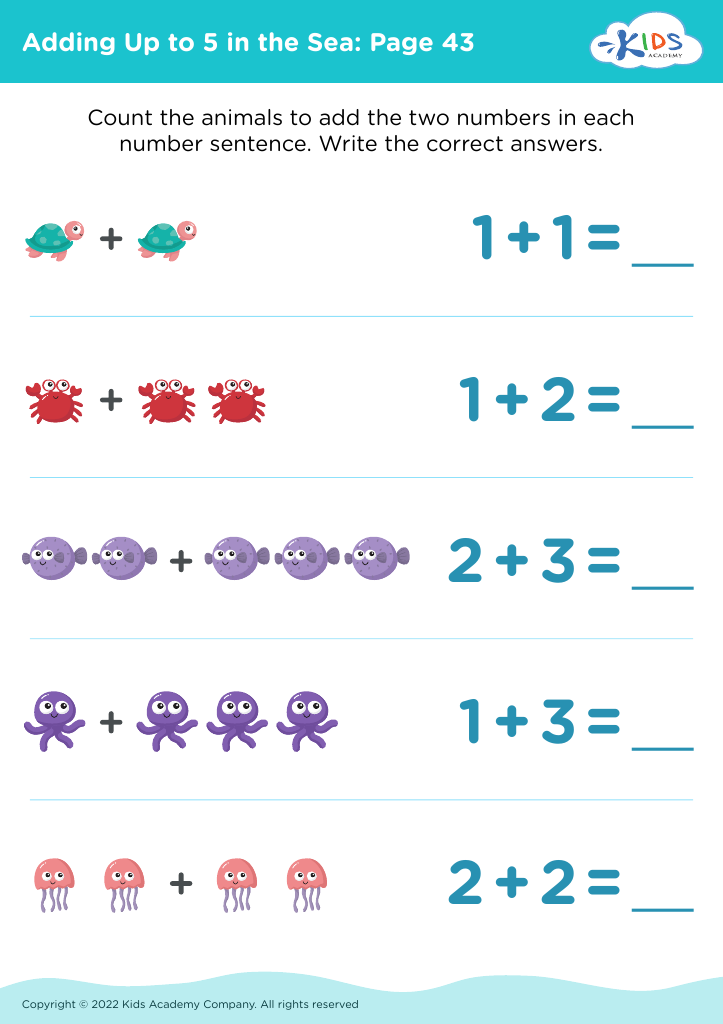



Basic addition practice, such as "Adding in the Sea" for 4-year-olds, is crucial for early childhood development. At this tender age, children's brains are highly receptive to new information, and foundational math skills are easier to establish. Introducing basic addition helps to develop their numerical literacy, which forms the building blocks for more complex mathematical concepts they will encounter later.
Engaging in themed activities like "Adding in the Sea" makes learning enjoyable, sparking curiosity and sustaining attention. It supports cognitive development by enhancing critical thinking, problem-solving abilities, and memory. Moreover, these activities can improve fine motor skills and hand-eye coordination if they involve manipulatives or interactive elements.
For parents and teachers, promoting such practices builds children's confidence in their abilities, encourages a positive attitude towards math, and helps identify any early challenges a child might face, allowing for timely interventions. Additionally, math practice promotes a structured way of thinking and reasoning, skills that are transferable to other academic areas and everyday life situations.
Furthermore, incorporating themes like "the sea" can make learning relatable and fun, fostering a lifelong love for learning. Thus, basic addition practice is not just about numbers—it’s a holistic educational step vital for a child's overall growth and future academic success.