Basic Arithmetic Adding Up to 5 Worksheets for 4-Year-Olds
34 filtered results
-
From - To
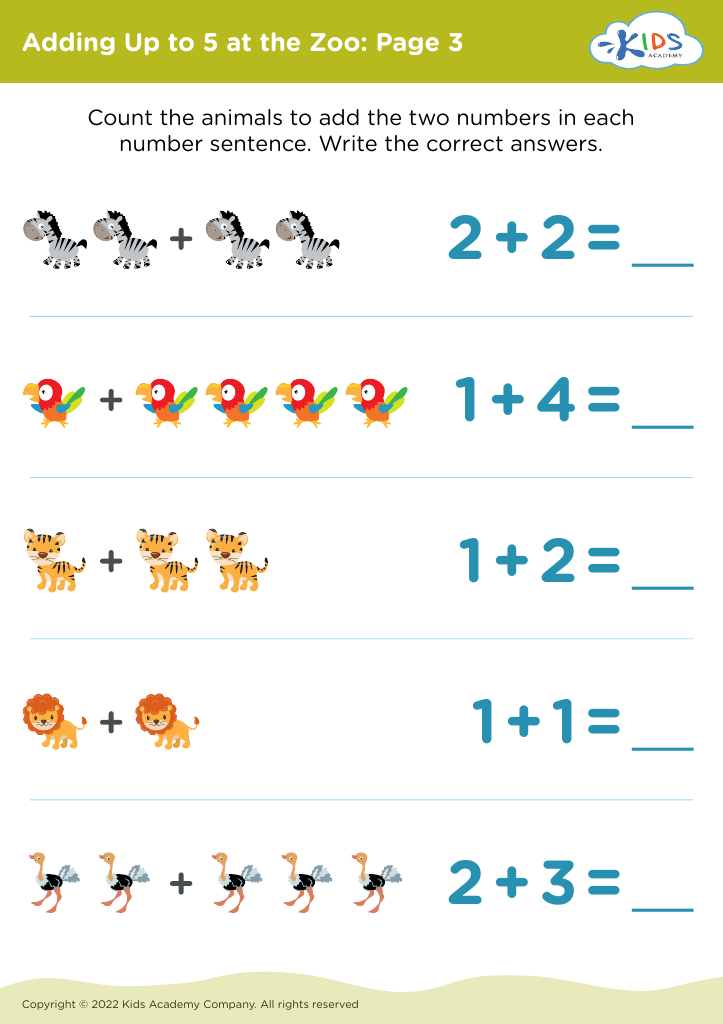
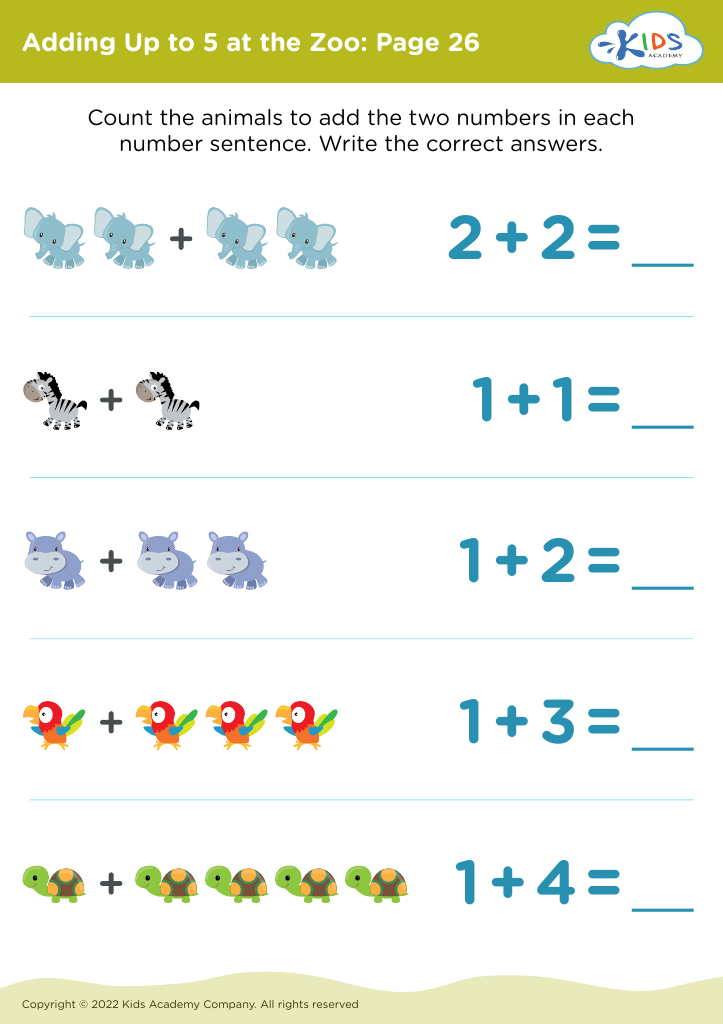
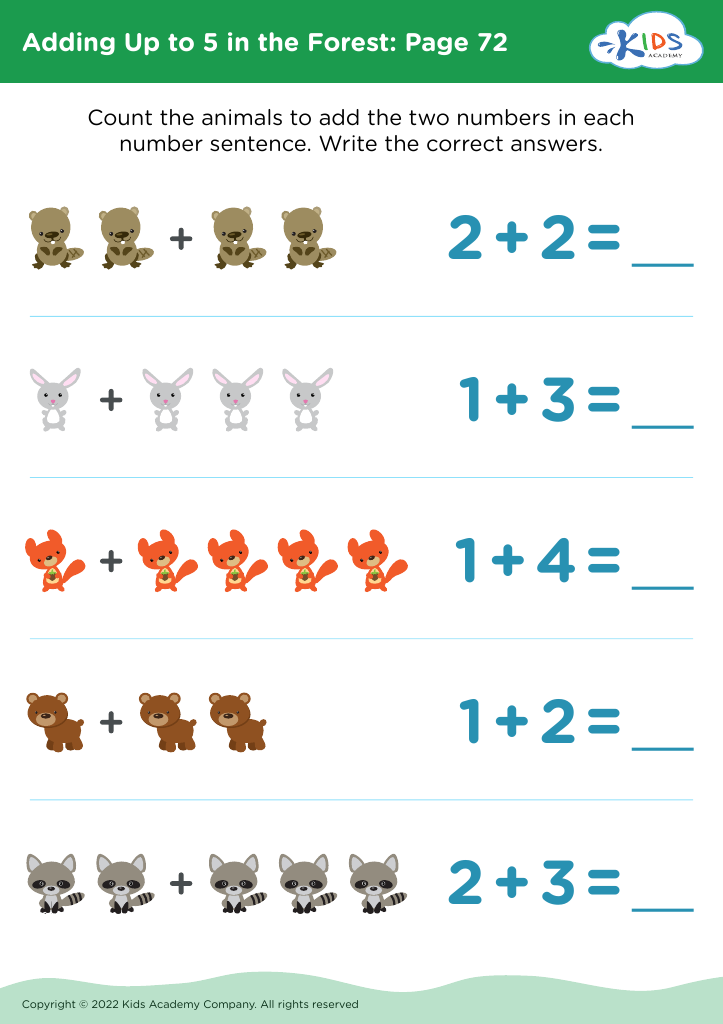
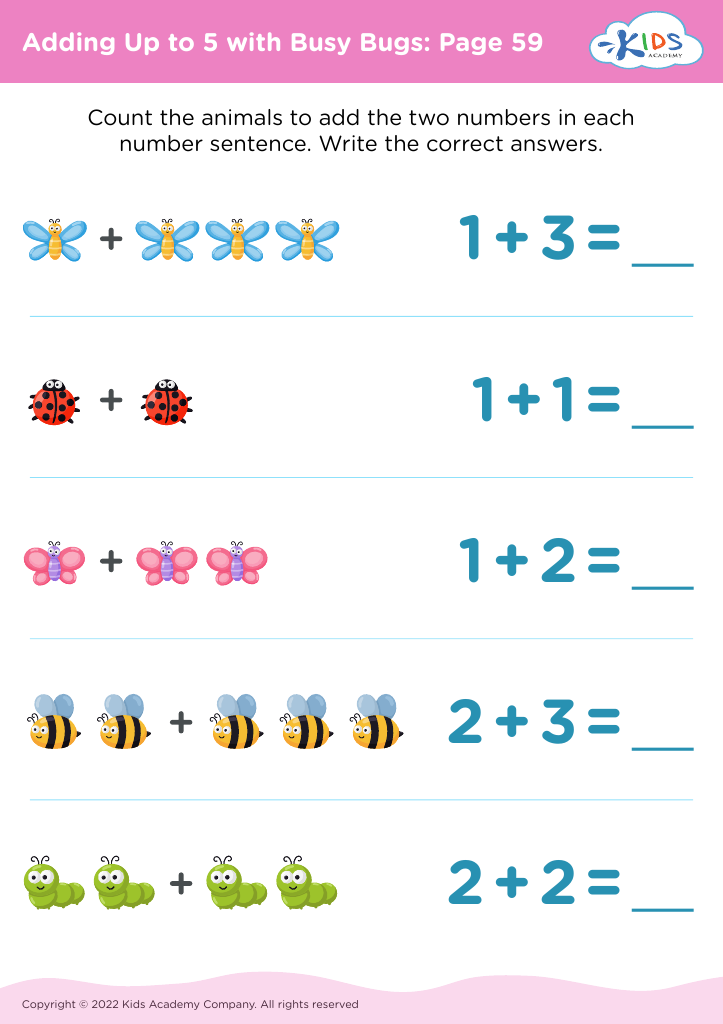
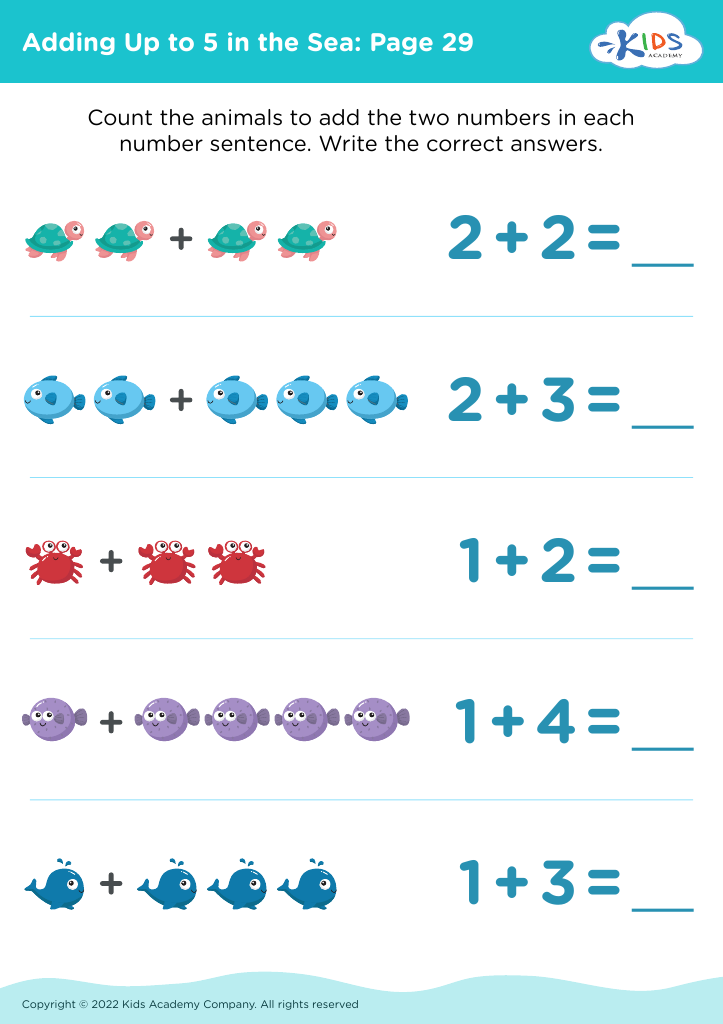
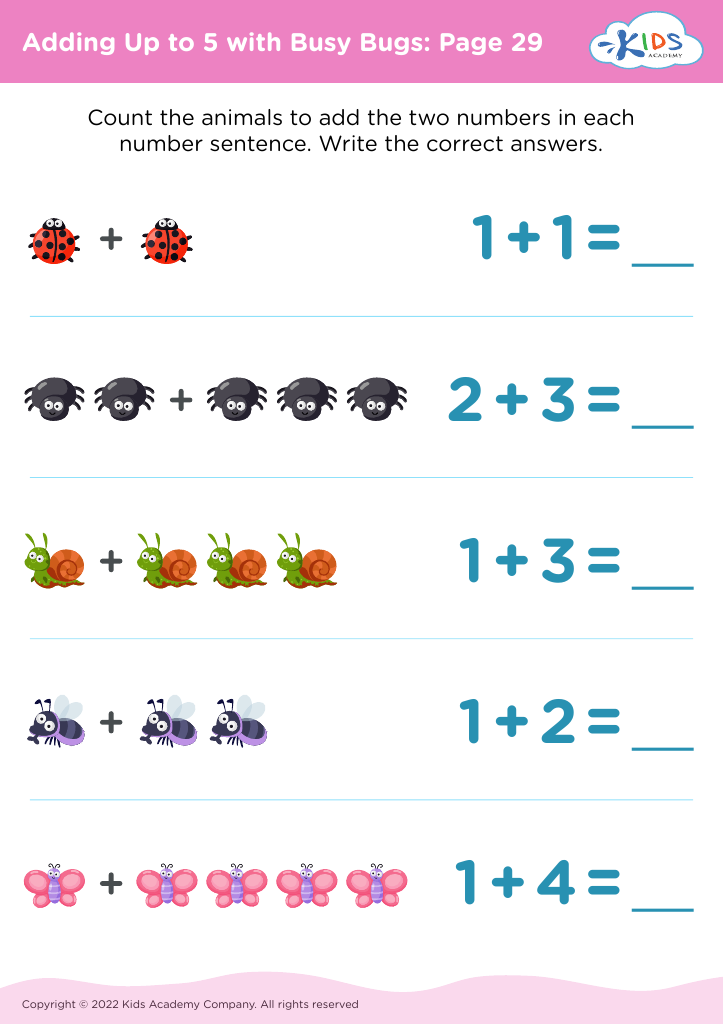
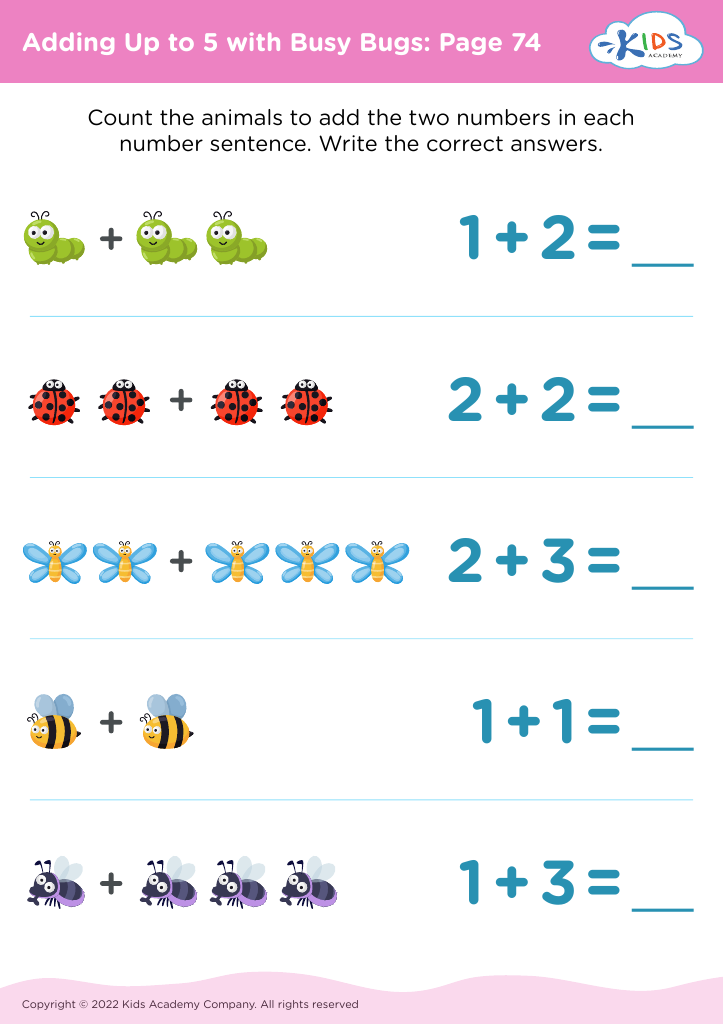
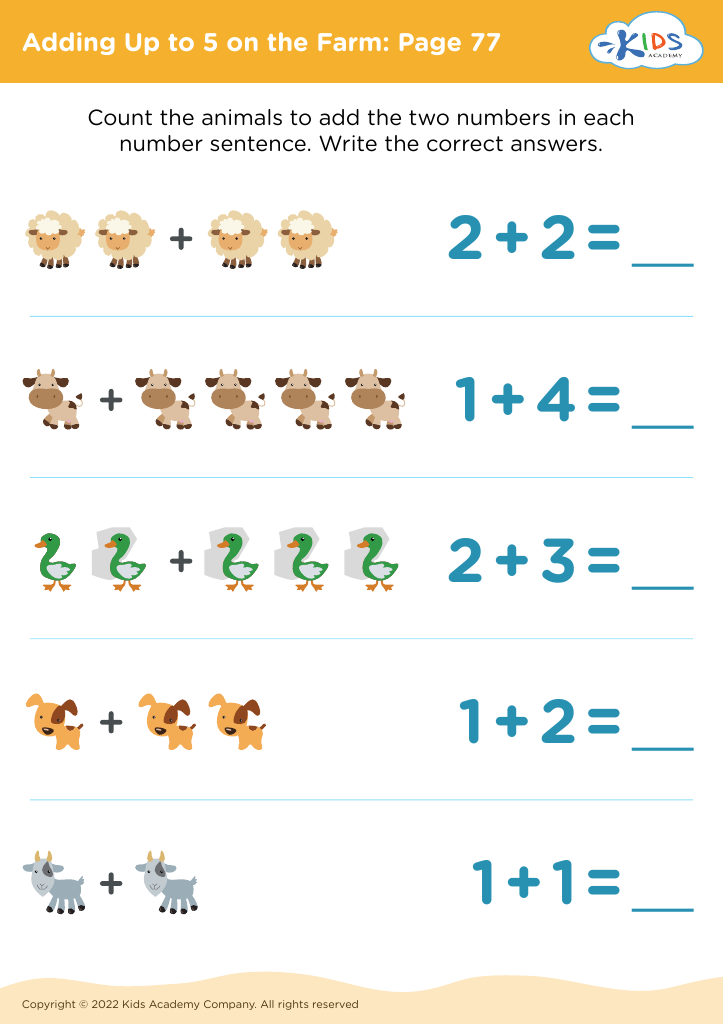
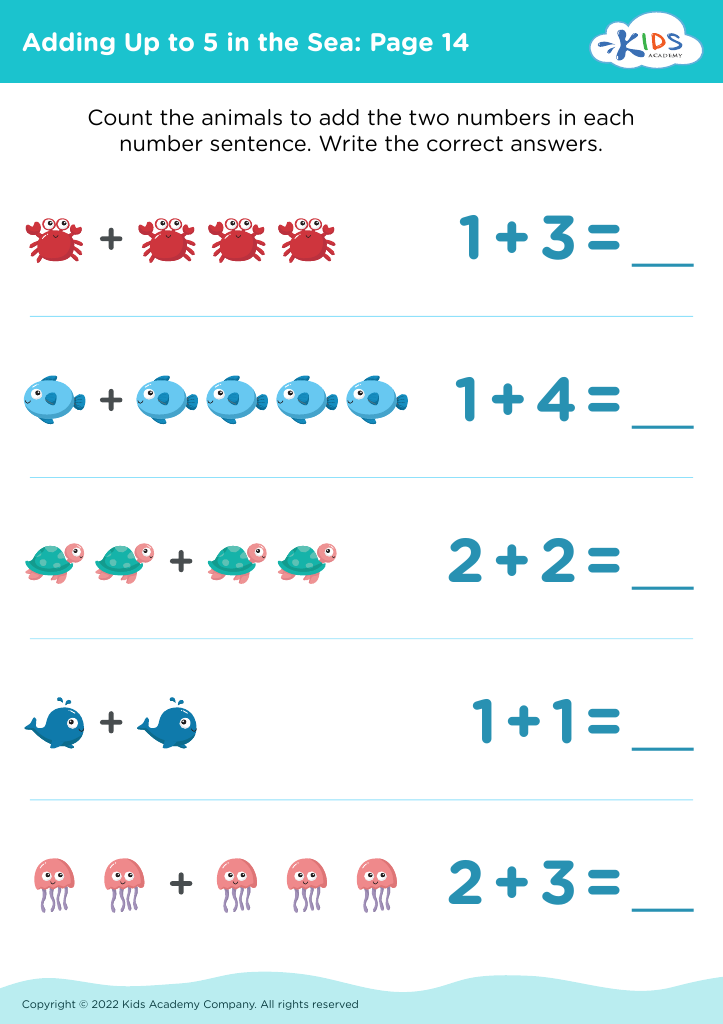
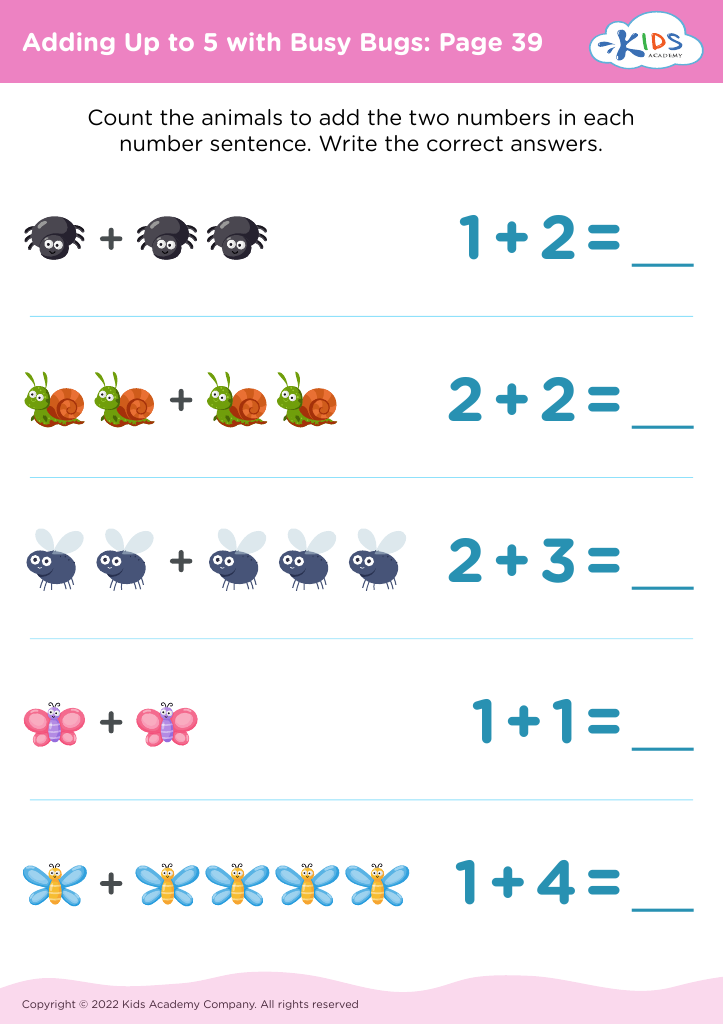
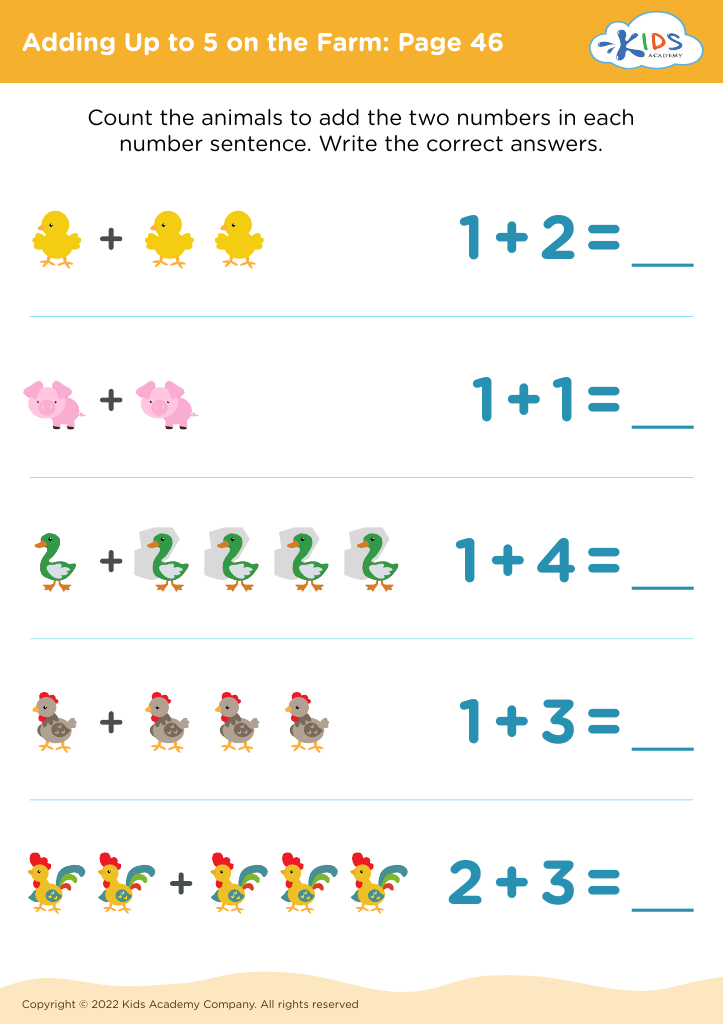
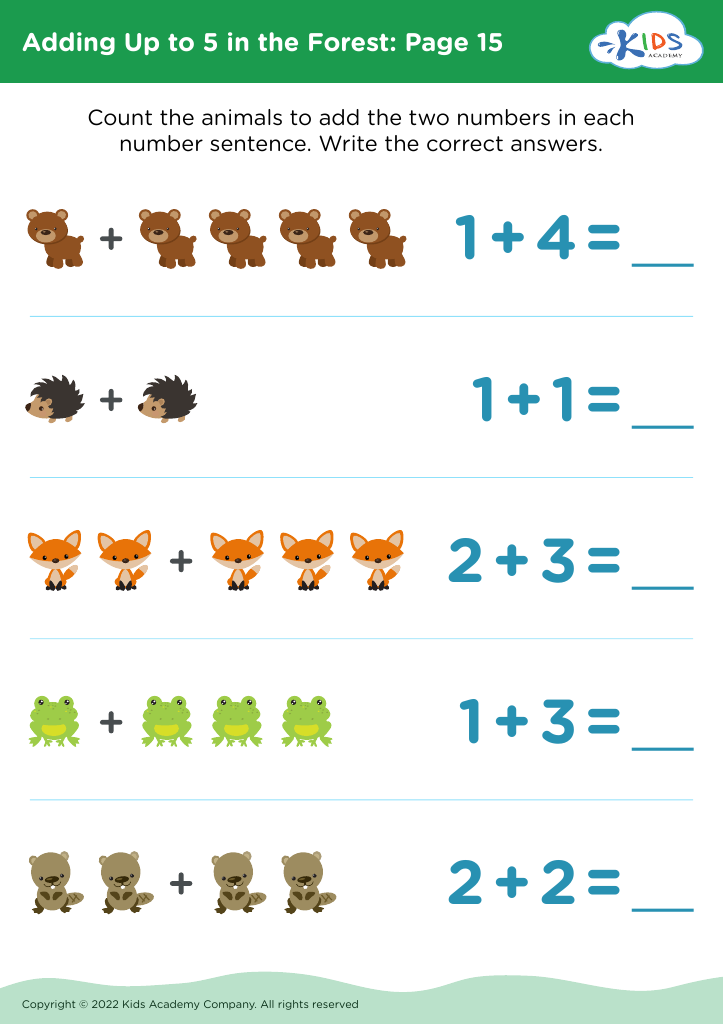
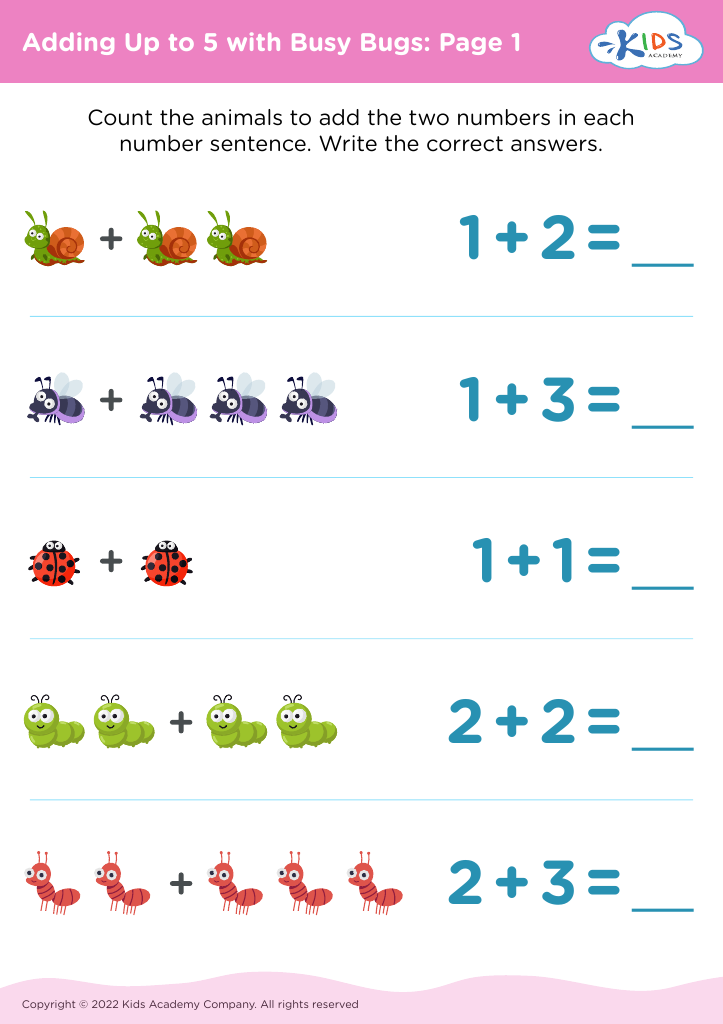
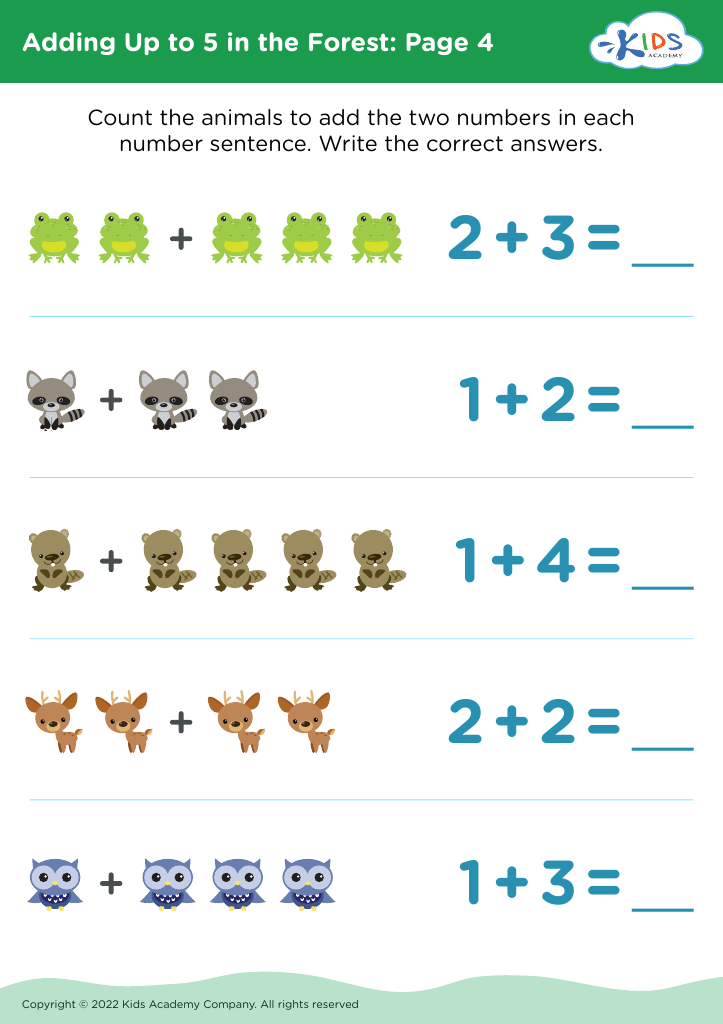
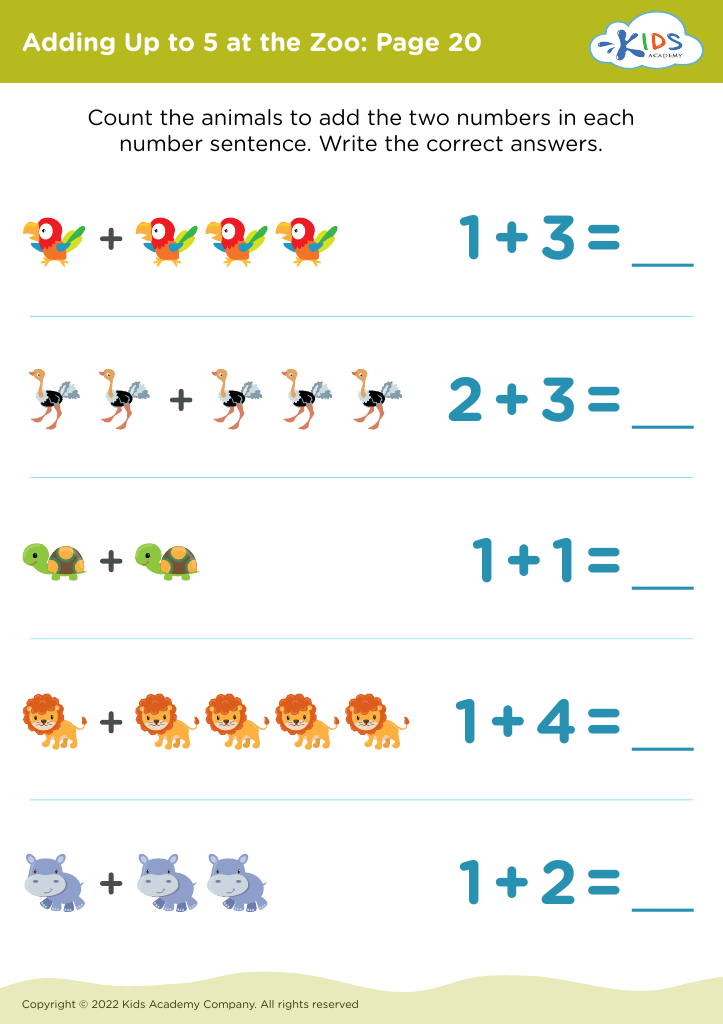
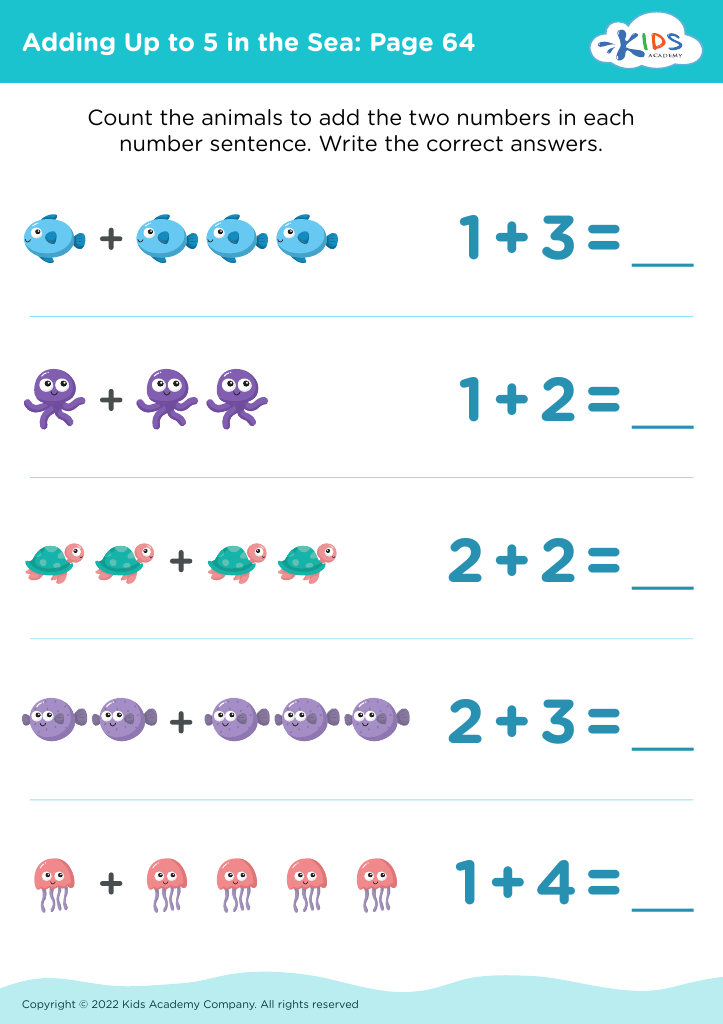
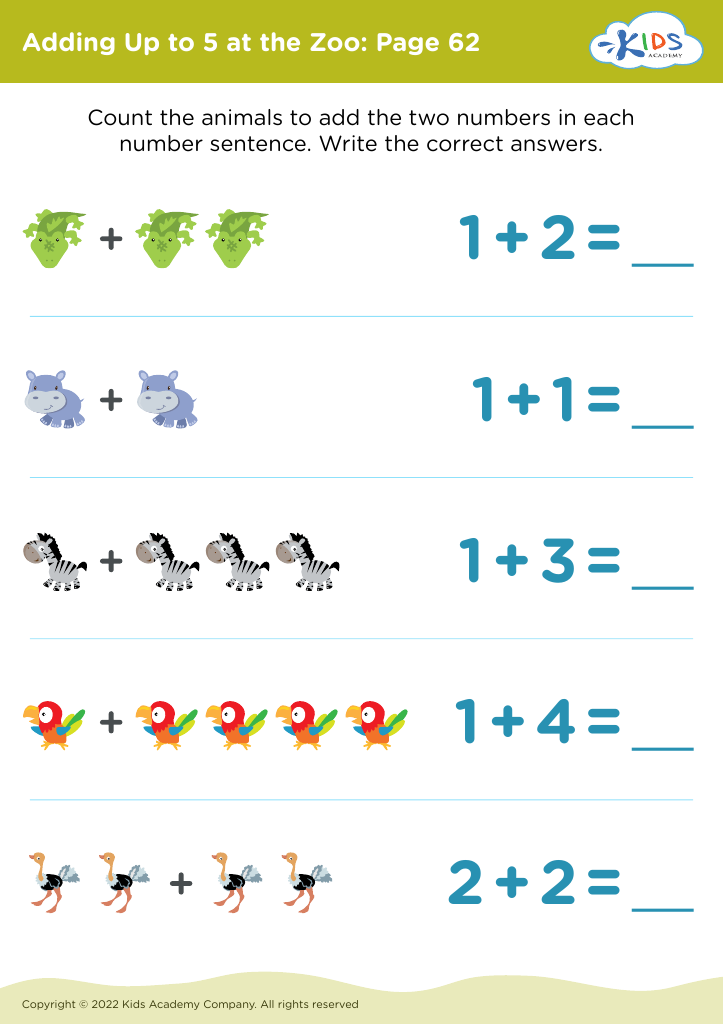
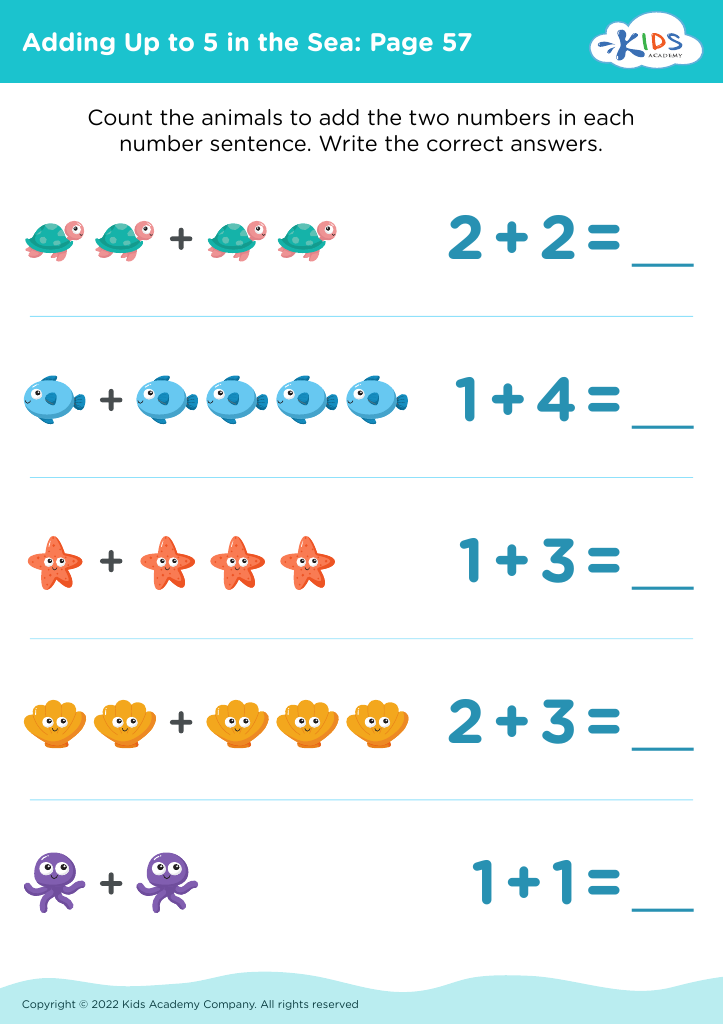
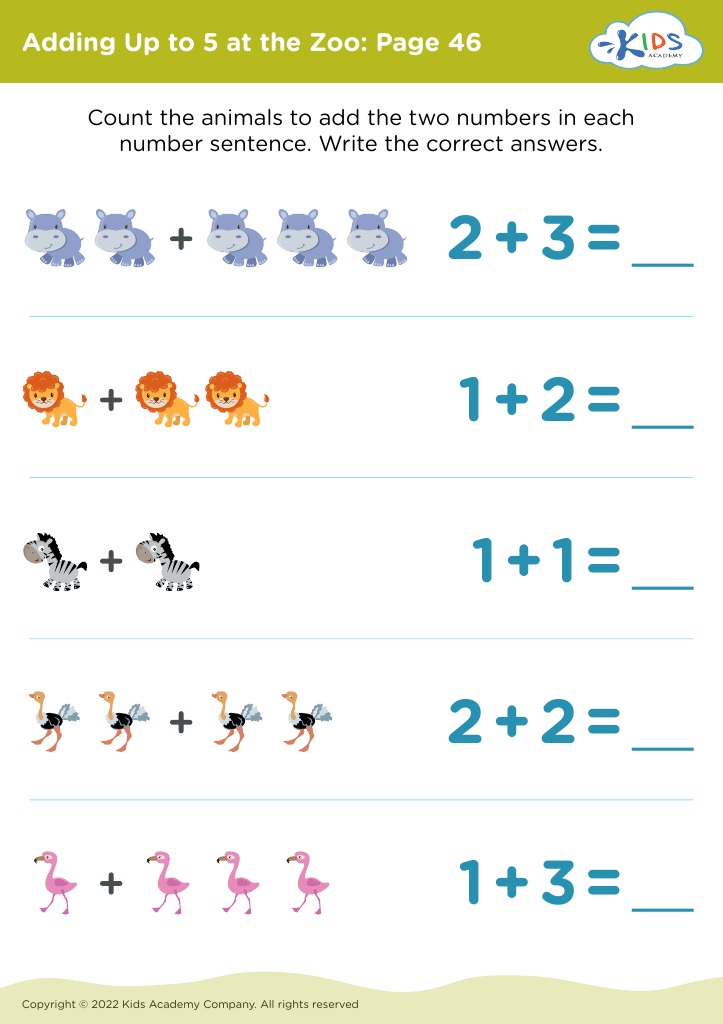
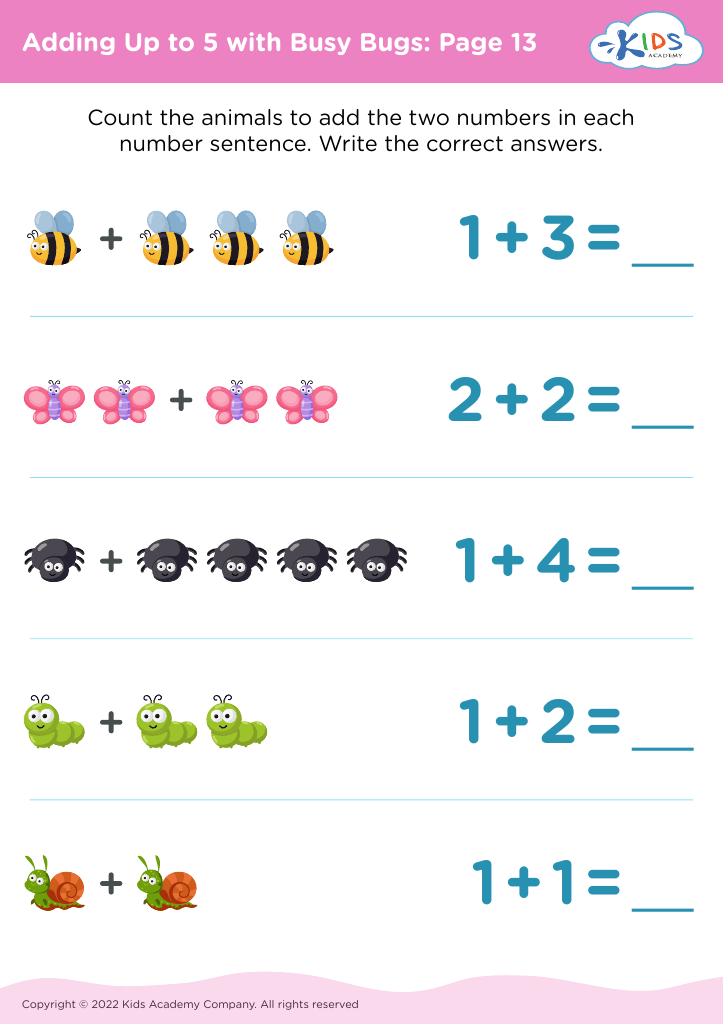
Give your 4-year-old a head start in math with our engaging "Basic Arithmetic Adding Up to 5" worksheets. Specially designed for preschoolers, these printable worksheets from Kids Academy help little learners practice basic addition up to the number 5 while enjoying fun themes and playful illustrations. Through a variety of interactive exercises, children will enhance their counting skills, understand simple sums, and build a solid mathematical foundation. Ideal for both classroom and at-home use, our activities make learning arithmetic enjoyable and stress-free. Make math an adventure with these age-appropriate exercises and watch your child’s confidence grow!
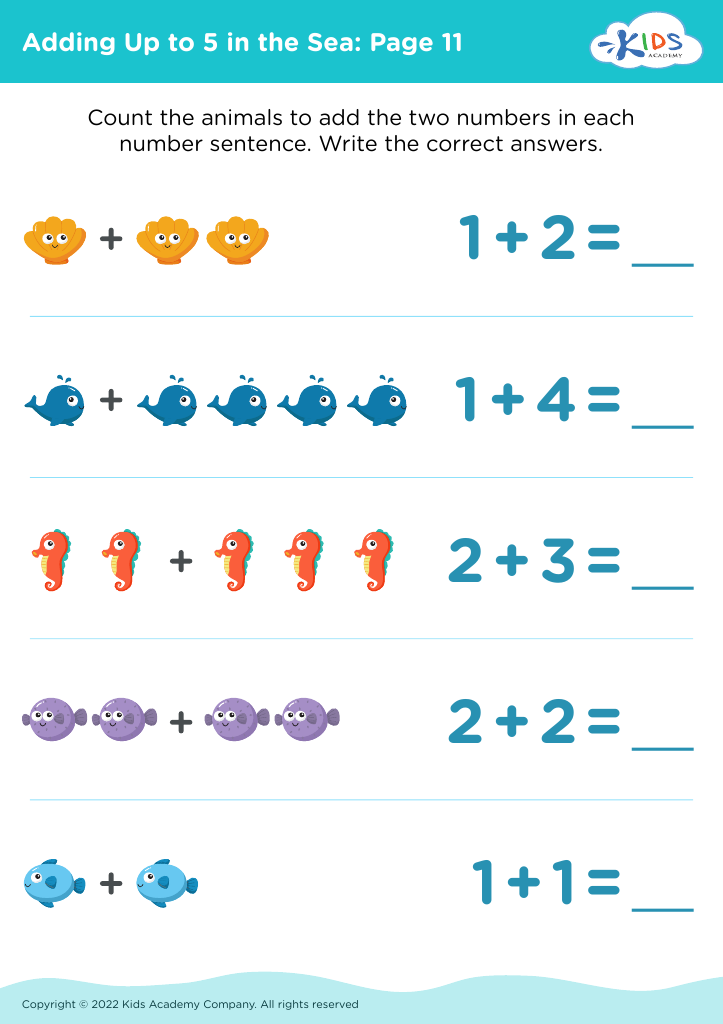
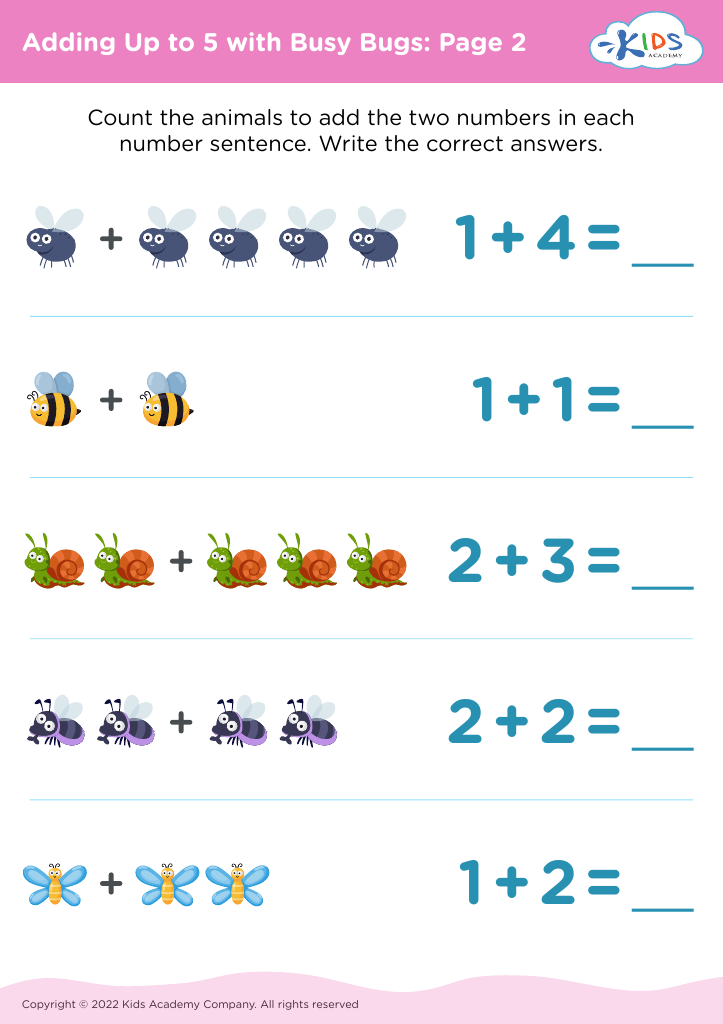
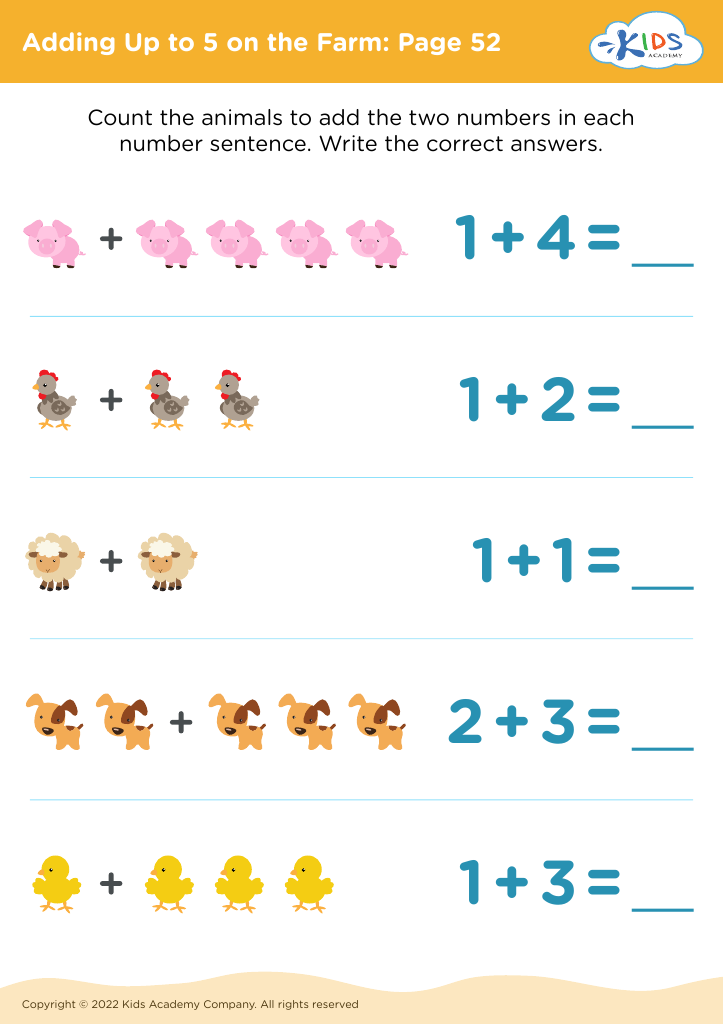
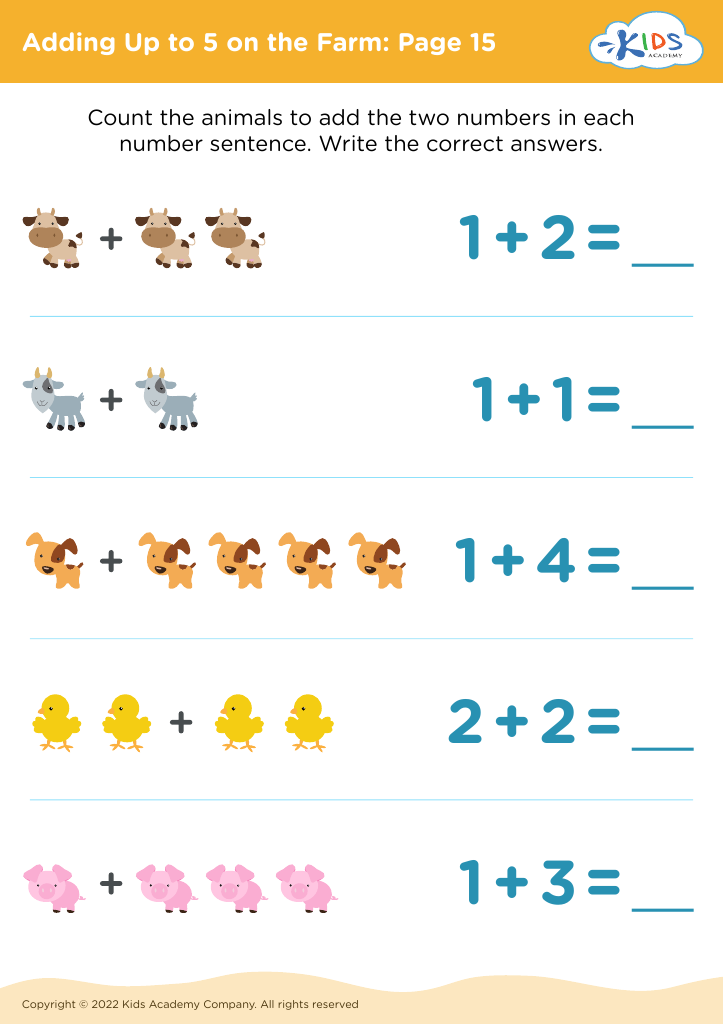





%20(1).jpg)


Basic arithmetic plays a fundamental role in the cognitive development of young children, and ensuring that 4-year-olds can accurately add numbers up to 5 is crucial for several reasons. First, early math skills are strongly associated with later academic success not only in math, but also in other subjects like reading and science. Mastering basic addition helps establish a solid foundation for more complex mathematical concepts encountered in subsequent school years.
Developing arithmetic skills at an early age encourages problem-solving and critical thinking—skills that are beneficial for overall intellectual growth. For 4-year-olds, understanding how to add small numbers fosters number sense, helping them recognize numerical relationships and patterns. This early exposure to math can increase a child's confidence and interest in the subject, making them more likely to engage and succeed in school later on.
Moreover, integrating such arithmetic exercises helps improve concentration and memory, as children need to remember numbers, sequences, and processes. Fun, educational activities, like counting games or using physical objects (like blocks or beads), can make learning enjoyable, promoting a love for learning in general.
In summary, emphasizing basic arithmetic for young children sets the stage for a lifetime of learning, preparing them not only for future educational endeavors but also for everyday life situations that require mathematical thinking.








