Filters

232 filtered results

Clear all filters
Favorites
With answer key
Interactive

232 filtered results

Difficulty Level

Grade


Check out this FREE Trial Lesson on Adding Up to 5 for age 4!

H

Favorites
With answer key
Interactive
  • 4
  • Counting practice
  • Adding Up to 5
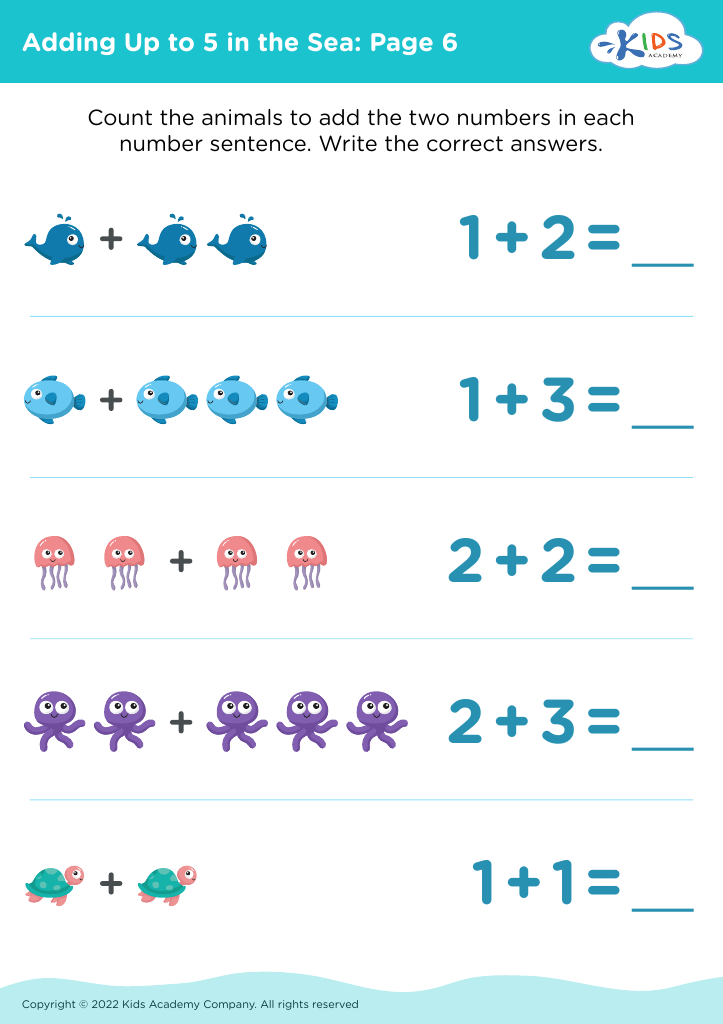
Adding Up to 5 in the Sea: Page 6

Adding Up to 5 in the Sea: Page 6

Adding Up to 5 in the Sea: Page 6
Worksheet
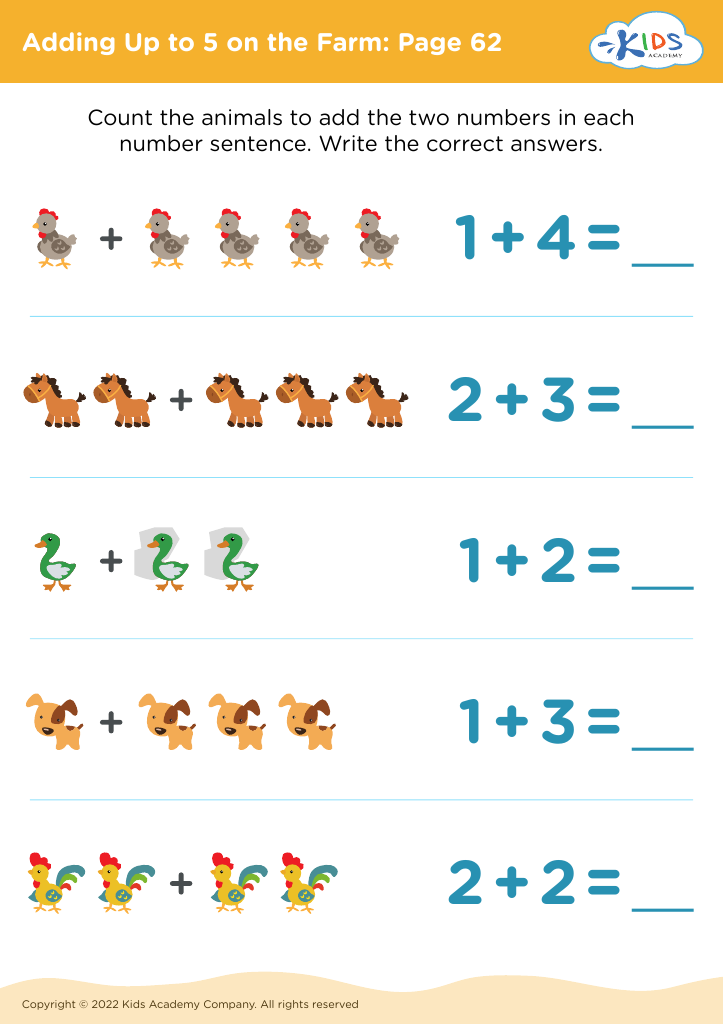
Adding Up to 5 on the Farm: Page 62
Worksheet
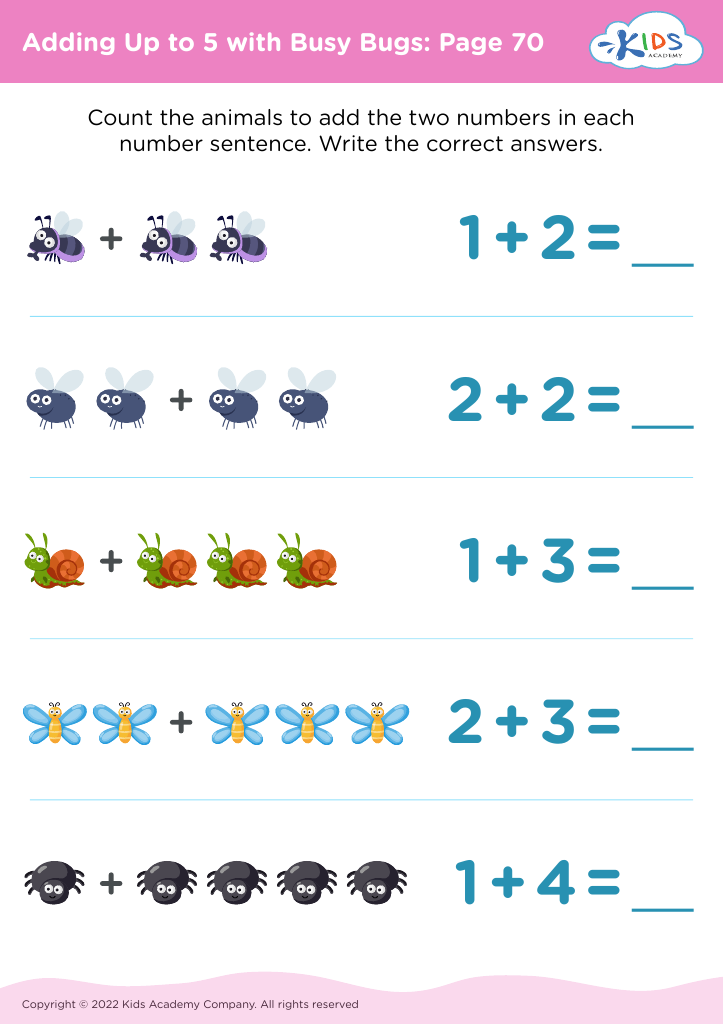
Adding Up to 5 with Busy Bugs: Page 70
Worksheet
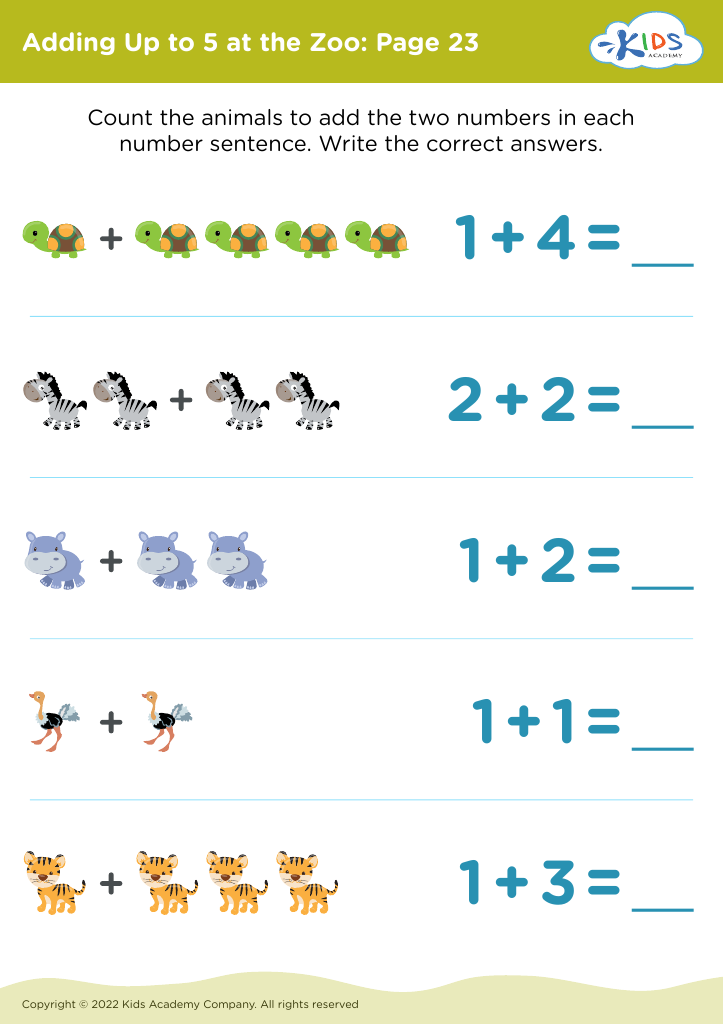
Adding Up to 5 at the Zoo: Page 23
Worksheet
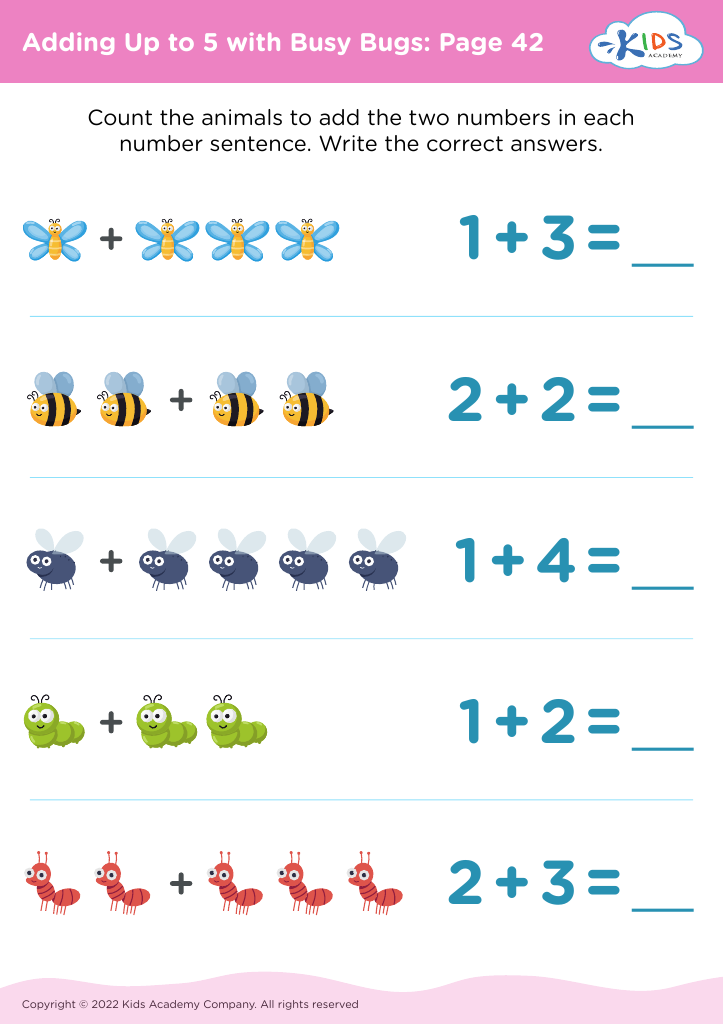
Adding Up to 5 with Busy Bugs: Page 42
Worksheet
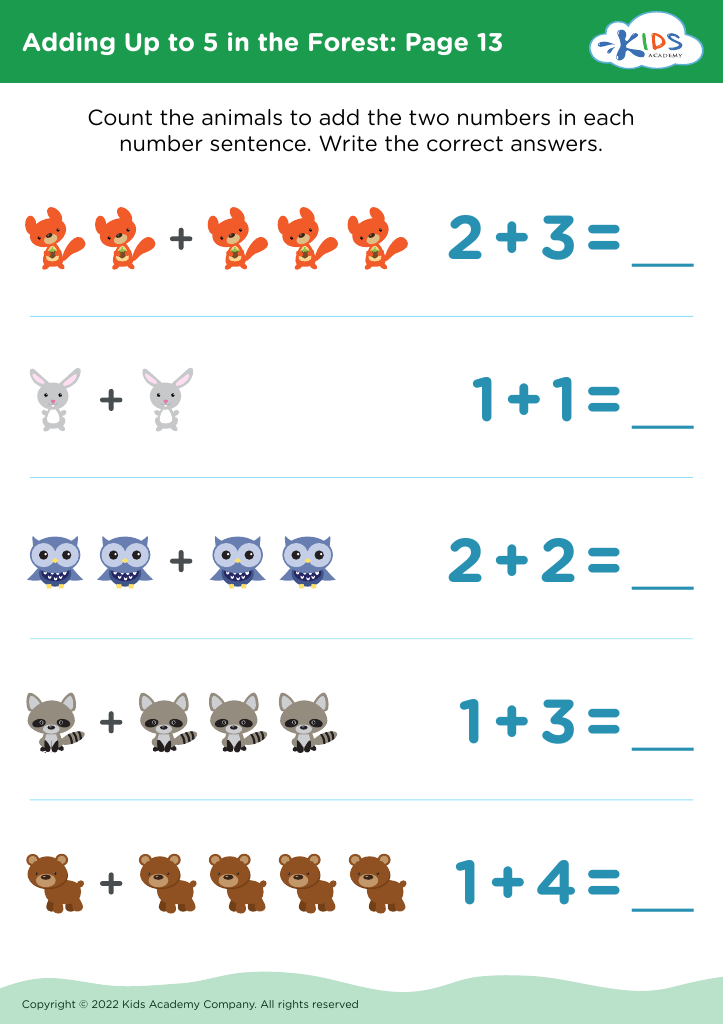
Adding Up to 5 in the Forest: Page 13
Worksheet
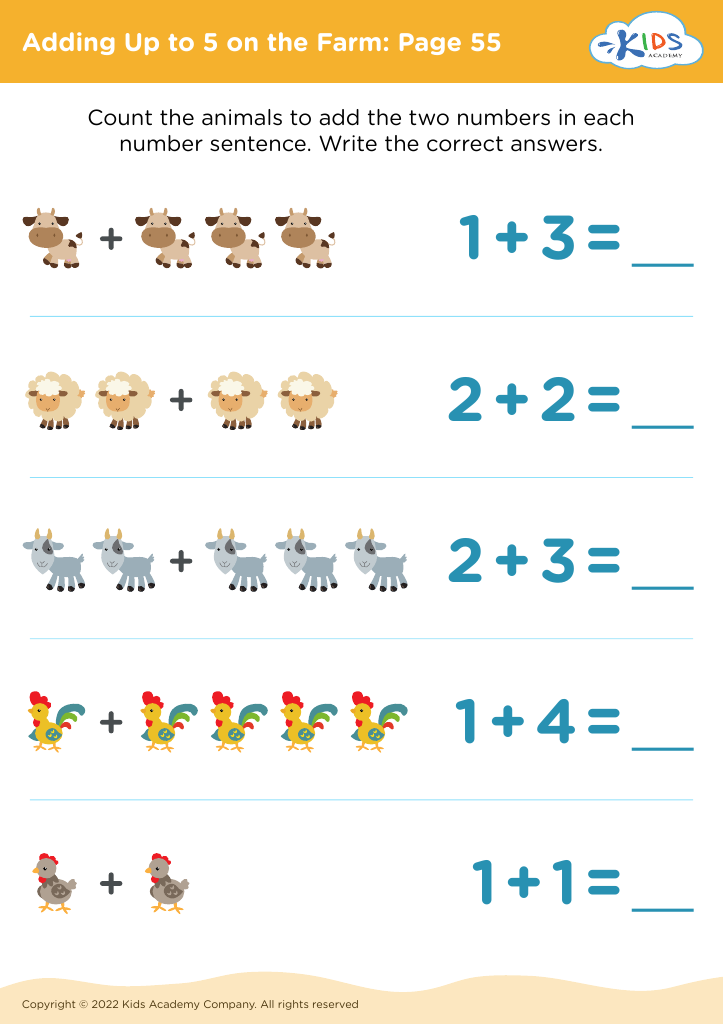
Adding Up to 5 on the Farm: Page 55
Worksheet
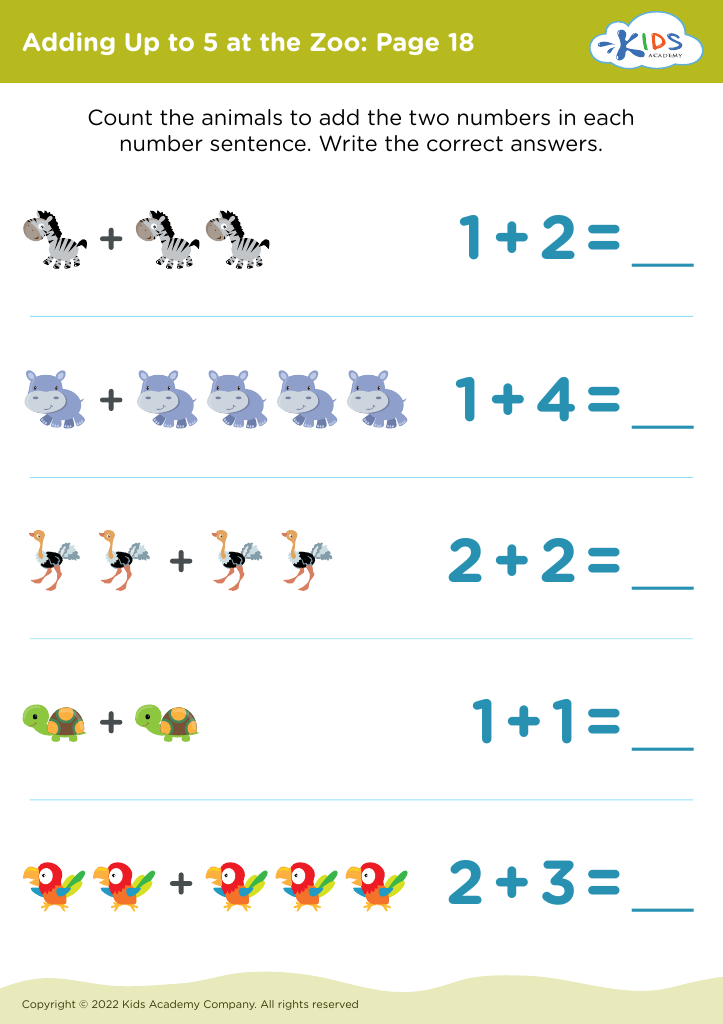
Adding Up to 5 at the Zoo: Page 18
Worksheet
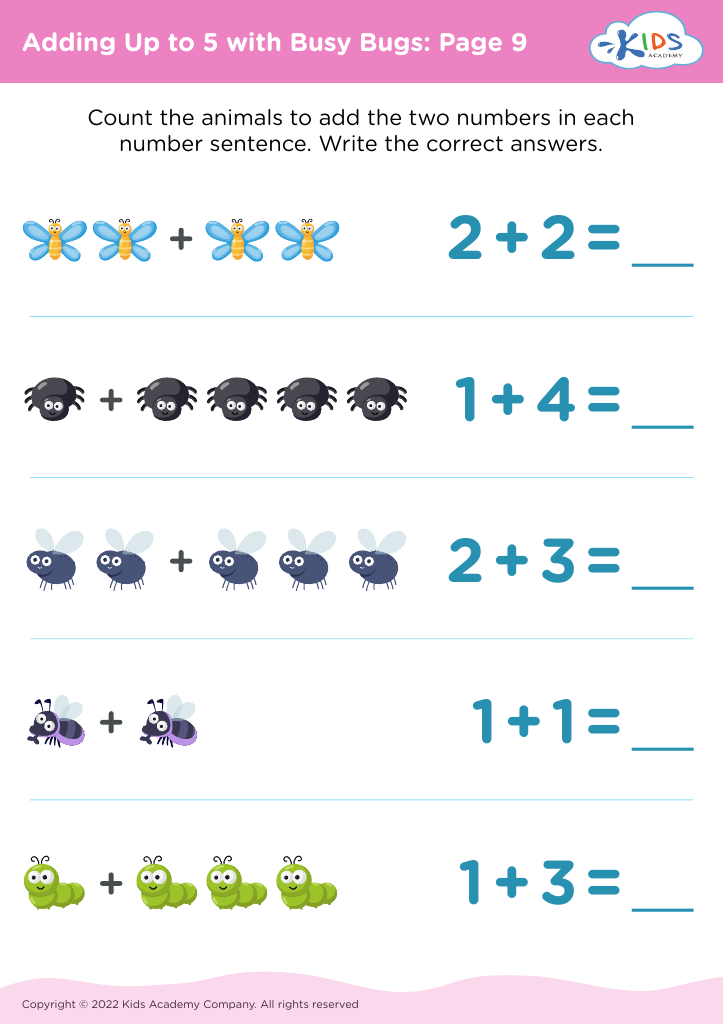
Adding Up to 5 with Busy Bugs: Page 9
Worksheet
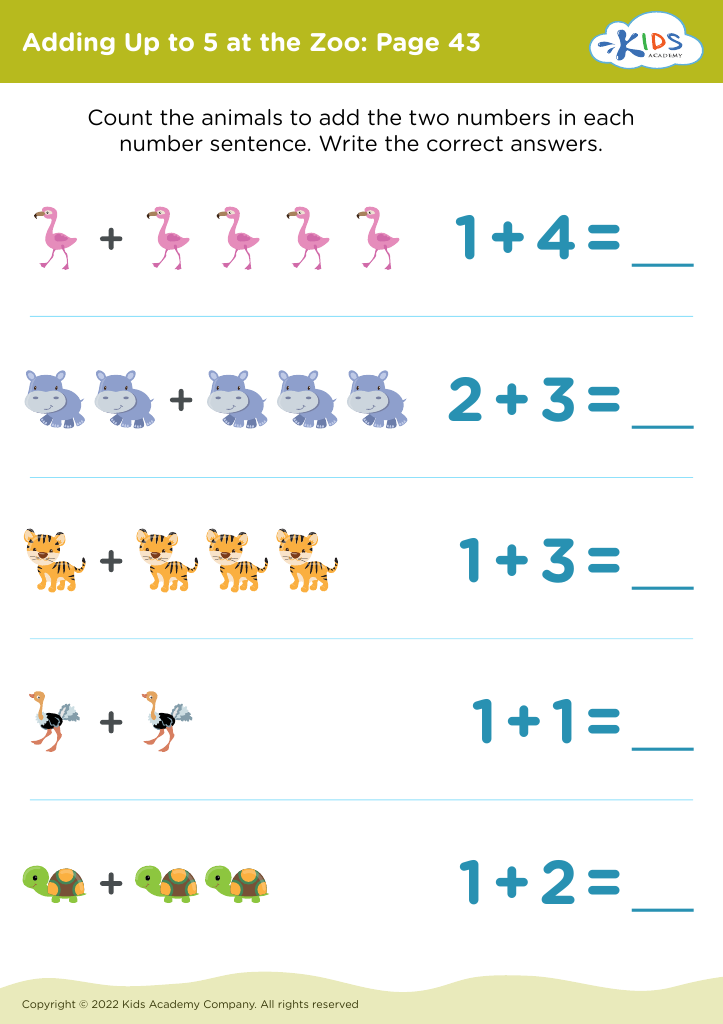
Adding Up to 5 at the Zoo: Page 43
Worksheet
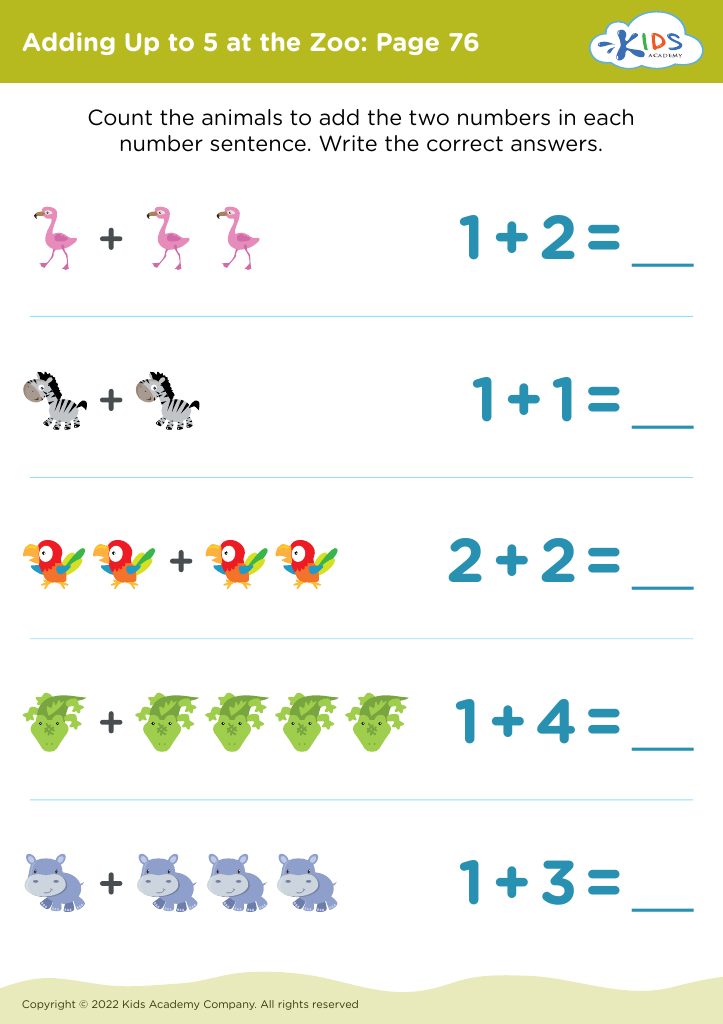
Adding Up to 5 at the Zoo: Page 76
Worksheet
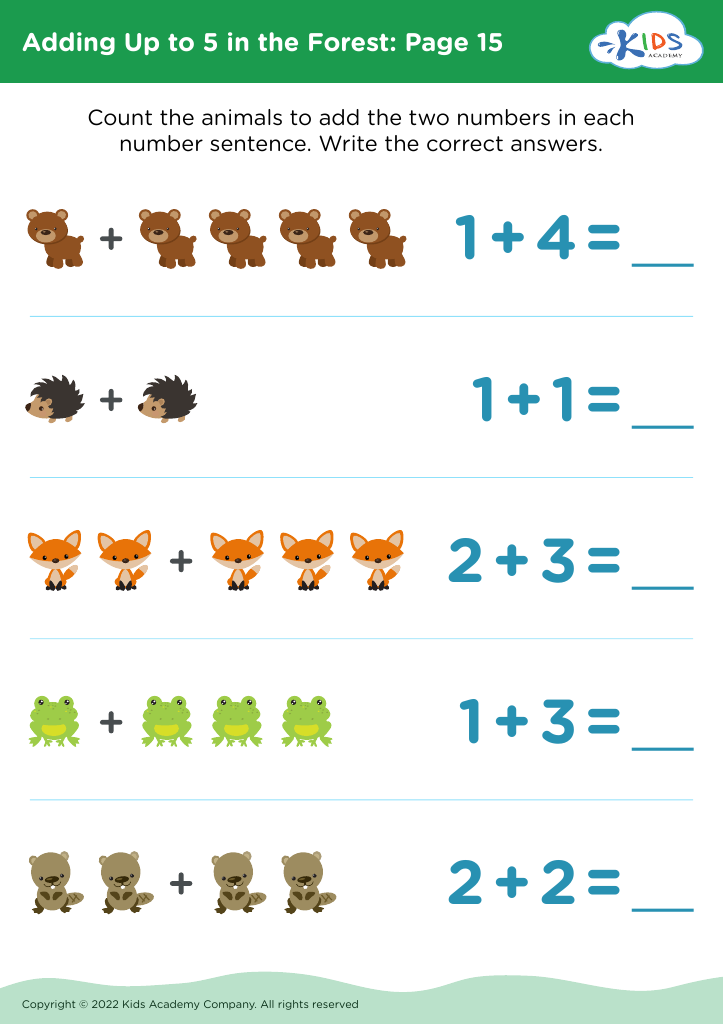
Adding Up to 5 in the Forest: Page 15
Worksheet
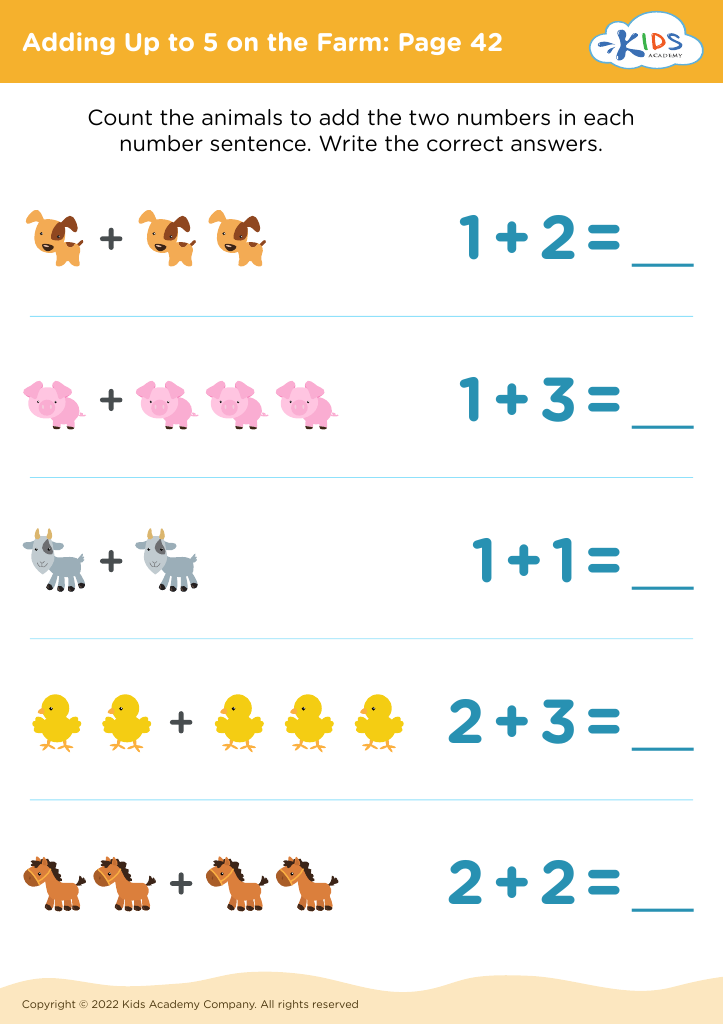
Adding Up to 5 on the Farm: Page 42
Worksheet
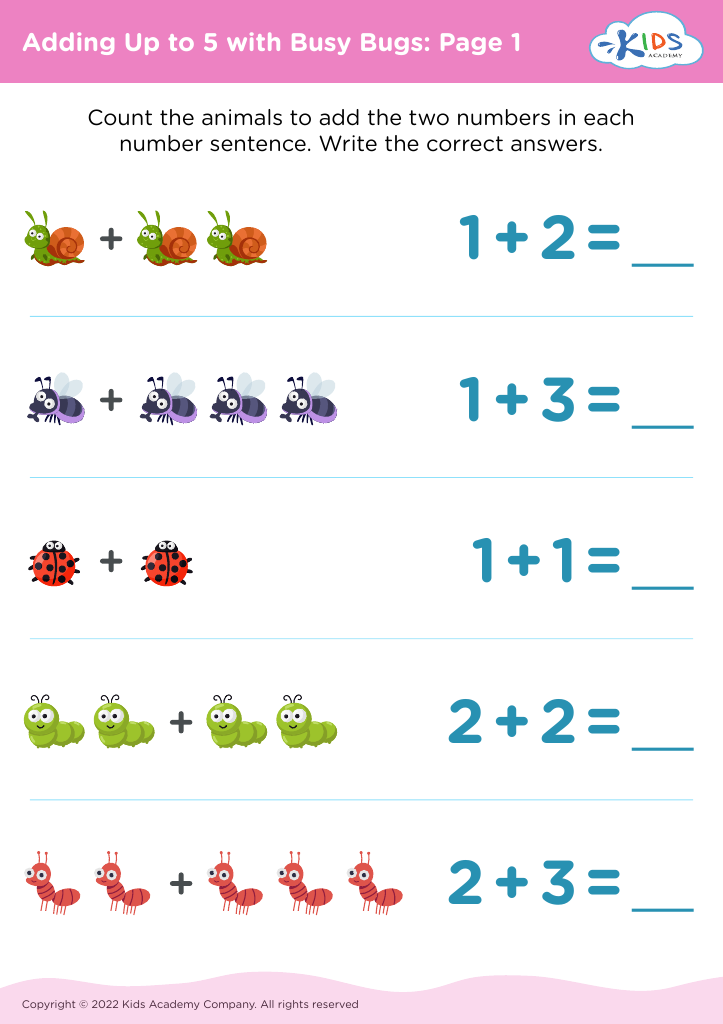
Adding Up to 5 with Busy Bugs: Page 1
Worksheet
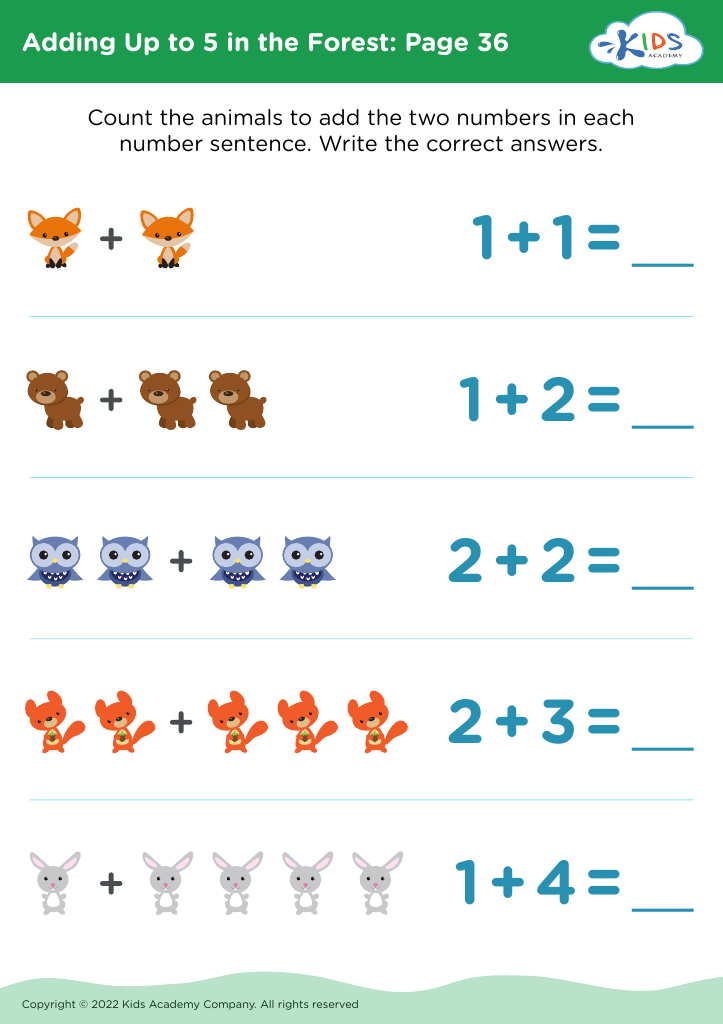
Adding Up to 5 in the Forest: Page 36
Worksheet
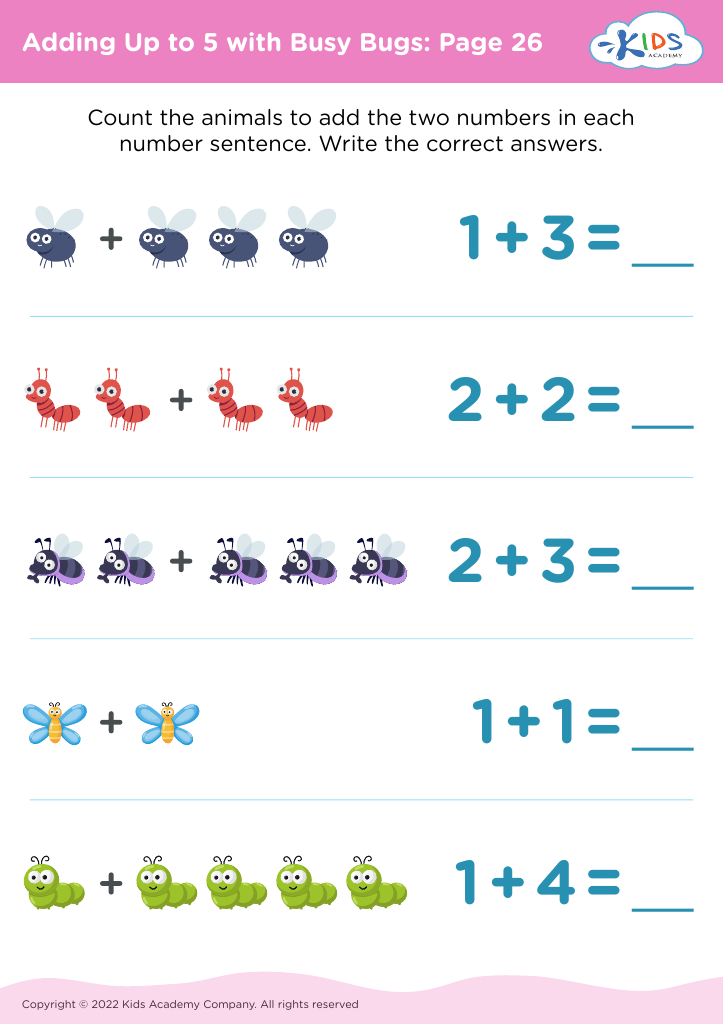
Adding Up to 5 with Busy Bugs: Page 26
Worksheet
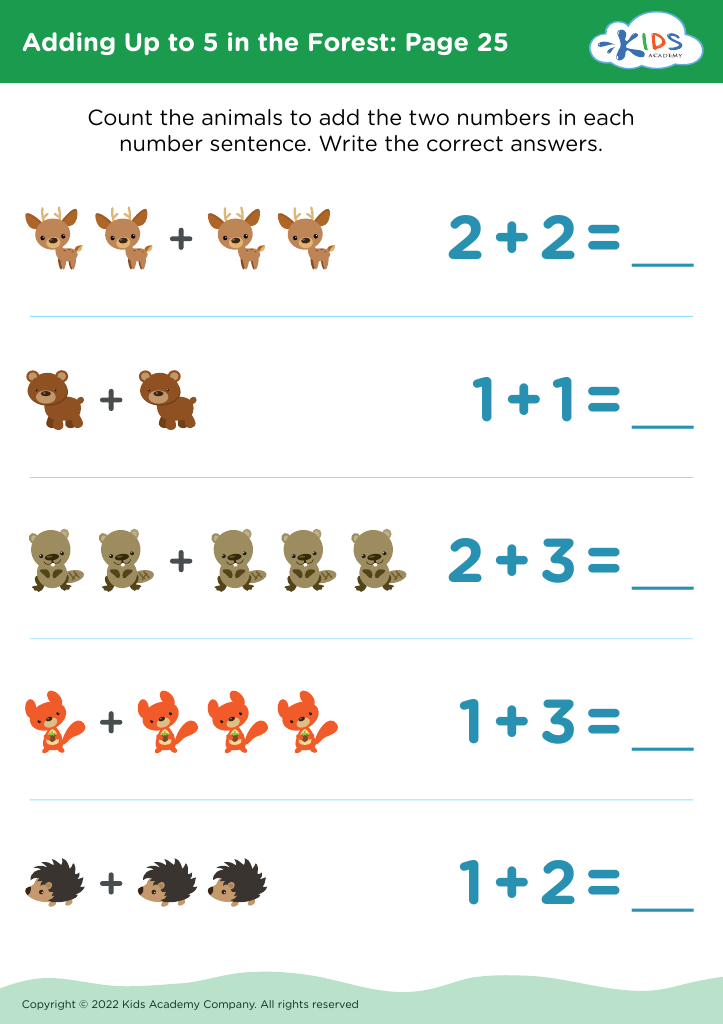
Adding Up to 5 in the Forest: Page 25
Worksheet
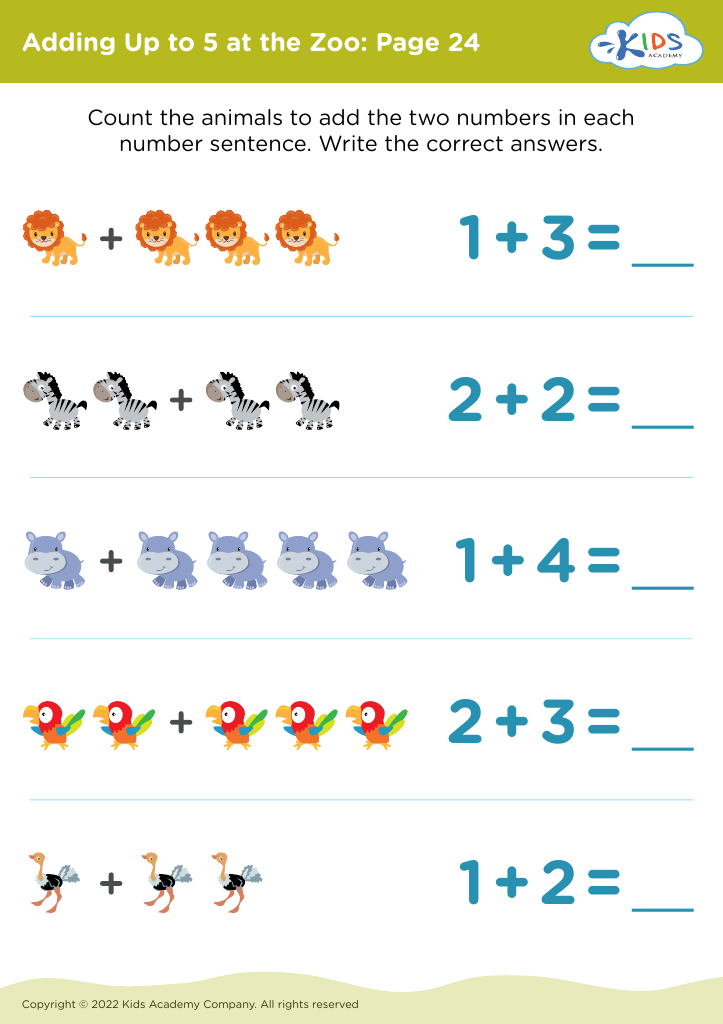
Adding Up to 5 at the Zoo: Page 24
Worksheet
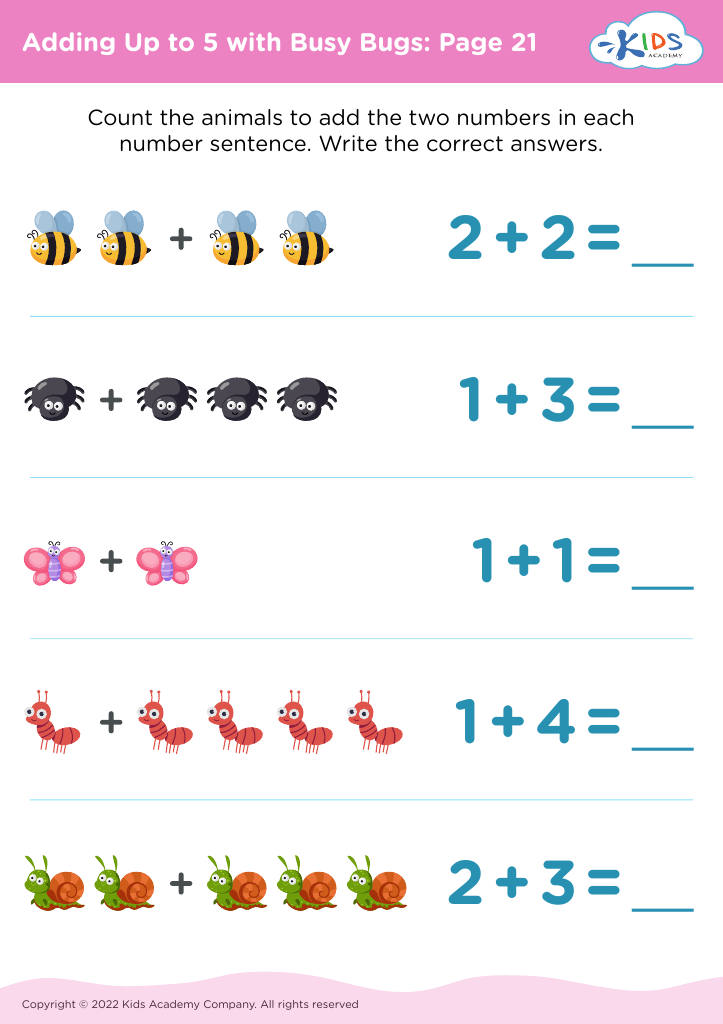
Adding Up to 5 with Busy Bugs: Page 21
Worksheet
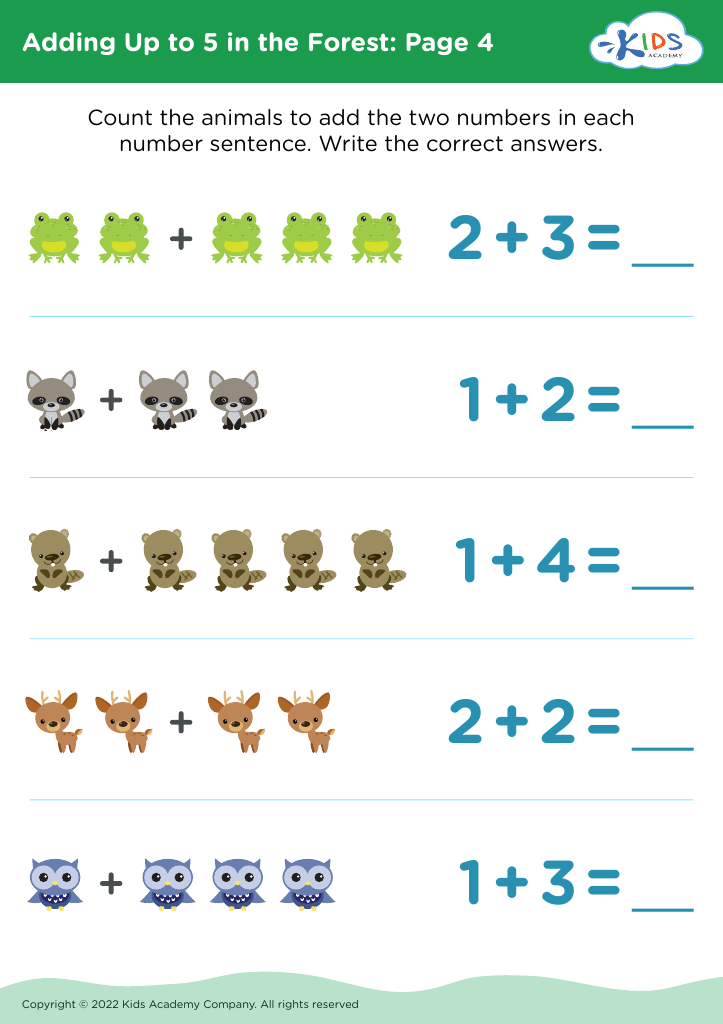
Adding Up to 5 in the Forest: Page 4
Worksheet
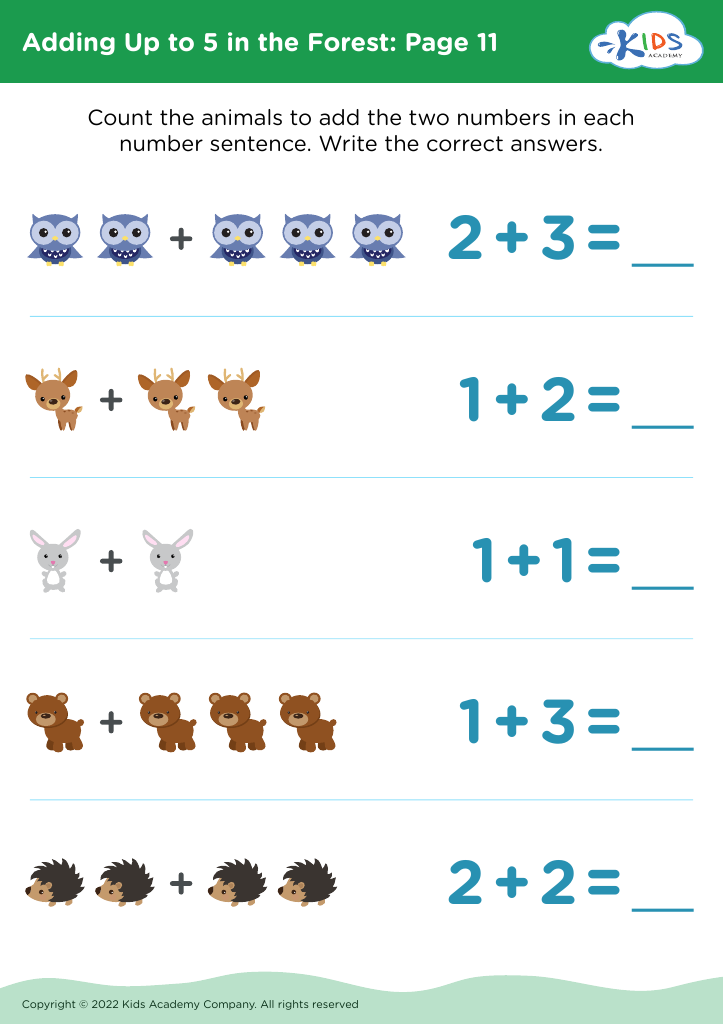
Adding Up to 5 in the Forest: Page 11
Worksheet
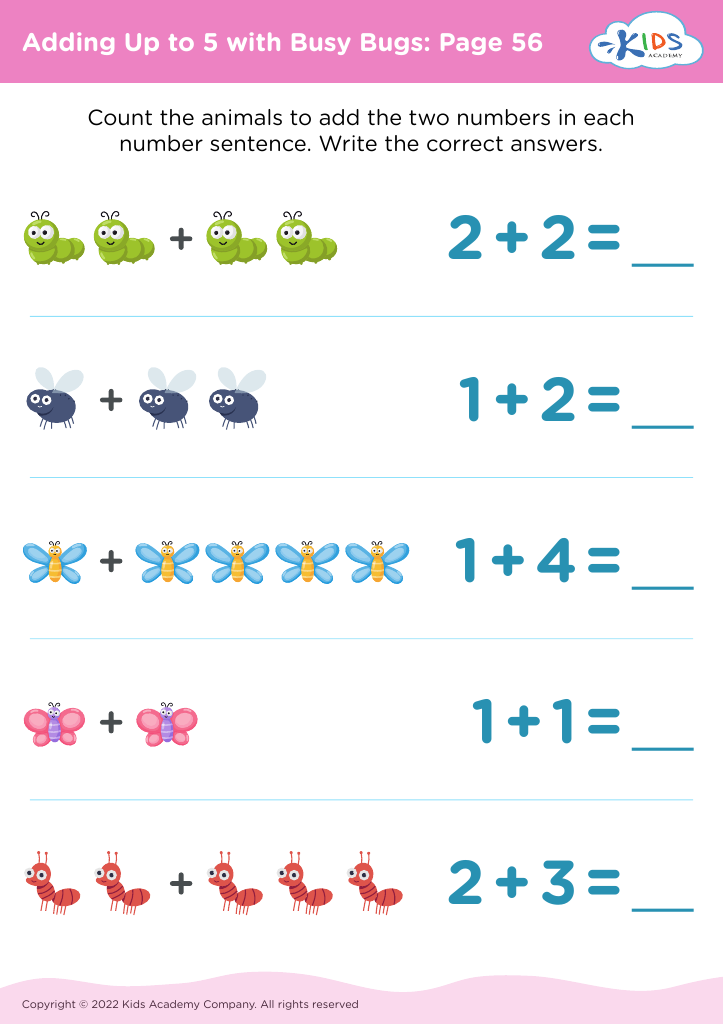
Adding Up to 5 with Busy Bugs: Page 56
Worksheet
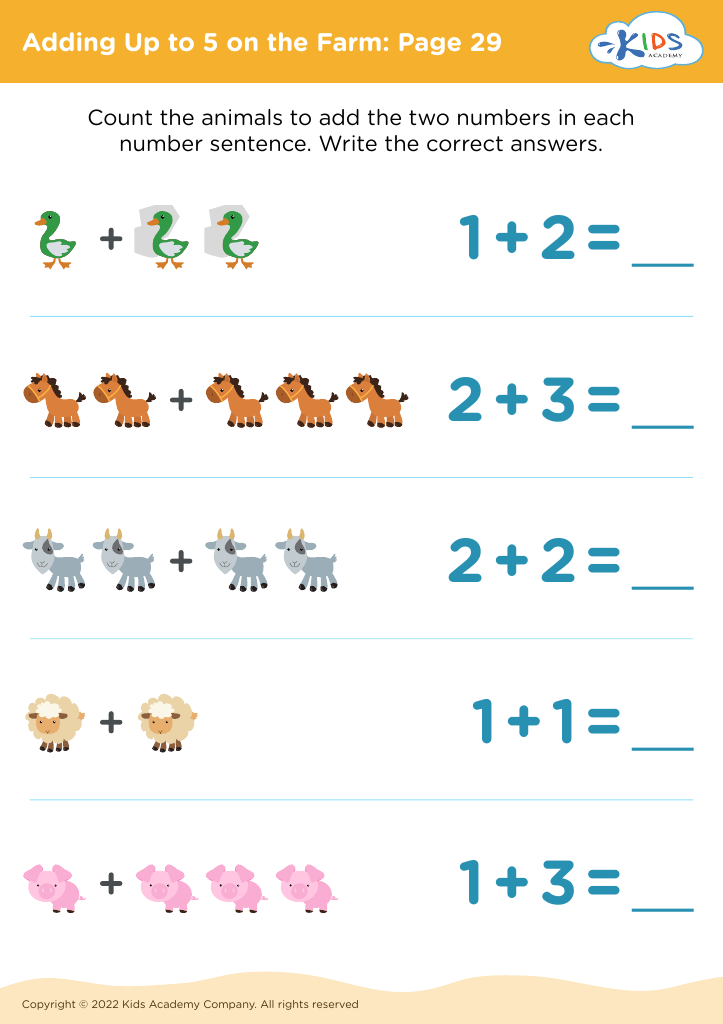
Adding Up to 5 on the Farm: Page 29
Worksheet
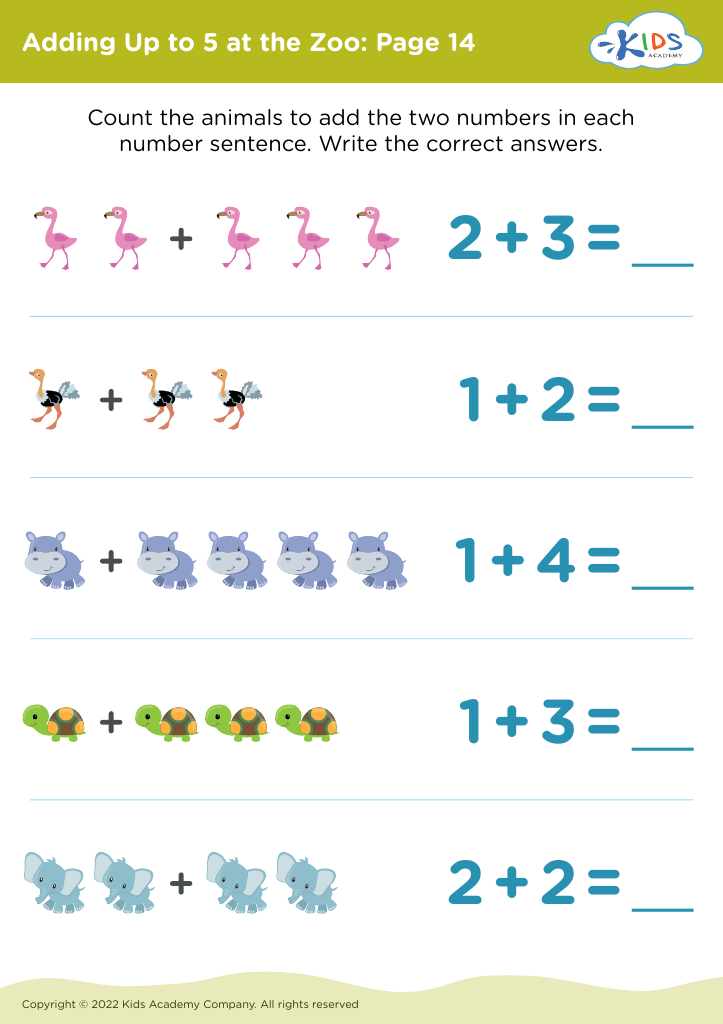
Adding Up to 5 at the Zoo: Page 14
Worksheet


Counting practice and adding up to 5 are crucial foundational skills for 4-year-olds. Engaging in these numerical activities helps children develop early math competencies, which are essential for later academic success. At this age, cognitive skills are rapidly evolving, and simple counting lays the groundwork for understanding more complex concepts such as addition, subtraction, and number relationships.

Parents and teachers should prioritize counting practice because it fosters not only numerical skills but also enhances critical thinking and problem-solving abilities. When children practice counting and adding, they learn to recognize patterns, understand quantities, and make comparisons, skills that extend beyond math into everyday life and future learning.

Moreover, engaging in counting activities builds a child's confidence in their abilities and enriches their language through mathematical vocabulary. These practices can also reinforce fine motor skills through hands-on activities, such as using objects or finger counting, making learning multifaceted and interactive.

Encouraging counting adds a fun and engaging aspect to learning, as children enjoy playful interactions with numbers through games and songs. By valuing this early practice, parents and teachers can set a strong foundation for children's lifelong mathematical understanding and enjoyment.