
Following instructions Adding Up to 5 Worksheets for 4-Year-Olds
3 filtered results
Difficulty Level
Grade
Age
-
From - To
Subject
Activity
Standards
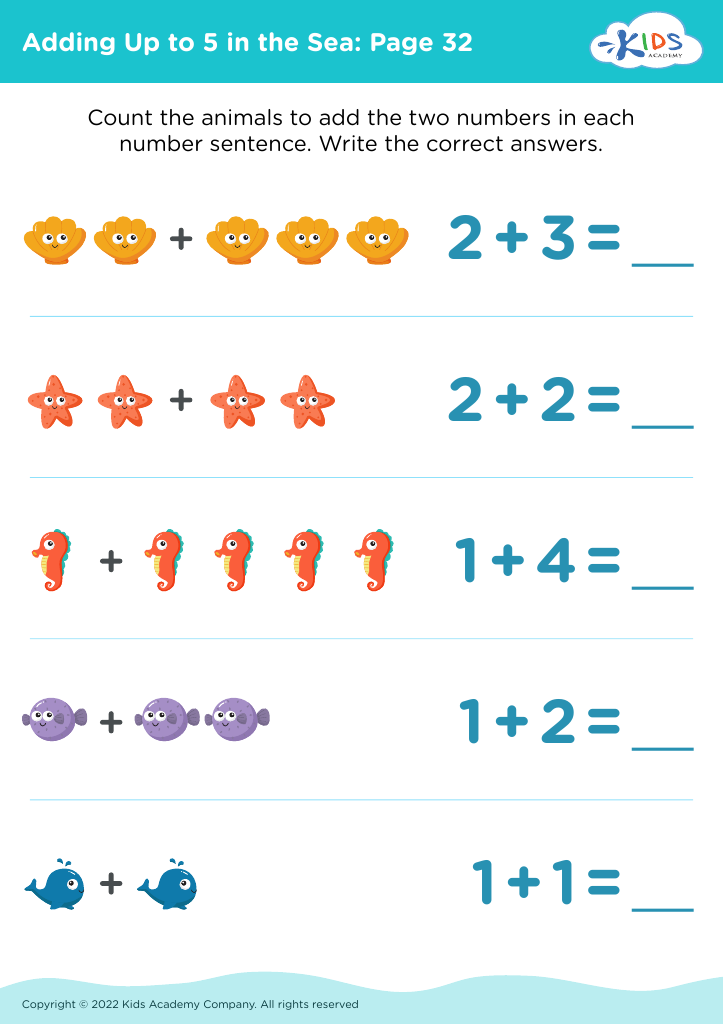
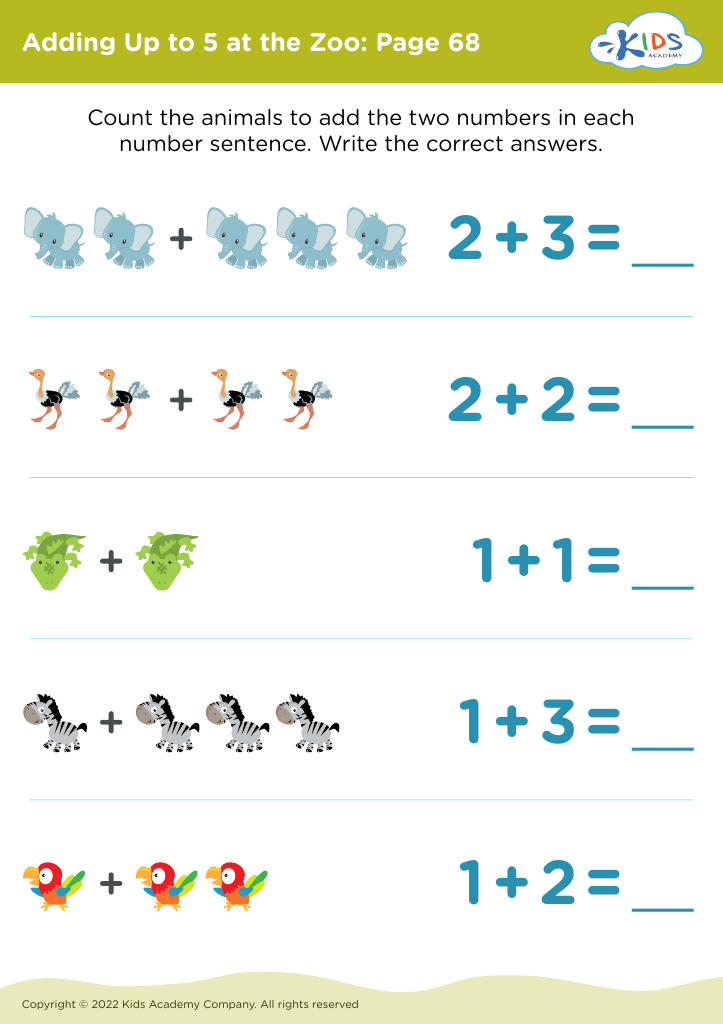
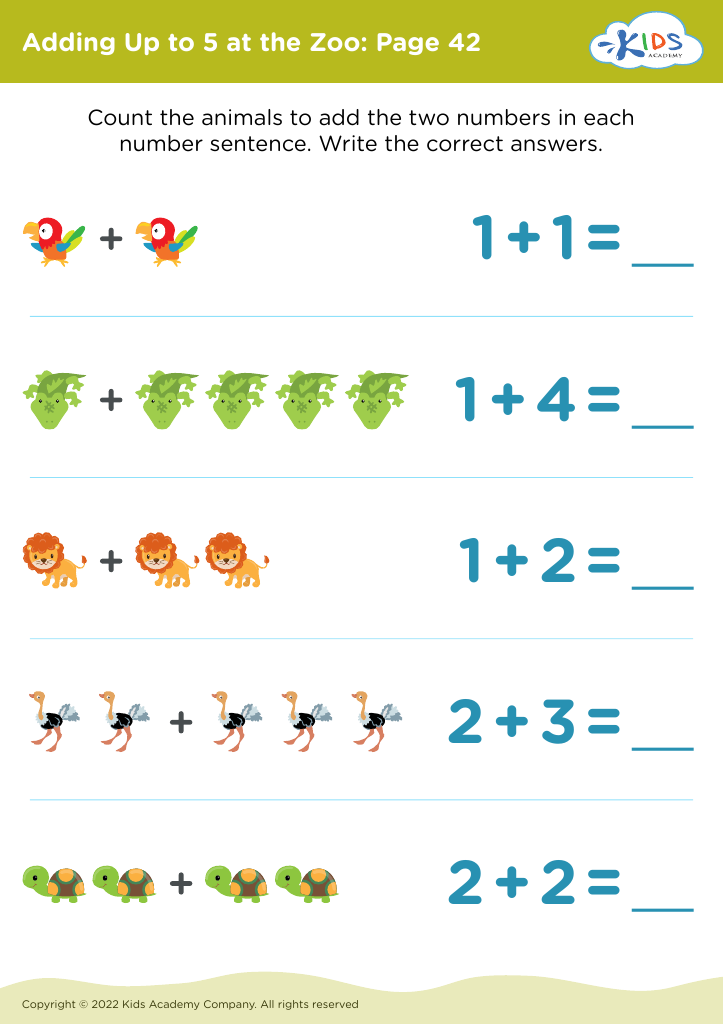
Introducing our "Following Instructions: Adding Up to 5 Worksheets for 4-Year-Olds" – a delightful resource to kickstart your child's early math journey! Designed to promote fundamental skills, these printable activities seamlessly blend learning with fun. Through guided practice, children will enhance their ability to follow directions, recognize numbers, and perform basic addition within 5. Engaging visuals and simple tasks ensure they stay motivated and excited about learning. Perfectly tailored for preschoolers, these worksheets support cognitive development and lay a strong foundation for future math success. Watch your little one's confidence soar as they master essential early math concepts!
Favorites
With answer key
Interactive
Join Kids Academy for Free
Who is primarily going to use this learning content?


%20(1).jpg)





Parents and teachers should pay close attention when guiding 4-year-olds to follow instructions and add up to 5 because these skills lay the groundwork for crucial cognitive and social development. Following instructions is fundamental for children’s learning processes. It teaches them to listen attentively, understand sequential steps, and execute tasks correctly, which fosters discipline and orderly behavior. These abilities are crucial at home, in school, and eventually in the workplace. Following instructions also nurtures patience and focus, vital components of self-regulation and academic success.
Additionally, teaching kids to add numbers up to 5 at this age is significant for their early numeracy skills. It introduces them to foundational math concepts, such as counting, recognizing numbers, and understanding basic arithmetic relationships. These skills are the building blocks for more advanced mathematical concepts and problem-solving abilities. Being proficient in early math also boosts confidence and encourages a positive attitude toward future learning.
Integrating following instructions and basic math into everyday activities equips children with essential skills for lifelong learning. Parents and teachers play a pivotal role in making these initial learning experiences engaging and positive, setting the stage for each child's academic and social success.








