Math problem-solving Adding Up to 5 Worksheets for 4-Year-Olds
3 filtered results
-
From - To
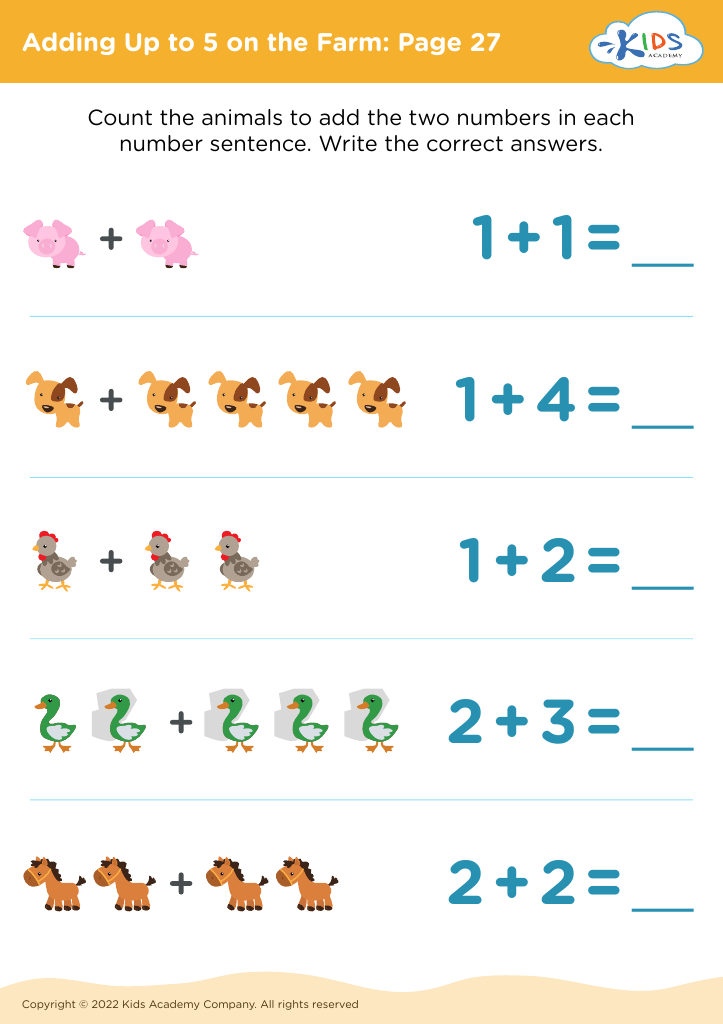
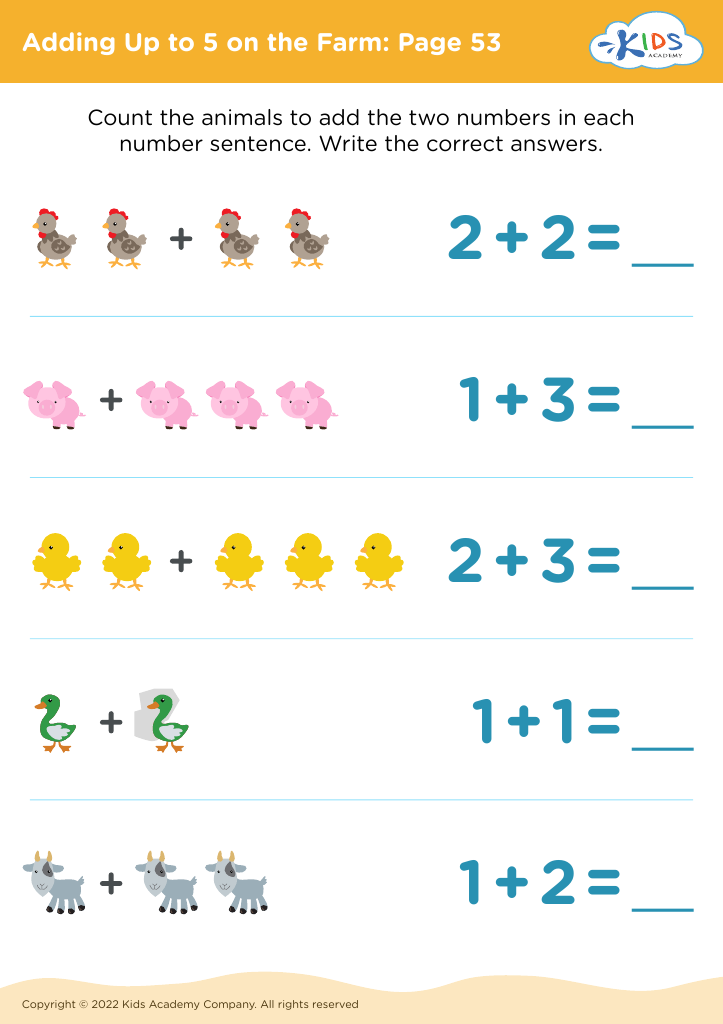
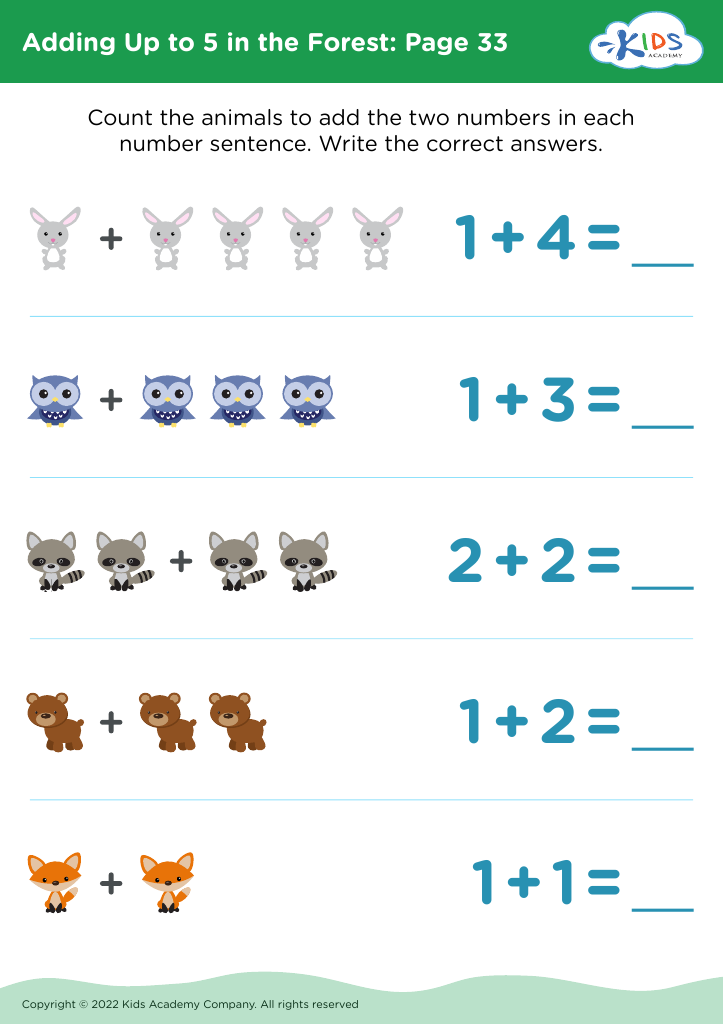
Boost your little one's math prowess with our "Math Problem-Solving Adding Up to 5 Worksheets" tailored for 4-year-olds! These captivating worksheets, available at Kids Academy, are designed to make learning basic math fun and engaging. They feature vibrant, kid-friendly illustrations and interactive problem-solving activities that strengthen math skills while sparking curiosity. Your child will practice adding numbers up to 5, enhancing their numerical fluency, and building a solid foundation for future math success. Perfect for preschoolers, these worksheets are an excellent tool for parents and educators aiming to support early math development in an enjoyable way.






%20(1).jpg)

Fostering math problem-solving skills, including adding up to 5, in 4-year-olds is crucial for several reasons related to cognitive, social, and academic development. Early exposure to simple addition lays a foundation for numeracy, enhancing a child's understanding of numbers and their relationships, which is essential for more complex mathematical concepts taught in later years. By solving addition problems, children also hone their critical thinking and problem-solving skills, which are transferable to various areas of learning and everyday life.
Cognitively, engaging in math exercises develops a young child's memory, attention span, and logical reasoning. Moreover, introducing math at a young age helps identify and support students who might need extra help, fostering a positive attitude towards learning and reducing future anxiety about the subject.
Socially, cooperative problem-solving activities can promote teamwork and communication skills, as young children often work with peers or adults during such tasks. As they succeed in solving problems, their confidence and self-esteem grow, making them more comfortable and willing to participate in classroom activities.
In essence, focusing on simple addition for 4-year-olds is an investment in their comprehensive development, preparing them for future academic challenges and providing the skills needed to navigate everyday situations involving numbers.








