Filters

349 filtered results

Clear all filters
Favorites
With answer key
Interactive

349 filtered results

Difficulty Level

Grade


Check out this FREE Trial Lesson on Adding Up to 5 for age 4!

P

Favorites
With answer key
Interactive
  • 4
  • Number Recognition
  • Adding Up to 5
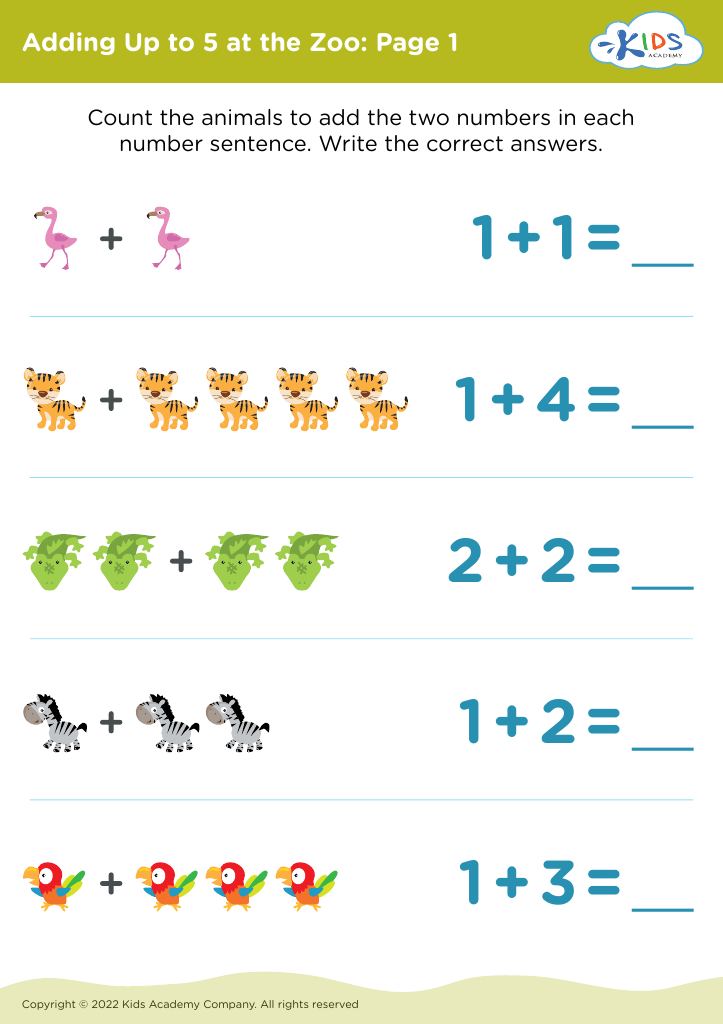
Adding Up to 5 at the Zoo: Page 1

Adding Up to 5 at the Zoo: Page 1

Adding Up to 5 at the Zoo: Page 1
Worksheet
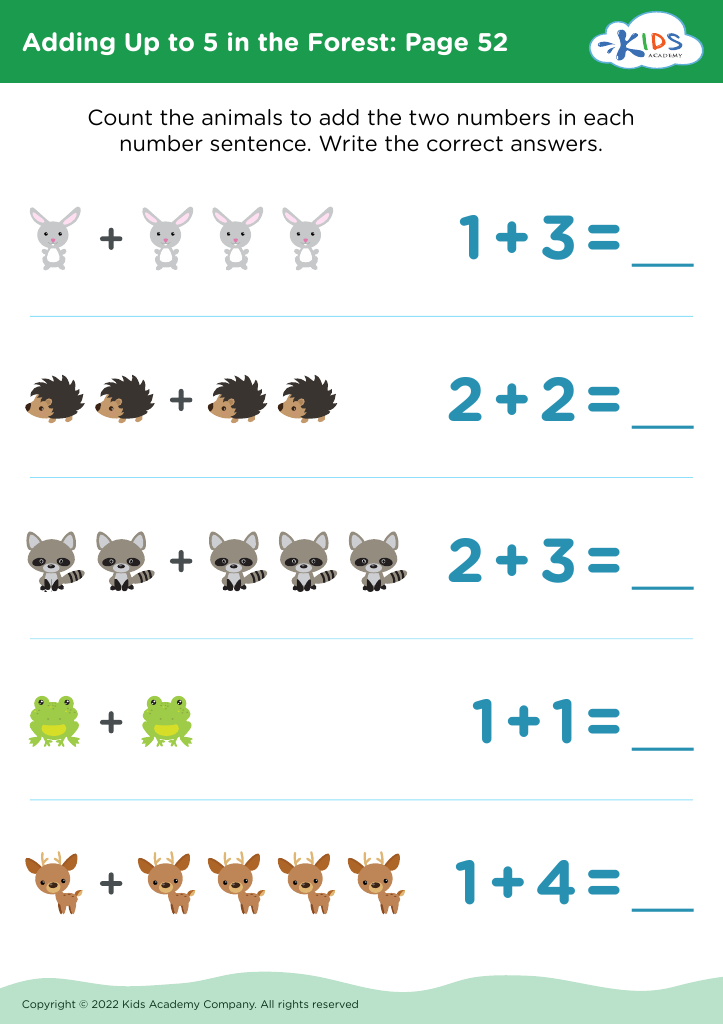
Adding Up to 5 in the Forest: Page 52
Worksheet
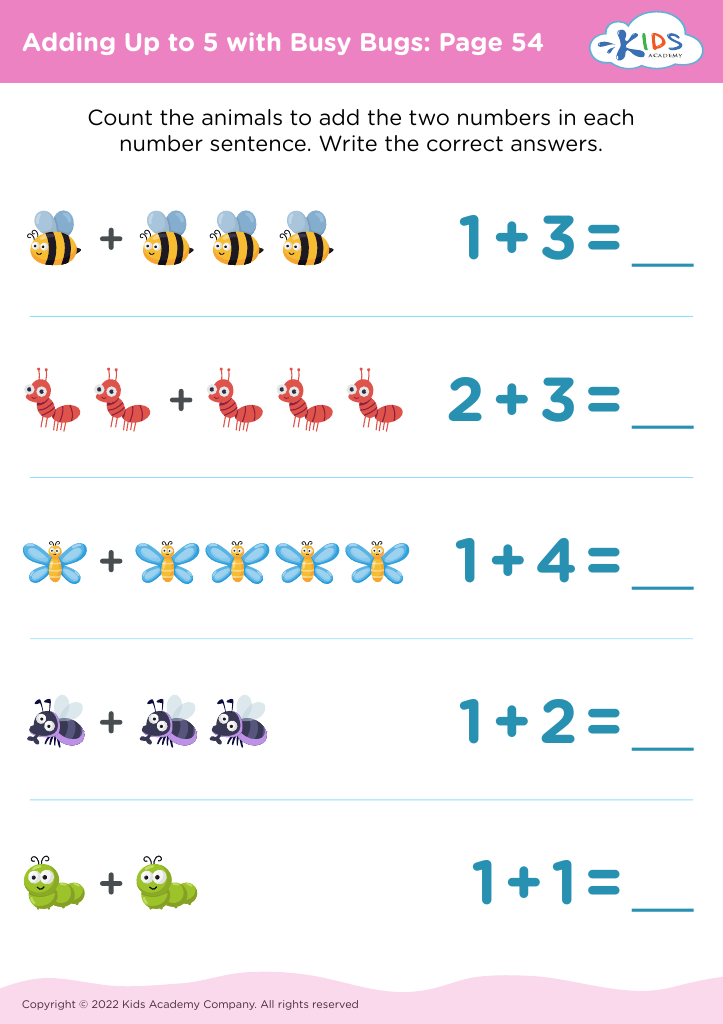
Adding Up to 5 with Busy Bugs: Page 54
Worksheet
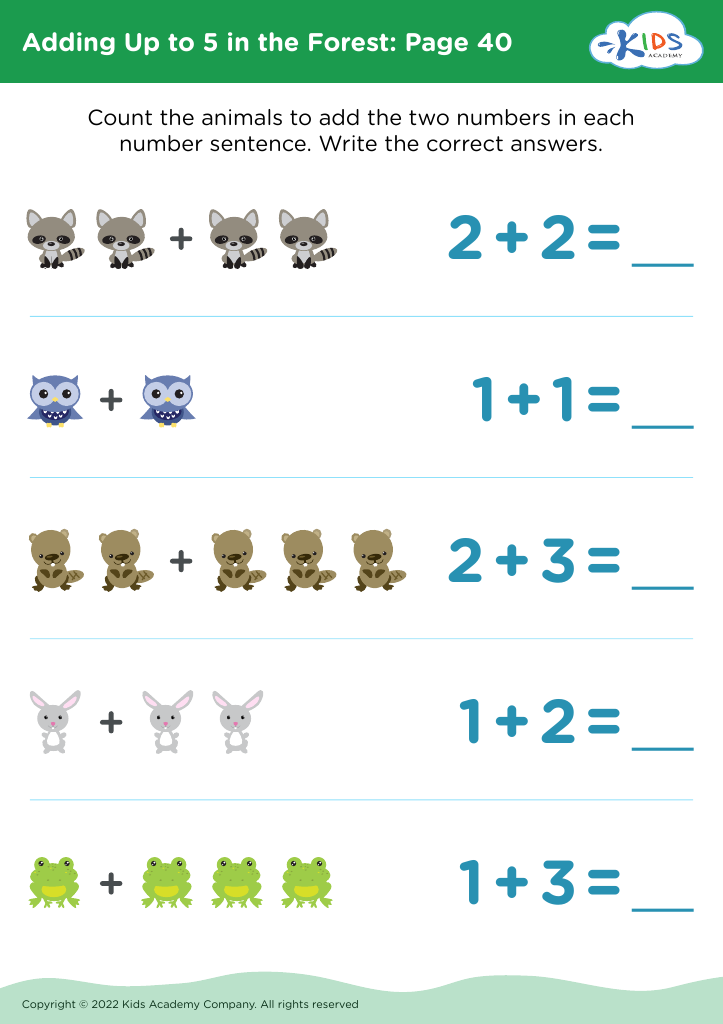
Adding Up to 5 in the Forest: Page 40
Worksheet
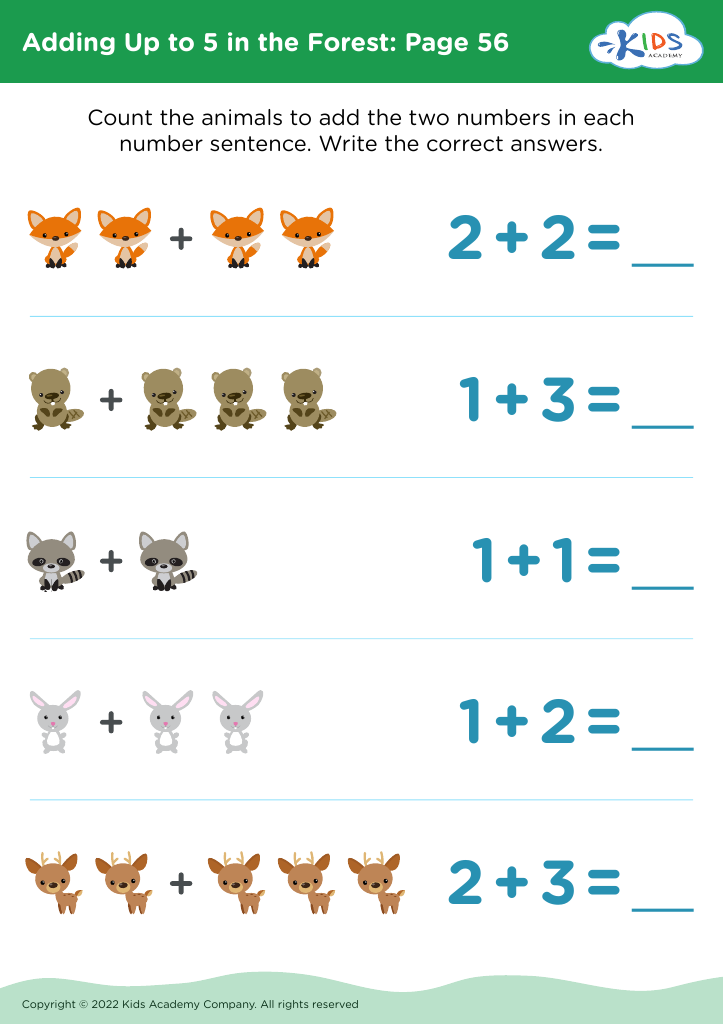
Adding Up to 5 in the Forest: Page 56
Worksheet
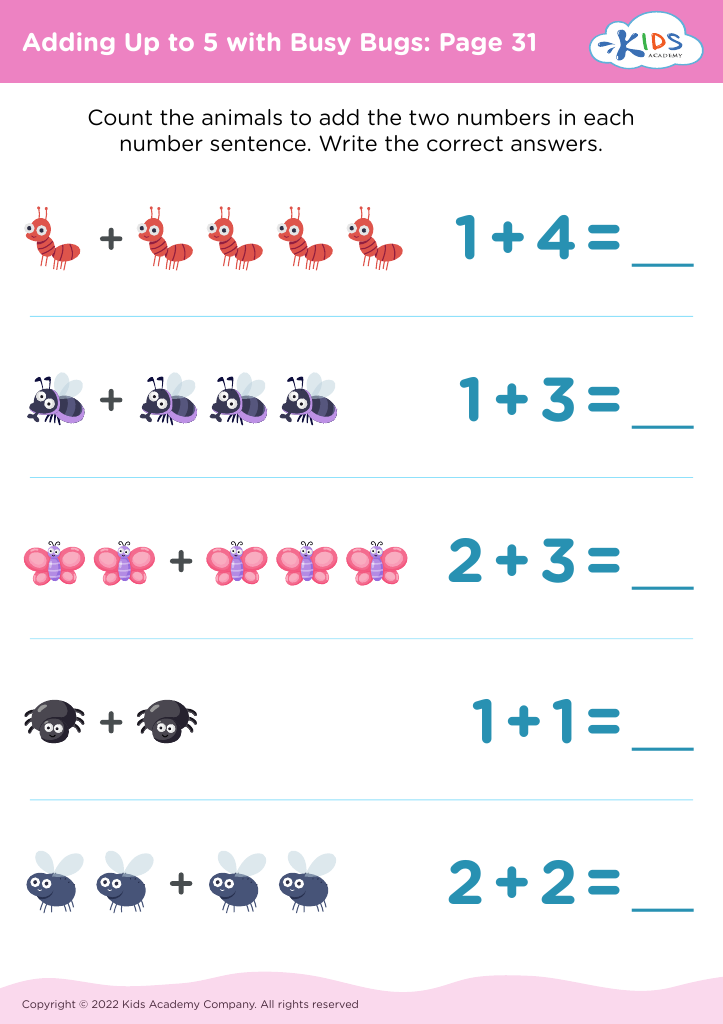
Adding Up to 5 with Busy Bugs: Page 31
Worksheet
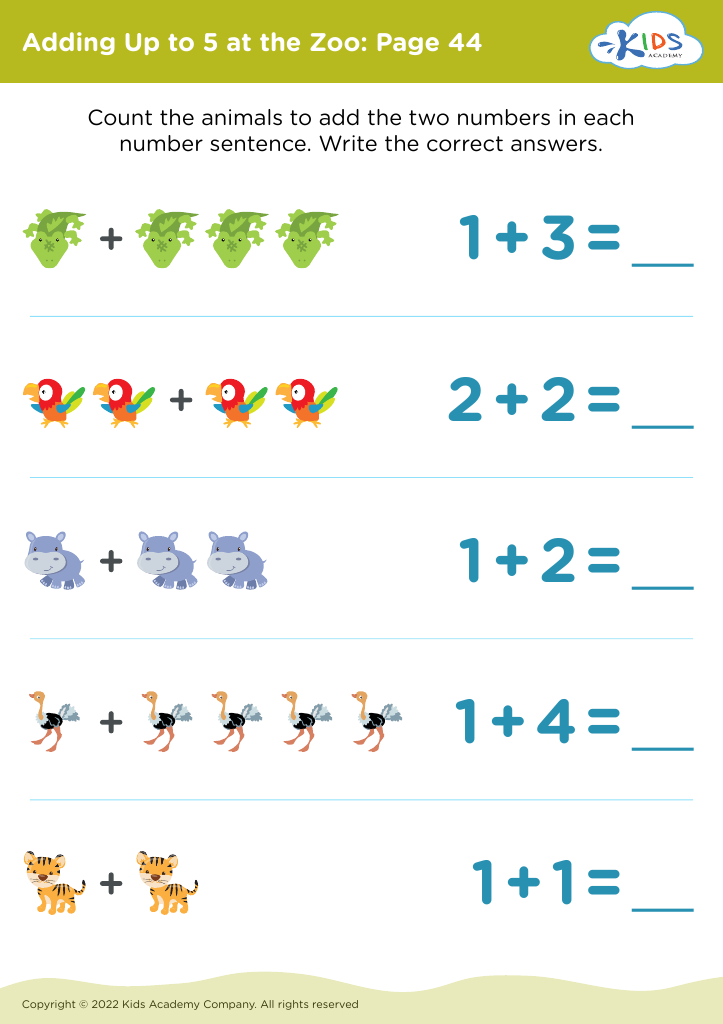
Adding Up to 5 at the Zoo: Page 44
Worksheet
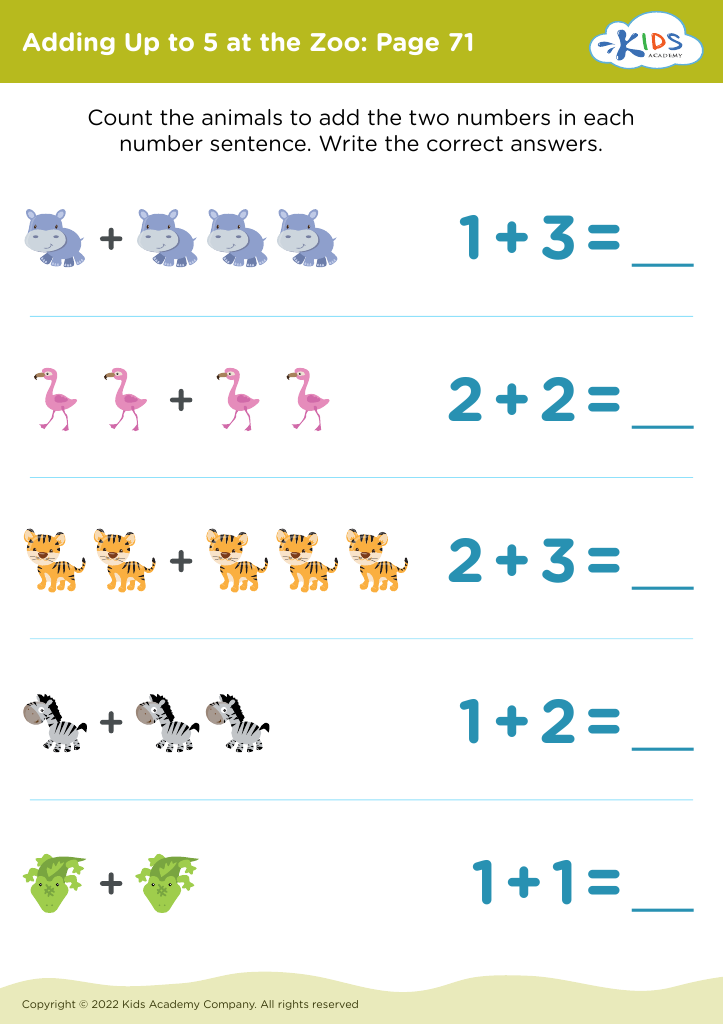
Adding Up to 5 at the Zoo: Page 71
Worksheet
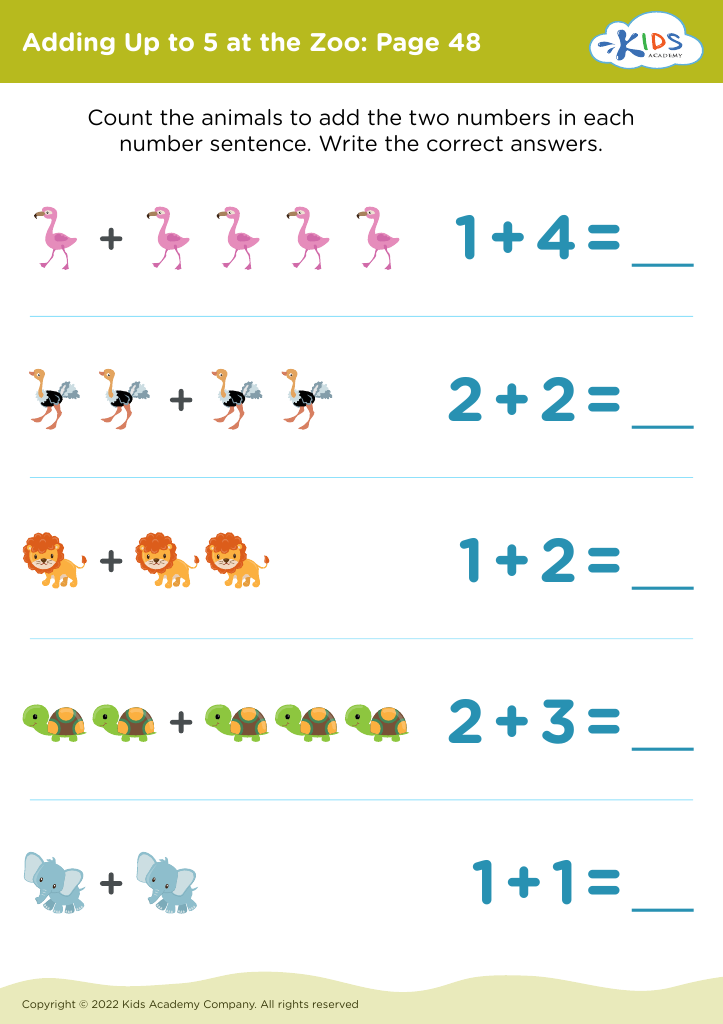
Adding Up to 5 at the Zoo: Page 48
Worksheet
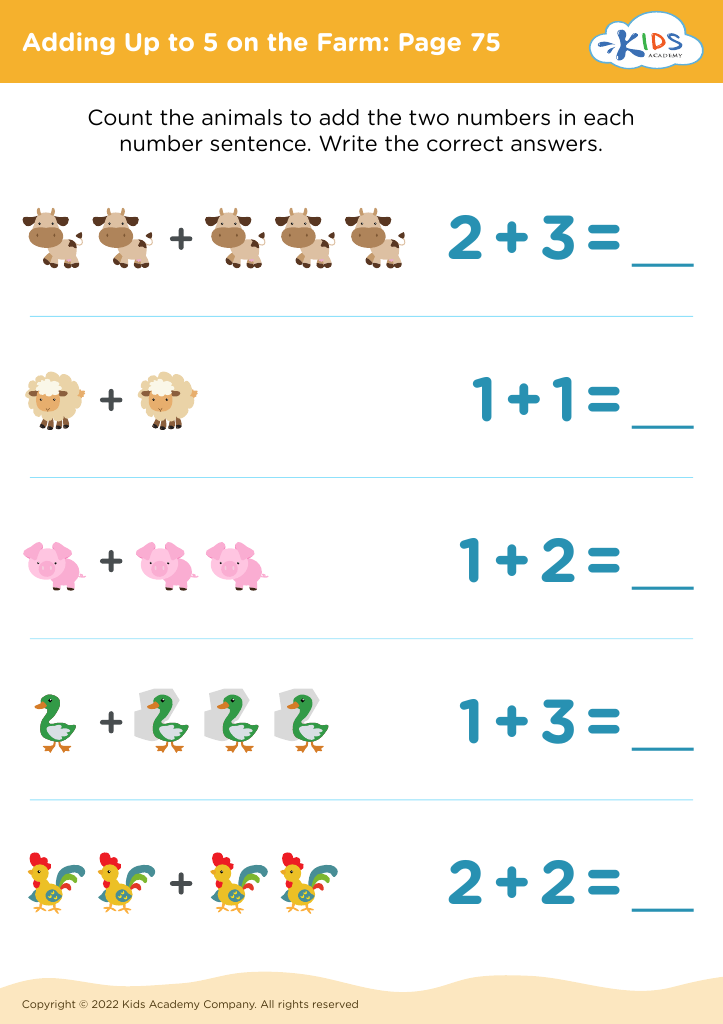
Adding Up to 5 on the Farm: Page 75
Worksheet
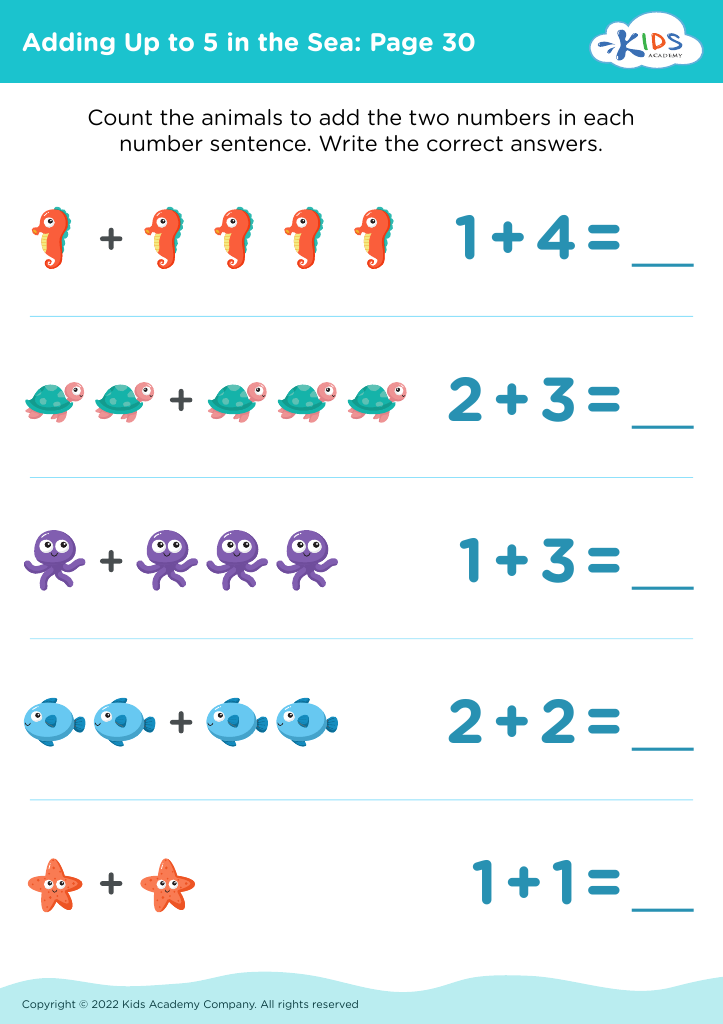
Adding Up to 5 in the Sea: Page 30
Worksheet
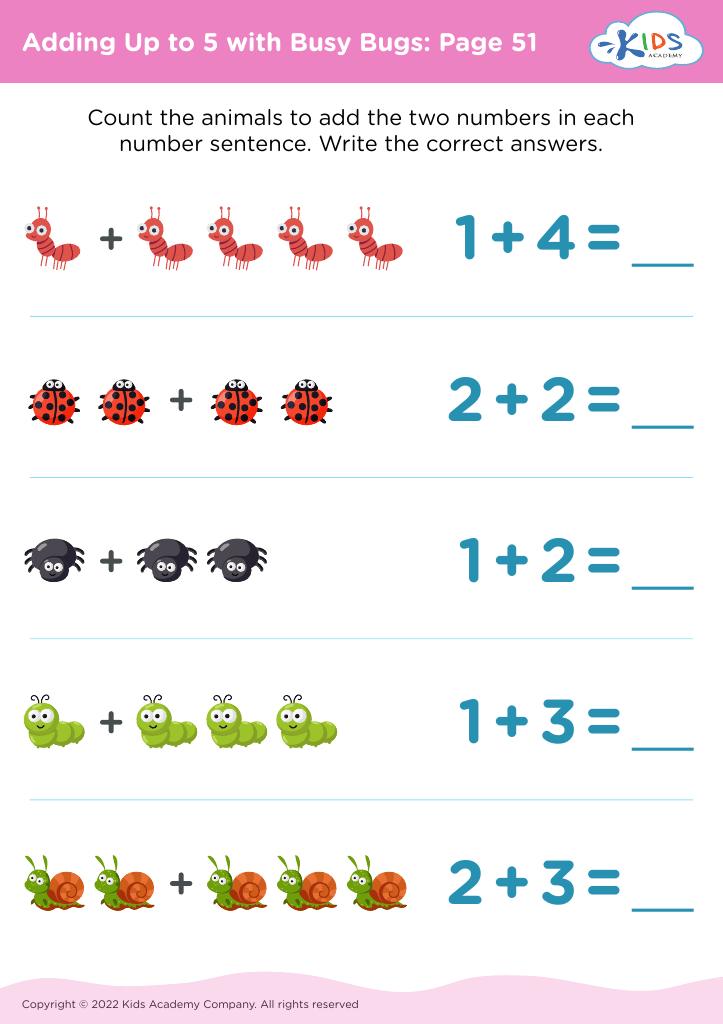
Adding Up to 5 with Busy Bugs: Page 51
Worksheet
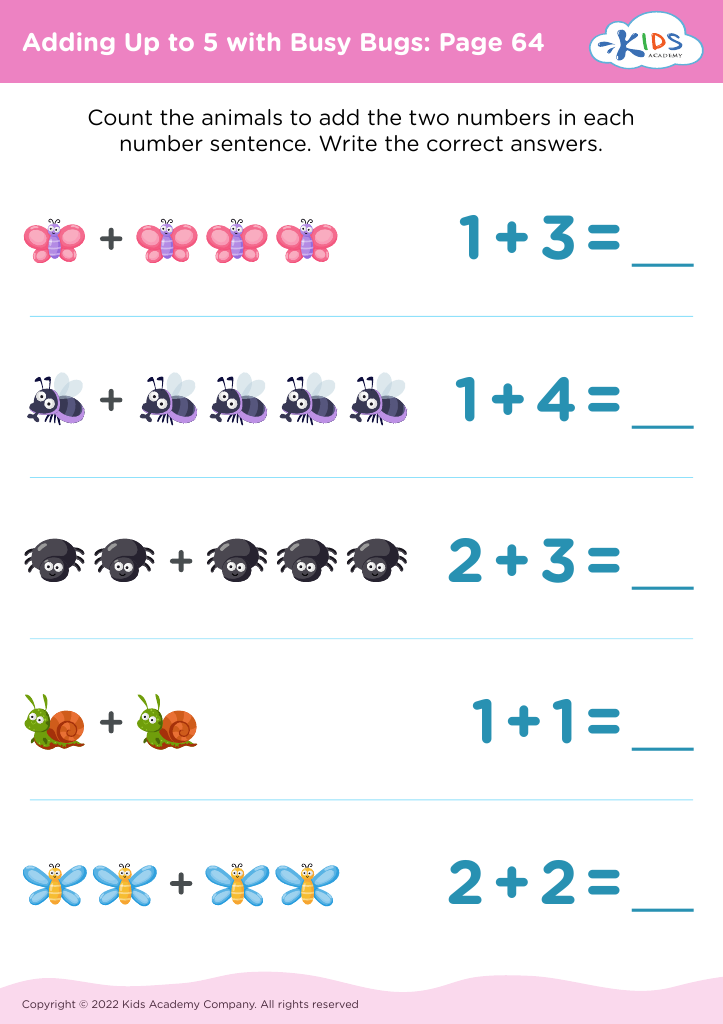
Adding Up to 5 with Busy Bugs: Page 64
Worksheet
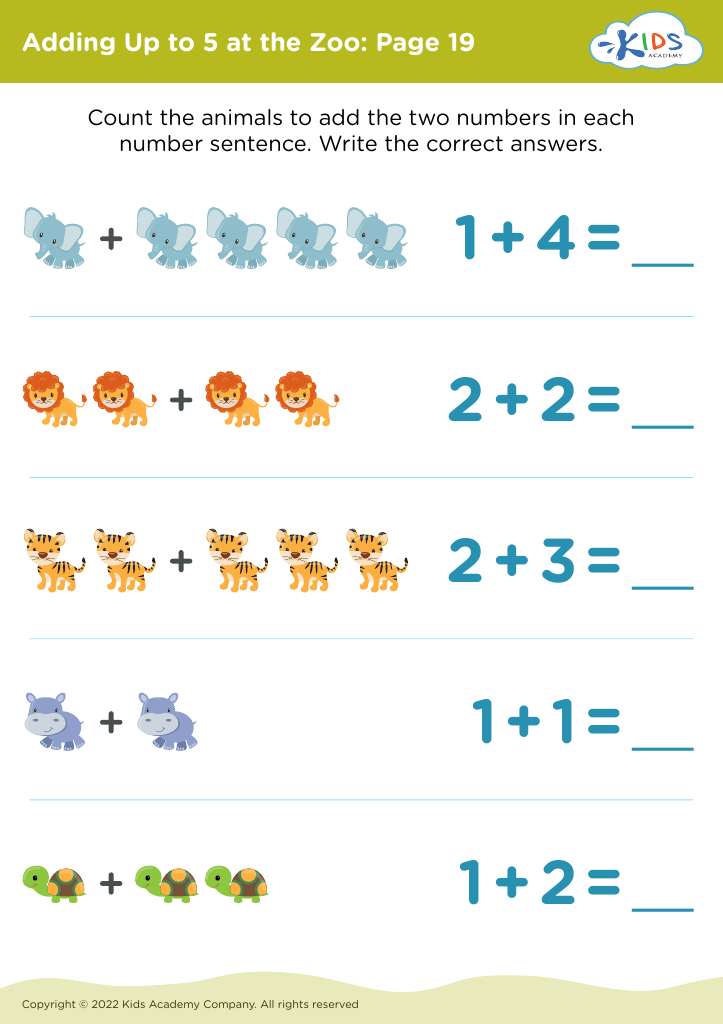
Adding Up to 5 at the Zoo: Page 19
Worksheet
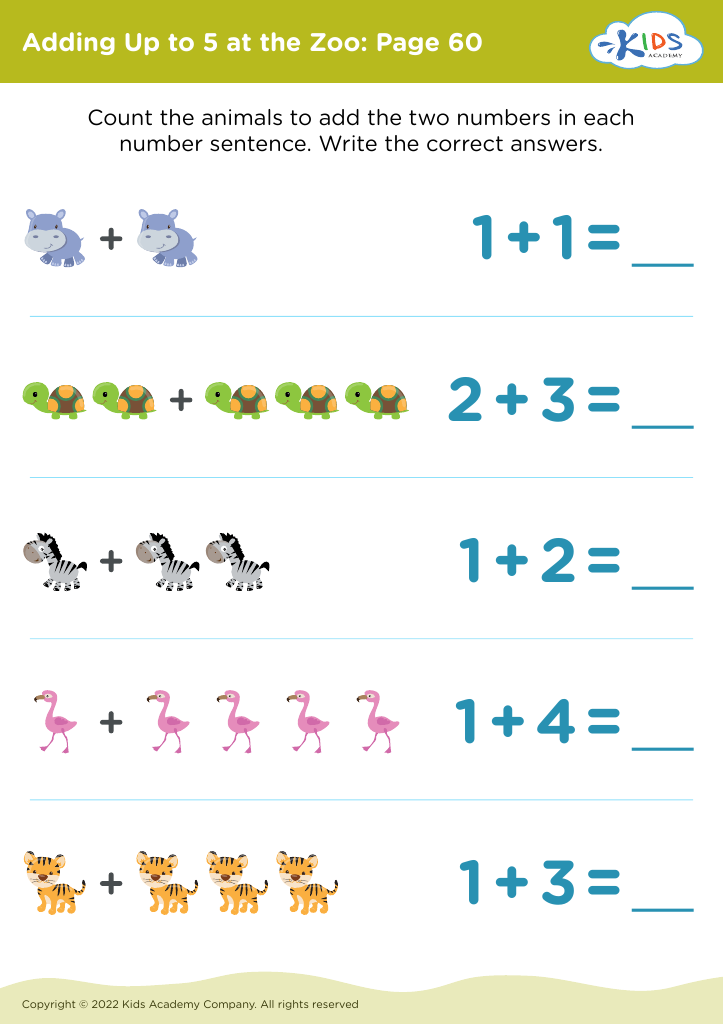
Adding Up to 5 at the Zoo: Page 60
Worksheet
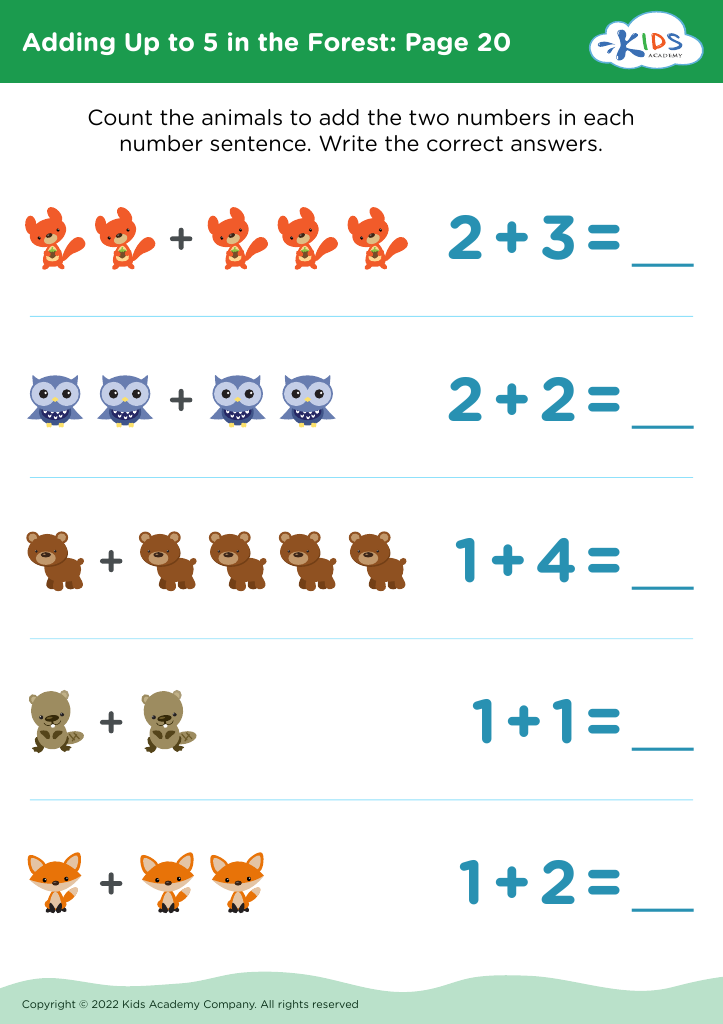
Adding Up to 5 in the Forest: Page 20
Worksheet
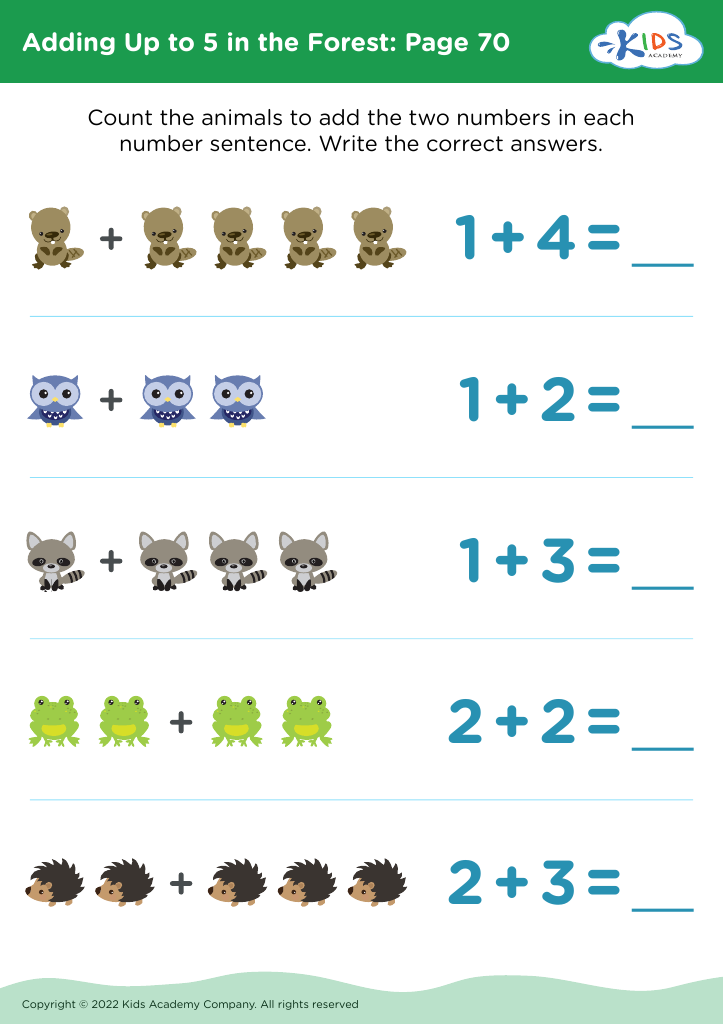
Adding Up to 5 in the Forest: Page 70
Worksheet
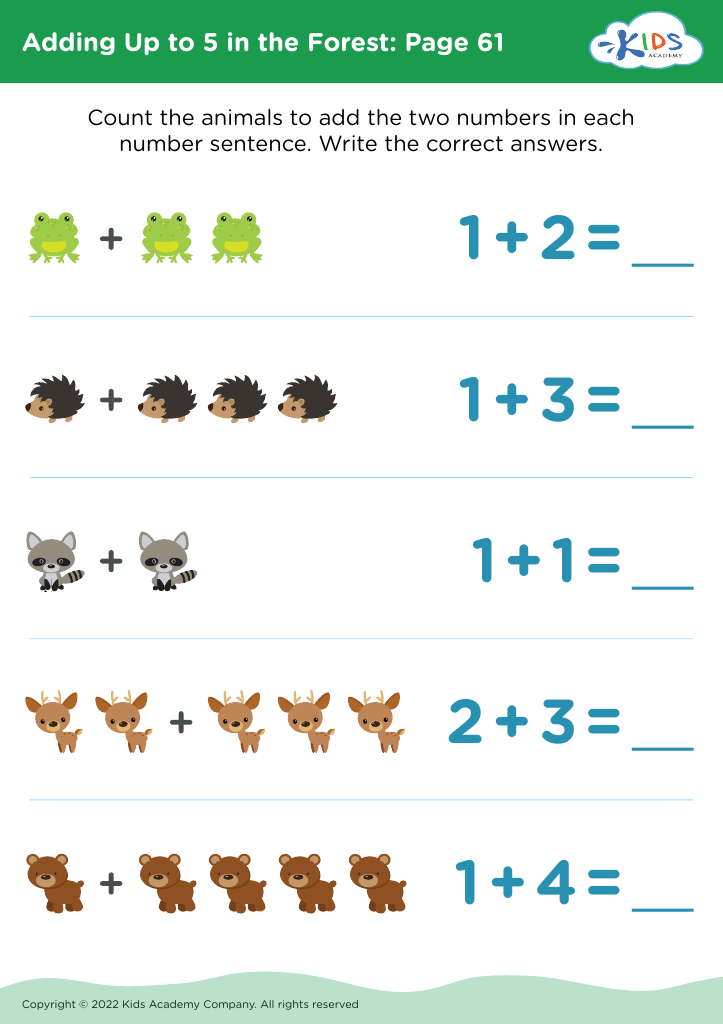
Adding Up to 5 in the Forest: Page 61
Worksheet
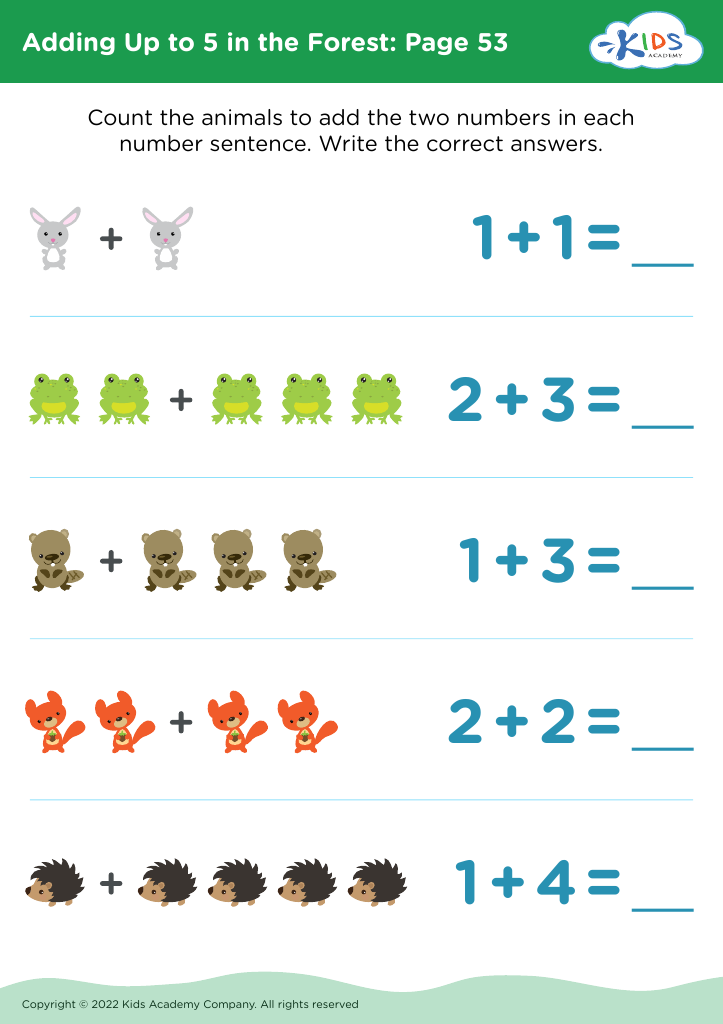
Adding Up to 5 in the Forest: Page 53
Worksheet
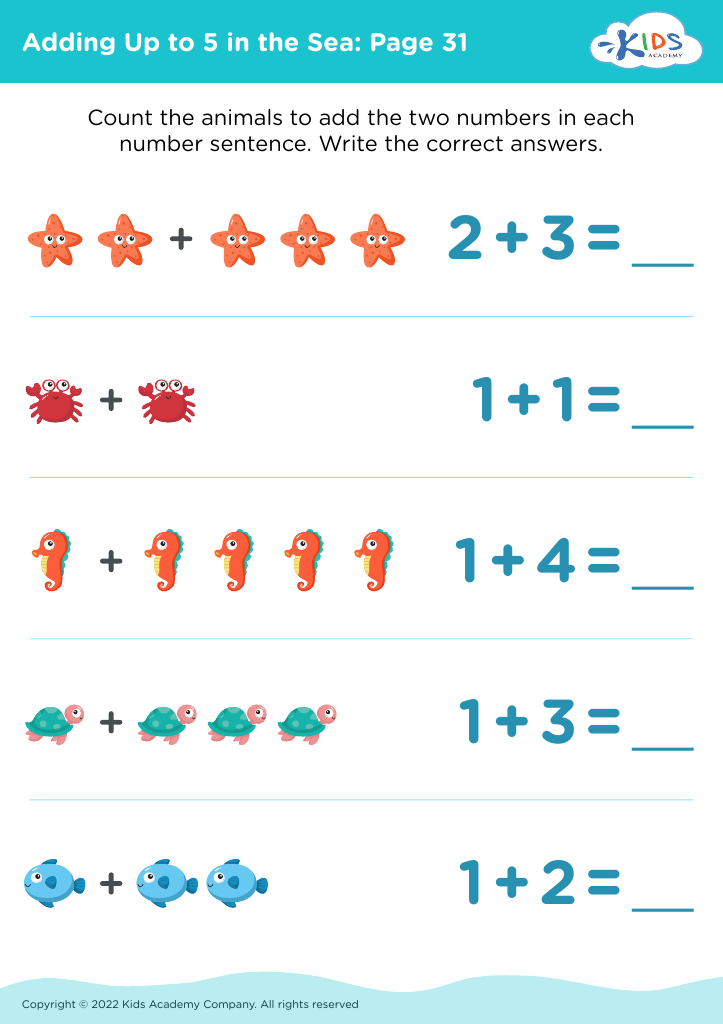
Adding Up to 5 in the Sea: Page 31
Worksheet
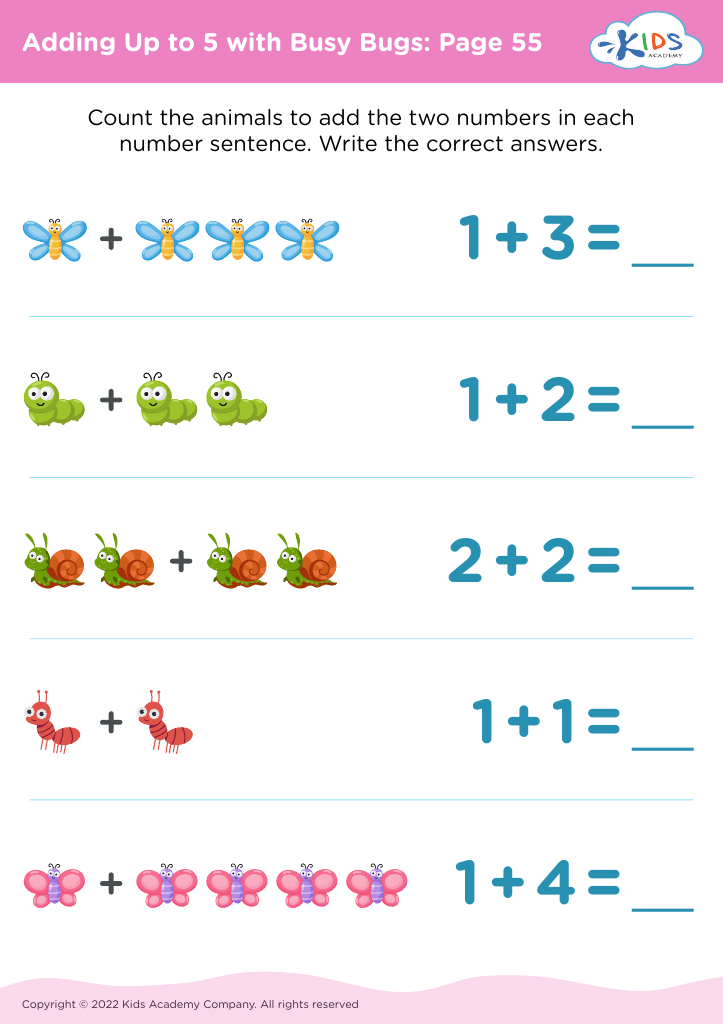
Adding Up to 5 with Busy Bugs: Page 55
Worksheet
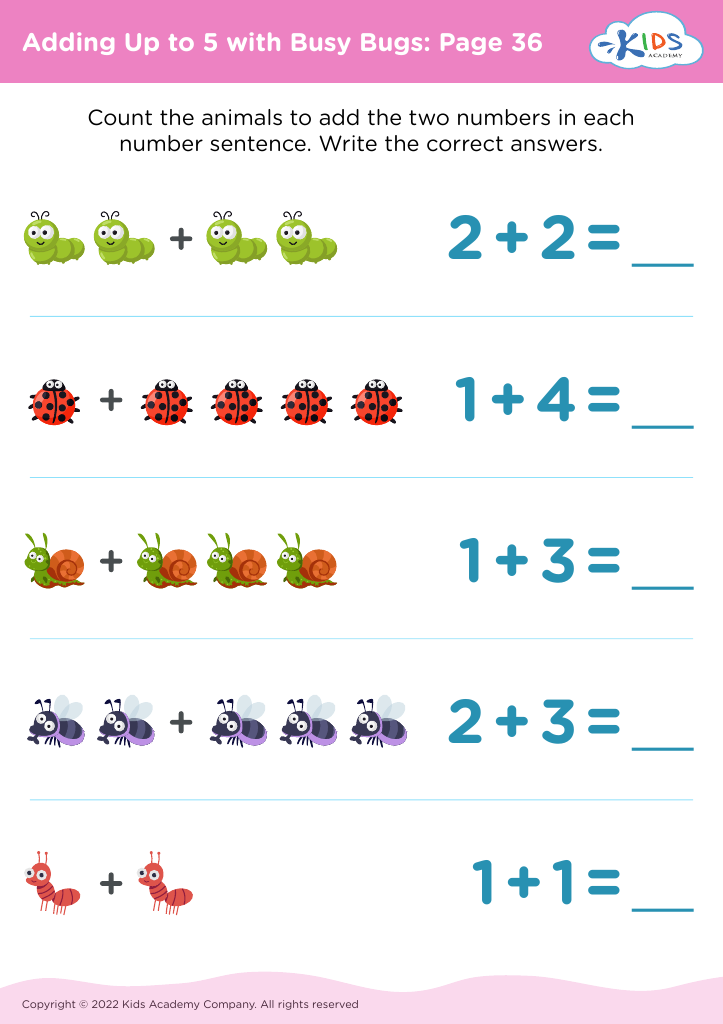
Adding Up to 5 with Busy Bugs: Page 36
Worksheet
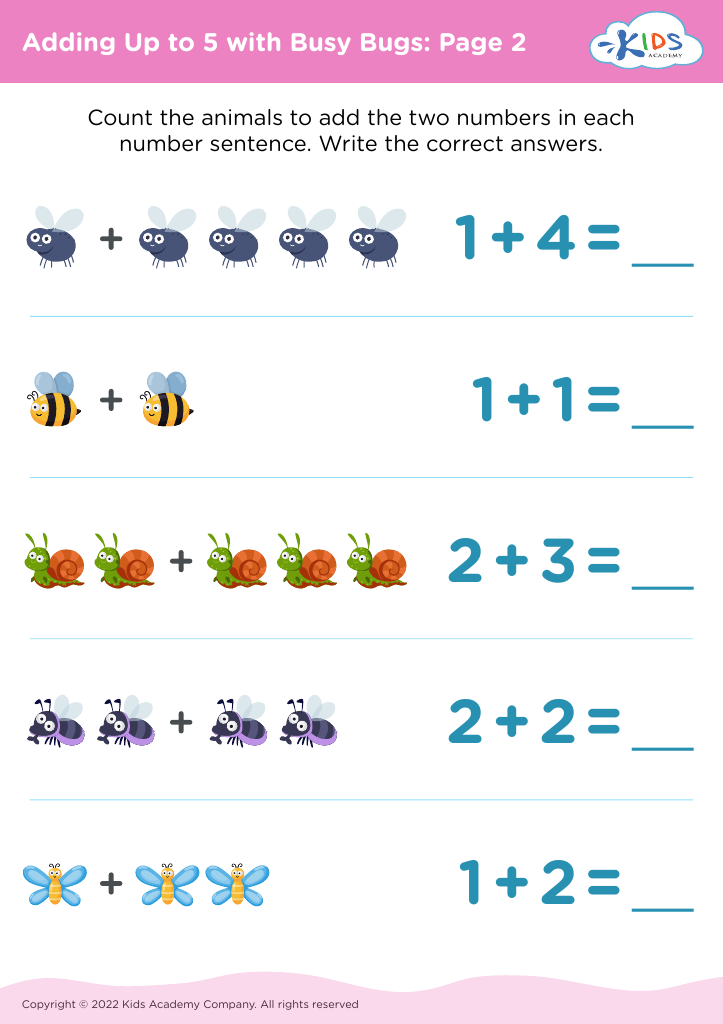
Adding Up to 5 with Busy Bugs: Page 2
Worksheet
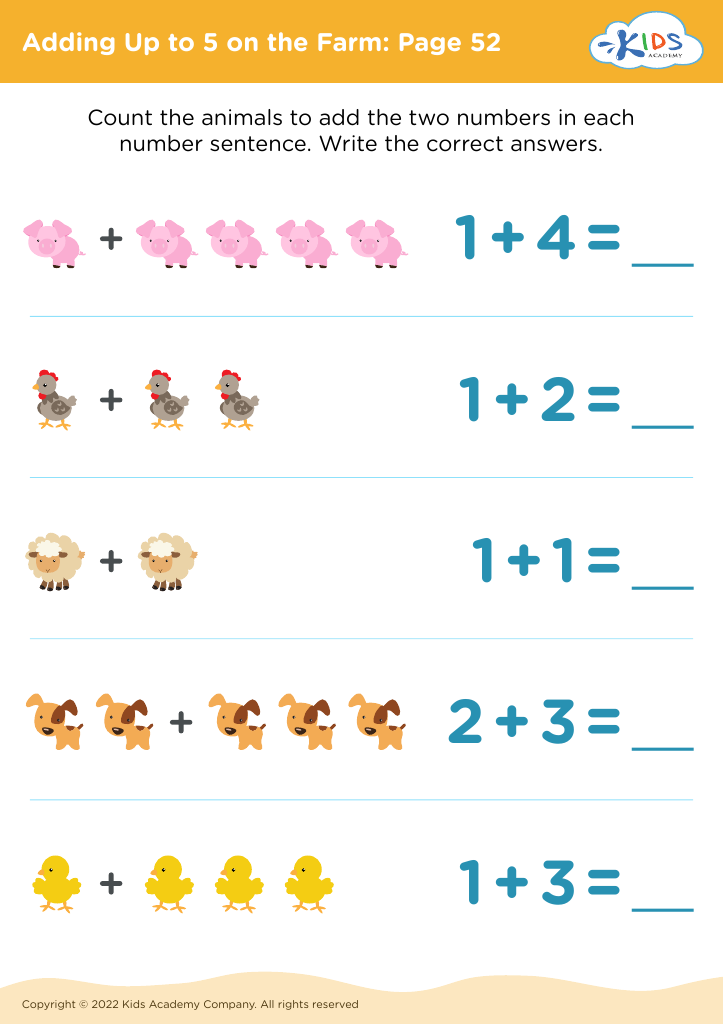
Adding Up to 5 on the Farm: Page 52
Worksheet


Number recognition and the ability to add up to 5 are foundational skills in early childhood education. For 4-year-olds, mastering these concepts is crucial for several reasons. Firstly, number recognition helps children develop a sense of numeracy, which is essential for learning more complex mathematical skills later on. Recognizing numbers lays the groundwork for counting, basic arithmetic, and understanding quantity, which are vital for everyday problem-solving.

Additionally, adding up to 5 encourages cognitive development by fostering critical thinking and problem-solving abilities. When children engage with simple addition, they learn to analyze and manipulate numbers, enhancing their logical reasoning skills. This early exposure also builds confidence in their ability to work with numbers, setting a positive attitude towards math in the future.

Moreover, these skills promote social interaction and cooperative play, as children often share and compare their mathematical insights with peers. Encouraging number recognition and simple addition in a playful, engaging manner can also strengthen the parent-child or teacher-child bond, making learning a collaborative experience. By prioritizing these early skills, parents and teachers help facilitate a solid foundation for academic success, nurturing a lifelong appreciation for learning, and mathematics in particular.