Sea creatures identification Adding Up to 5 Worksheets for 4-Year-Olds
3 filtered results
-
From - To
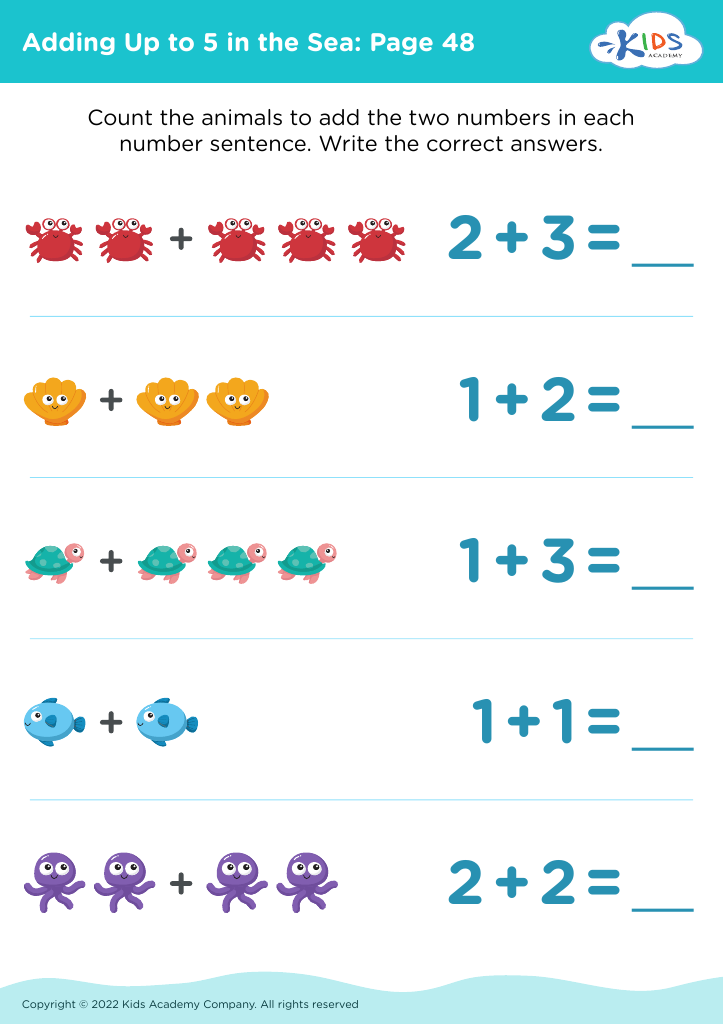
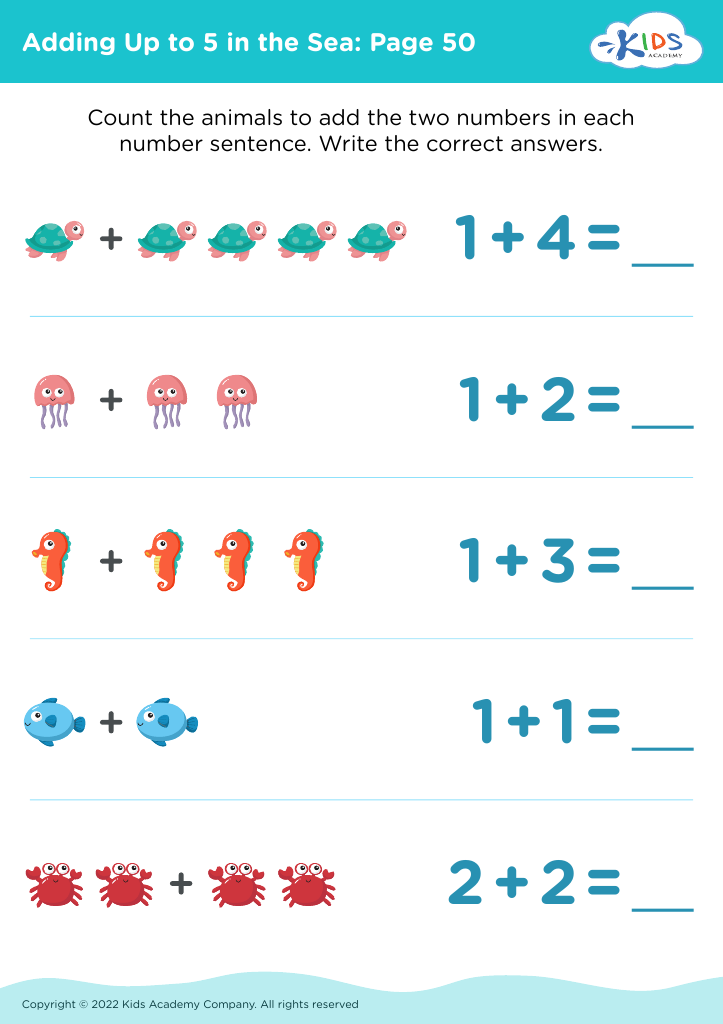
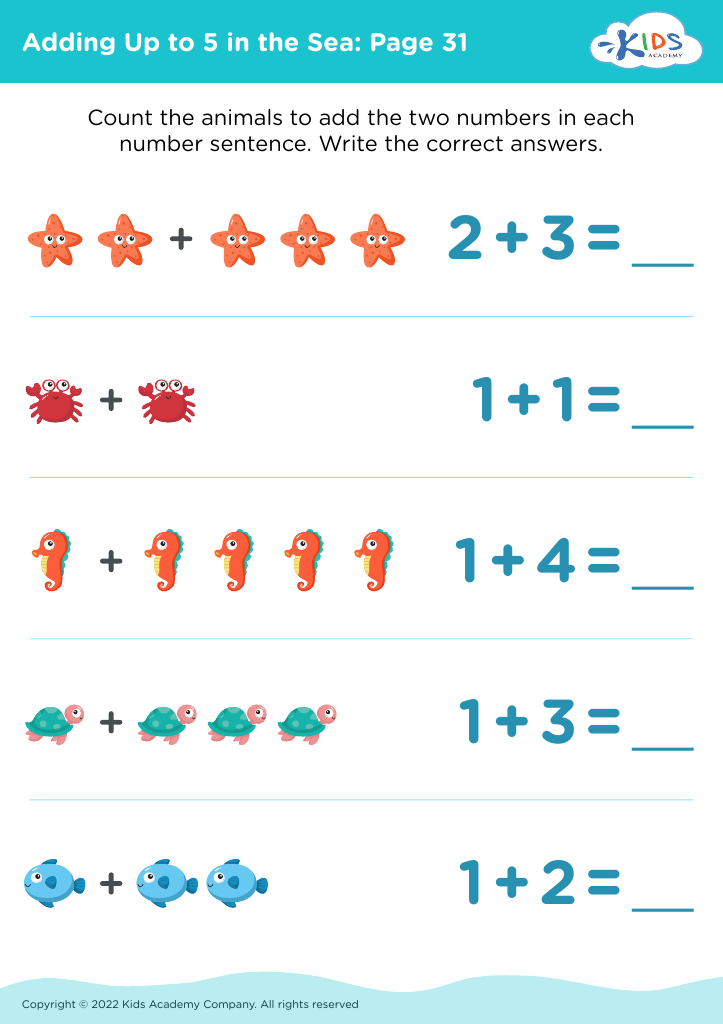
Introduce your little learners to the fascinating world of sea creatures with our engaging "Sea Creatures Identification: Adding Up to 5" worksheets designed specifically for 4-year-olds. These printable activities combine early math skills with fun ocean-themed visuals, encouraging children to recognize and identify various sea animals. Each worksheet provides a playful way to practice counting and simple addition, enhancing both their numeric understanding and marine knowledge. Ideal for parents and teachers, this resource fosters a love for marine life while supporting early math development. Dive in and watch your child’s skills swim to success! Perfect for at-home or classroom use!



%20(1).jpg)




Parents and teachers should care about sea creature identification for 4-year-olds because it enriches their learning in fun and engaging ways. Learning about sea creatures introduces children to the wonders of the ocean, fostering curiosity about the natural world. This educational experience builds foundational knowledge about biodiversity, encouraging kids to appreciate and protect marine life.
When children identify sea creatures, they enhance their language skills by learning new vocabulary. For example, they might learn words like "fish," "octopus," or "starfish." Plus, recognizing the creatures builds essential counting skills. Sorting and counting sea creatures can become a playful activity where kids can, for example, count up to 5! This hands-on learning promotes critical thinking as they categorize animals by types, colors, or sizes.
Additionally, discussing sea creatures can spark conversations about conservation, instilling values of care and responsibility toward the environment. Children begin to understand the connections they share with living beings, reinforcing empathy and respect for wildlife.
Overall, engaging with sea creatures provides early learners with joyful experiences that combine science, math, and eco-awareness, setting a foundation for more advanced learning in the future.








