Understanding numerical values Adding Up to 5 Worksheets for 4-Year-Olds
4 filtered results
-
From - To
Dive into our "Understanding Numerical Values Adding Up to 5 Worksheets" tailored for 4-year-olds! These fun and engaging worksheets help young learners grasp basic math concepts, focusing on adding numbers up to 5. Packed with colorful illustrations and simple exercises, each page encourages your child's love for learning while enhancing their numerical skills. Children will practice counting, recognize patterns, and build a solid foundation for future math success. Ideal for parents and educators, these worksheets turn learning into a captivating adventure. Let your child discover the joy of math with our expertly crafted resources!
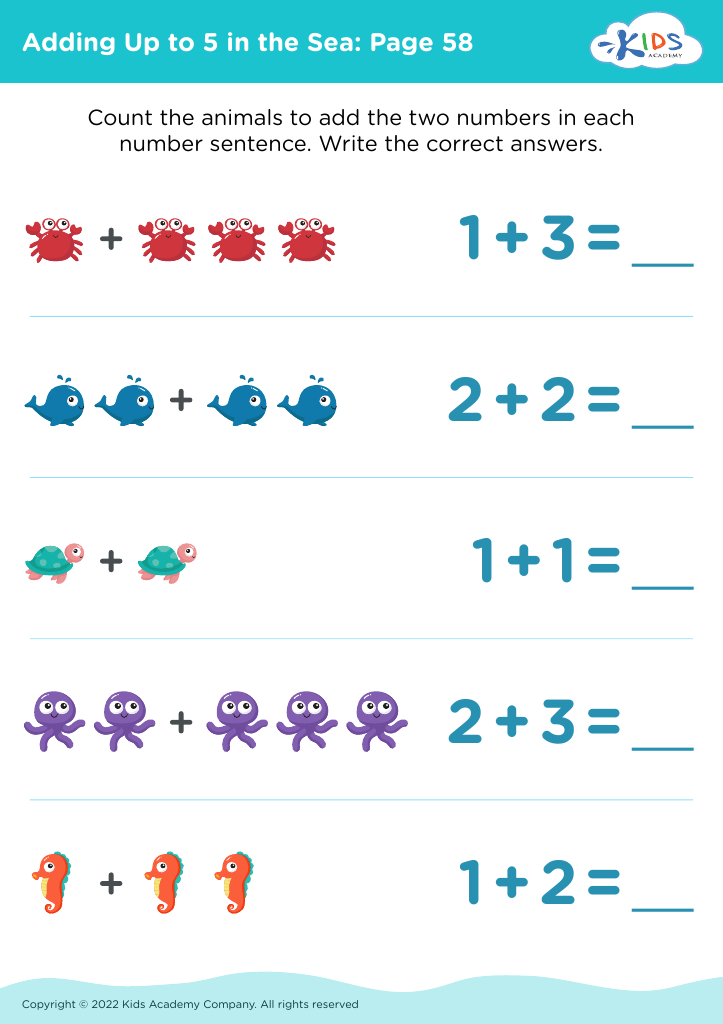
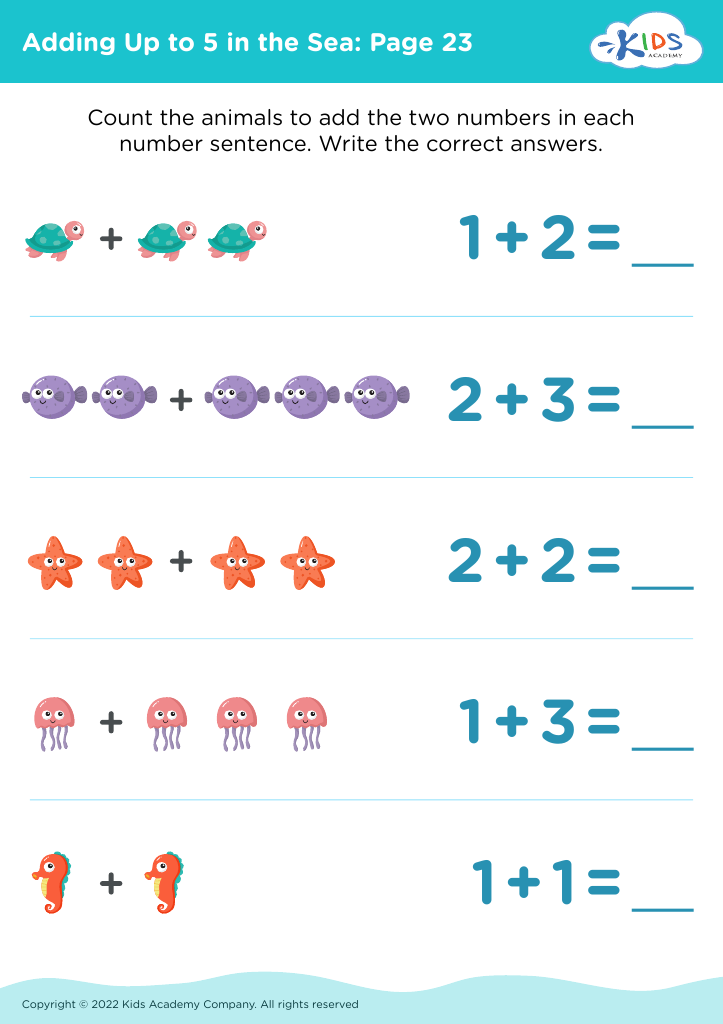
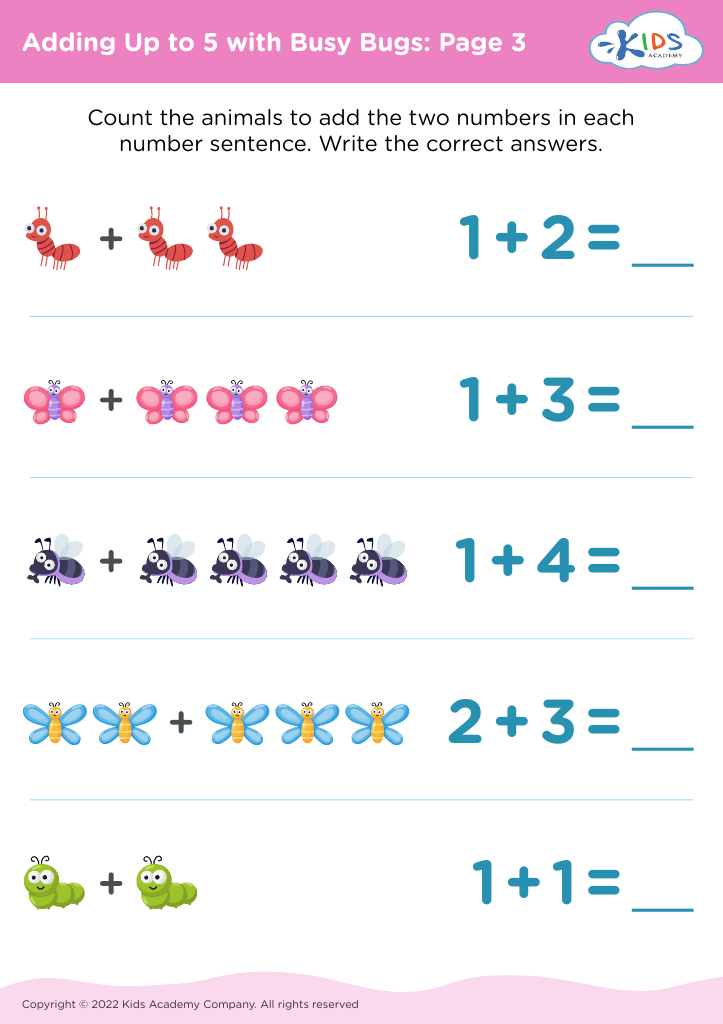
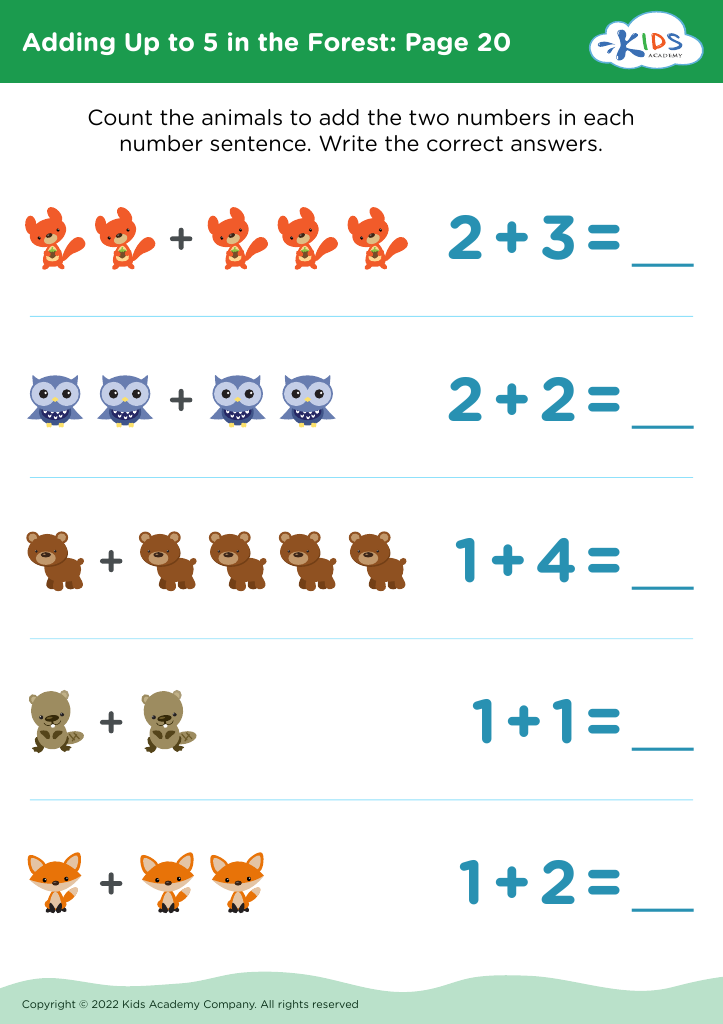






.jpg)

Parents and teachers should care about understanding numerical values adding up to 5 for 4-year-olds because it lays the foundation for essential math skills, which are crucial for cognitive development and later academic success. At this age, young children are in a prime period for learning basic concepts through play and simple activities. Grasping the idea of quantities and addition helps them develop critical thinking, problem-solving abilities, and logical reasoning.
Early numerical understanding fosters a confident attitude towards math, which is important as attitudes formed in early childhood can last a lifetime. By knowing how numbers combine to make 5, children begin to comprehend the structure of our number system, including addition, subtraction, and the principles of more and less. This basic arithmetic skill is a stepping stone for more complex mathematical ideas they will learn in school.
Additionally, working with numbers enhances memory and contributes to better focus and concentration. Activities involving numbers also improve fine motor skills and hand-eye coordination, as children often use counters or blocks to visualize mathematics.
Cultivating an early interest and competency in math through understanding simple numerical values also allows kids to experience success in learning, boosting their self-esteem and willingness to tackle more challenging tasks in the future.








