Understanding quantity Adding Up to 5 Worksheets for 4-Year-Olds
17 filtered results
-
From - To
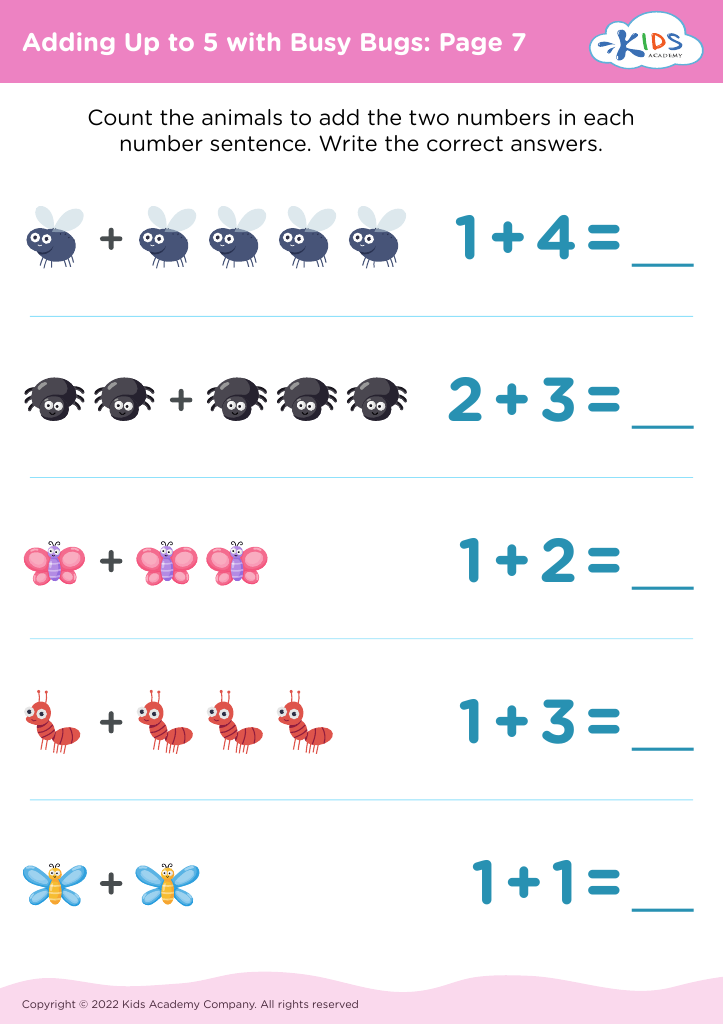
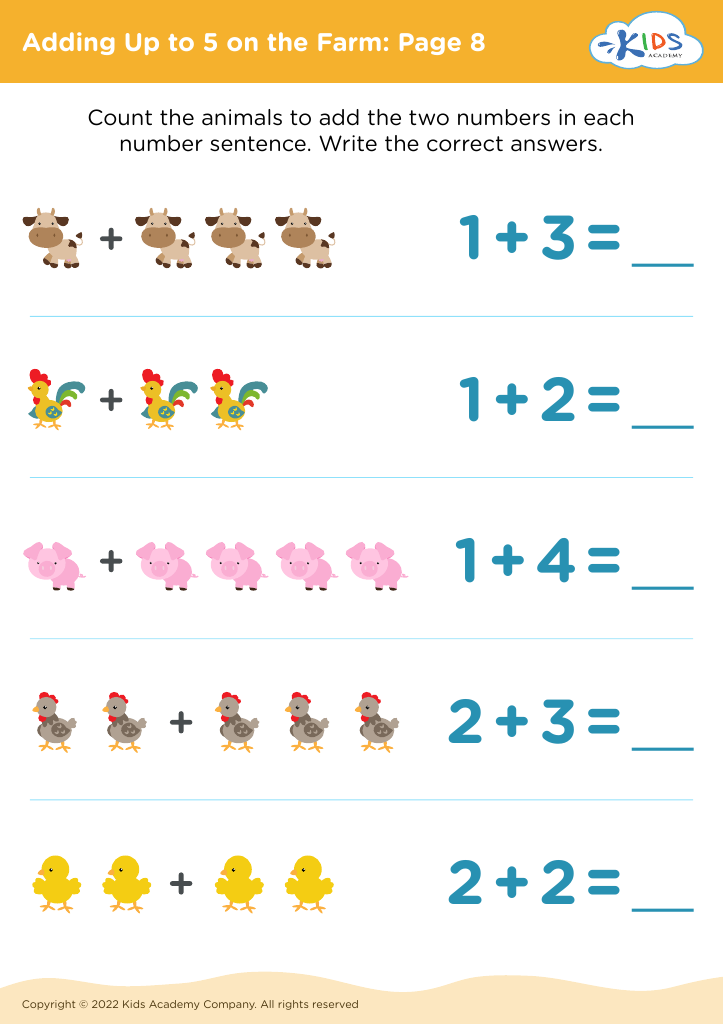
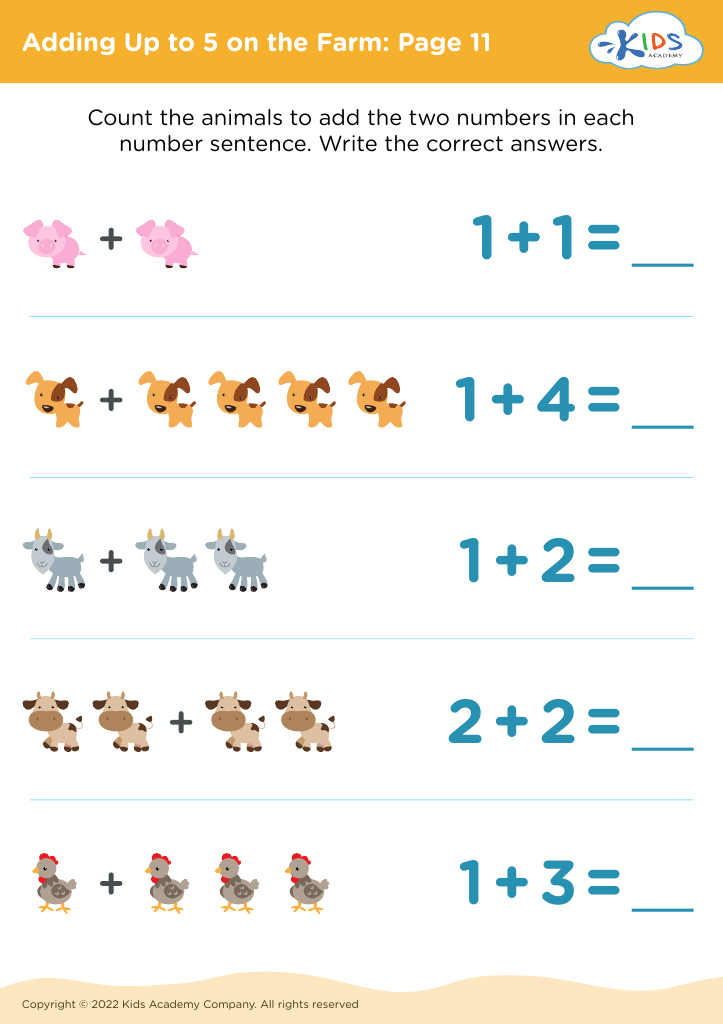
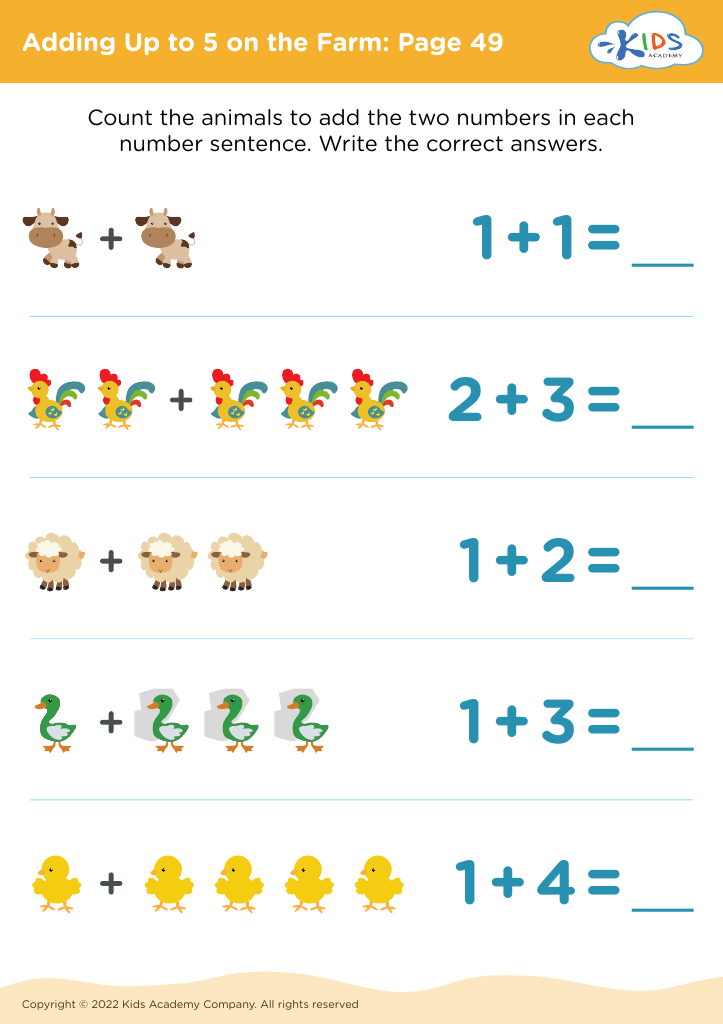
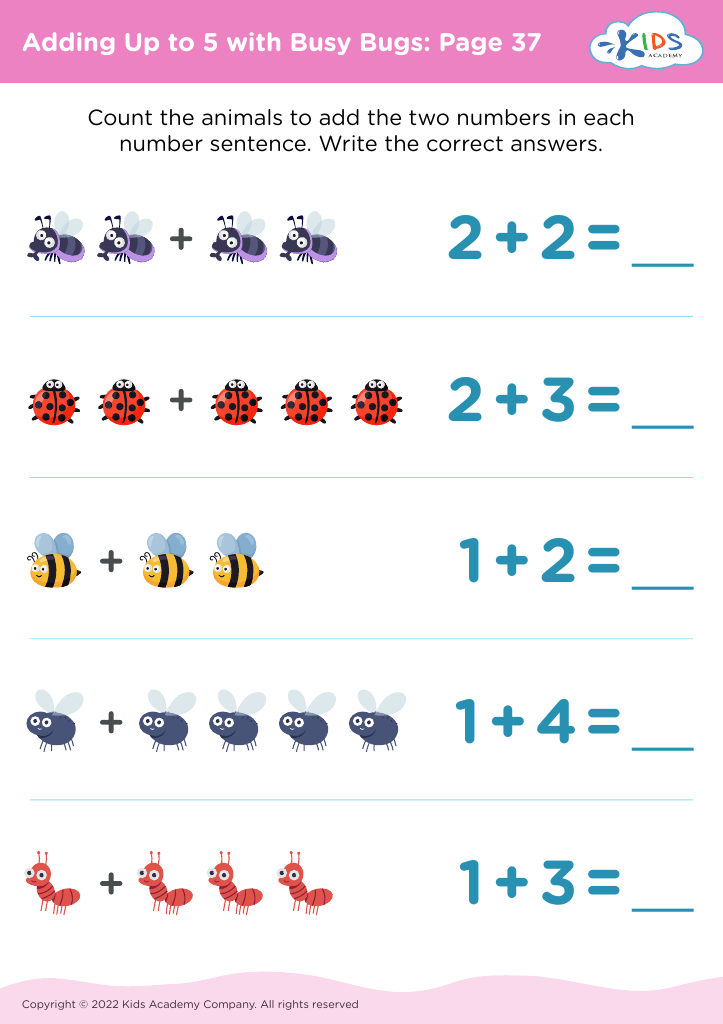
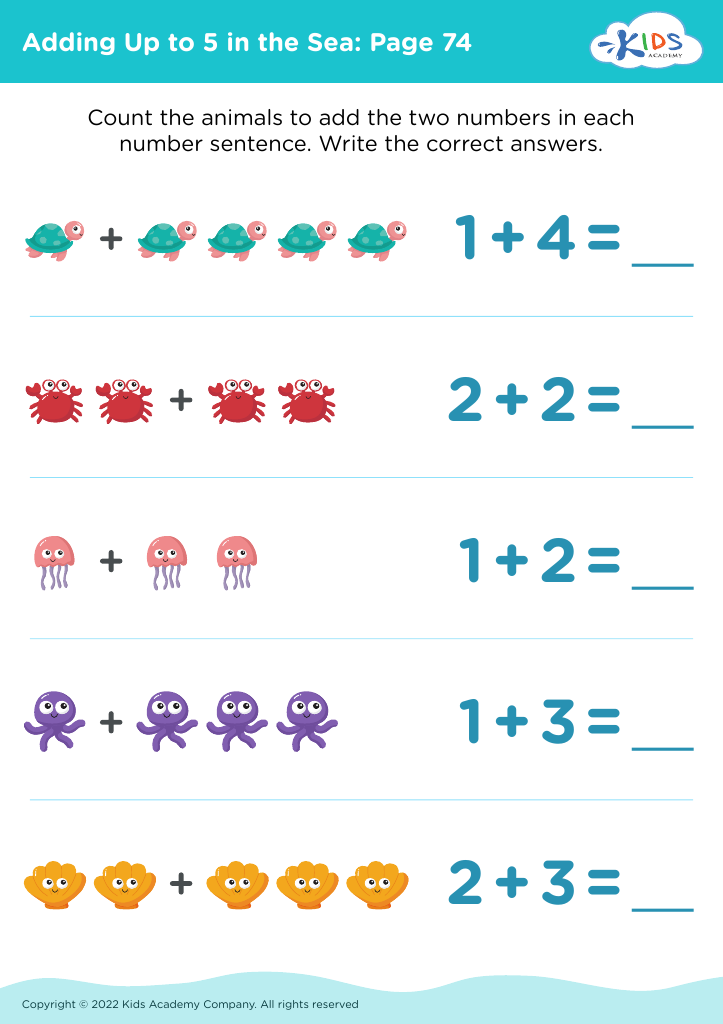
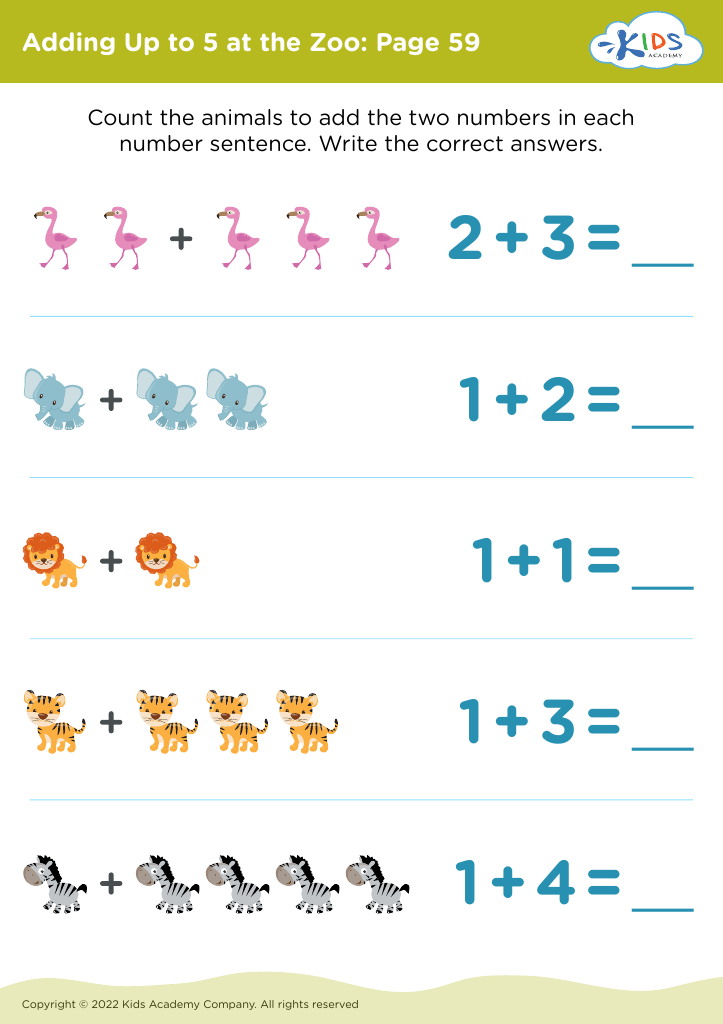
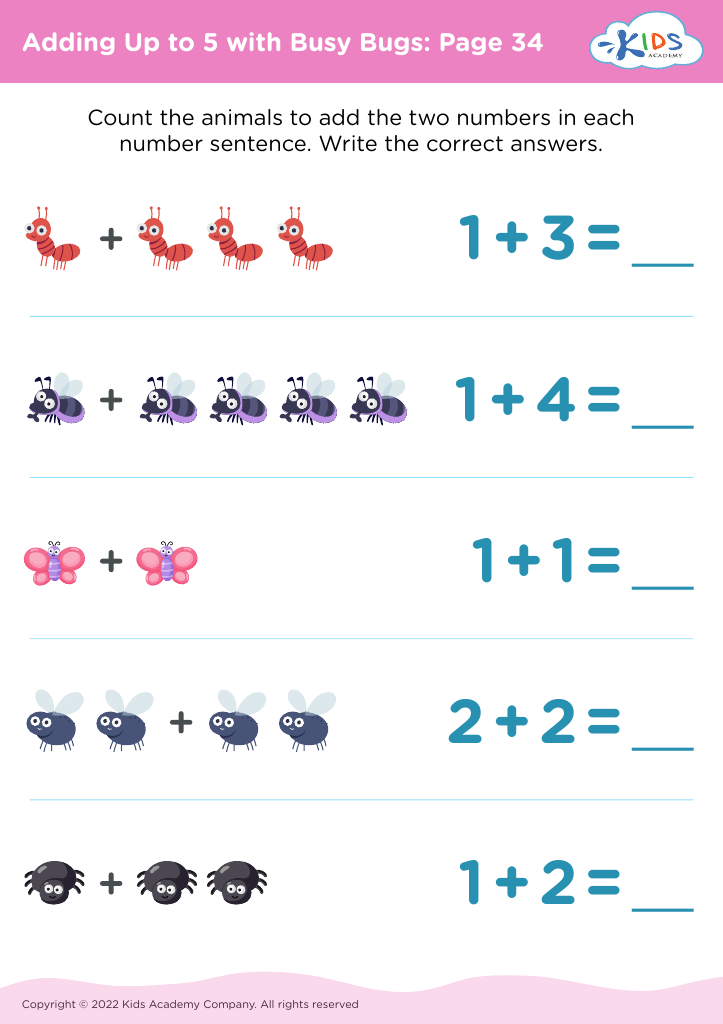
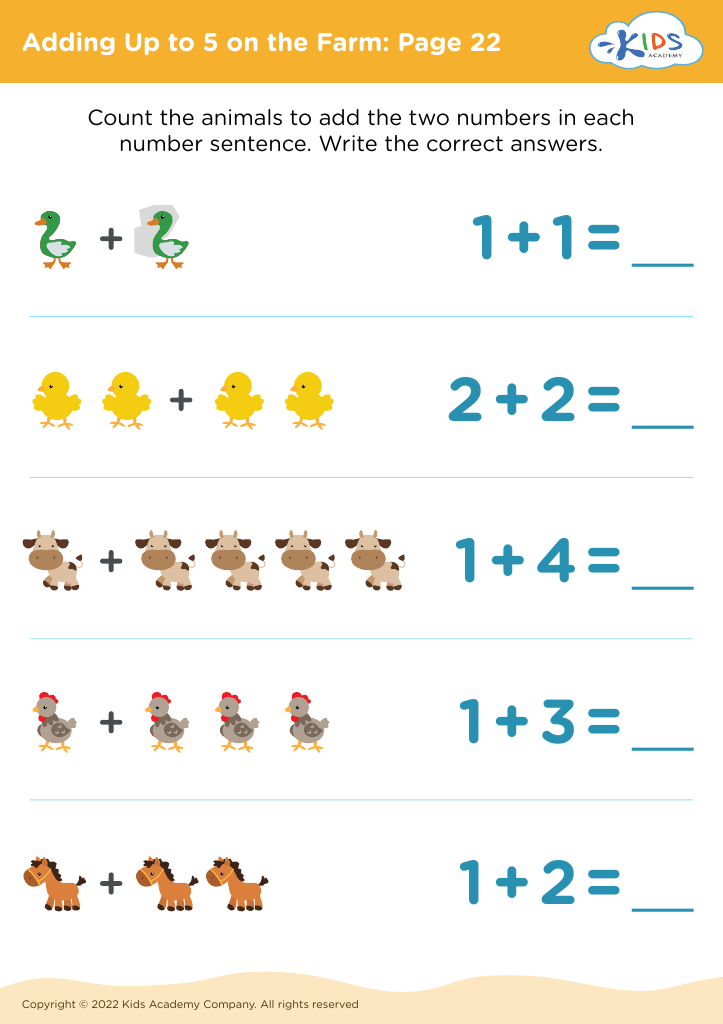
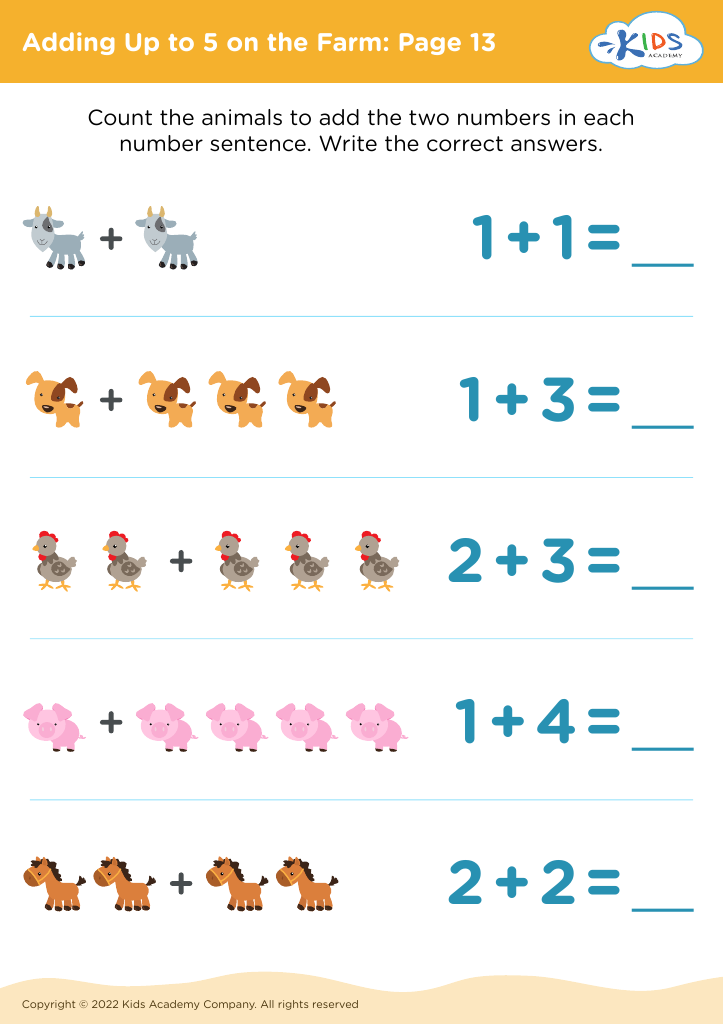
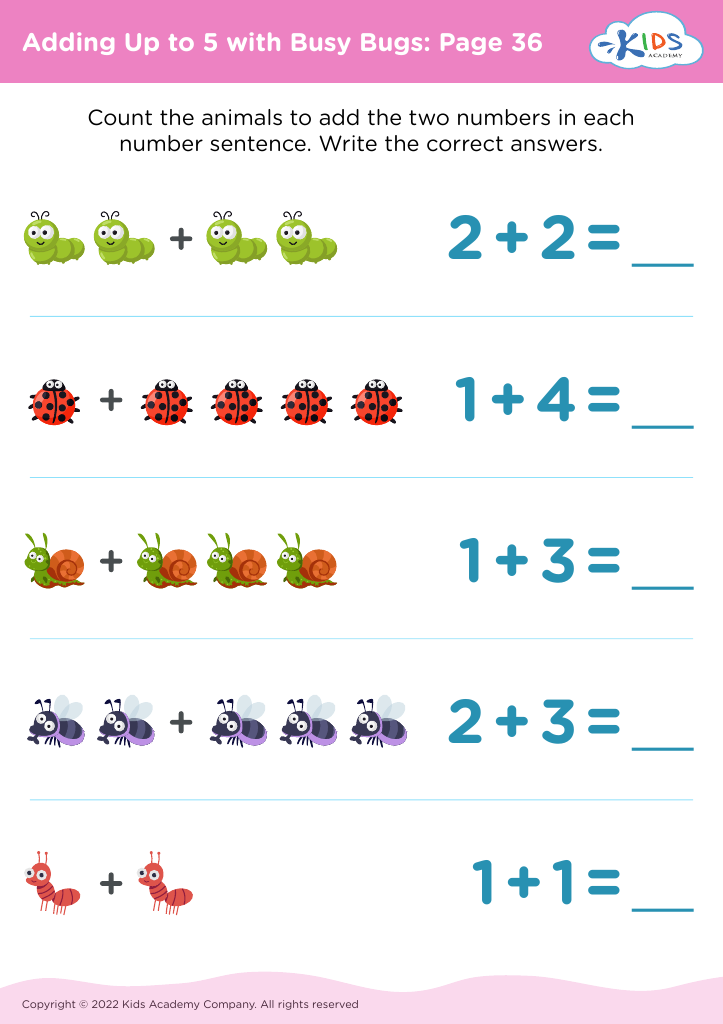
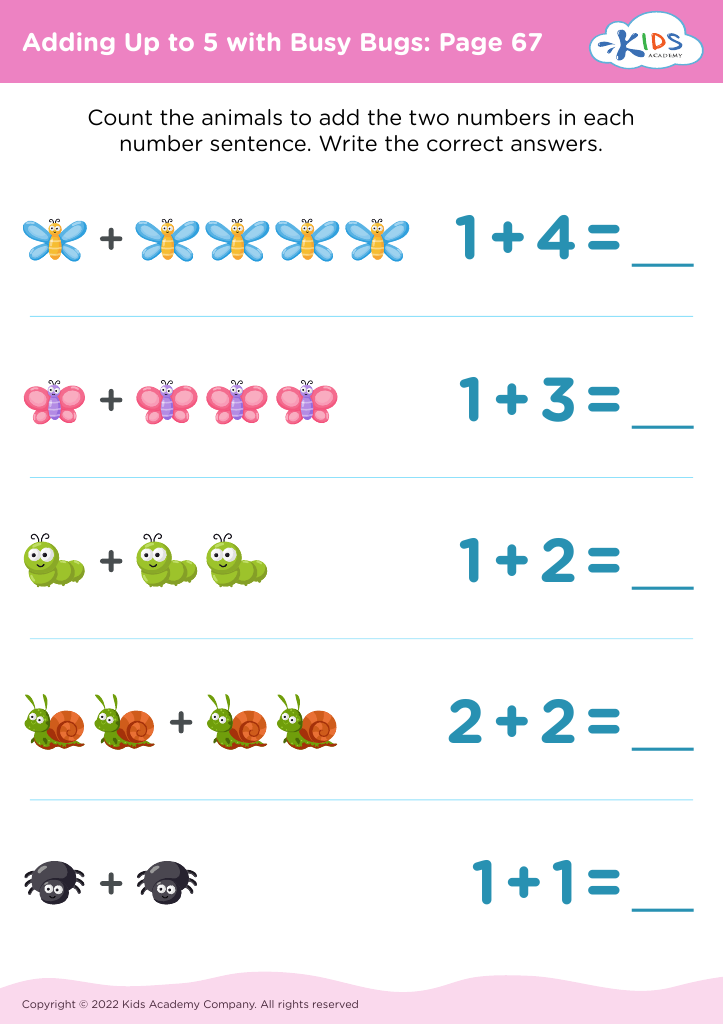
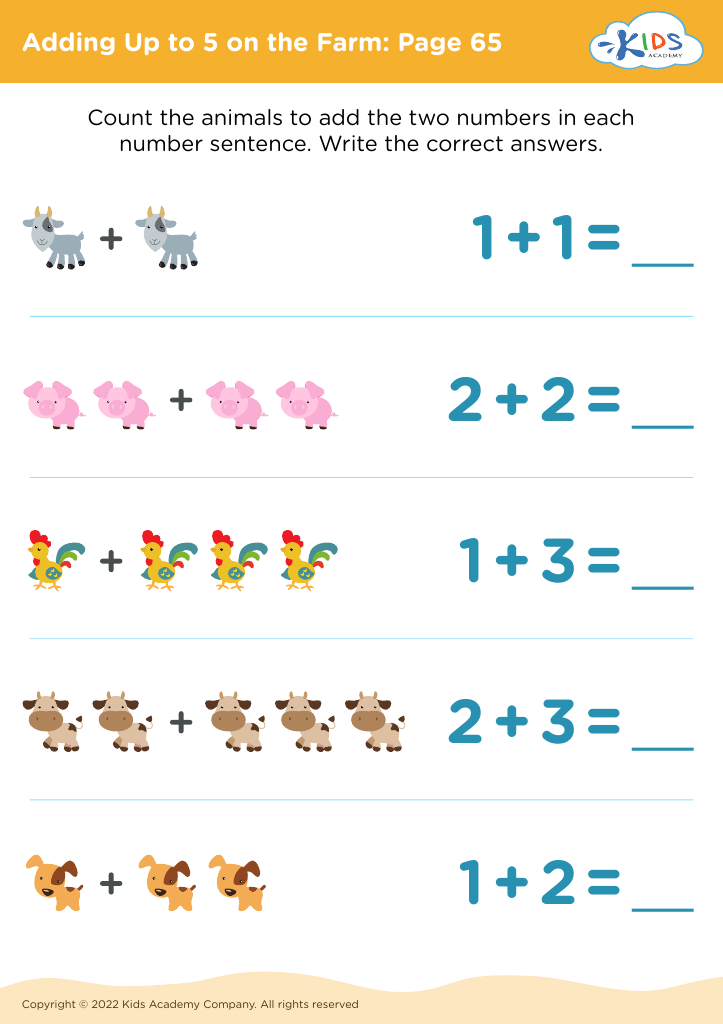
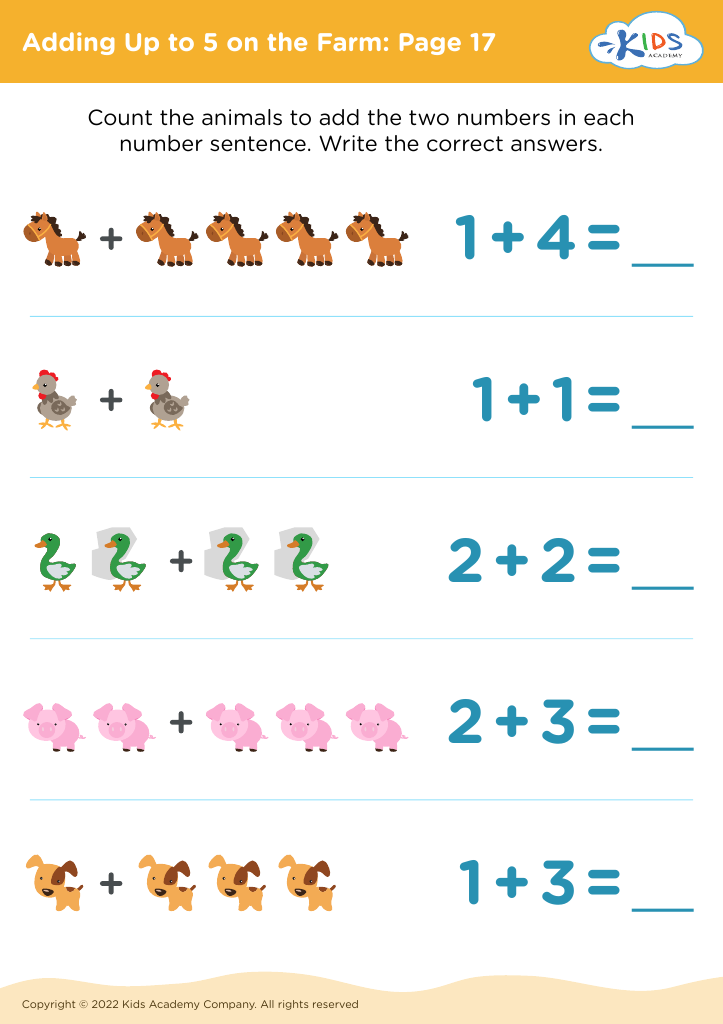
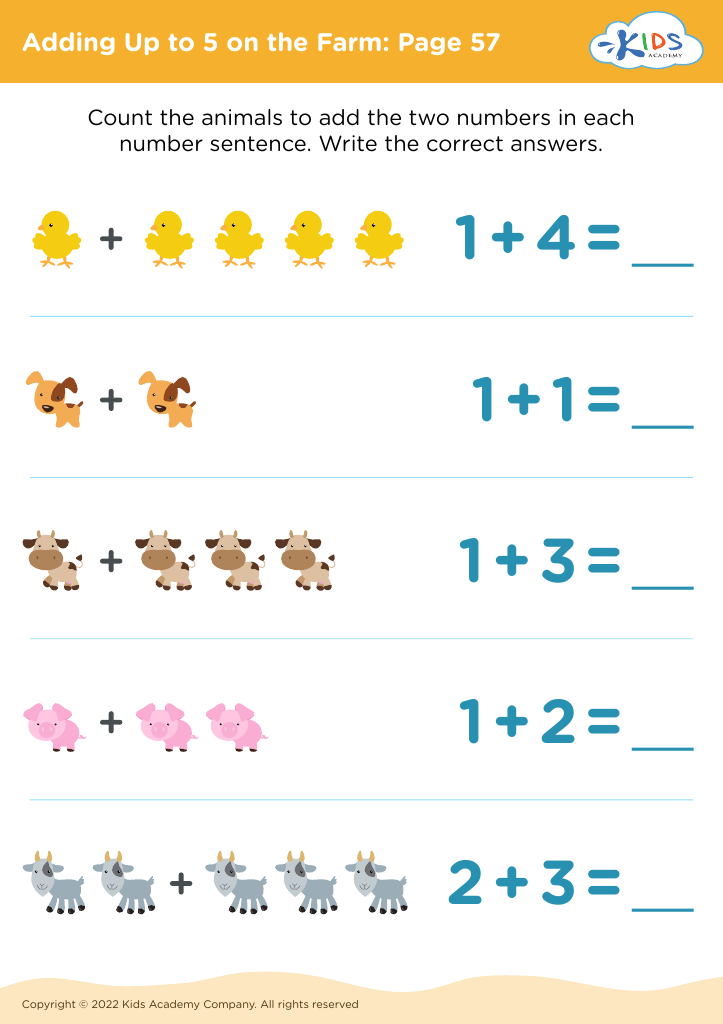
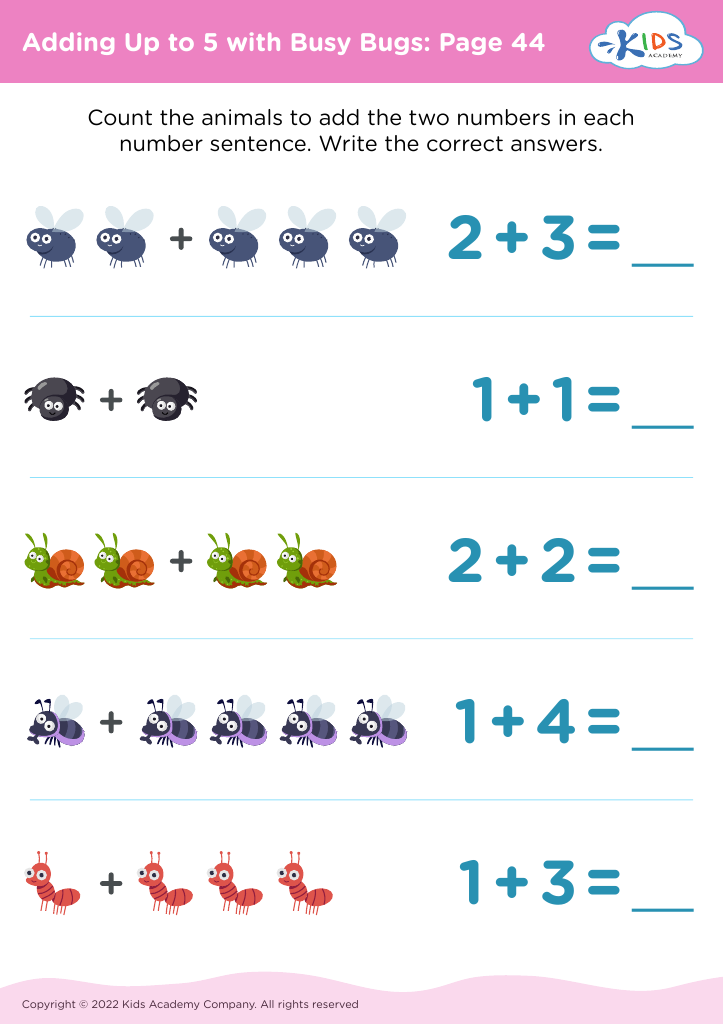
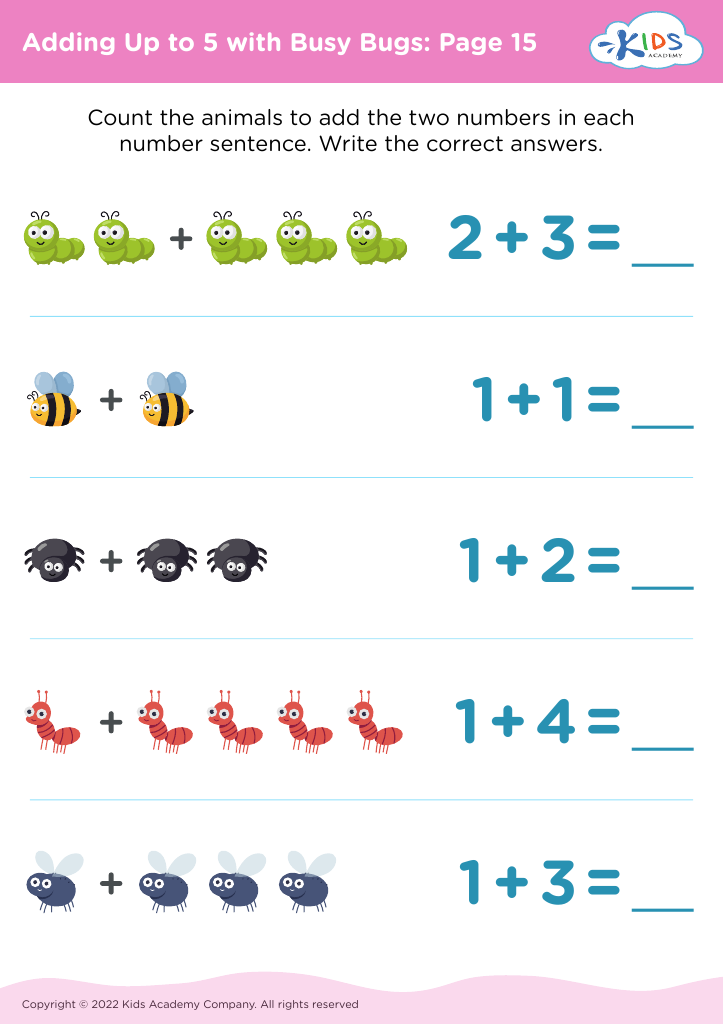
Discover the joy of early math with our "Understanding Quantity: Adding Up to 5 Worksheets" designed for 4-year-olds! These engaging worksheets introduce preschoolers to basic addition concepts through fun visuals and interactive activities. Children will learn to recognize and combine quantities, fostering essential early math skills in a playful and approachable way. Each worksheet follows a step-by-step format, encouraging little learners to count, add, and visually understand the numbers involved. Perfect for homeschooling or classroom settings, our resources support young minds as they build a strong foundation in math, setting the stage for their future learning adventures!


.jpg)





Understanding quantity and the concept of adding up to 5 is a foundational skill that significantly impacts a child's overall mathematical development. For 4-year-olds, this learning stage lays the groundwork for future numerical understanding, critical thinking, and problem-solving abilities. Quantitative skills foster an intuitive grasp of everyday situations that involve counting, such as sharing snacks or sorting toys.
Parents and teachers should care about this topic because a strong early math foundation builds confidence and enjoyment in learning. Engaging children in activities that emphasize counting and simple addition promotes cognitive growth and helps them relate abstract concepts to their daily life experiences.
Additionally, understanding the concept of “adding up to 5” helps children develop spatial awareness and enhances their ability to recognize patterns. By recognizing numbers and their relationships, kids can gradually move toward more complex math skills. Encouraging these early experiences fosters a positive attitude toward math, setting the stage for a lifelong appreciation and facilitating success in school.
Ultimately, investing in early number sense not only impacts academic achievement but also nurtures essential life skills, promoting logical reasoning and decision-making as children grow. Thus, educators and parents play a critical role in supporting this vital aspect of childhood learning.








