Addition Practice Adding with Busy Bugs Worksheets for 4-Year-Olds
17 filtered results
-
From - To
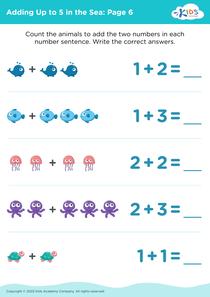
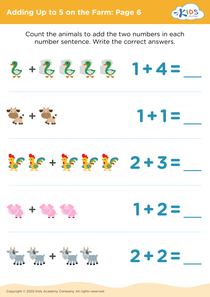
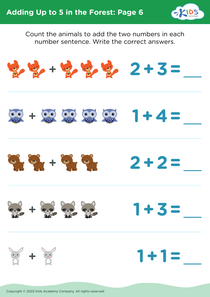
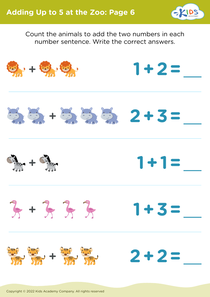
Help your 4-year-old master addition with Busy Bugs Worksheets from Kids Academy! These engaging, colorful worksheets are designed to make learning fun and interactive. Featuring adorable busy bug characters, they guide young learners through simple addition problems, fostering foundational math skills and number sense. Ideal for home or classroom use, these worksheets support early math development and provide the perfect start for a lifetime of learning. Encourage your child's math journey today with Busy Bugs Worksheets, and watch their confidence and abilities grow with each addition practice session!
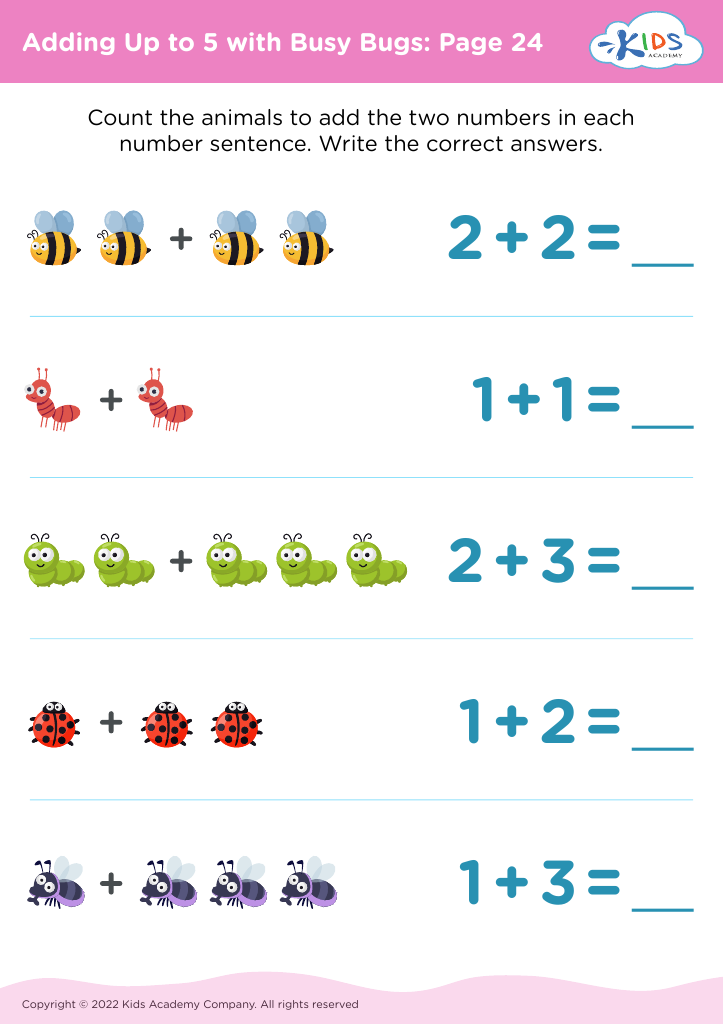
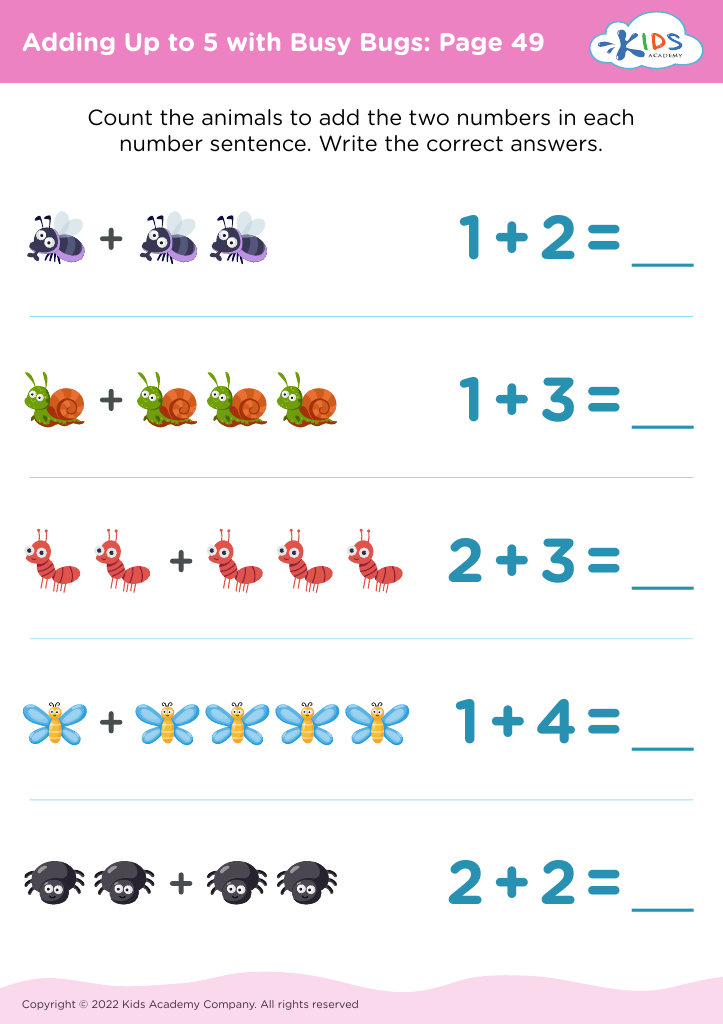
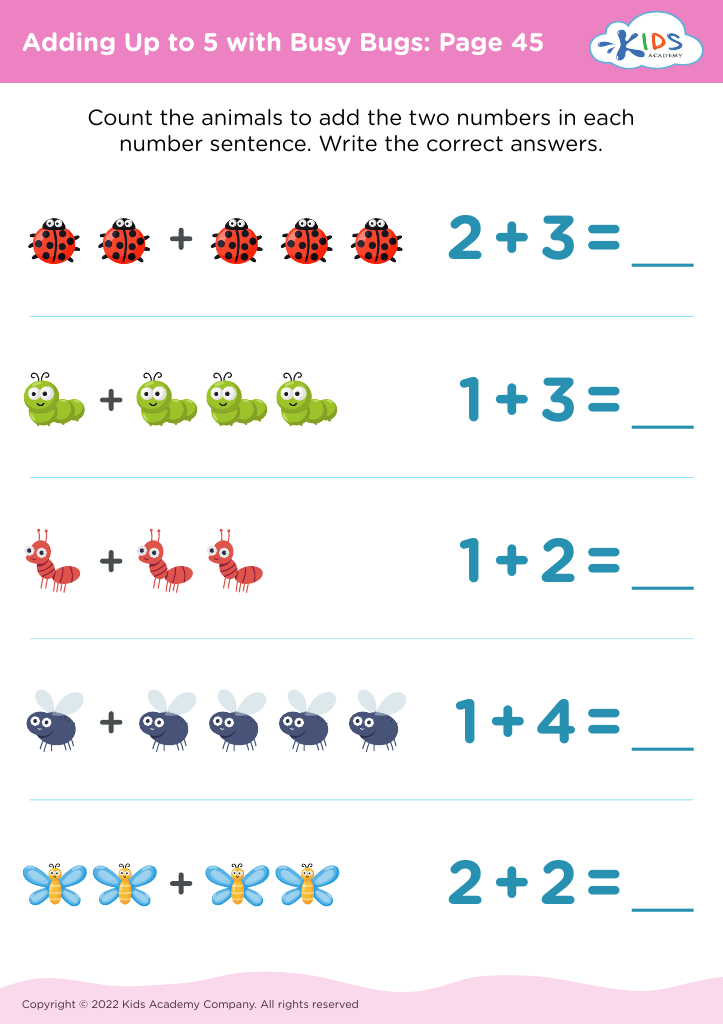
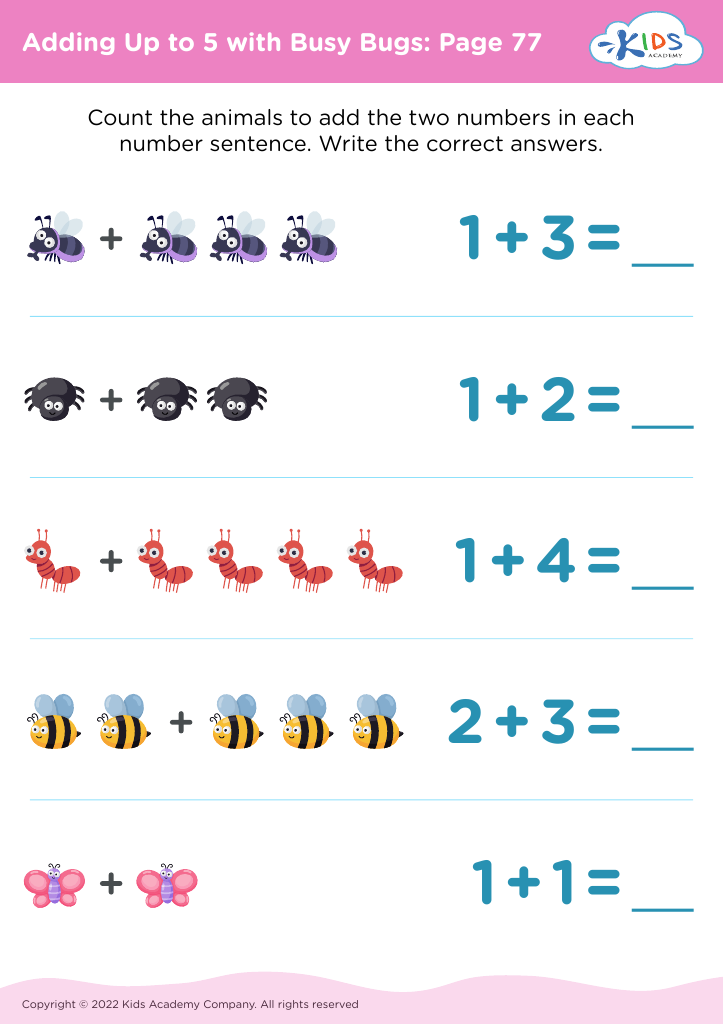
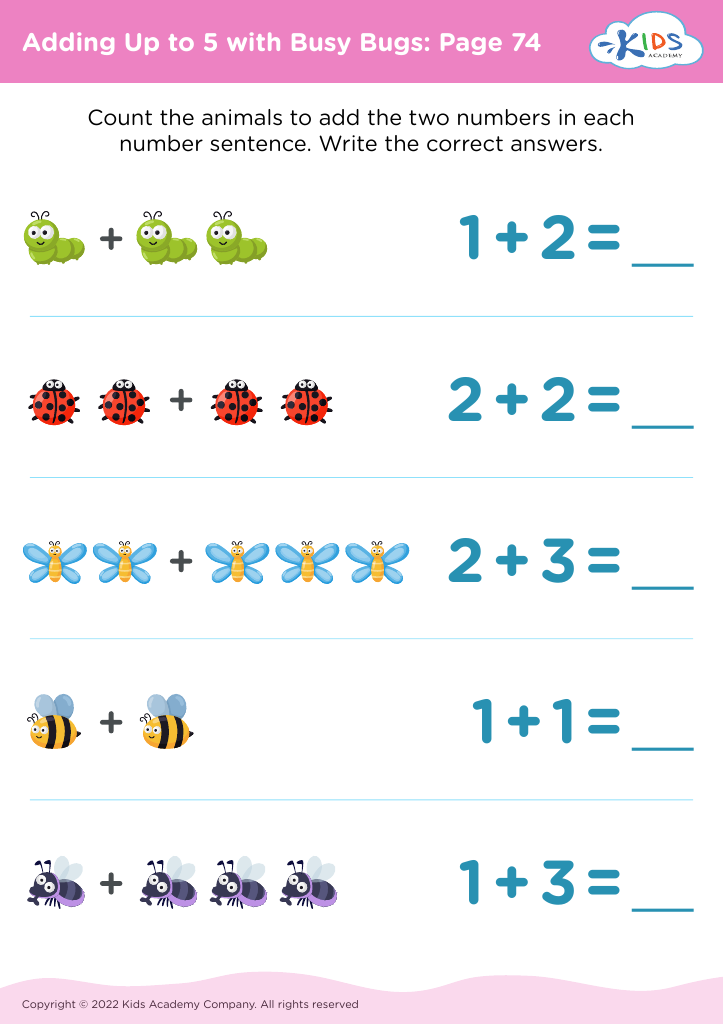
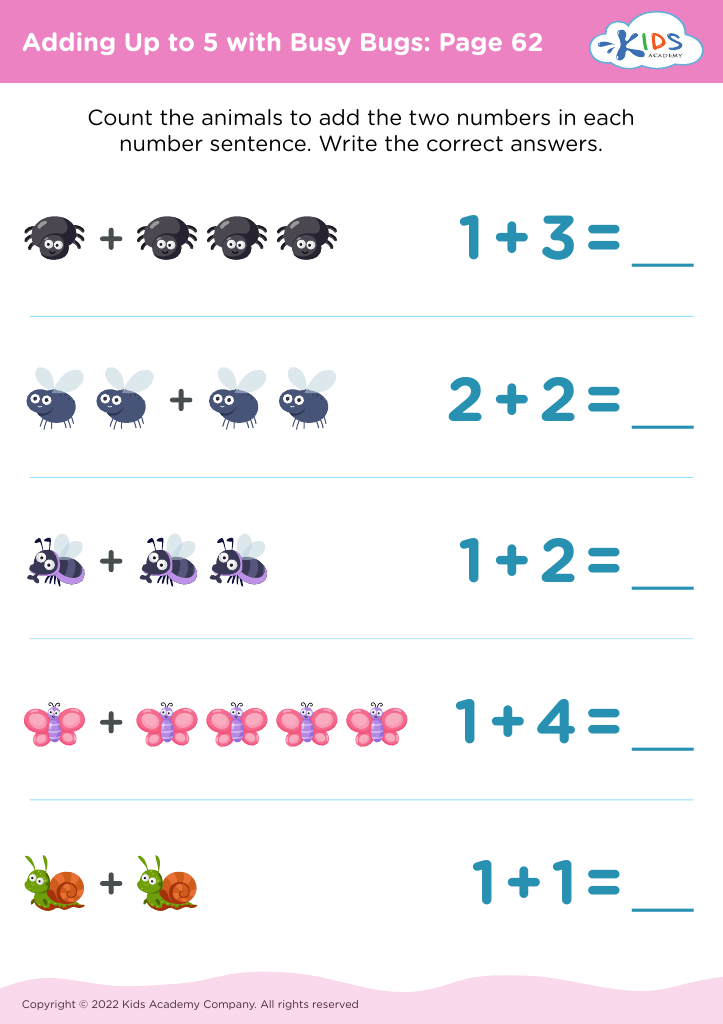
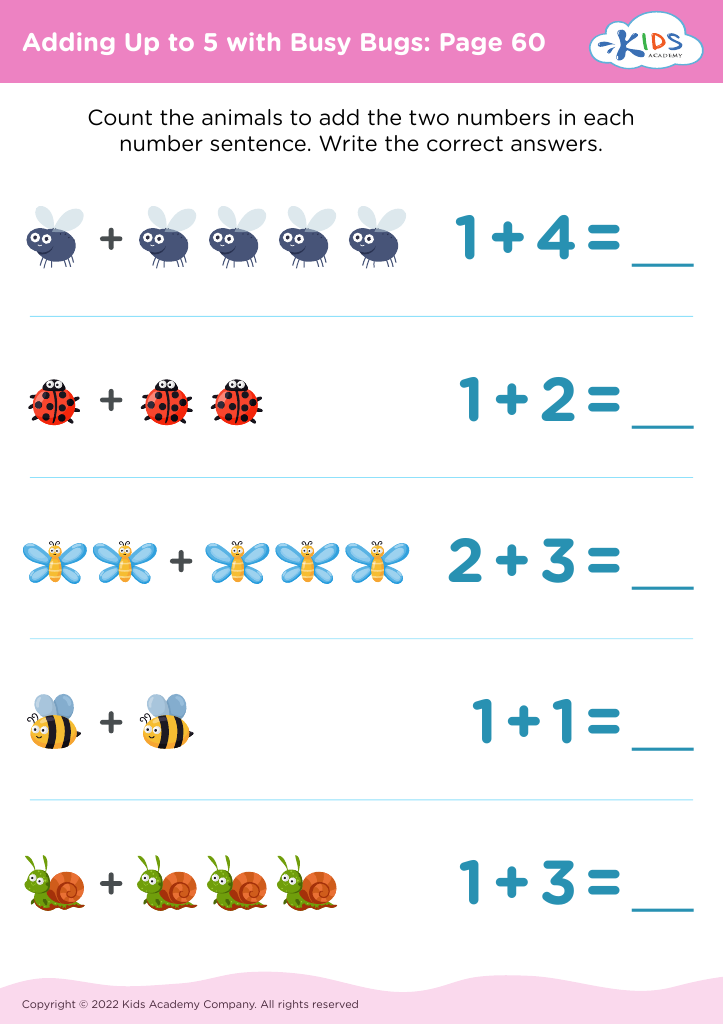
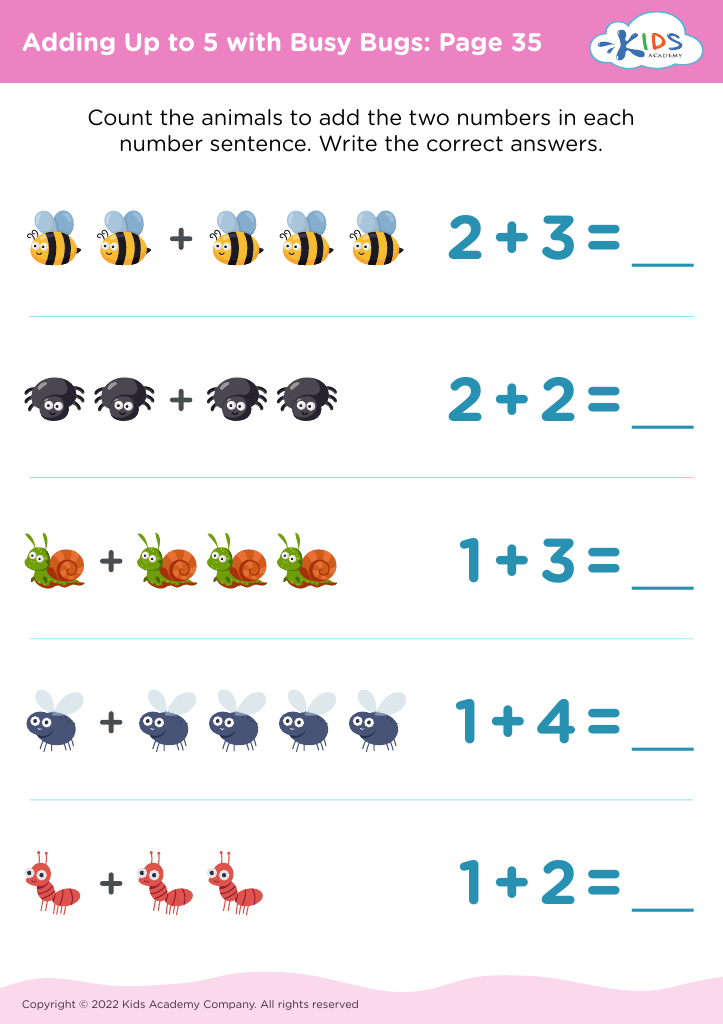
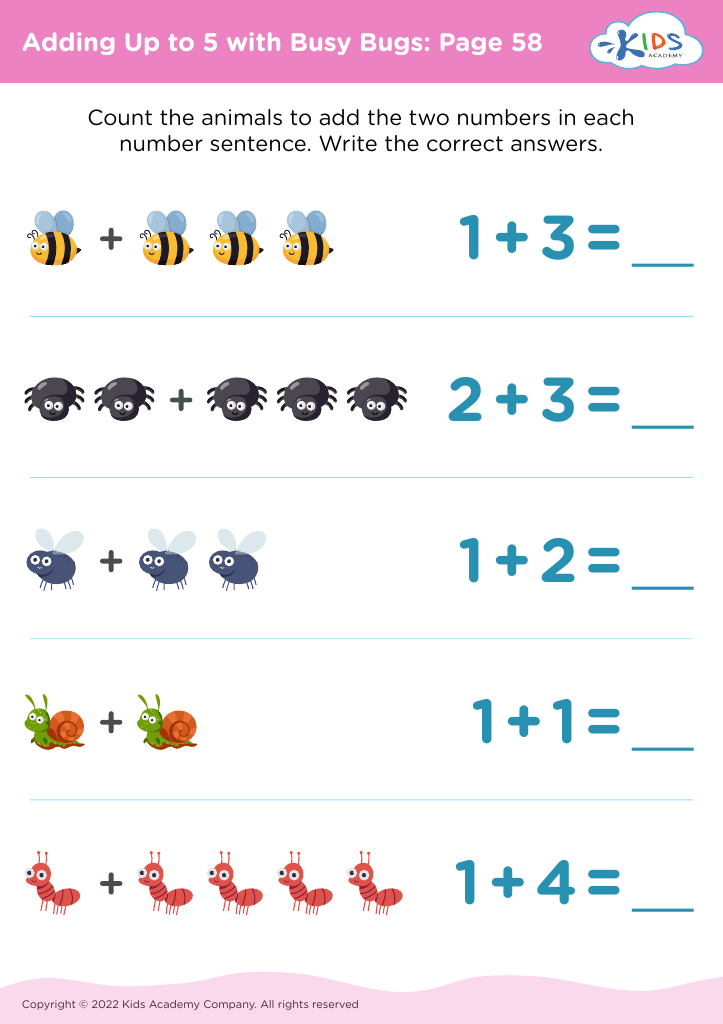
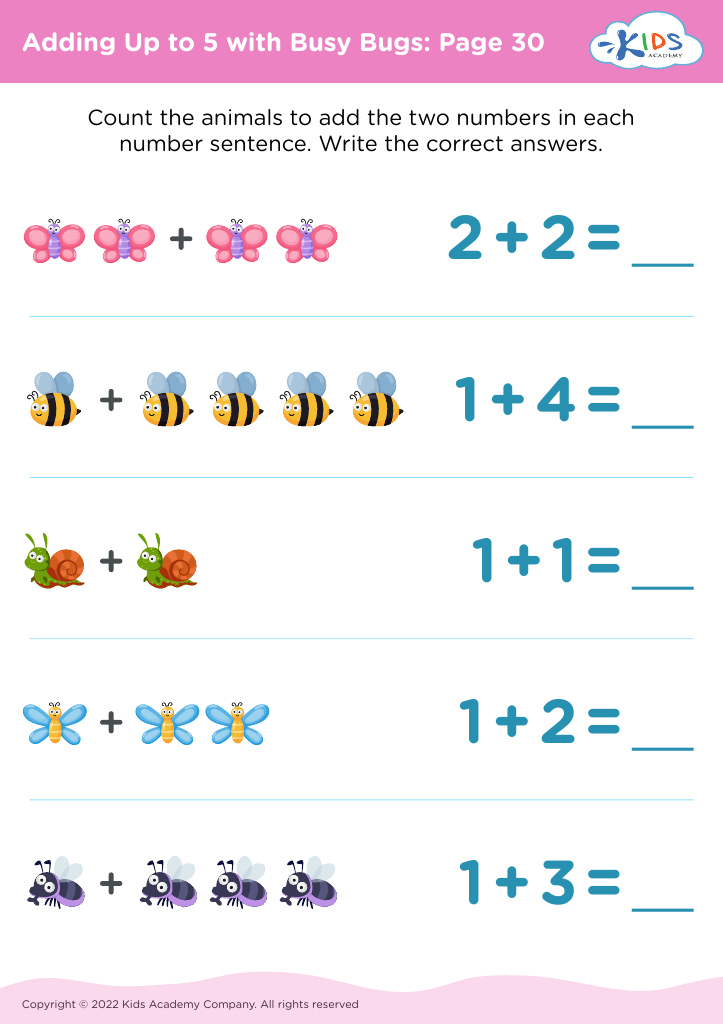
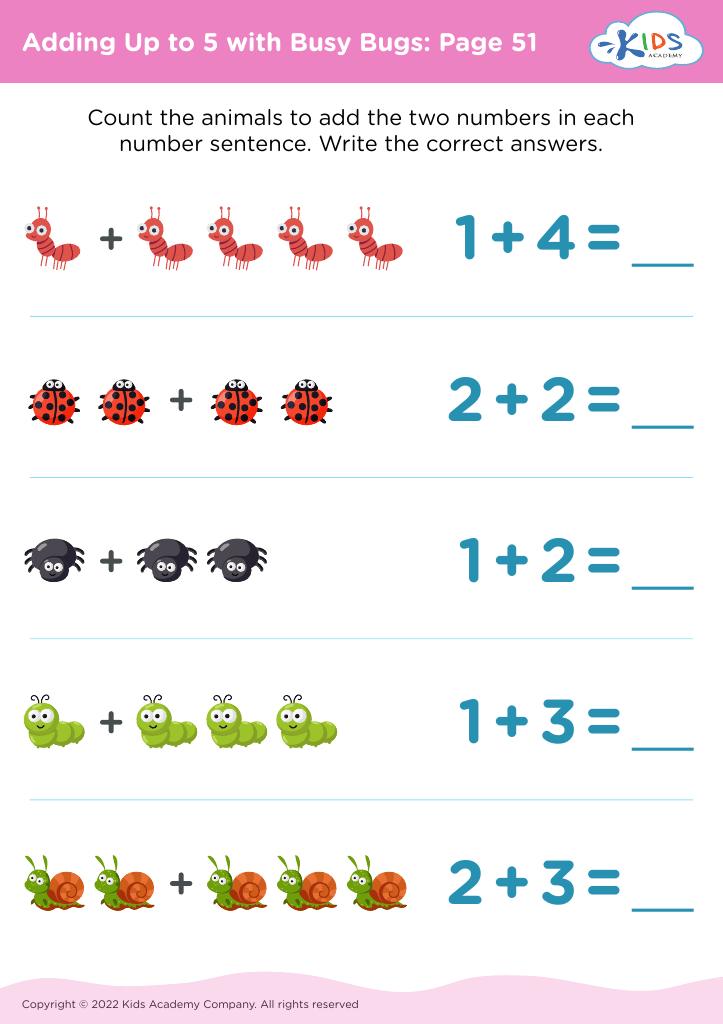
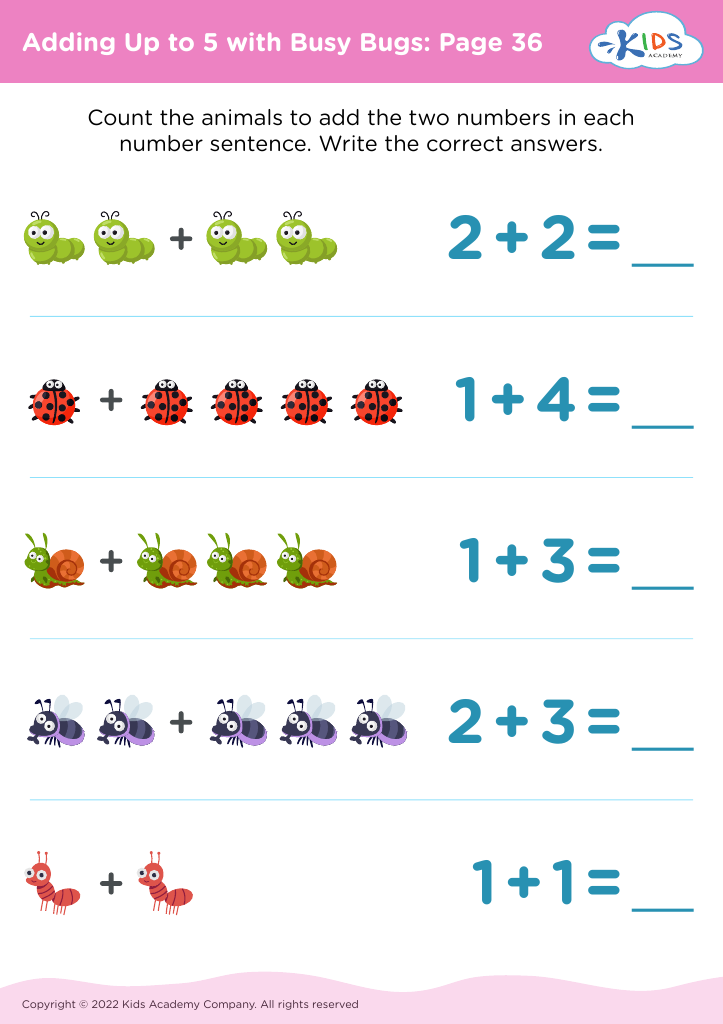
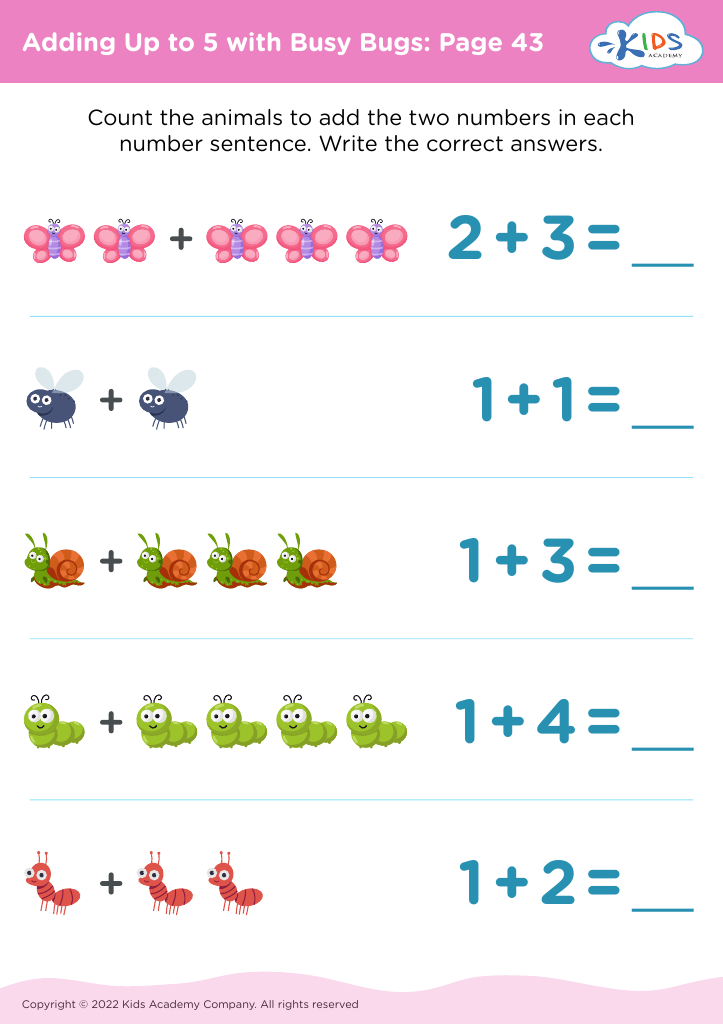
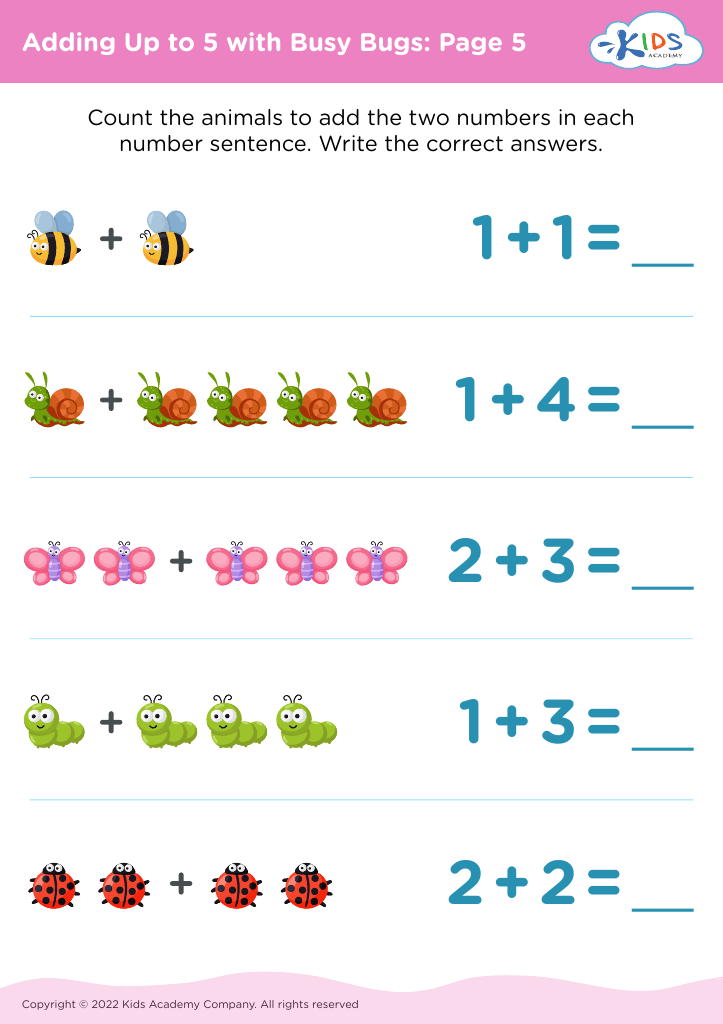
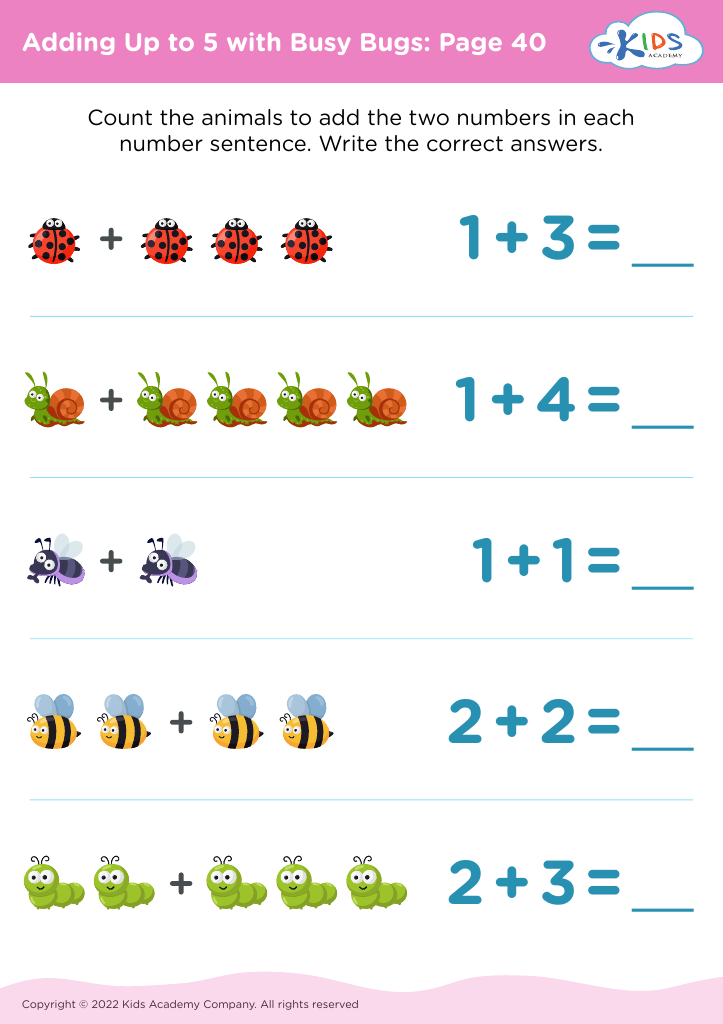
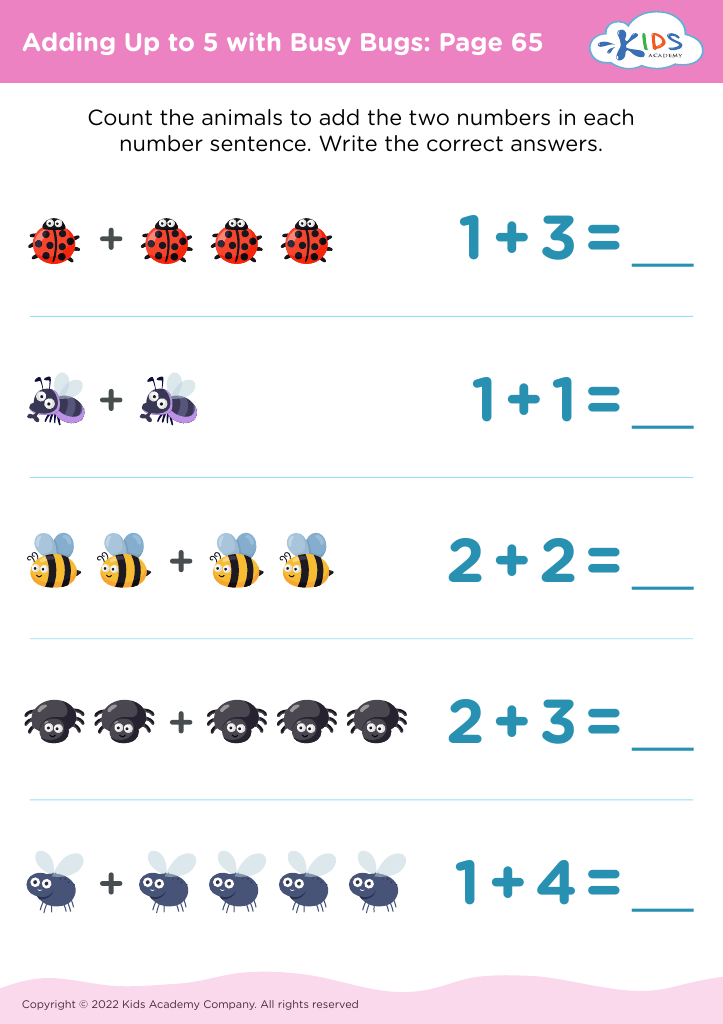
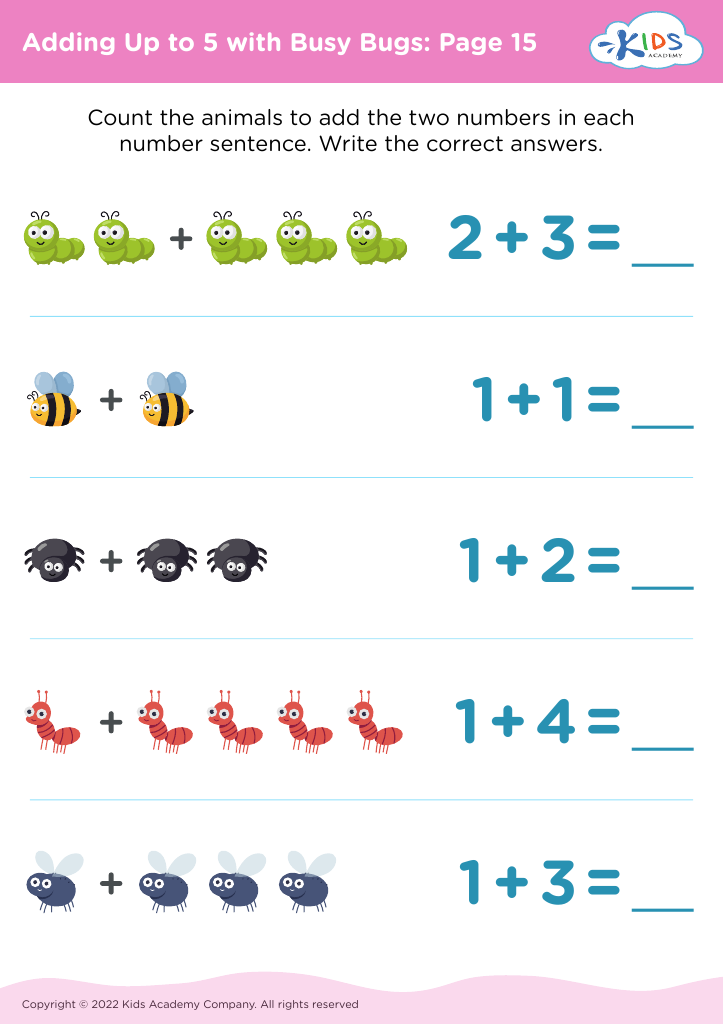



Parents and teachers should care about "Addition Practice Adding with Busy Bugs" for 4-year-olds because it leverages three key principles of early childhood education: engagement, foundational skill-building, and developmental appropriateness.
First, engagement is critical at this age. This activity typically incorporates bright colors, playful characters, and interactive elements, all of which capture the attention and imagination of 4-year-olds. This ensures that the learning process feels more like play, fostering a positive attitude towards math from an early age.
Second, foundational skill-building is essential. Addition is one of the basic building blocks of math. Early mastery of this skill sets the stage for future arithmetic and mathematical concepts. By introducing addition through a fun and relatable method like counting bugs, children start to grasp numerical relationships and basic math operations in a concrete, manageable way.
Finally, developmental appropriateness is crucial. At 4 years old, children are just starting to understand abstract concepts through tangible experiences. "Addition Practice Adding with Busy Bugs" aligns with their cognitive and developmental stage, as it requires counting and simple addition, an achievable challenge that can boost confidence and encourage a love for learning.
Investing in such educational tools helps ensure that children develop necessary academic skills in a context that respects their developmental needs and learning preferences.