Basic Addition Skills Adding with Busy Bugs Worksheets for 4-Year-Olds - Page 2
34 filtered results
-
From - To
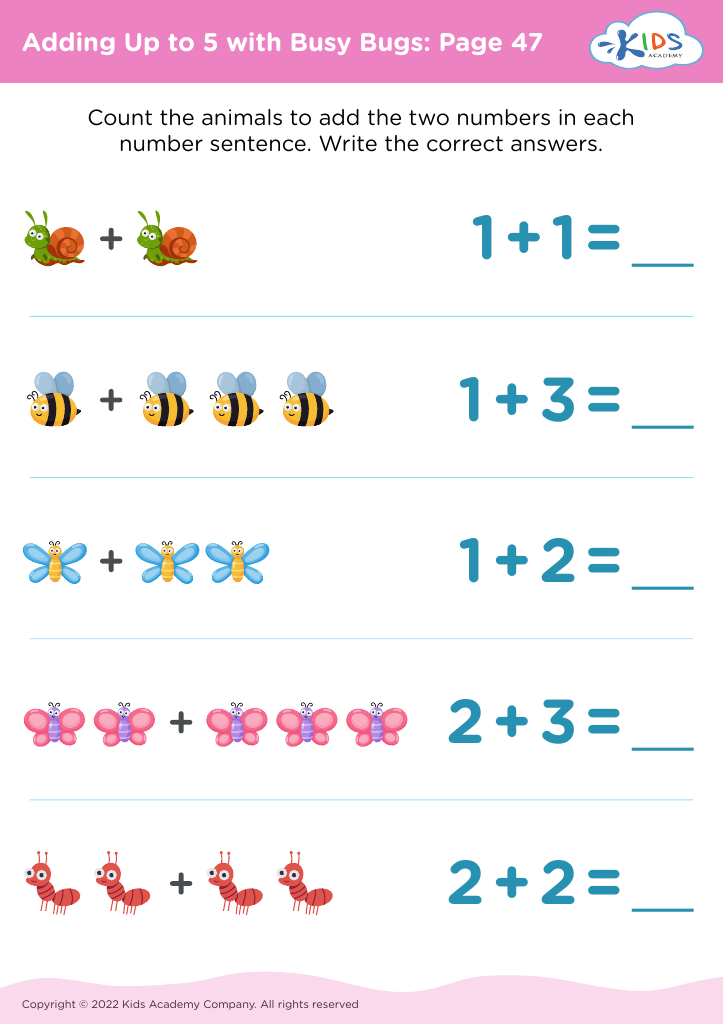
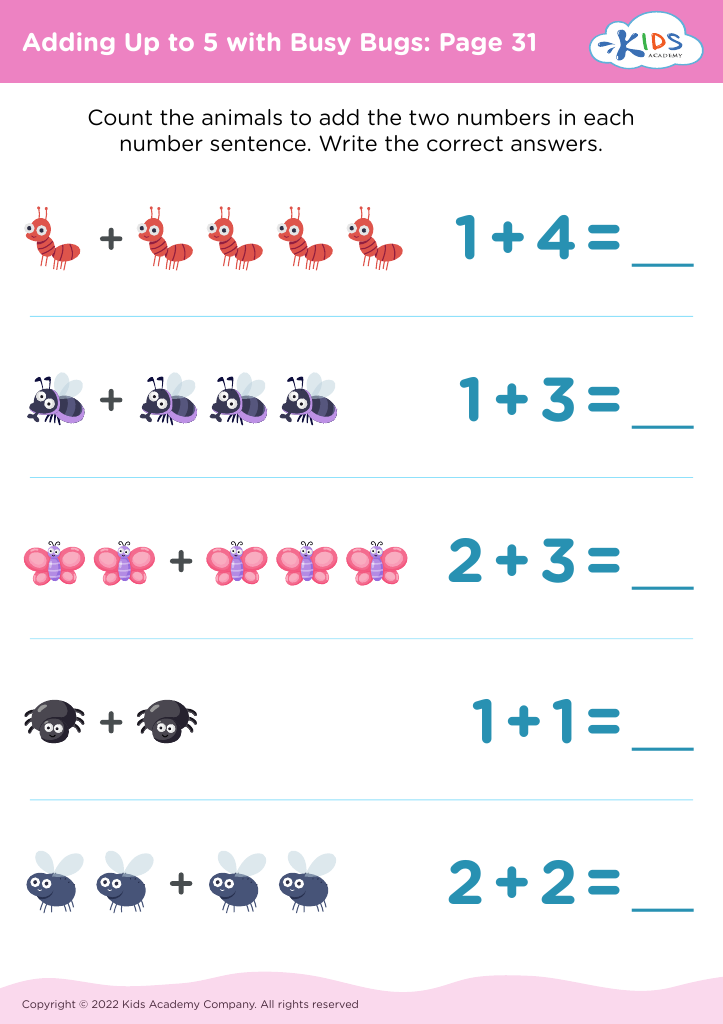
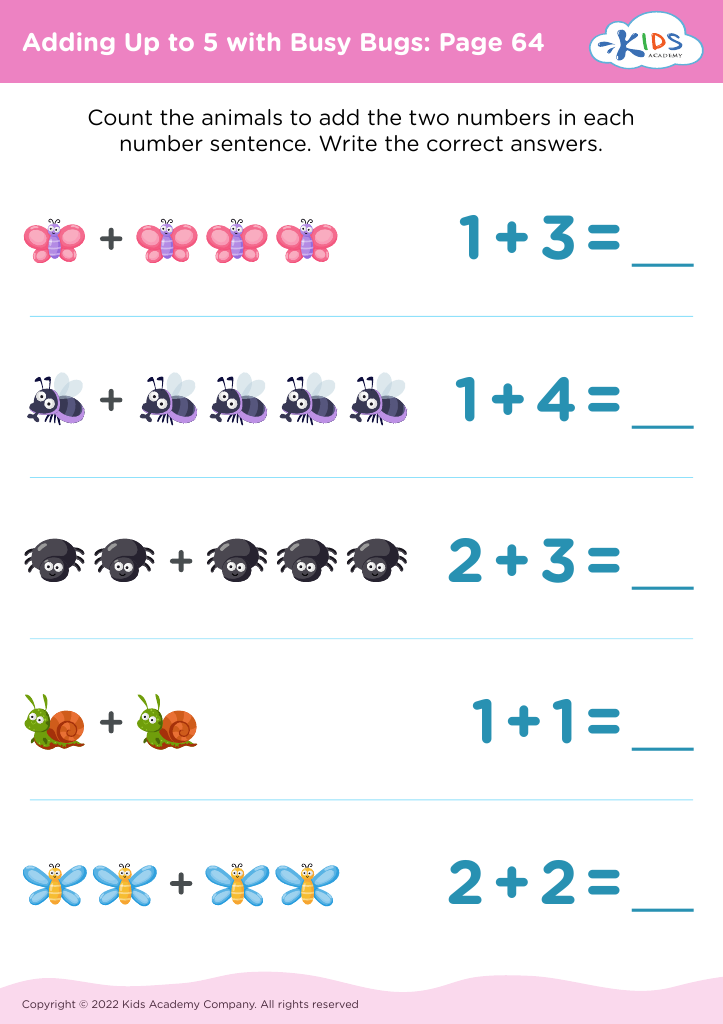
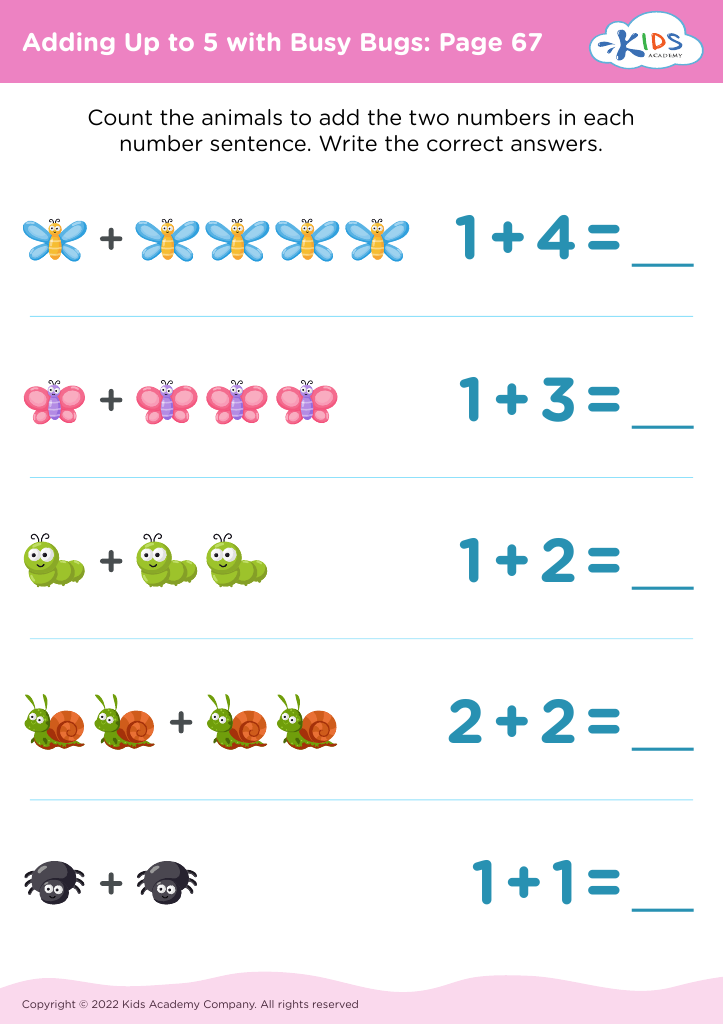
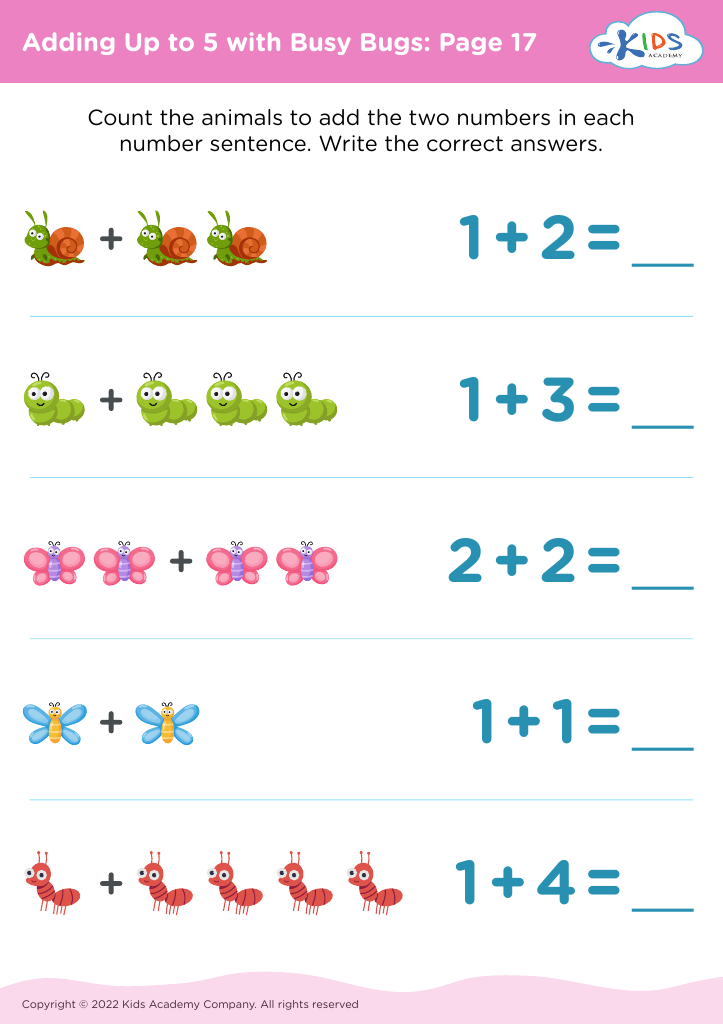
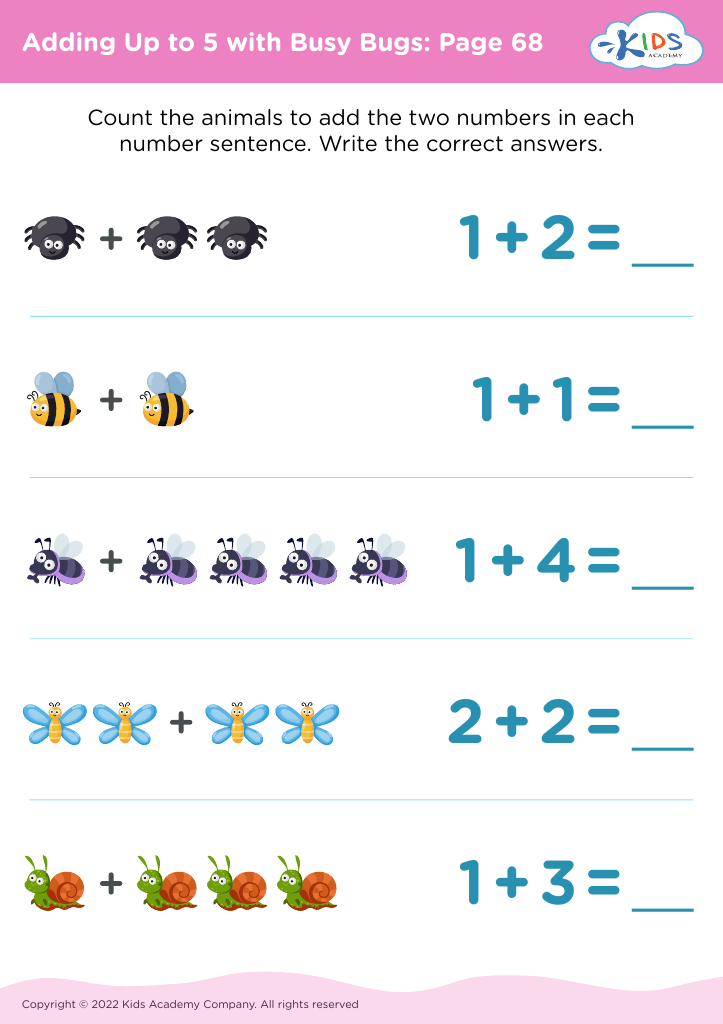
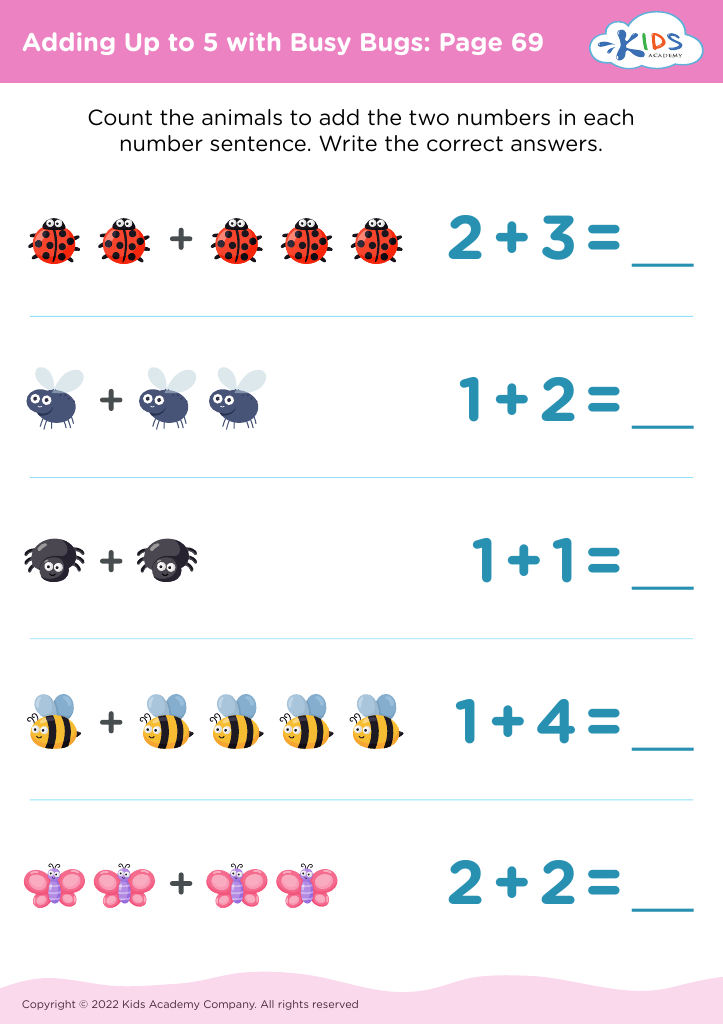
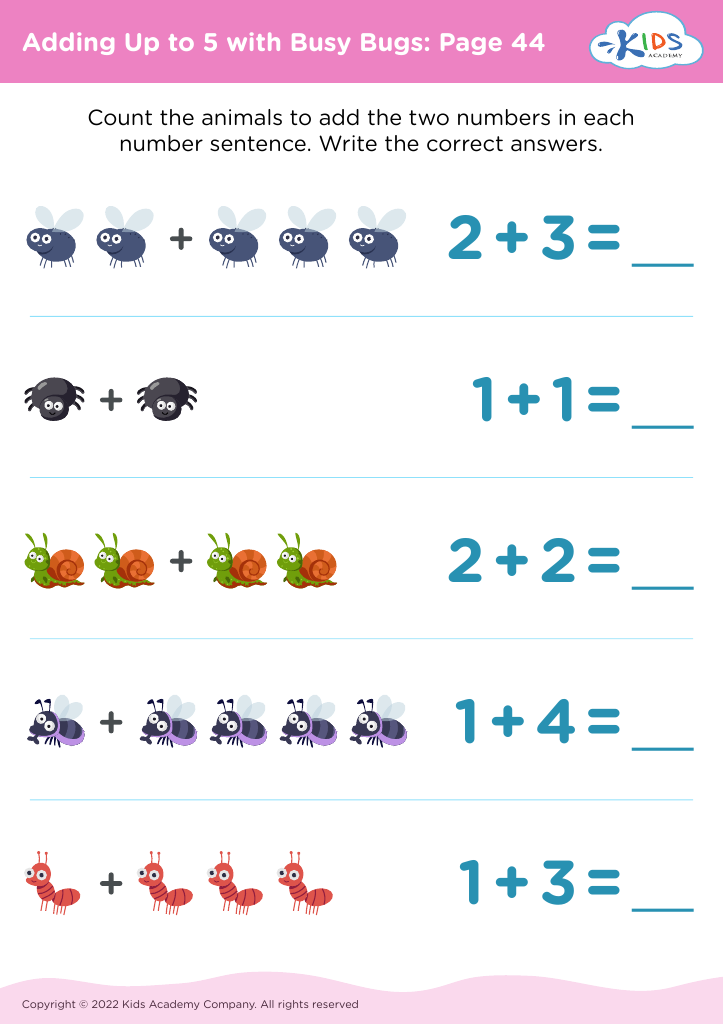
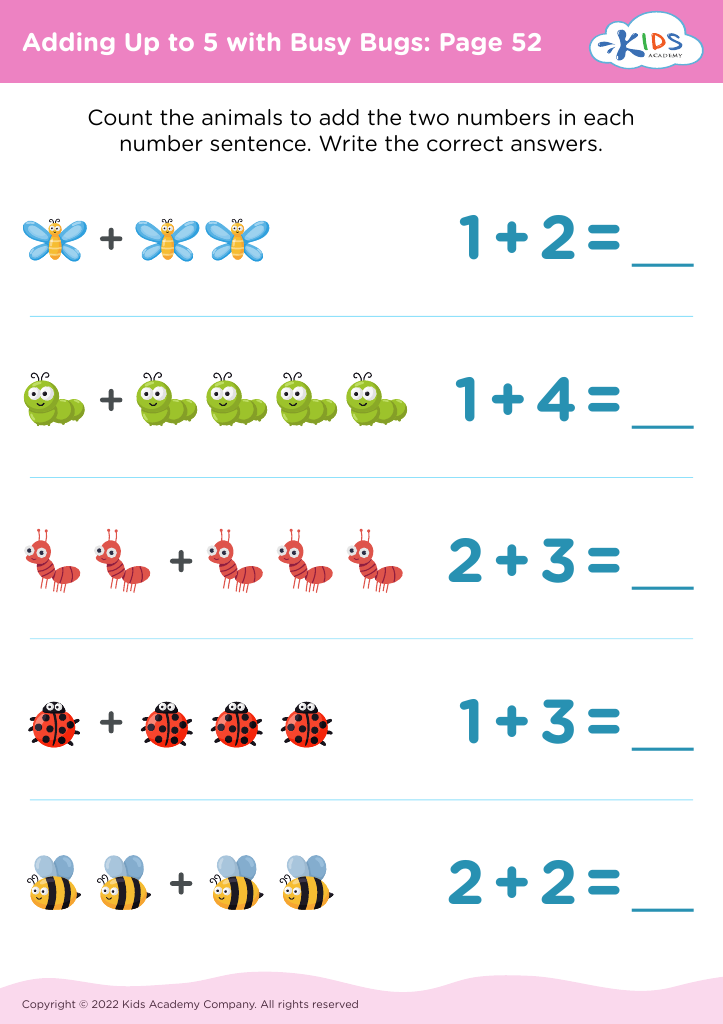
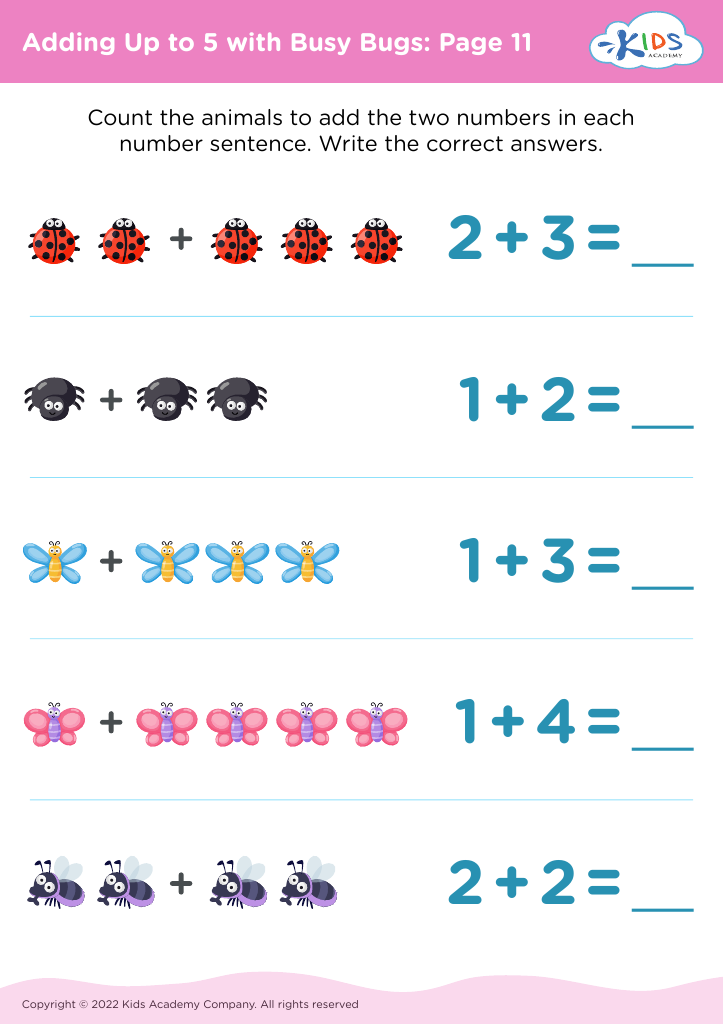



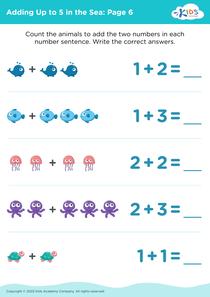
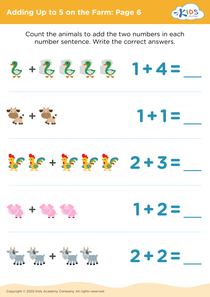
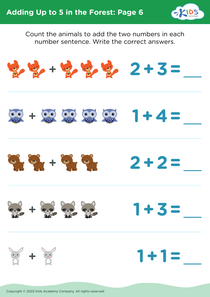
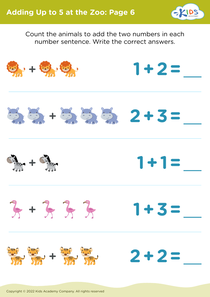
Basic addition skills are foundational for young children's mathematical understanding and overall academic success. Introducing addition through engaging activities, such as "Adding with Busy Bugs," helps 4-year-olds develop numeracy in a fun and interactive way. Parents and teachers should care about this skill as it promotes cognitive development and critical thinking abilities.
Learning addition is not just about numbers; it enhances problem-solving skills and logical reasoning. "Adding with Busy Bugs" utilizes visual aids in the form of colorful, friendly bugs, making abstract concepts concrete and memorable. This approach not only captures children's interest but also improves their memory retention.
Moreover, early exposure to math concepts fosters a positive attitude towards learning. Children who grasp basic addition are more likely to feel confident in their abilities, paving the way for future success in more complex math tasks. Additionally, these skills can aid in daily activities, such as sharing snacks or counting toys, linking learning to real-life situations.
Encouraging collaboration between parents and teachers in reinforcing these skills ensures a consistent and comprehensive learning experience. By investing time and effort into basic addition through playful methods, adults can help shape children's understanding of math, creating a strong foundation for lifelong learning.