Understanding Quantities Adding with Busy Bugs Worksheets for 4-Year-Olds
4 filtered results
-
From - To
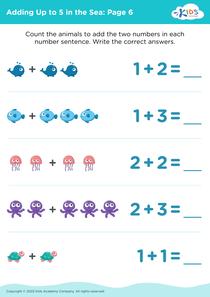
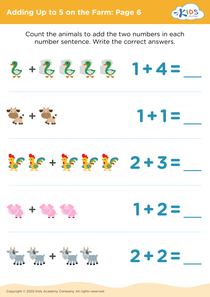
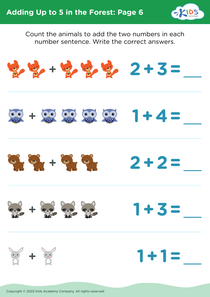
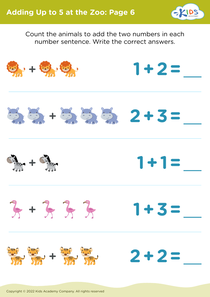
Unlock your child's mathematical potential with our "Understanding Quantities: Adding with Busy Bugs Worksheets" designed specifically for 4-year-olds. These engaging and colorful worksheets utilize charming bug illustrations to teach young learners the foundational concepts of quantity and addition. Children will enjoy counting, identifying, and comparing different groups of bugs, enhancing their number sense while developing essential early math skills. Perfect for at-home learning or classroom activities, these sheets create a fun, interactive way for your little ones to explore numbers and become confident in their ability to add. Start their learning journey with Busy Bugs today!
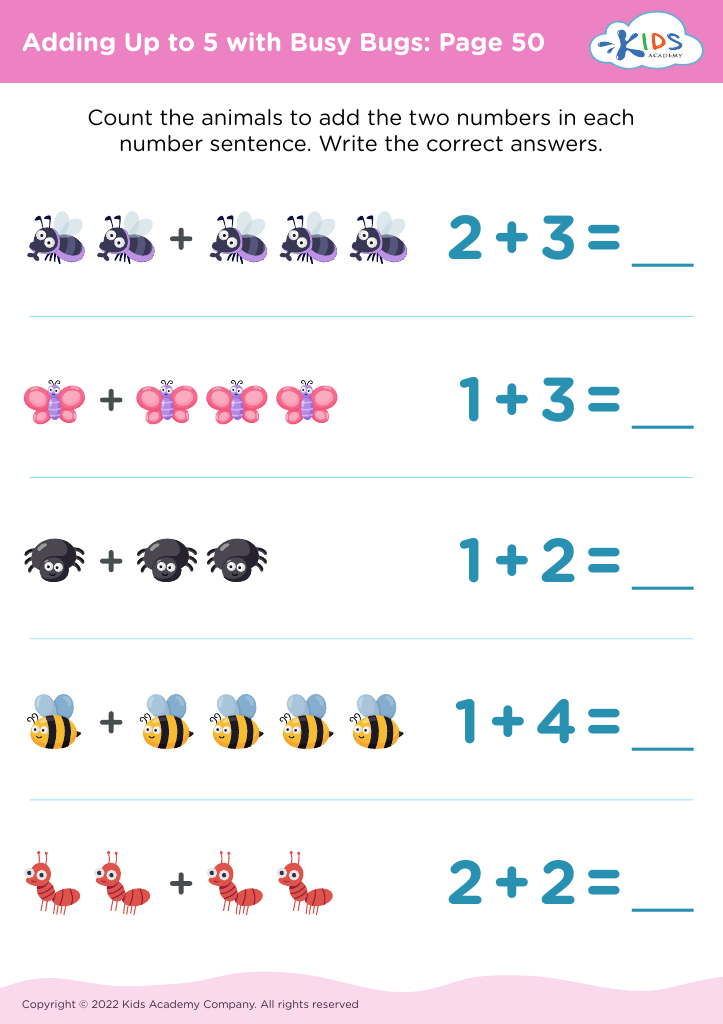
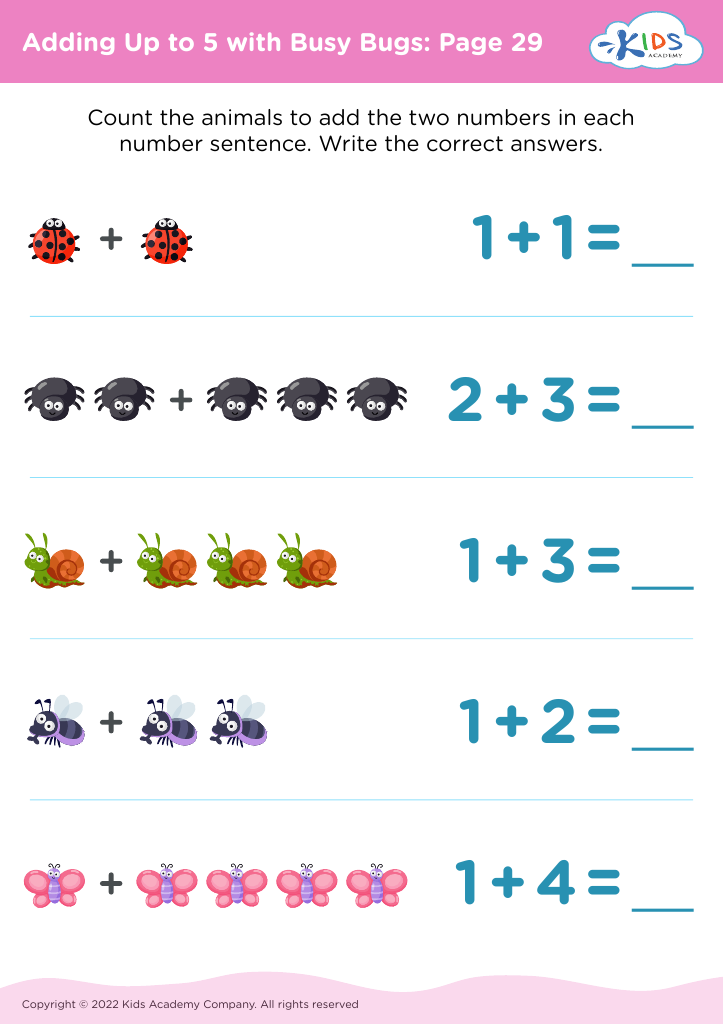
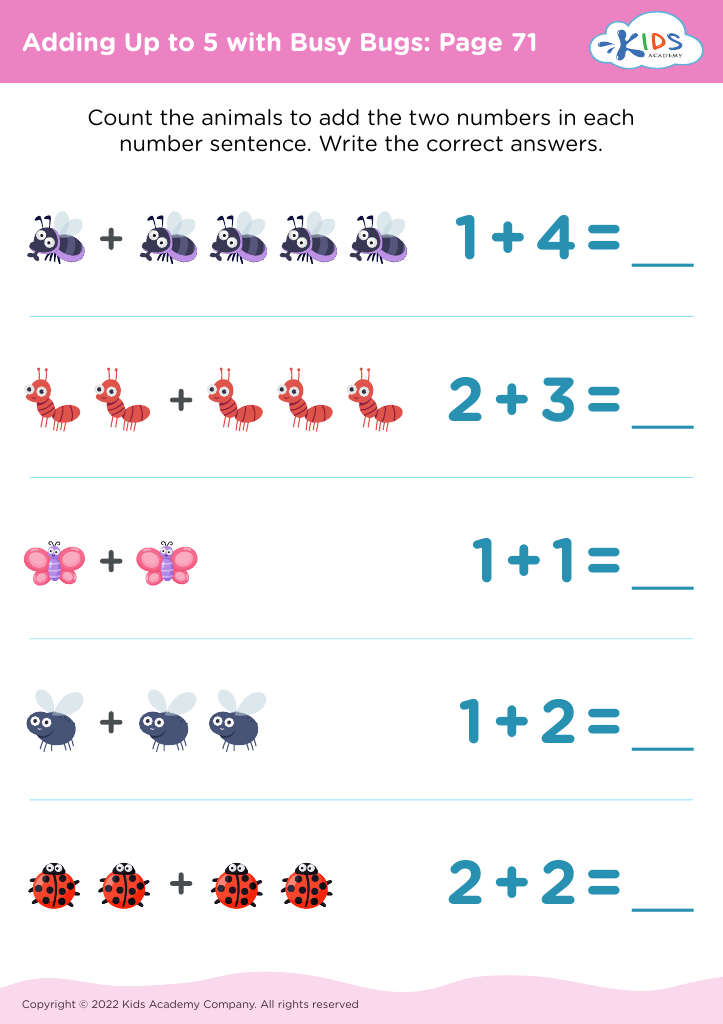
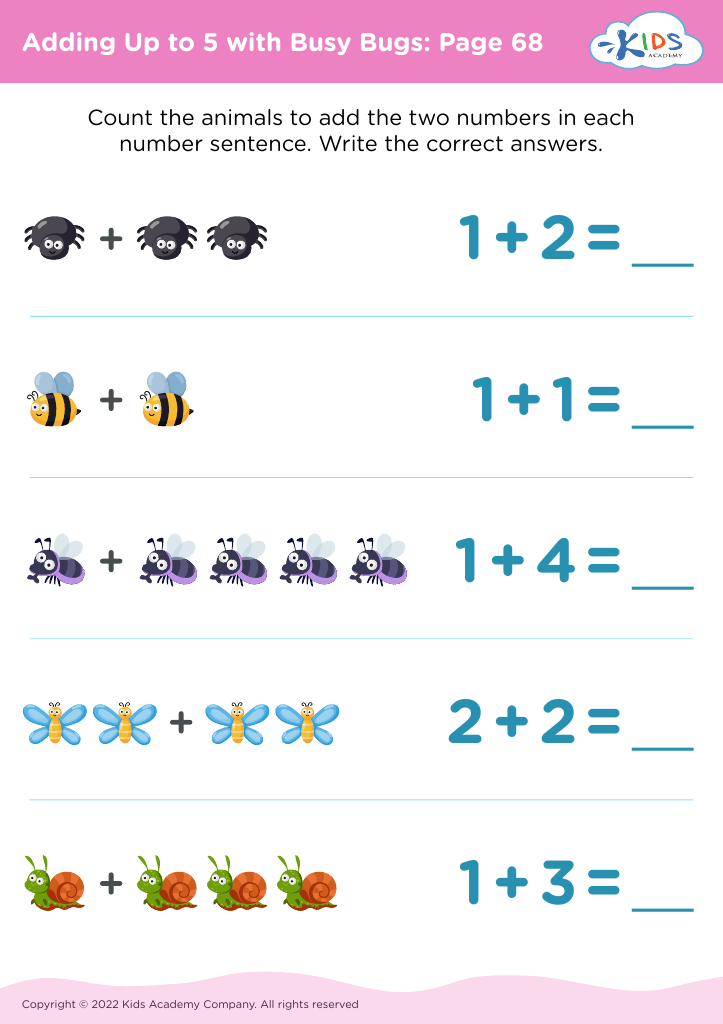



Understanding quantities and basic addition is fundamental for early childhood development, and programs like "Understanding Quantities Adding with Busy Bugs" offer an engaging way to introduce these concepts to 4-year-olds. Early mathematical skills set the foundation for academic success and cognitive growth. When parents and teachers prioritize such learning opportunities, they help children develop crucial problem-solving skills and logical thinking.
The “Busy Bugs” program utilizes playful characters that capture children's interest, making learning fun and interactive. This approach not only helps children comprehend addition through visual and tangible stimuli but also promotes a love for learning. As young learners manipulate bug-themed objects to understand numbers and sequences, they enjoy hands-on experiences that reinforce their understanding of quantities.
Additionally, these activities foster essential social skills as children often work collaboratively, share ideas, and communicate their thought processes. Providing a solid grasp of basic math concepts enables children to approach more complex subjects with confidence in the future. For parents and teachers, advocating such interactive learning tools reflects a commitment to fostering holistic educational development, preparing children for academic challenges ahead while nurturing their intellectual curiosity in a supportive environment.