Addition up to 5 Addition & Subtraction Worksheets for 4-Year-Olds
4 filtered results
-
From - To
Discover our engaging "Addition up to 5" worksheets, designed specifically for 4-year-olds! These interactive activities introduce young learners to the fundamental concepts of addition and subtraction, using visuals and fun themes to cultivate an enjoyable learning experience. By practicing with numbers up to 5, your child will strengthen their math skills, boost confidence, and develop critical thinking. Each worksheet fosters independent learning, encouraging children to explore math in a playful way. Perfect for homeschool or supplemental learning, these resources make math early engaging and accessible. Grab our printable worksheets today and watch your child excel in foundational math skills!
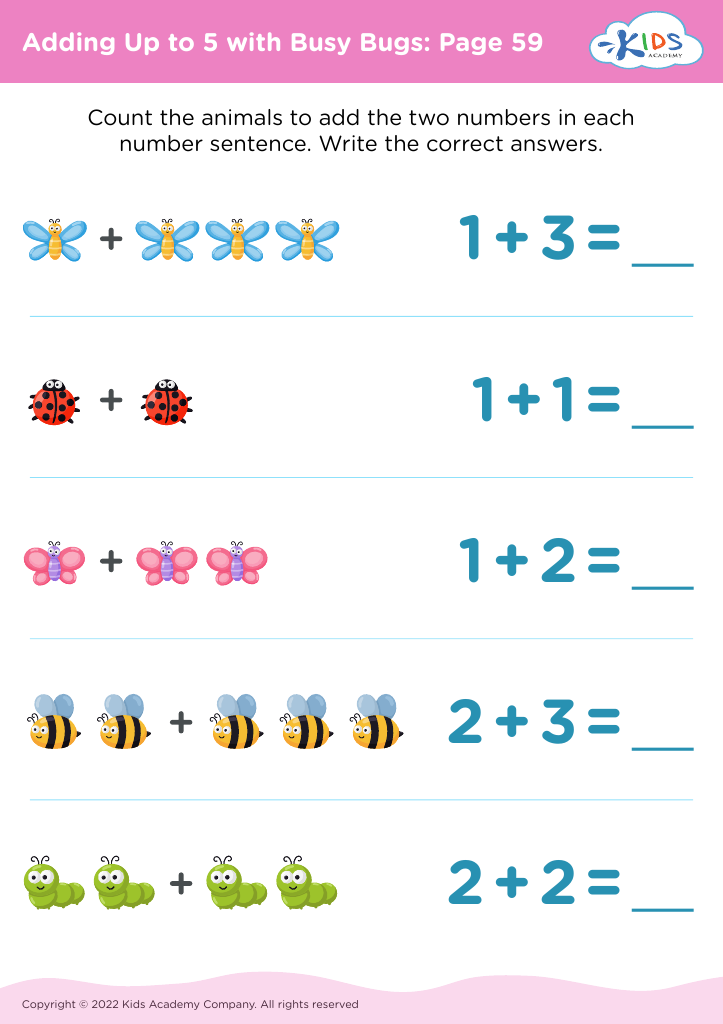
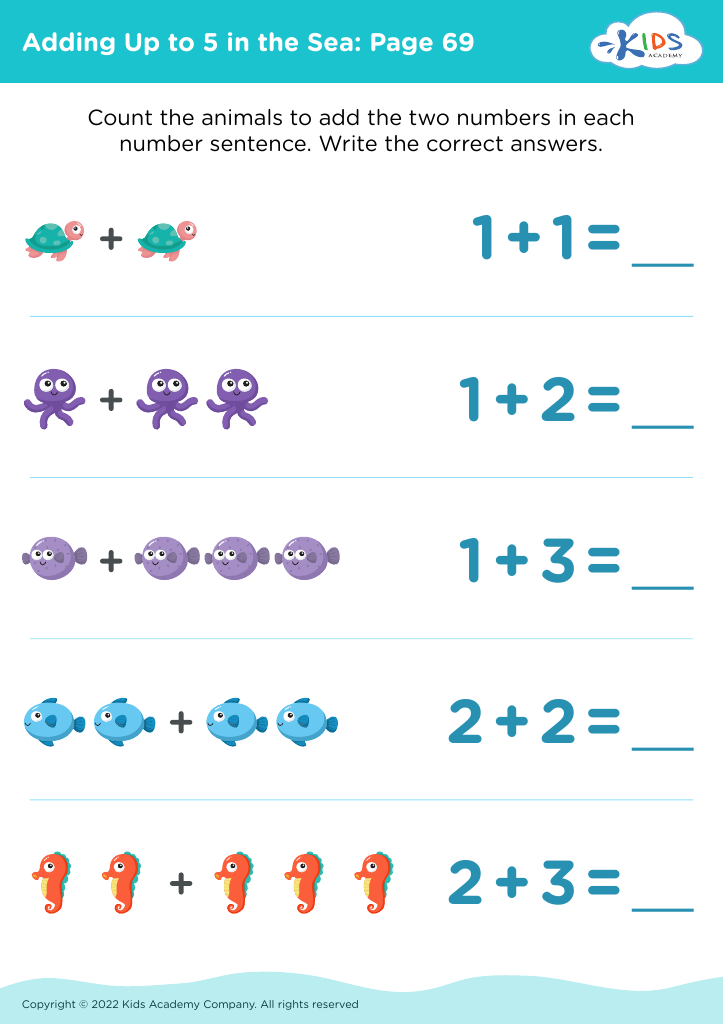
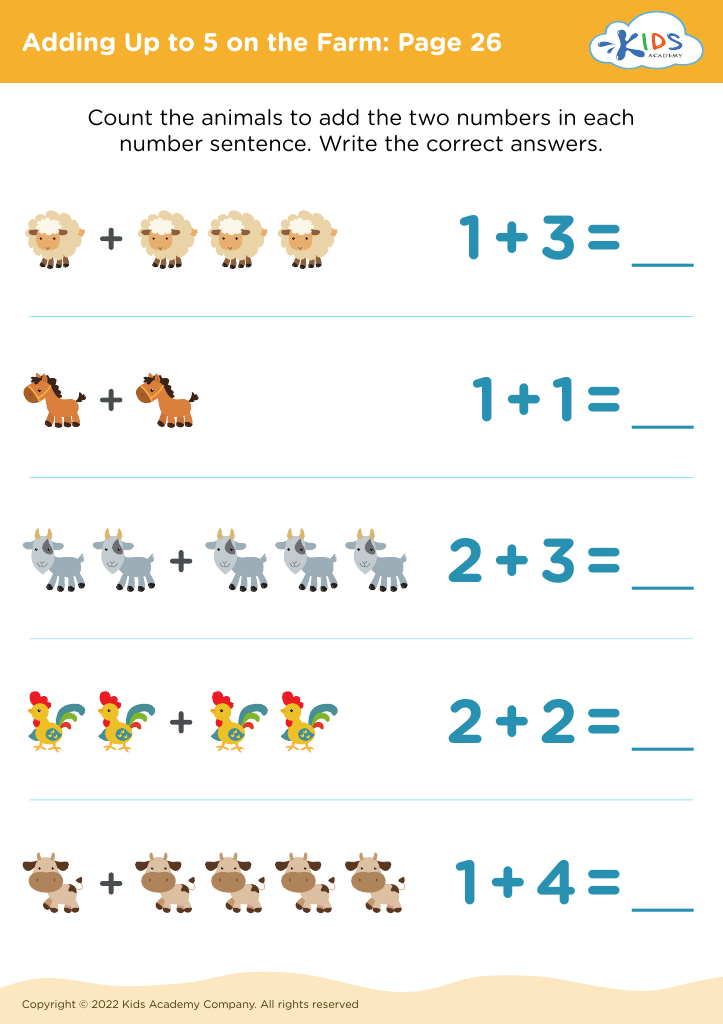
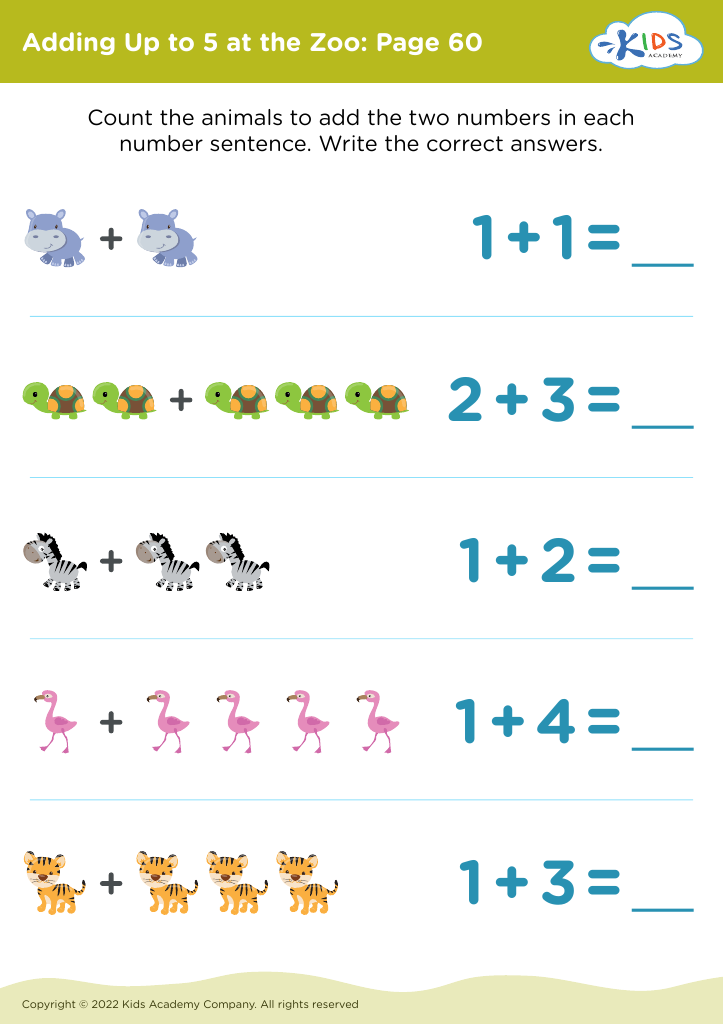








Teaching addition and subtraction up to 5 to 4-year-olds is crucial for their early mathematical development and overall cognitive growth. At this young age, children are naturally curious and eager to learn, making it an ideal time to introduce basic math concepts. Understanding simple addition and subtraction helps children develop problem-solving skills and logical reasoning. These foundational skills are essential as they build the groundwork for more complicated arithmetic in later years.
Additionally, engaging with numbers and math fosters critical thinking and promotes confidence in academic settings. Parents and teachers can incorporate math in everyday activities, making learning fun and relevant. This can include counting toys, sharing snacks, or playing games that involve simple addition and subtraction, turning learning into a playful experience.
Furthermore, early exposure to math can help identify learning patterns and potential difficulties, allowing for timely support and intervention. By nurturing mathematical understanding, parents and teachers help children develop a positive attitude toward math, encouraging lifelong learning. In essence, focusing on addition and subtraction up to 5 equips young learners with vital tools for their educational journey and lays a strong foundation for future academic success.








