Animal identification Addition & Subtraction Worksheets for 4-Year-Olds
27 filtered results
-
From - To
Unlock your child's arithmetic skills with our "Animal Identification Addition & Subtraction Worksheets" designed for 4-year-olds. These engaging printables combine fundamental math skills with delightful animal-themed activities, making learning fun and effective. Kids will reinforce their addition and subtraction abilities while identifying various animals, ensuring a multidimensional educational experience. Perfect for preschoolers, these worksheets provide ample practice to boost their early math confidence. Ideal for both home and classroom use, they cater to young learners' interests, turning math practice into an adventure. Discover our exceptional resources, building a strong foundation for your child's future math success.
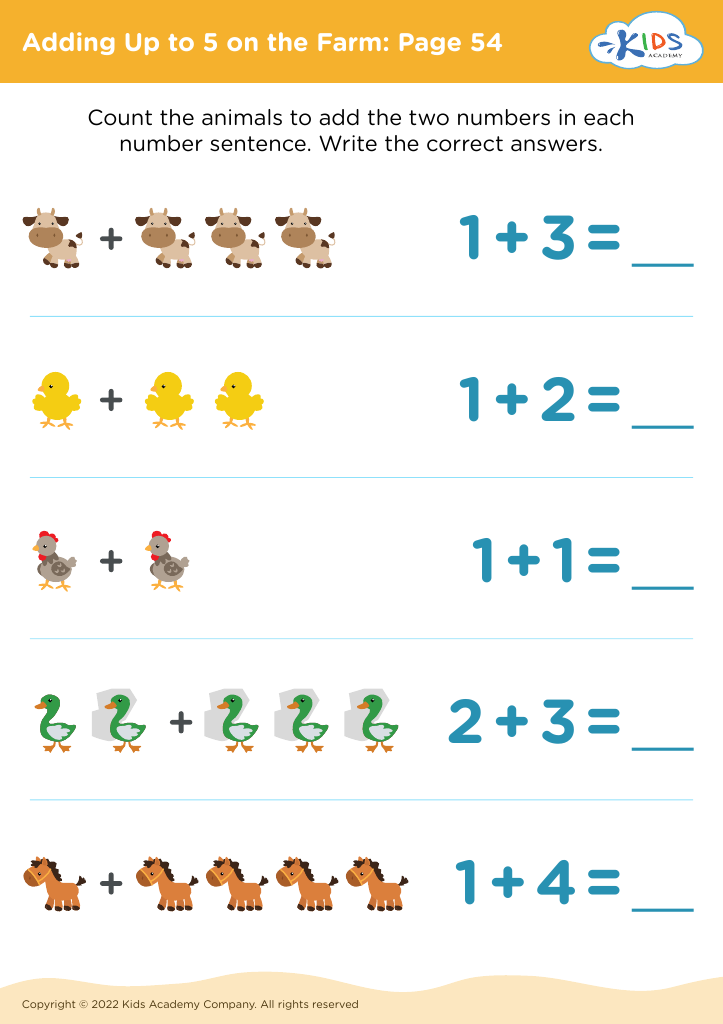
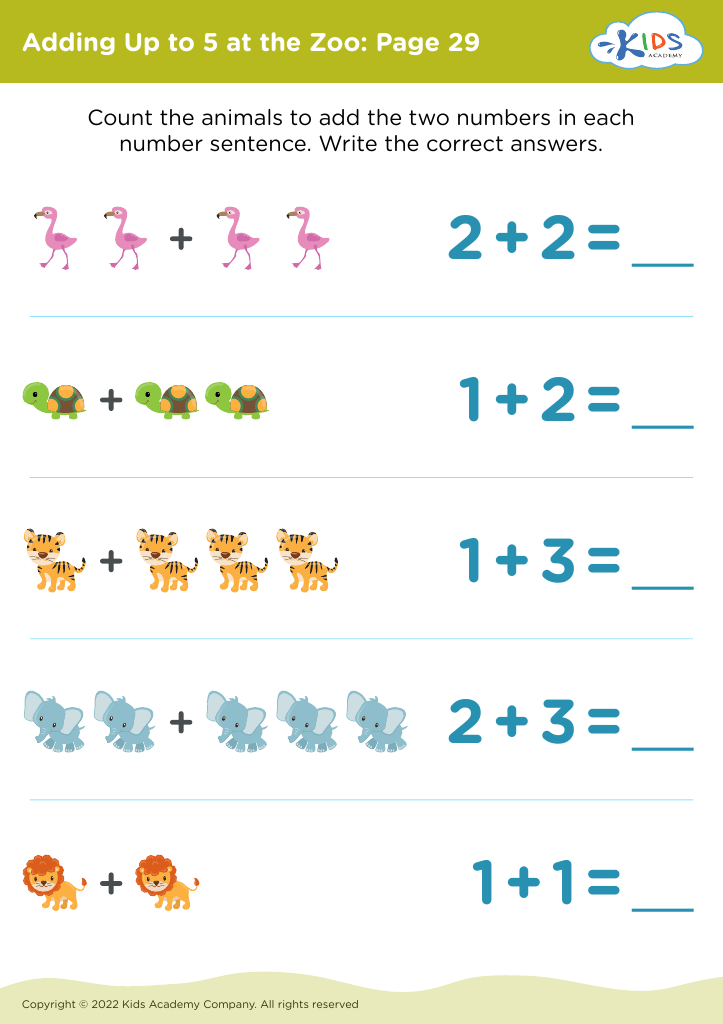
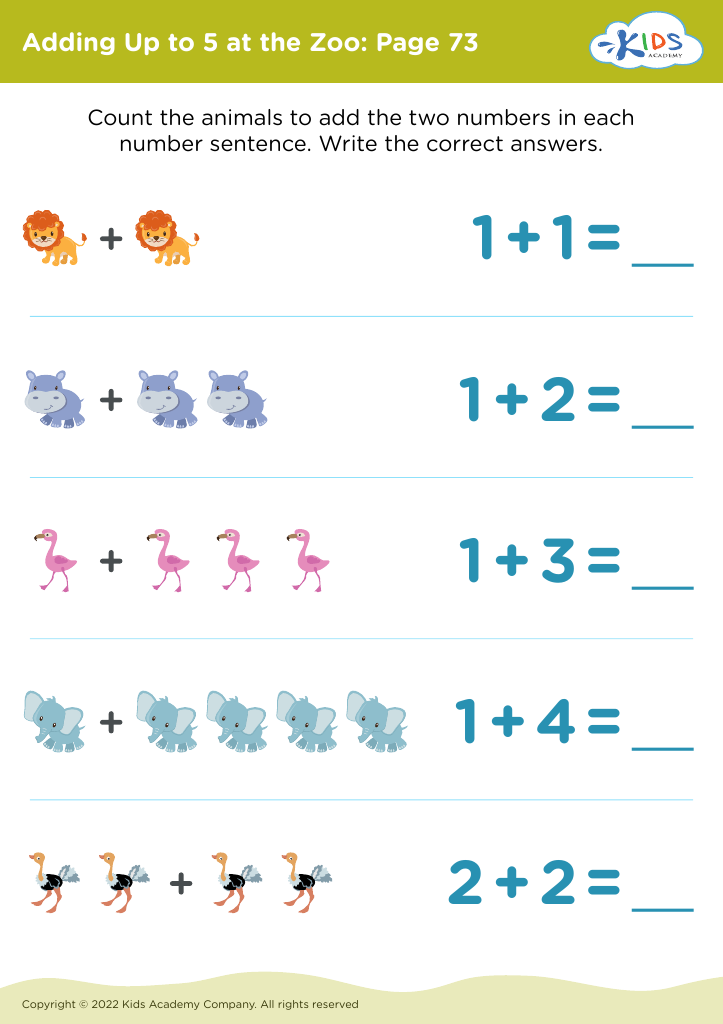
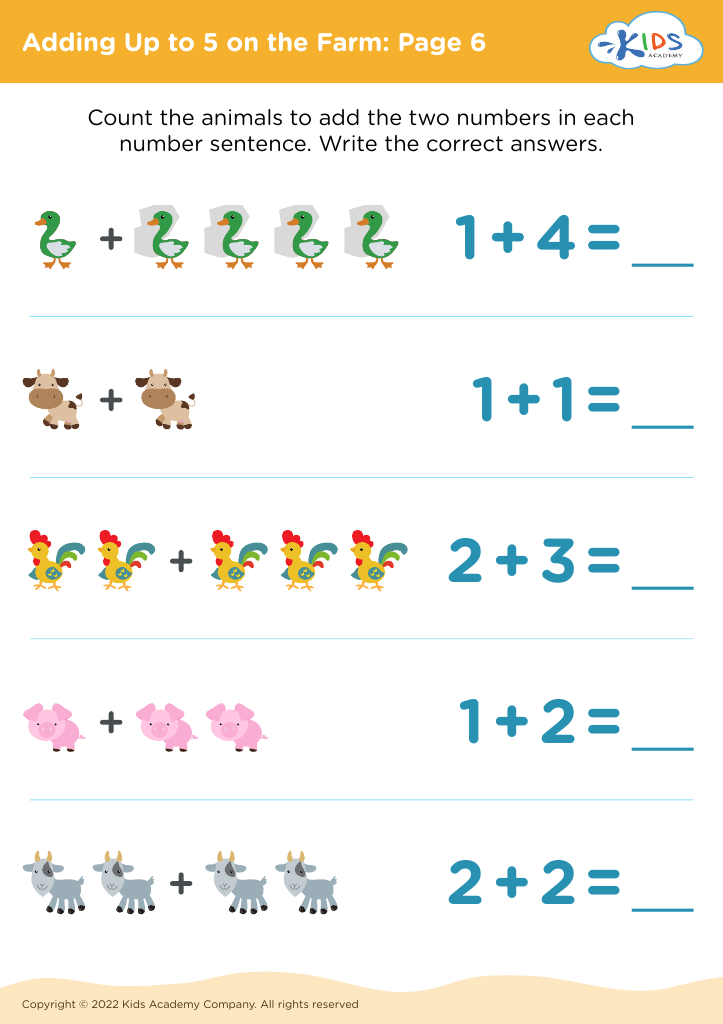
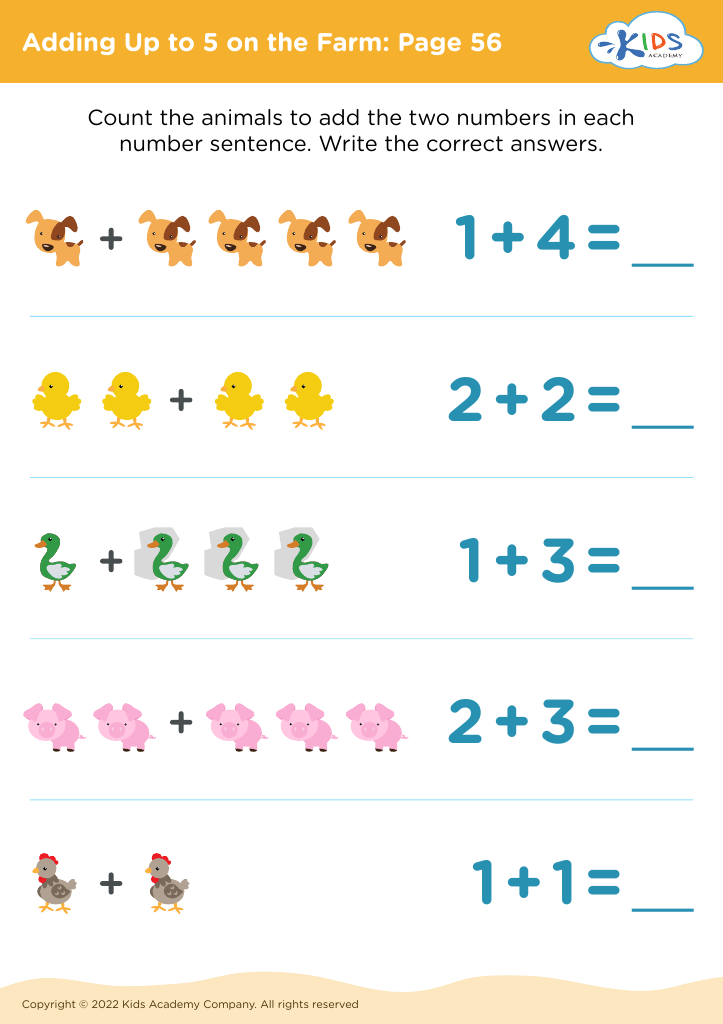
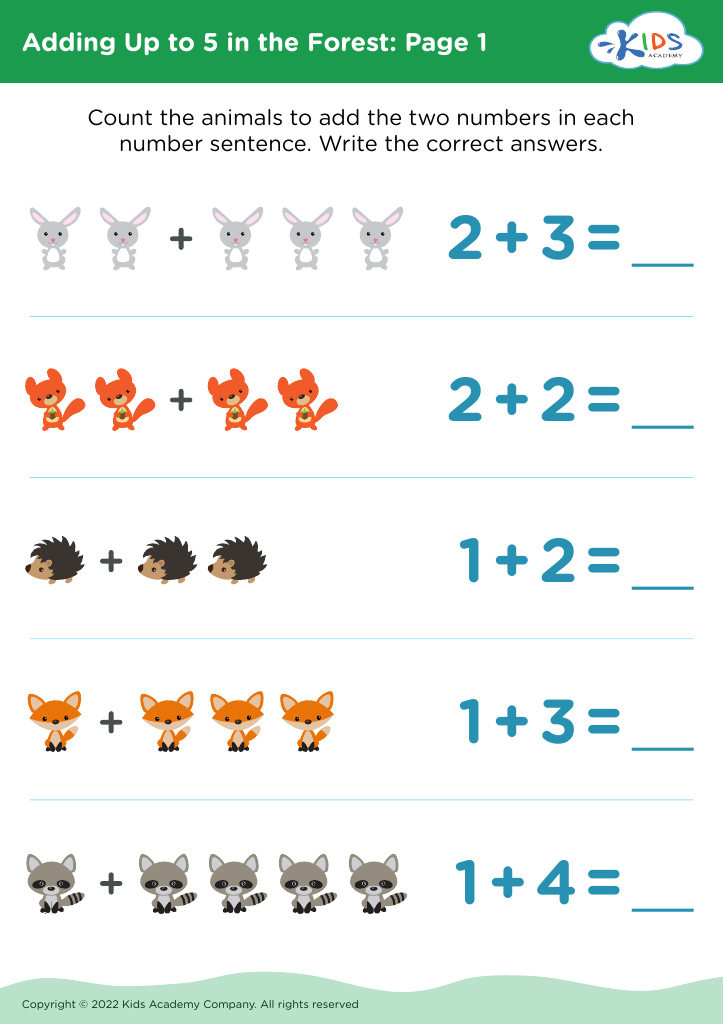
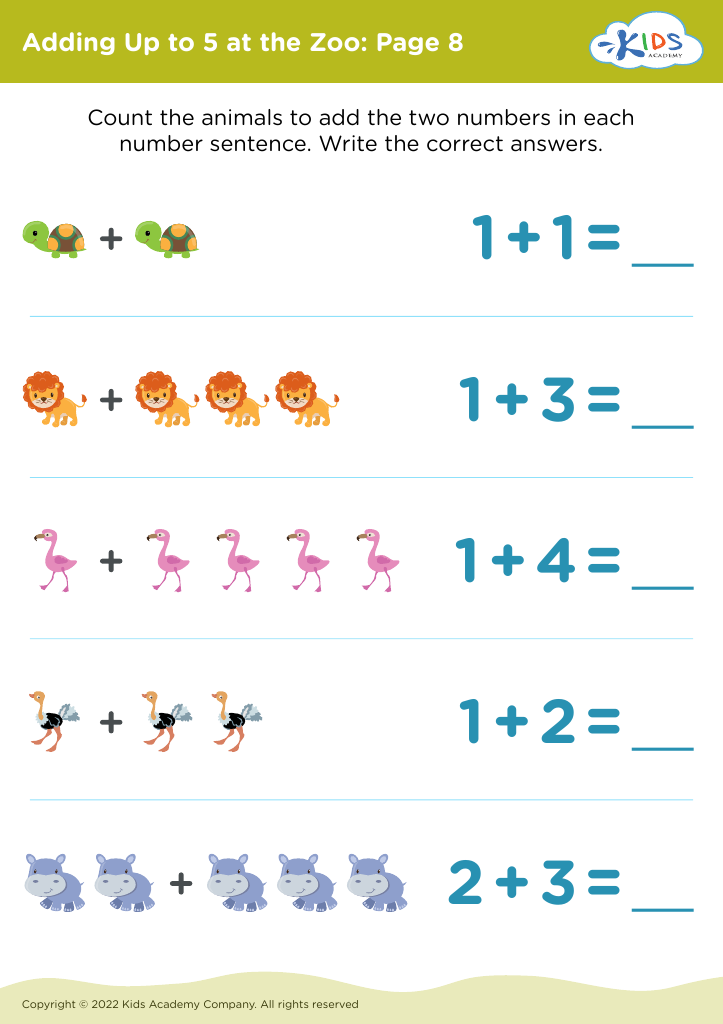
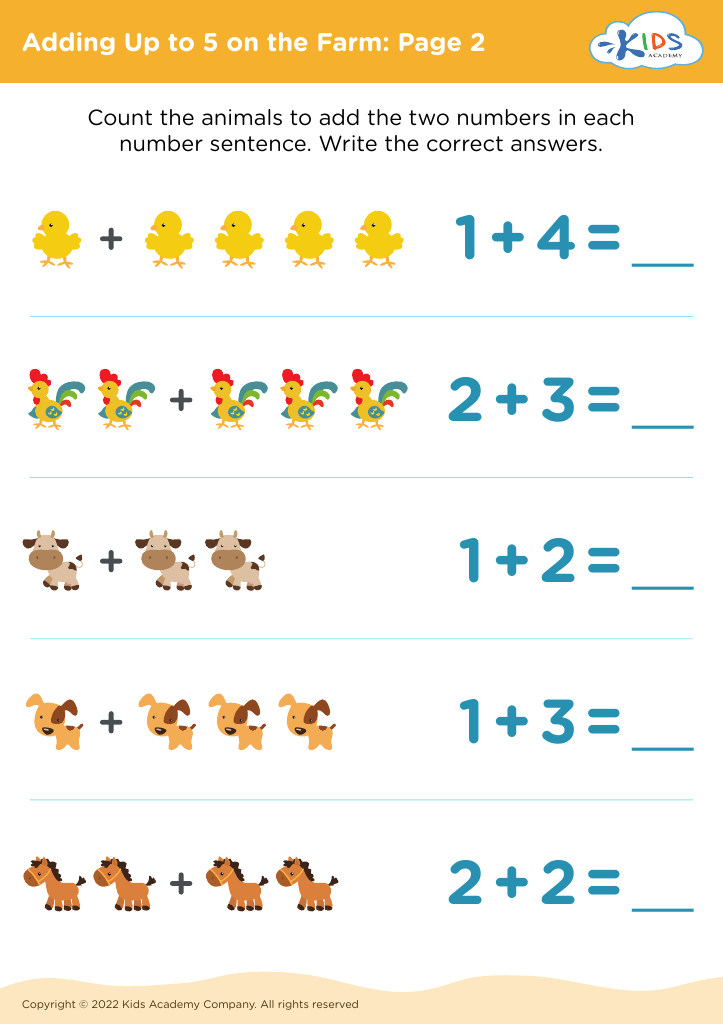
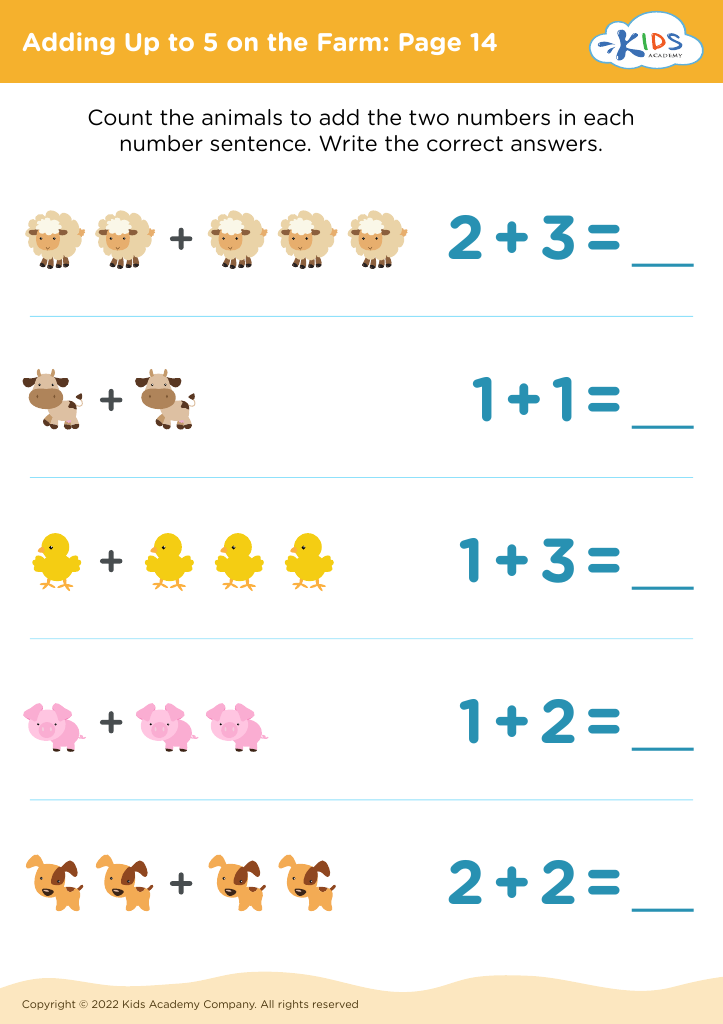
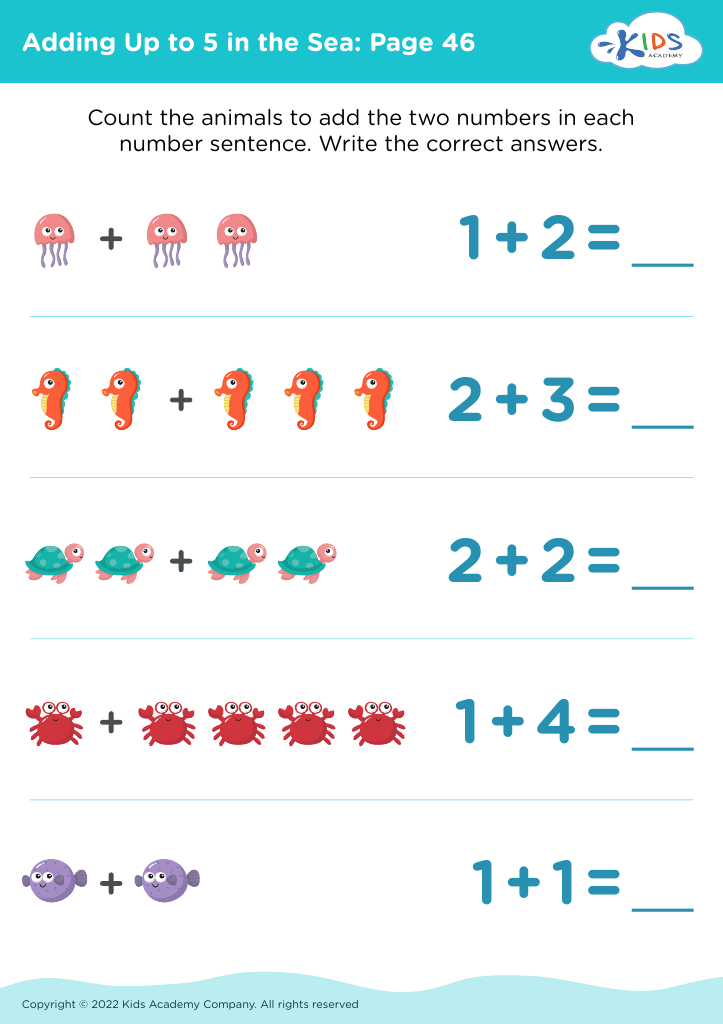
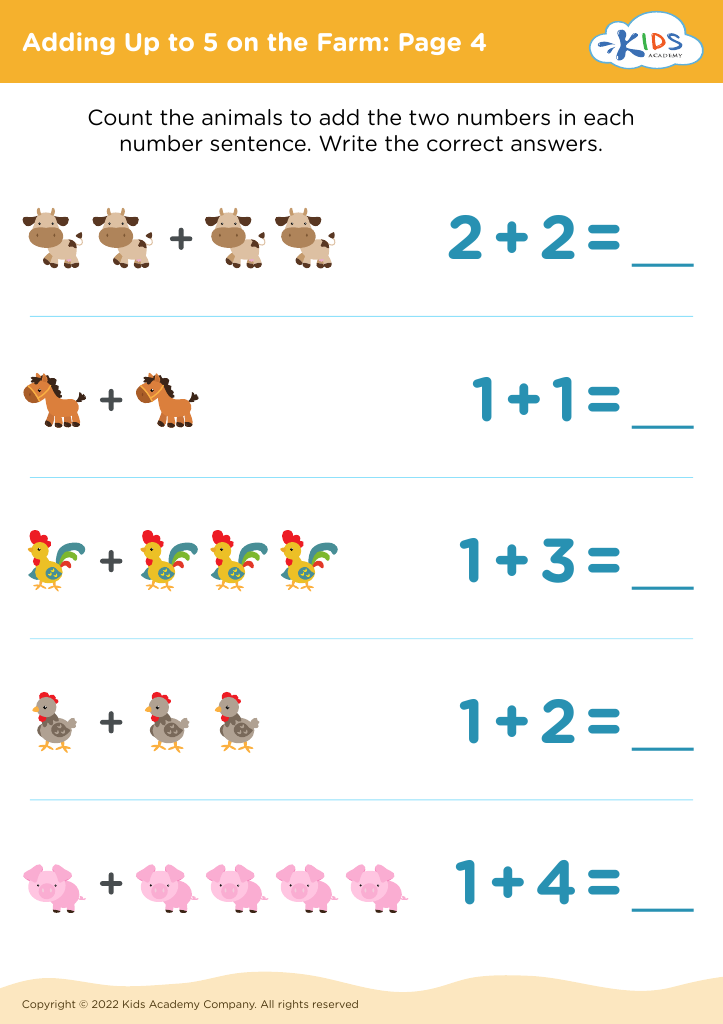
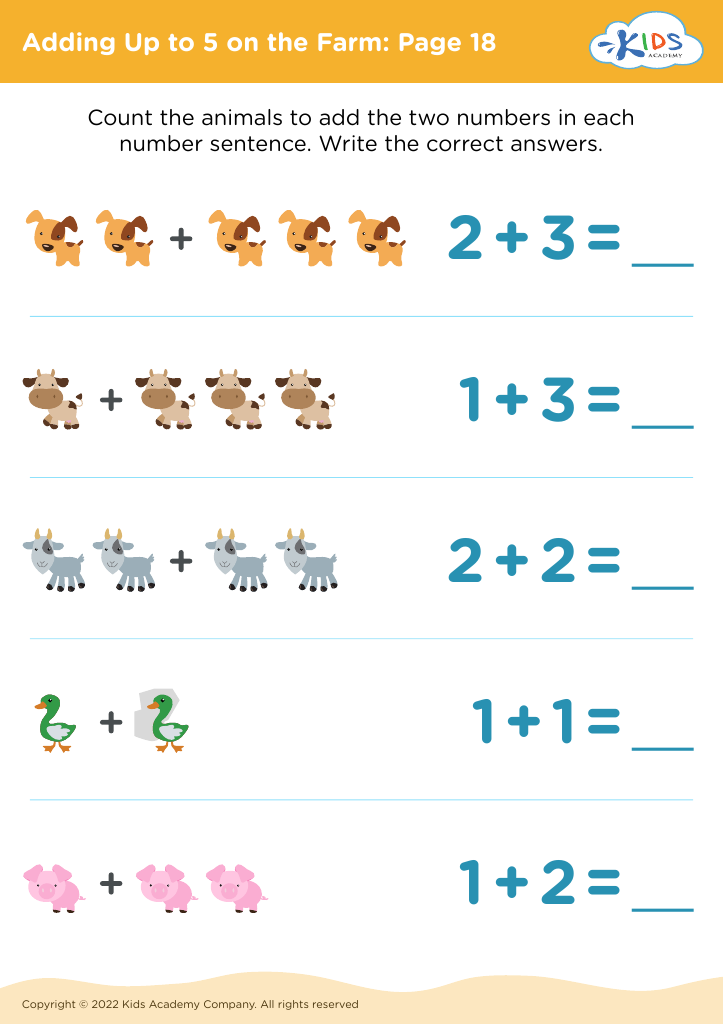
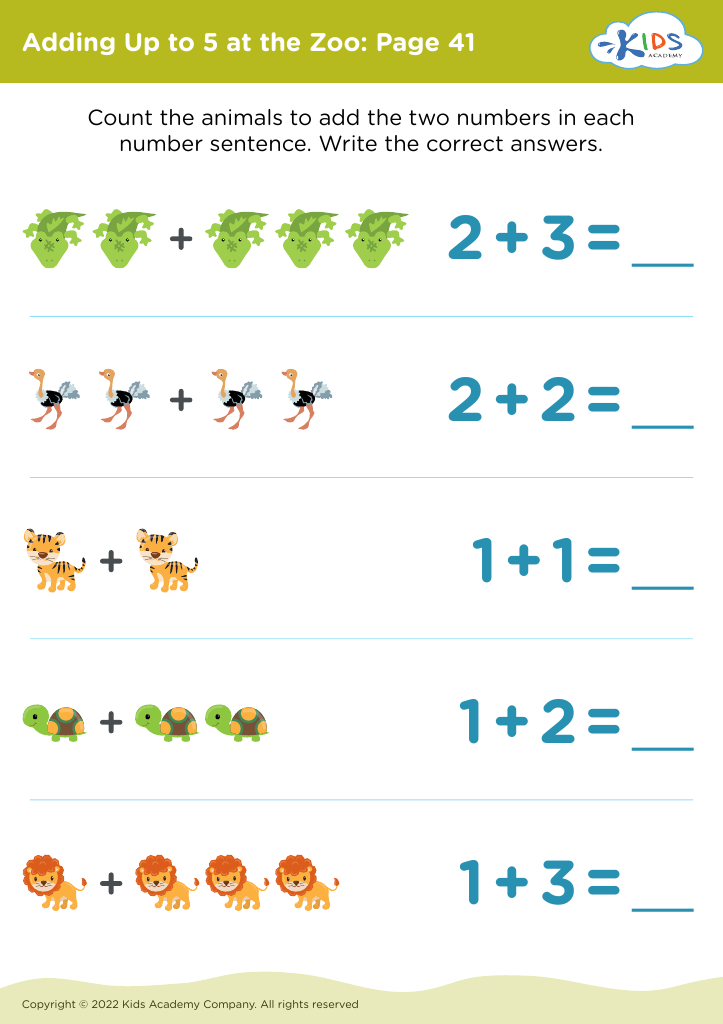
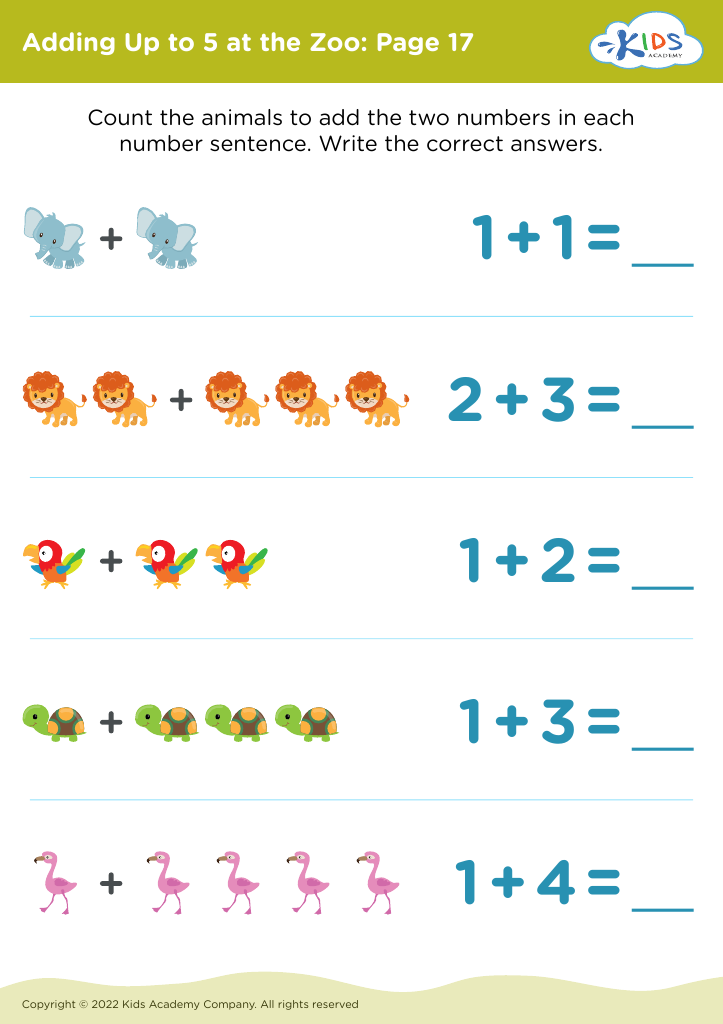
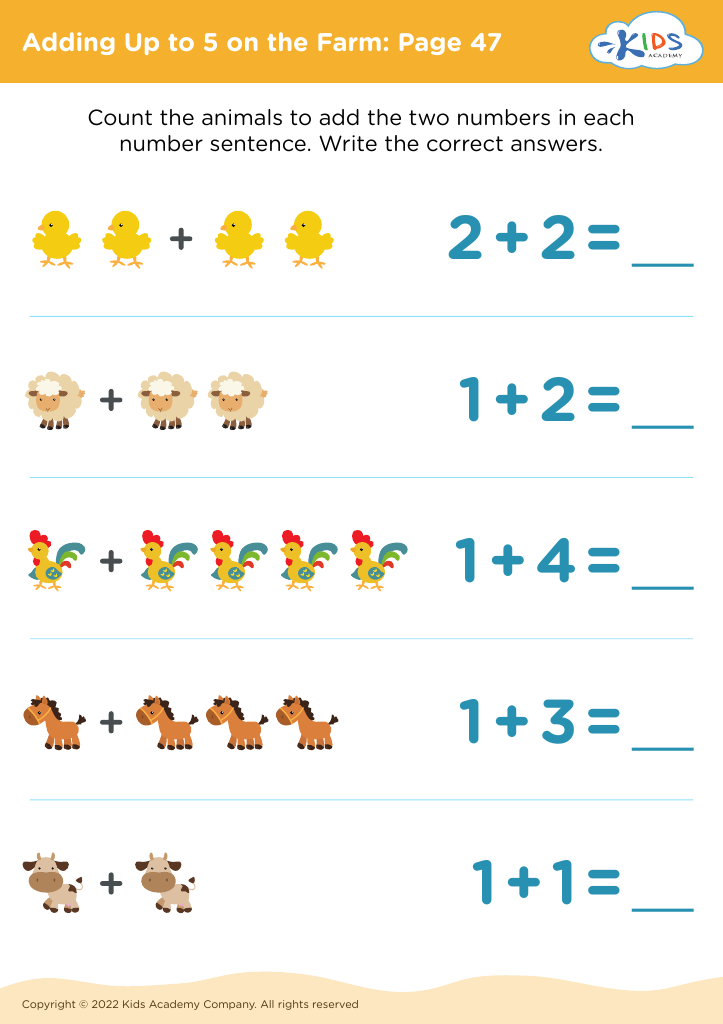
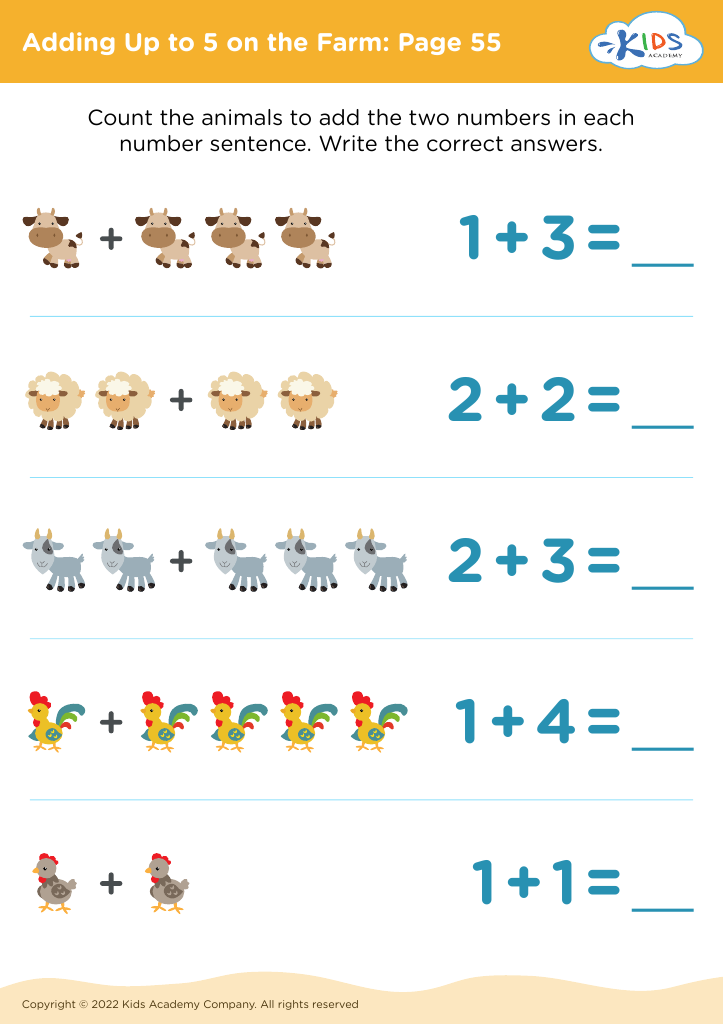
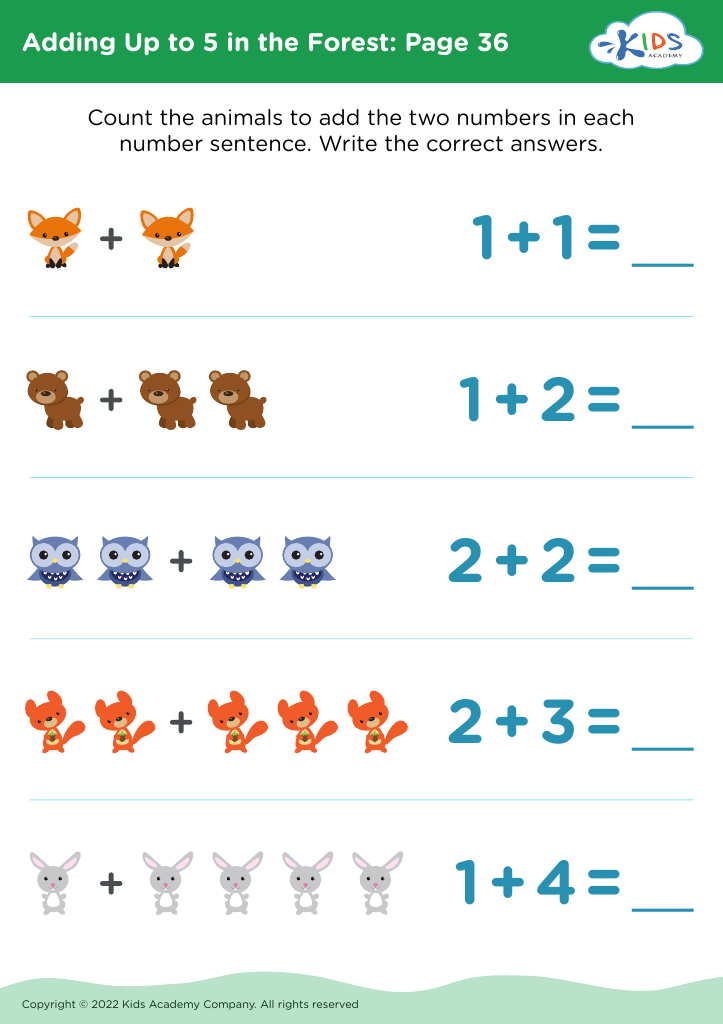
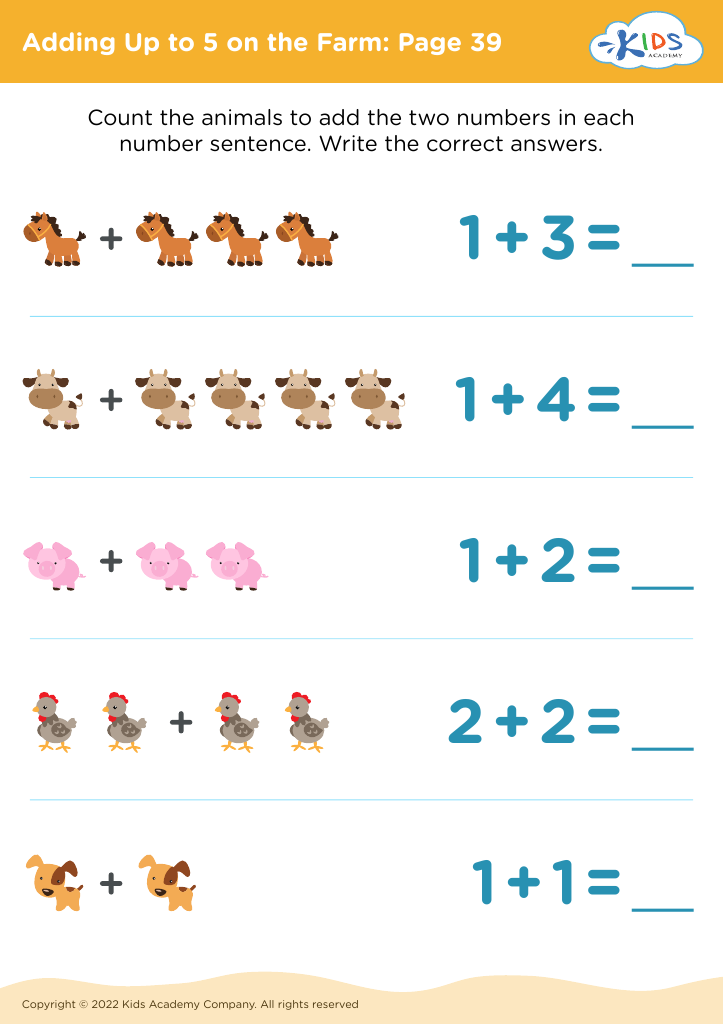
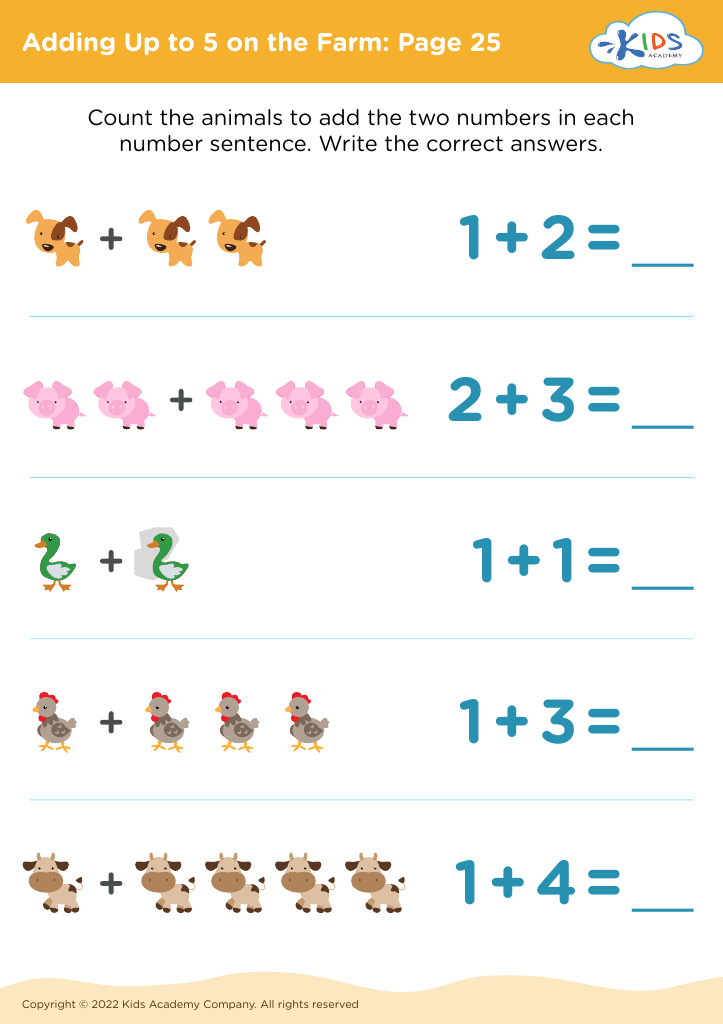
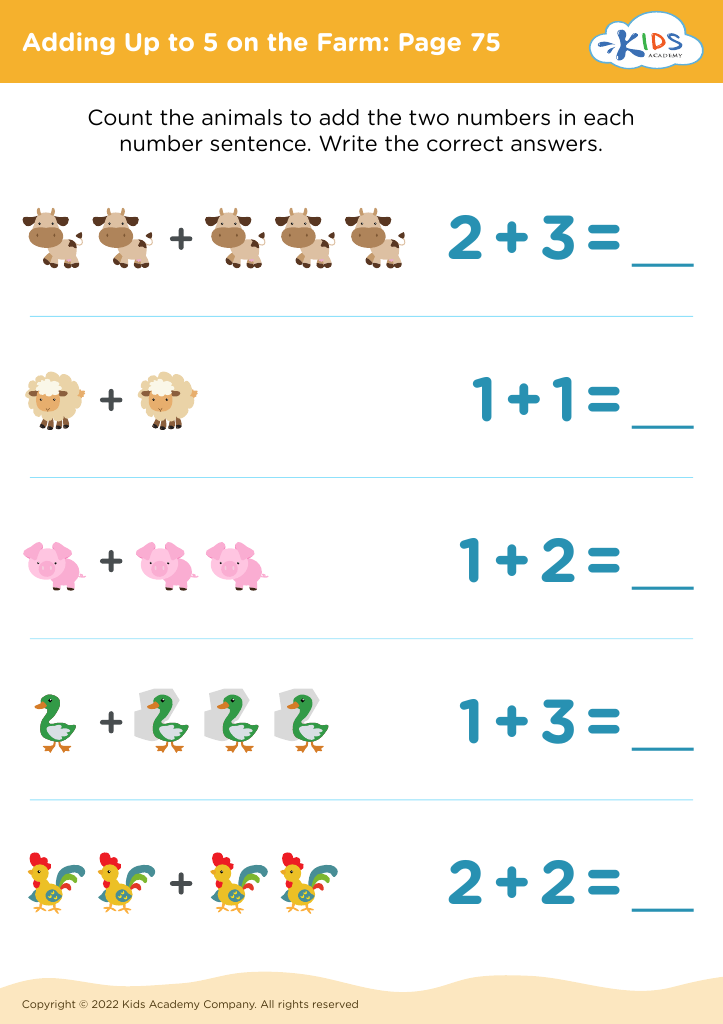
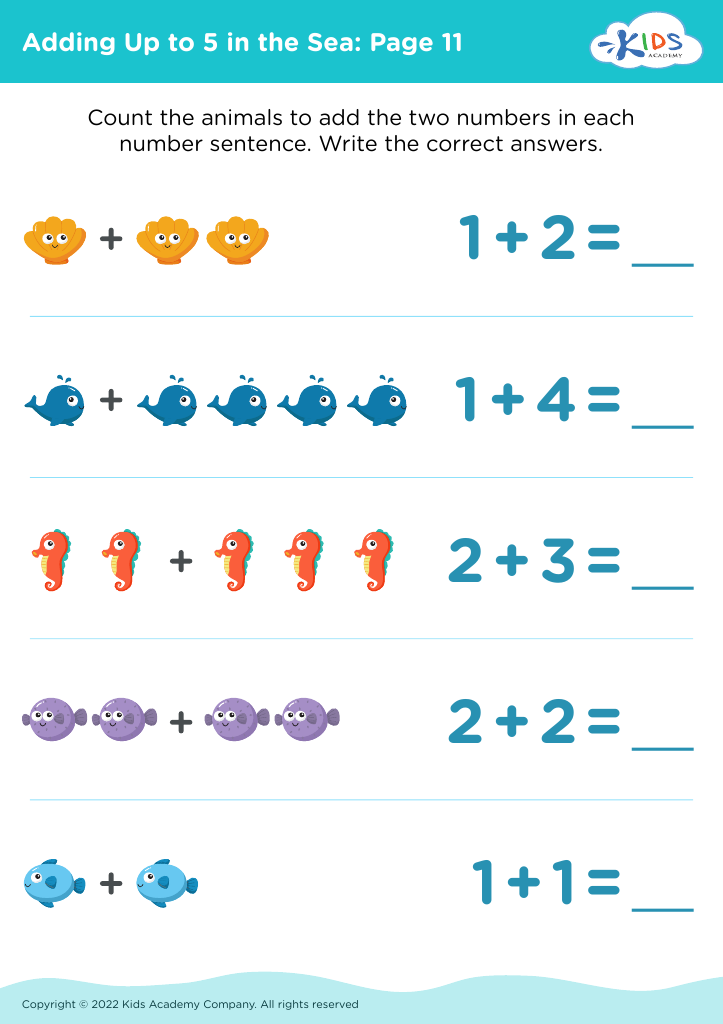
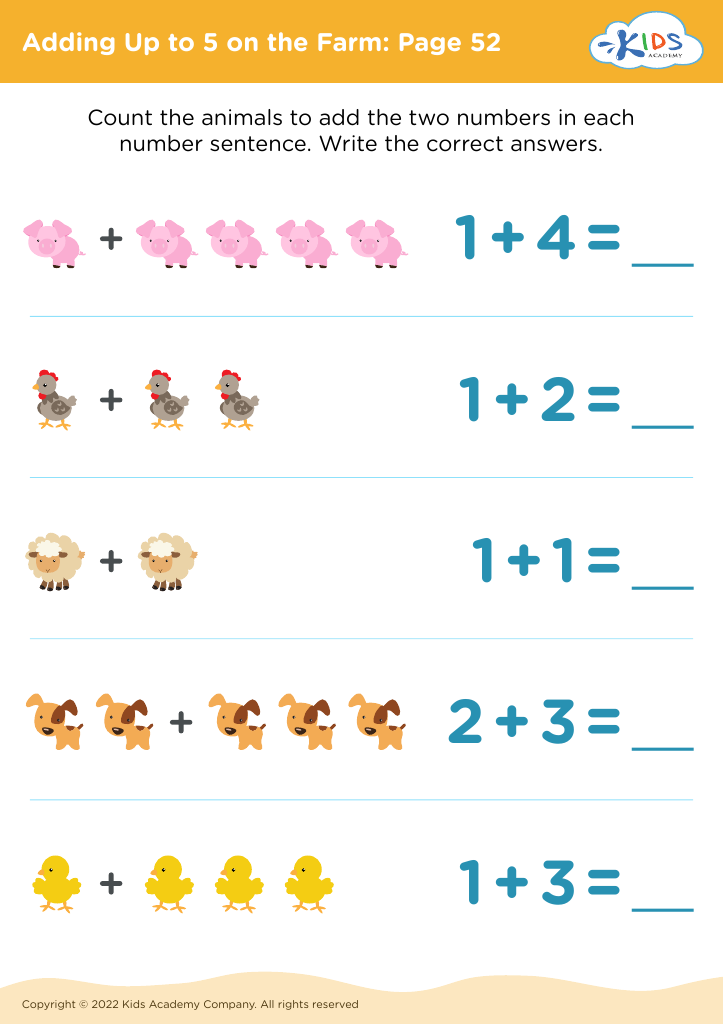
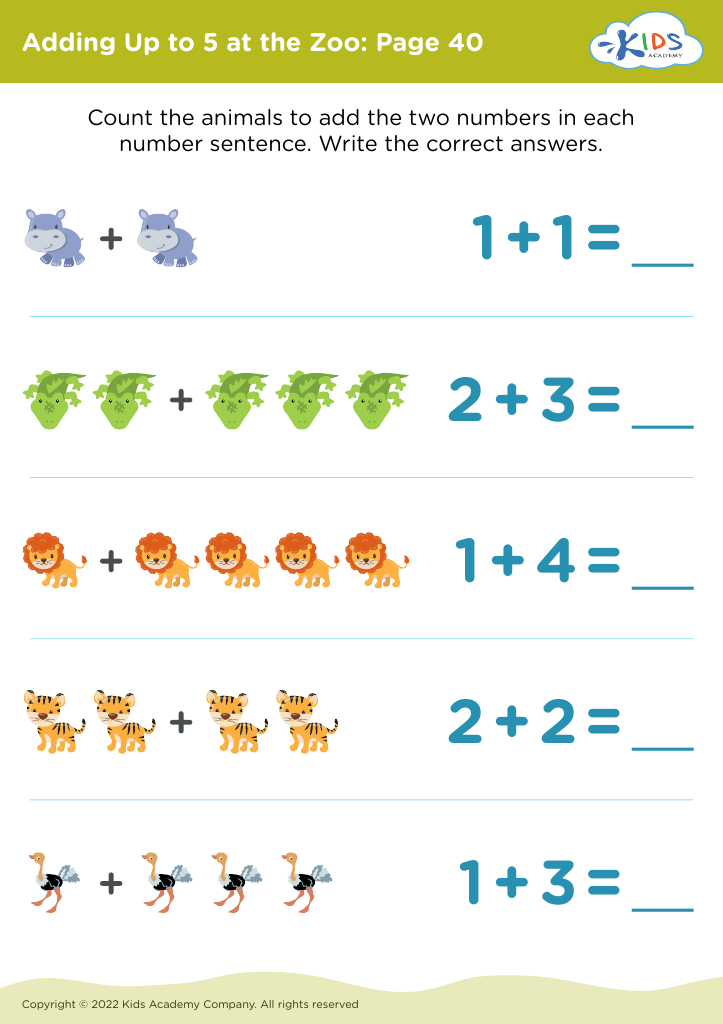
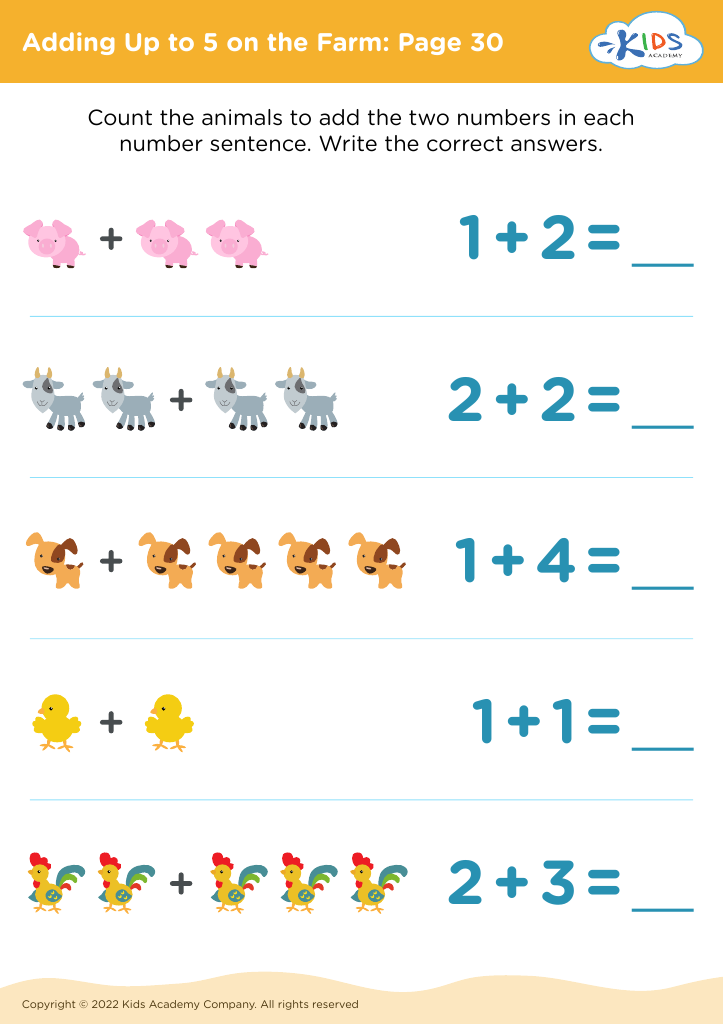








Parents and teachers should care about animal identification, addition, and subtraction for 4-year-olds because these activities lay a critical foundation for early cognitive and academic development. At this young age, children's brains are incredibly receptive to new information, and integrating learning with fun activities can significantly enhance their engagement and retention.
Animal identification helps children develop critical observational skills and expand their vocabulary. Recognizing different animals and naming them enhances their memory, language skills, and categorization abilities, which are essential for reading and science as they grow older.
Integrating simple addition and subtraction with animal activities adds another layer of developmental benefits. These basic arithmetic skills are the building blocks for more complex math concepts. Early exposure to numbers and operations can foster a positive attitude towards math, reduce future anxiety, and improve problem-solving skills. Engaging them with familiar and enjoyable subjects like animals makes learning feel less like a chore and more like a game, increasing motivation and participation.
Furthermore, these activities encourage fine motor skills, as children often sort animal figures or use fingers to count, and social skills when performed in group settings. Thus, parents and teachers facilitate a well-rounded, enjoyable educational experience that helps prepare children for more structured learning environments.








