Attention to Detail Addition & Subtraction Worksheets for 4-Year-Olds
3 filtered results
-
From - To
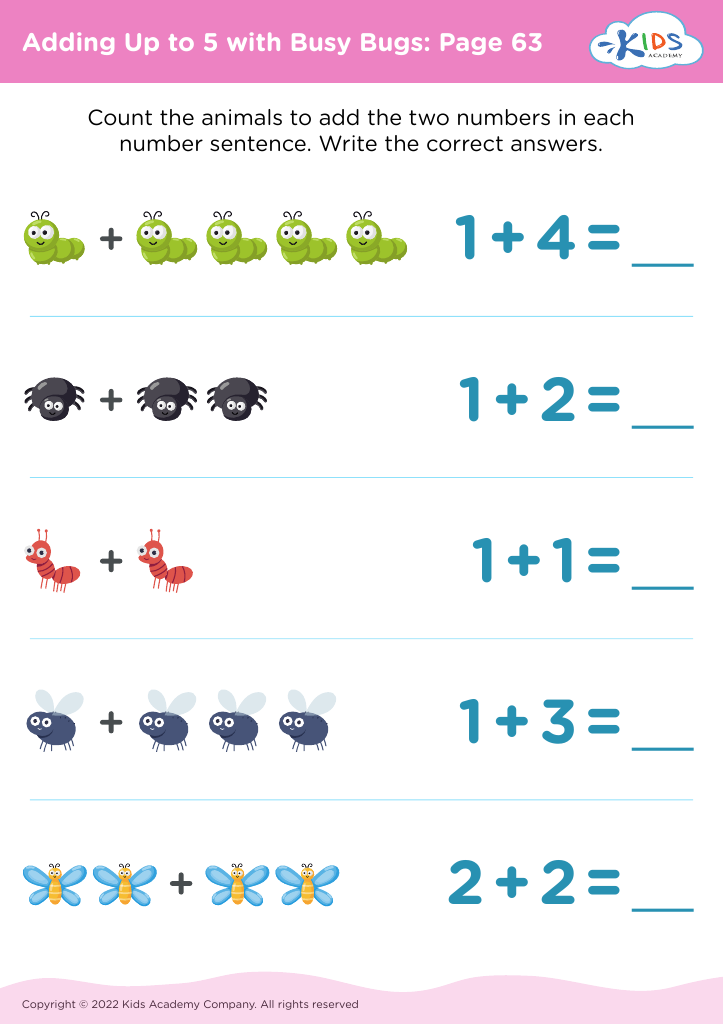
Enhance your 4-year-old's math skills with our specially crafted "Attention to Detail Addition & Subtraction Worksheets." Designed to foster early numeracy, these engaging activities help young learners recognize patterns, improve focus, and strengthen problem-solving skills. Each vibrant worksheet ensures fun-filled learning with adorable illustrations and simple equations tailored to their developmental stage. As kids practice addition and subtraction, they'll also boost their attention to detail, laying a solid foundation for future success in math. Perfect for parents and teachers, these worksheets turn practice time into an educational adventure. Available now on Kids Academy, let the learning begin!
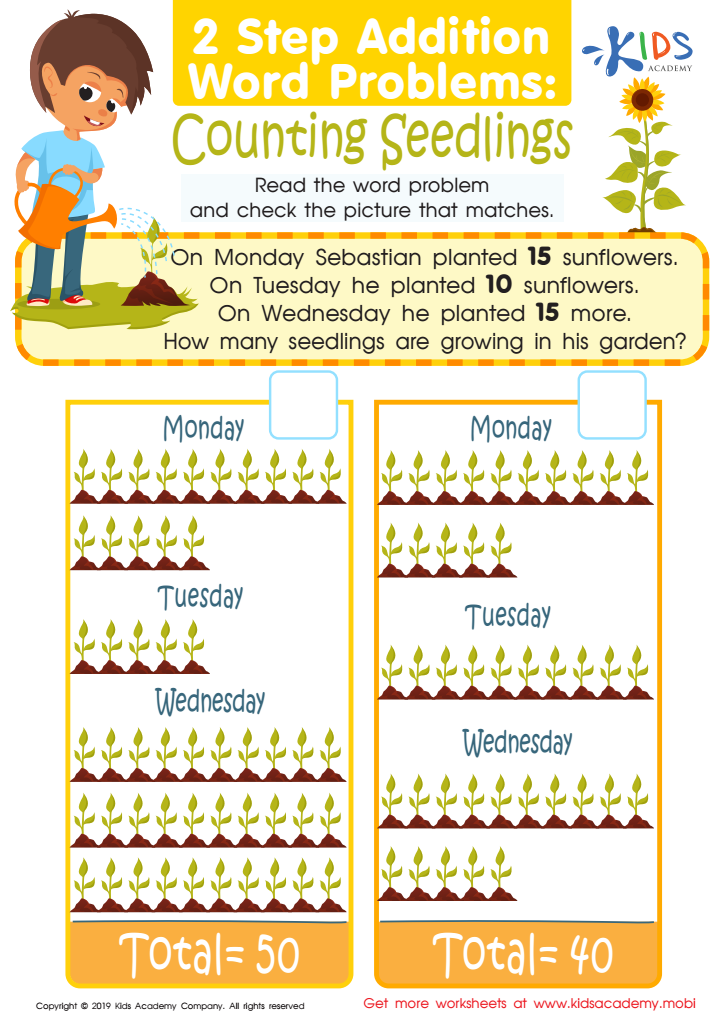
Counting Seedlings Worksheet
 Assign to My Students
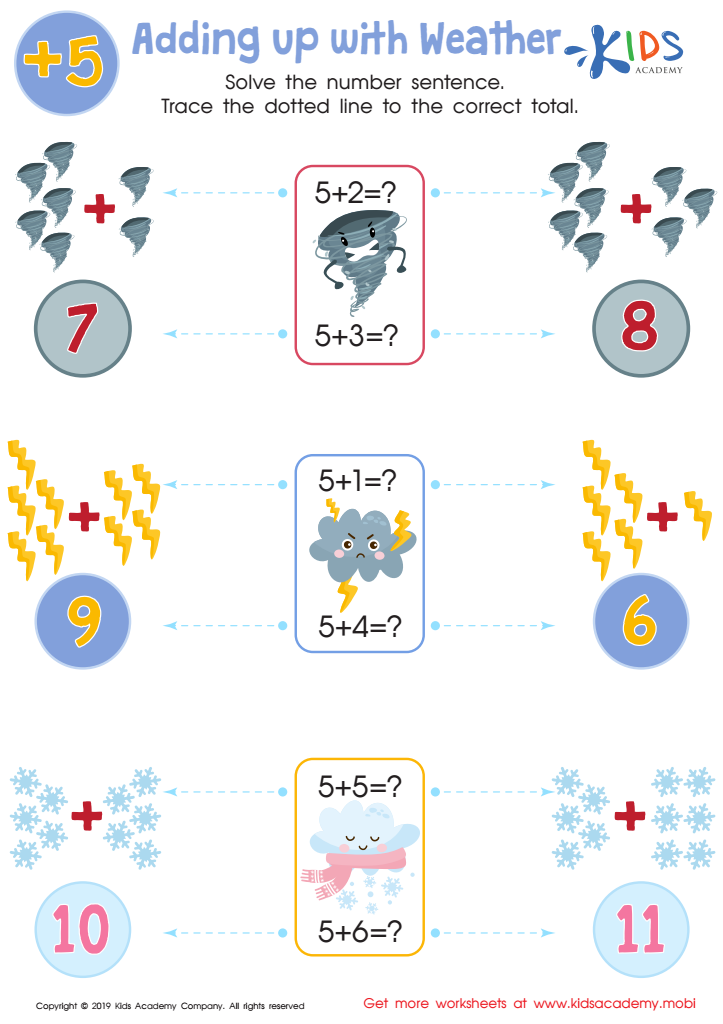
Adding up With Water Worksheet








Attention to detail in addition and subtraction for 4-year-olds is crucial for developing foundational math skills and fostering cognitive growth. At this formative stage, young children's brains are incredibly malleable, making it prime time to instill essential habits and concepts. Focusing on addition and subtraction helps them understand basic arithmetic, laying the groundwork for more complex math in the future.
Practicing these skills also enhances attention to detail, an important trait that affects various aspects of life, including reading, writing, and problem-solving. When children learn to notice small details, they become better at distinguishing between numerical values, understanding patterns, and following instructions accurately.
Moreover, success in early math builds confidence. When children correctly solve simple math problems, they gain a sense of accomplishment, encouraging a positive attitude towards learning. This sense of achievement can foster persistence, resilience, and a love for math, which are invaluable as they progress through school.
Parents and teachers should thus prioritize attention to detail in early math practice. It's not merely about numbers but developing a structured and analytical mindset that will benefit children in many educational and real-world scenarios. Early engagement with these concepts prepares them for academically challenging environments and sets the stage for future learning success.








