Understanding number relationships Addition & Subtraction Worksheets for 4-Year-Olds
4 filtered results
-
From - To
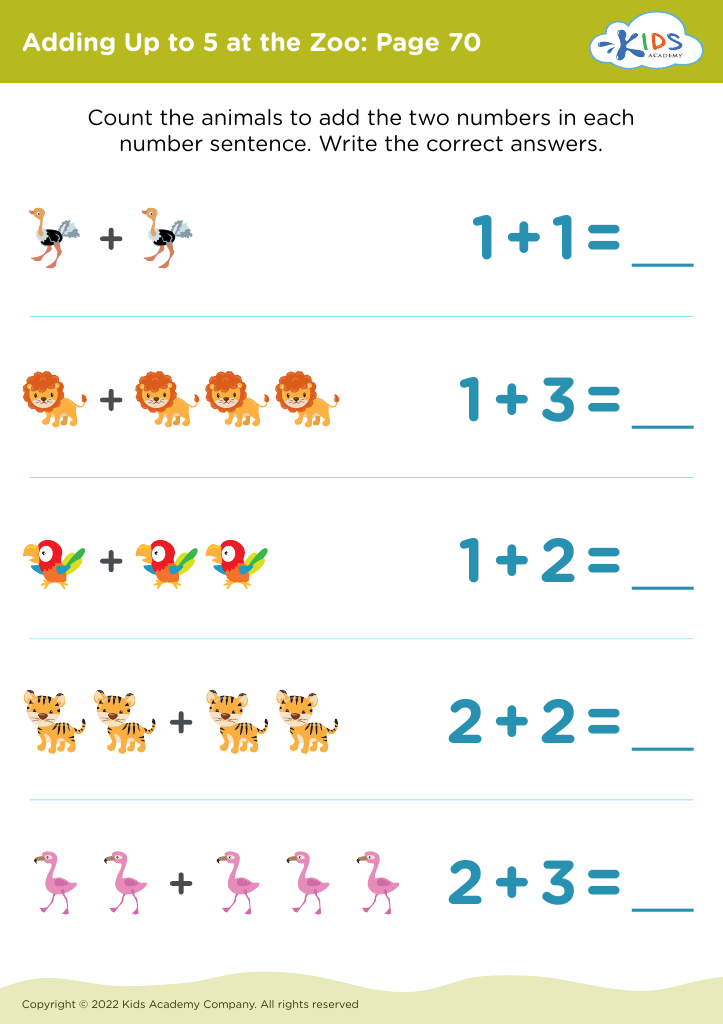
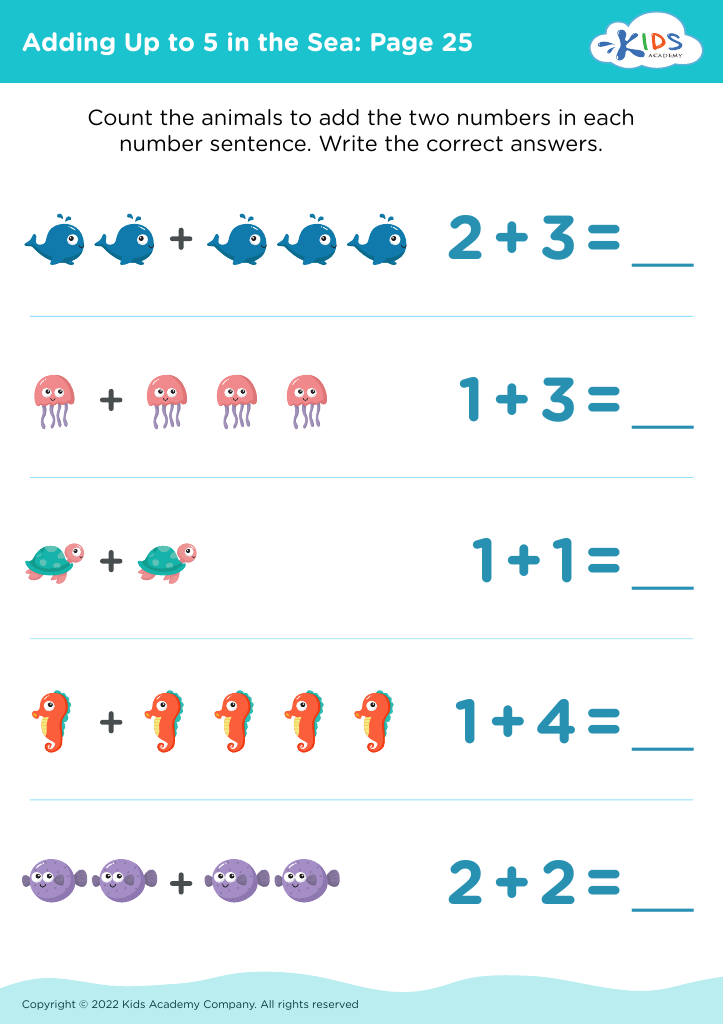
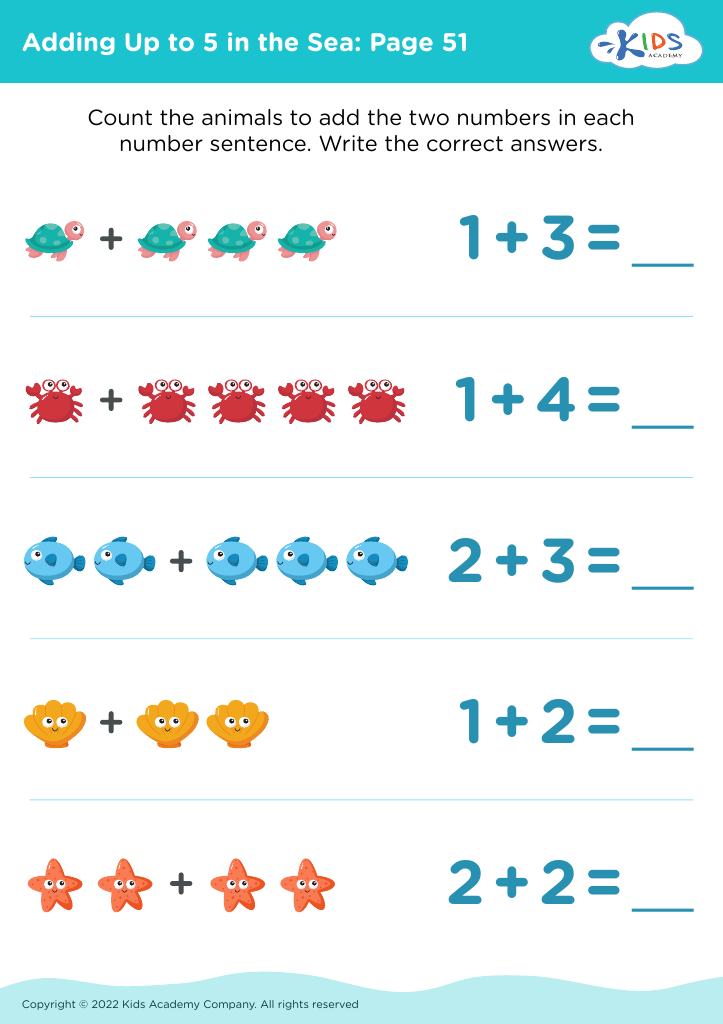
Explore our "Understanding Number Relationships: Addition & Subtraction Worksheets for 4-Year-Olds" to help young learners develop essential math skills! Our engaging worksheets are designed to introduce foundational concepts of addition and subtraction in a fun and interactive way. Through colorful visuals and age-appropriate exercises, children will learn how numbers connect, encouraging critical thinking and problem-solving skills. Perfect for preschool and Kindergarten classrooms or at-home learning, these resources foster a love for math while ensuring that kids grasp basic number relationships fluently. Empower your child’s early math journey with our thoughtfully crafted worksheets today!
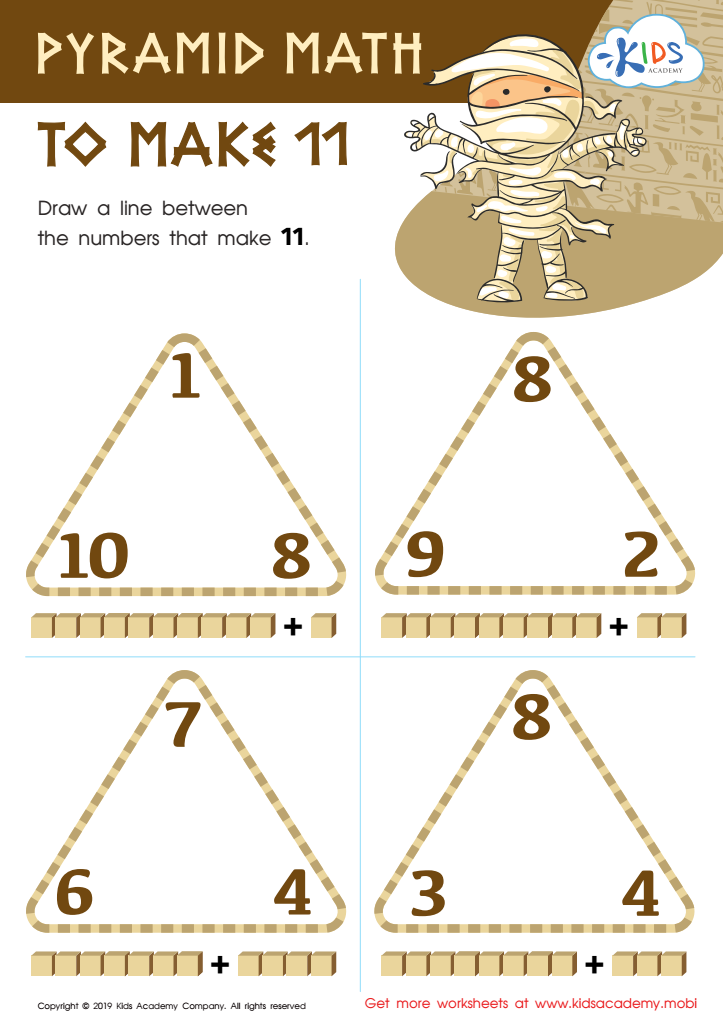
Pyramid Math to Make 11 Worksheet
 Assign to My Students








Understanding number relationships through addition and subtraction is fundamental for 4-year-olds as it lays the groundwork for future mathematical concepts. At this age, children are naturally curious and absorbing information rapidly; by engaging them in number relationships, parents and teachers help activate critical thinking and problem-solving skills.
Learning addition and subtraction fosters cognitive development and enhances a child's ability to recognize patterns and relationships among numbers. This understanding directly impacts their ability to tackle more complex mathematical processes later on, such as multiplication, division, and even algebra. Moreover, grasping basic number relationships boosts a child’s confidence in their mathematical abilities, allowing them to approach challenges with a positive mindset.
Furthermore, incorporating these concepts into everyday activities creates a practical and enjoyable learning experience. For example, counting objects during play or sharing snacks encourages exploration of numbers in a fun context. This holistic approach not only builds foundational math skills but also nurtures a love for learning. In summary, parents and teachers should prioritize understanding addition and subtraction in young children as a stepping stone for future academic success and lifelong numeracy skills.








