
Visual-motor skills Addition & Subtraction Worksheets for 4-Year-Olds
3 filtered results
Difficulty Level
Grade
Age
-
From - To
Subject
Activity
Standards
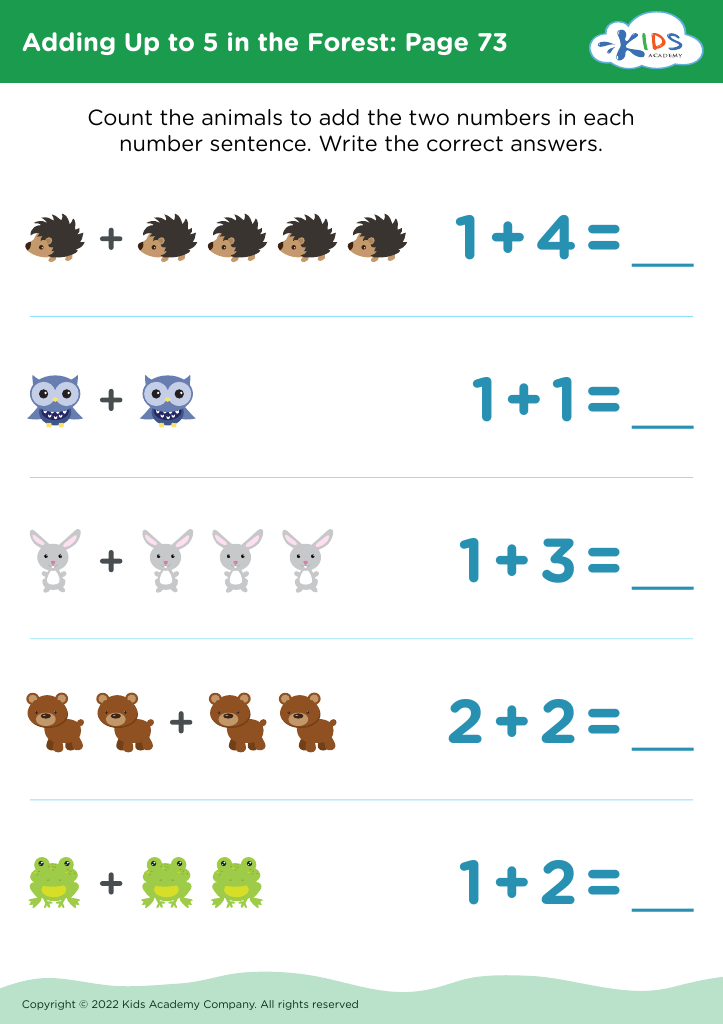
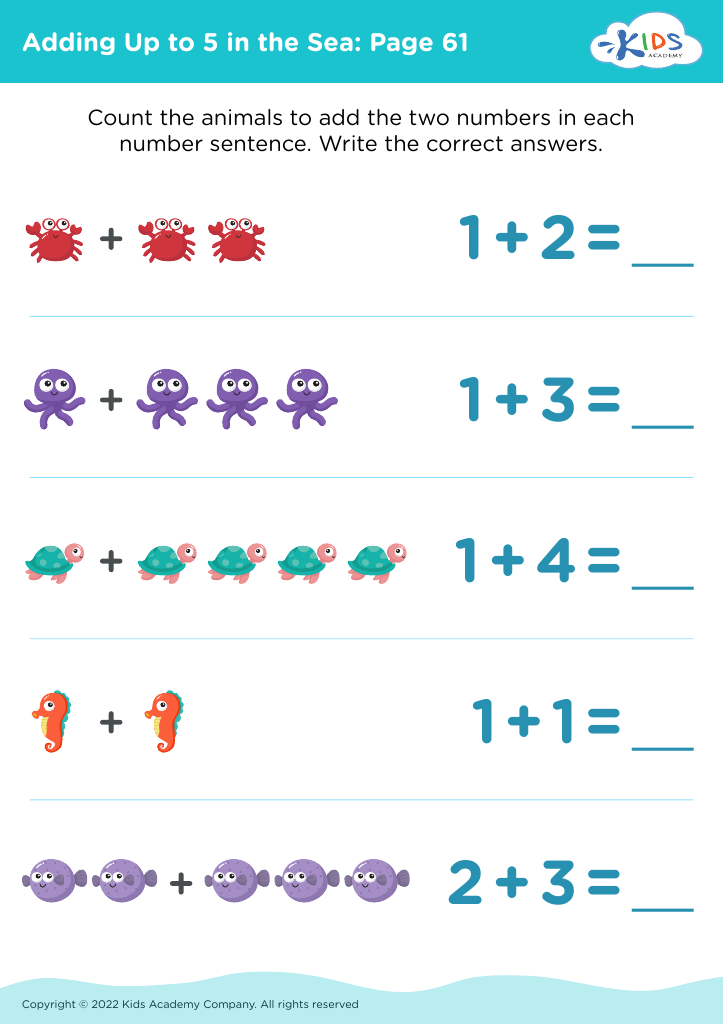
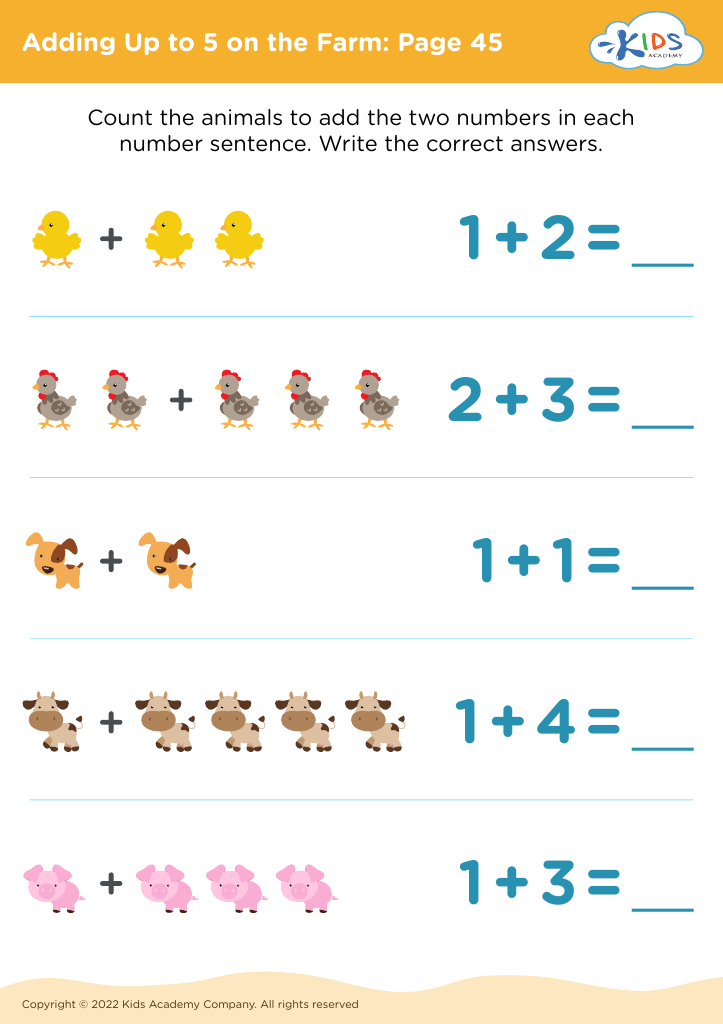
Our "Visual-Motor Skills Addition & Subtraction Worksheets for 4-Year-Olds" are expertly designed to enhance your child's math learning while strengthening their hand-eye coordination. These engaging worksheets make early math practice fun and interactive, helping children master the basics of addition and subtraction through visually appealing exercises. Perfect for preschoolers, our activities encourage focus, fine motor development, and accurate number writing. Give your child a head start in math and essential motor skills with our thoughtfully curated worksheets that pave the way for future success in mathematics.
Favorites
With answer key
Interactive
Join Kids Academy for Free
Who is primarily going to use this learning content?








Parents and teachers should care about visual-motor skills in relation to addition and subtraction for 4-year-olds because these skills are crucial for overall cognitive and motor development. Visual-motor integration involves coordinating visual perception and motor actions, like writing numbers or counting on fingers, which forms the foundation for more complex mathematical and spatial tasks in the future.
At the age of four, children are in a critical developmental window where enhancing both fine motor skills (such as holding a pencil) and cognitive abilities (like understanding numerical concepts) can greatly influence their academic success. Proficiency in visual-motor skills supports the child’s ability to interpret visual information accurately and respond with appropriate physical actions, helping them to understand and perform basic arithmetic tasks more efficiently.
Practicing visual-motor skills through activities like drawing numbers, tracing, or using manipulatives (e.g., blocks or beads) for counting and simple arithmetic, builds neural connections and integrates different brain functions. This not only aids in mathematical comprehension but also boosts overall confidence, setting a positive precedent for lifelong learning.
In summary, caring about and nurturing visual-motor skills in young children prepares them for future academic challenges, ensures well-rounded development, and builds a solid foundation for both mathematics and many other facets of learning.








