
Visual perception Addition & Subtraction Worksheets for 4-Year-Olds
14 filtered results
Difficulty Level
Grade
Age
-
From - To
Subject
Activity
Standards
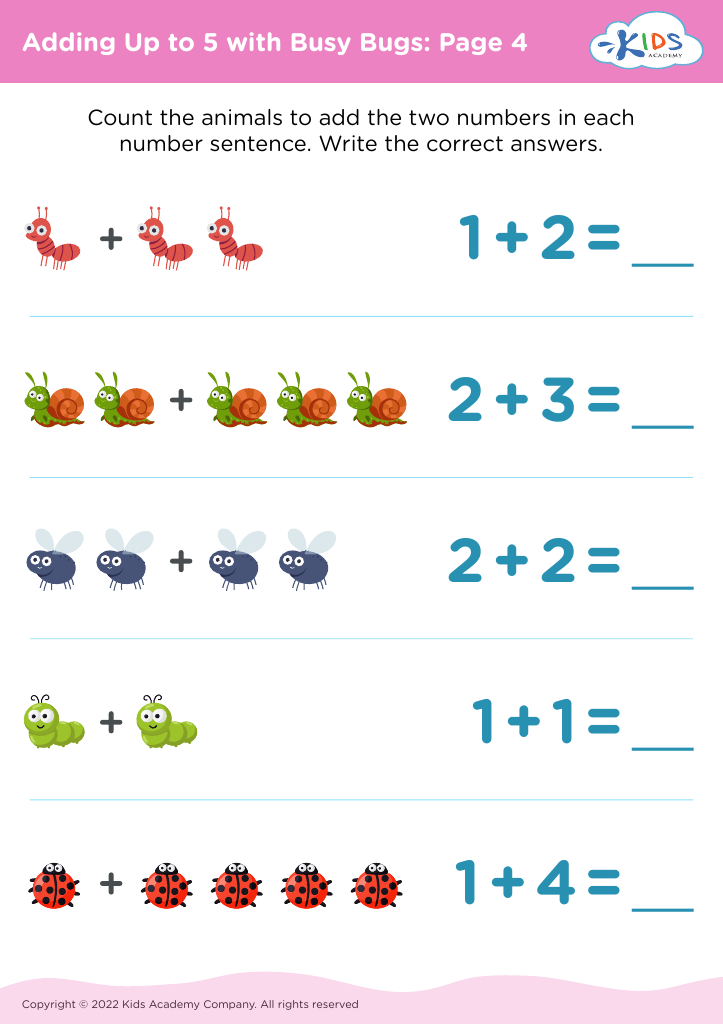
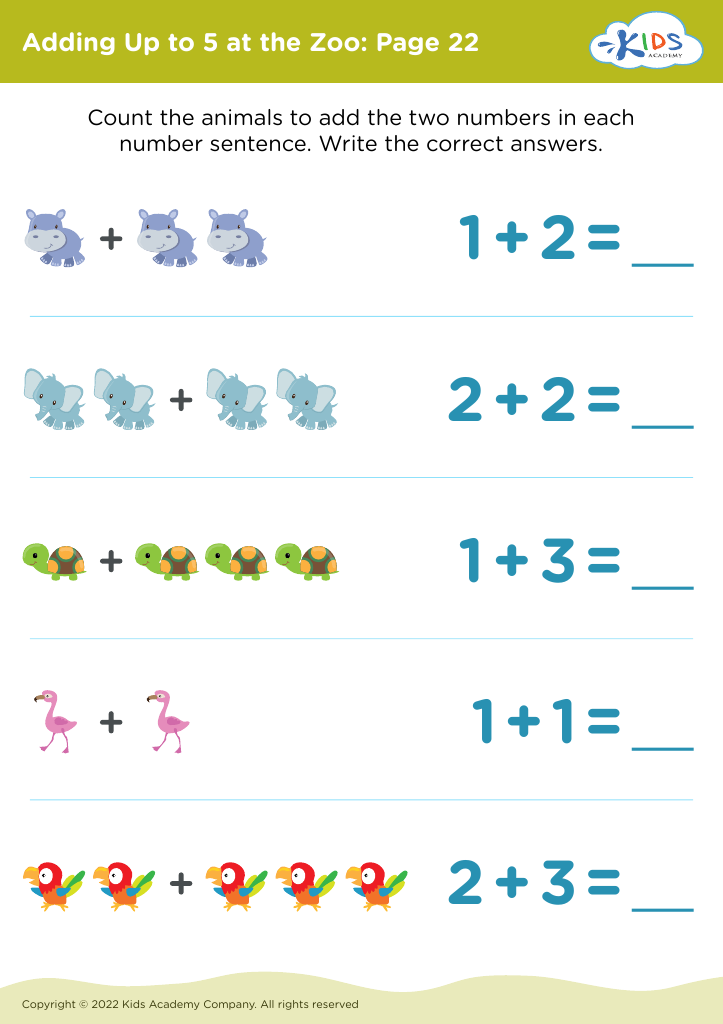
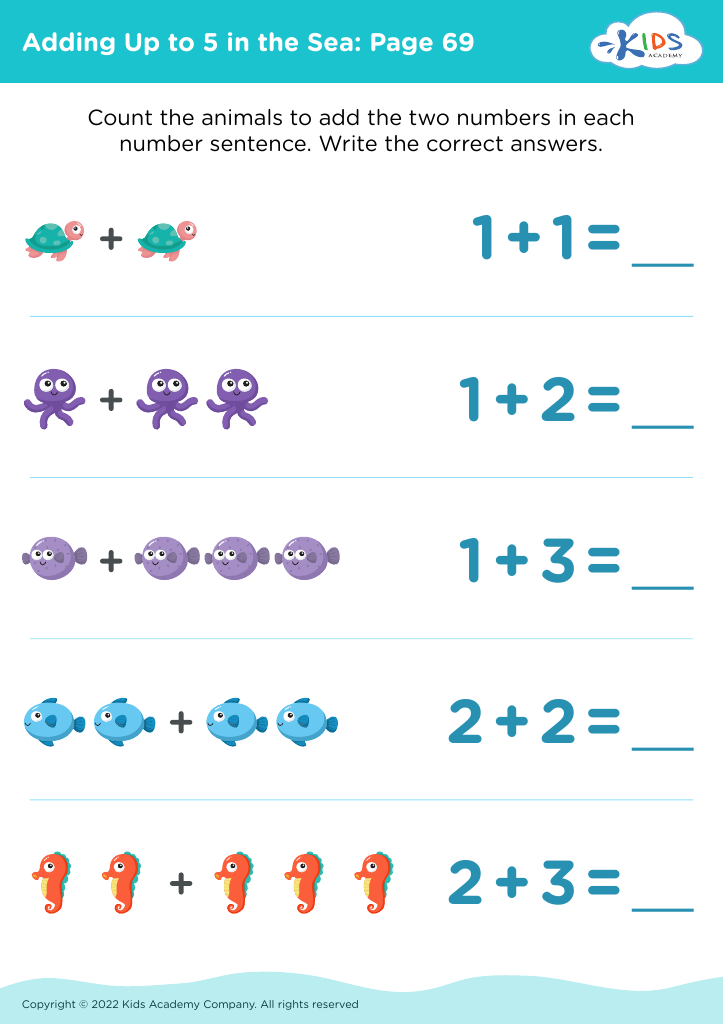
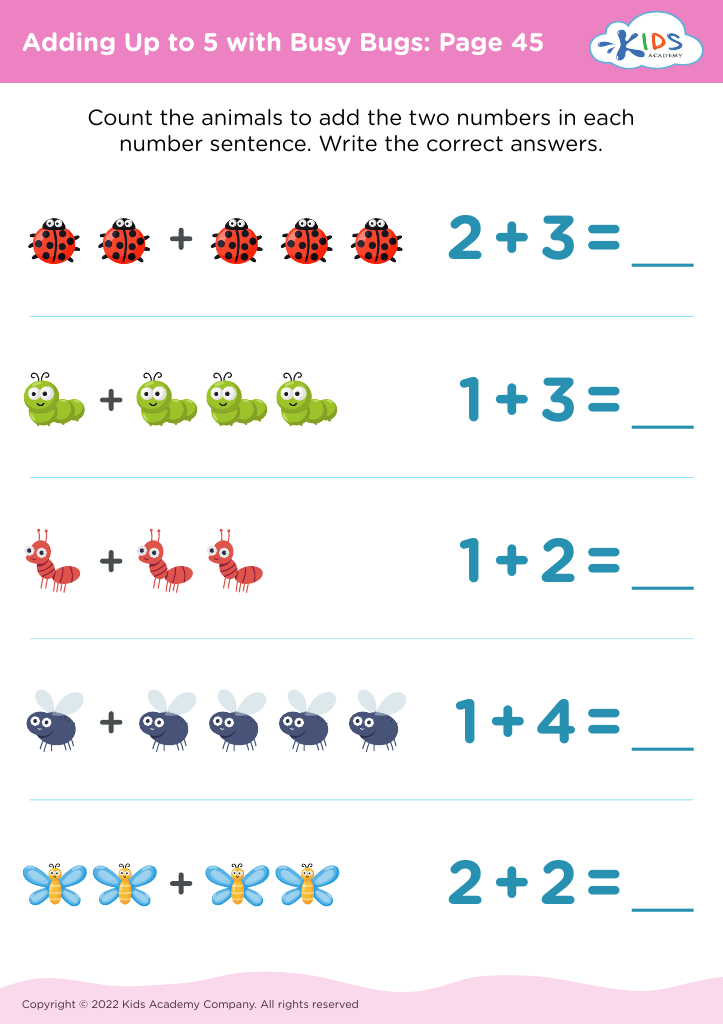
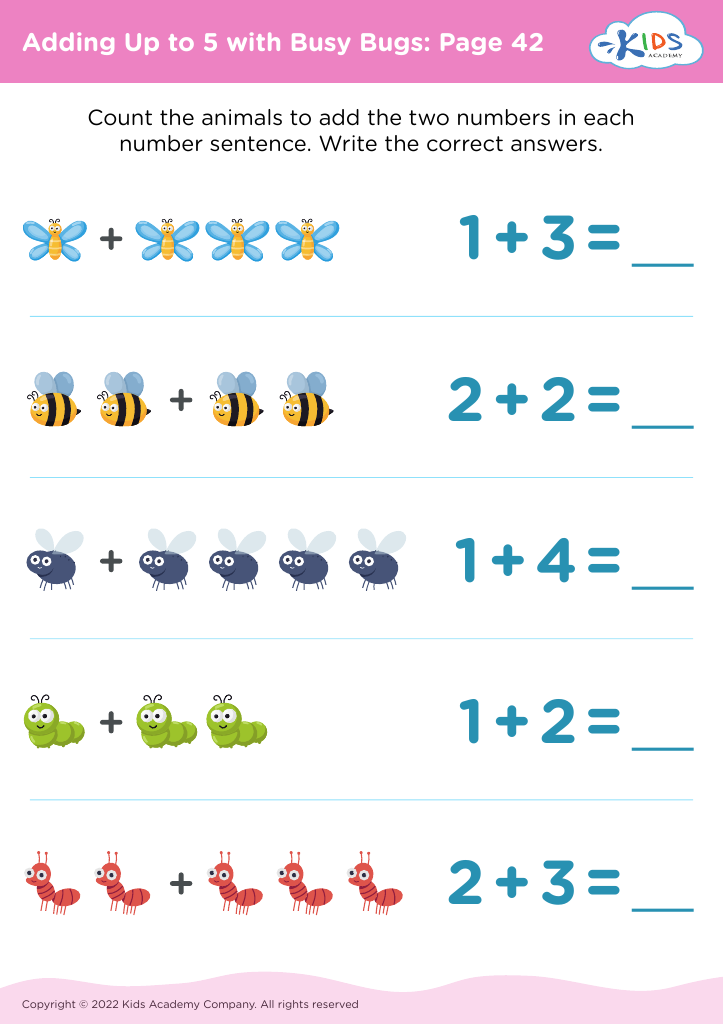
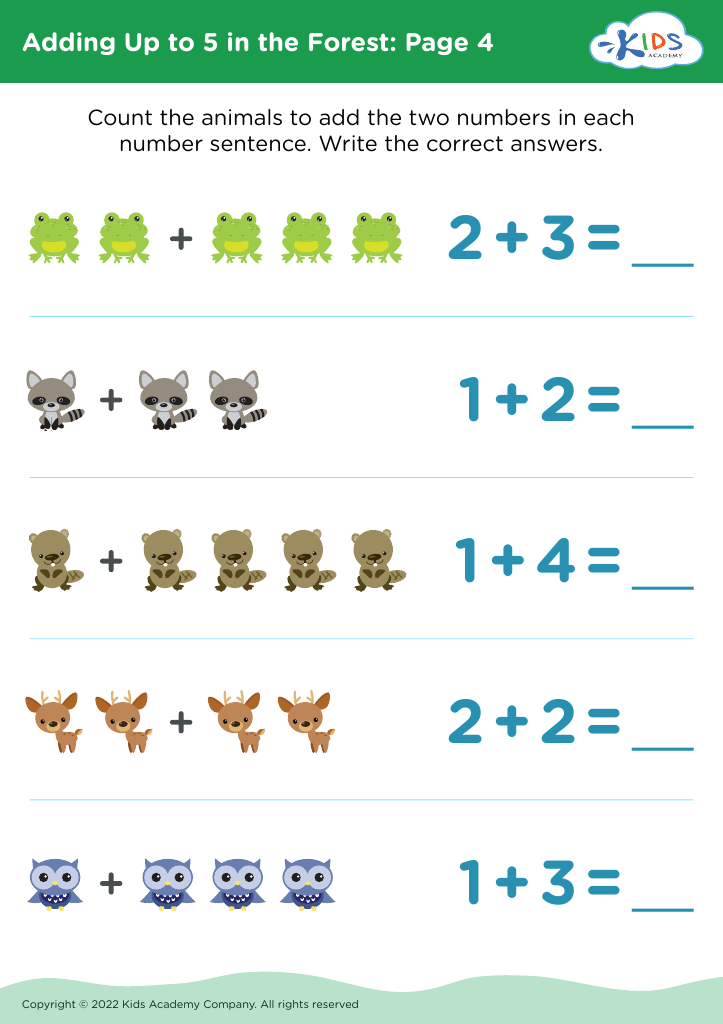
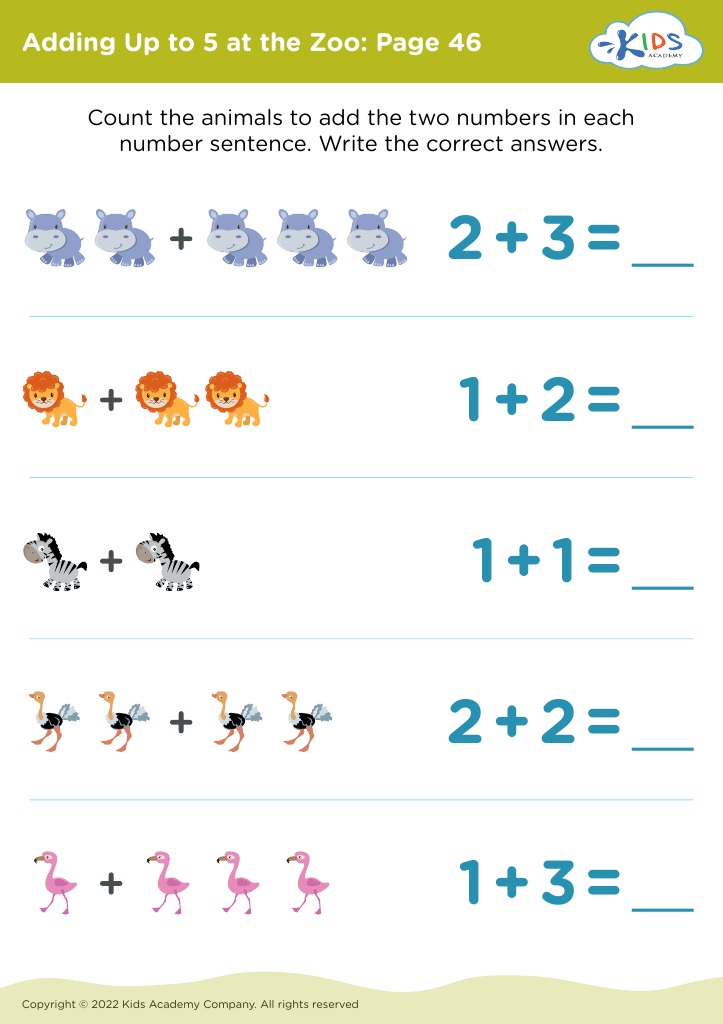
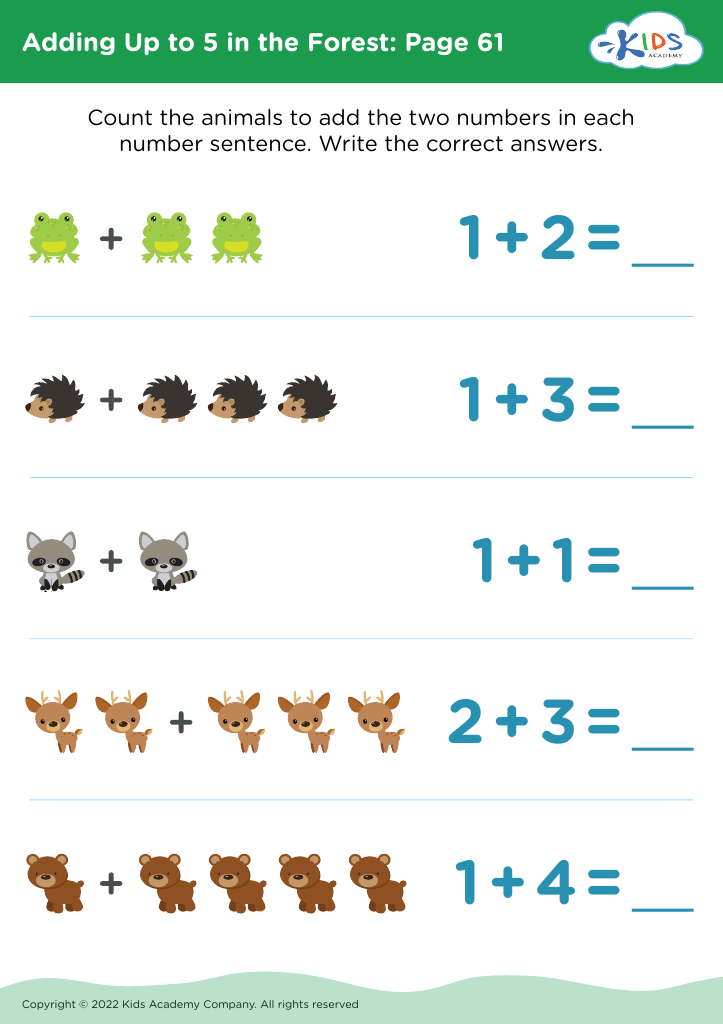
Enhance your 4-year-old's math skills with our engaging Visual Perception Addition and Subtraction Worksheets! Designed to foster early numeracy, these worksheets focus on improving visual recognition and cognitive skills through fun activities. Children will enjoy colorful visuals and relatable themes that make learning addition and subtraction engaging. As they complete each worksheet, little learners will strengthen their ability to recognize numbers, patterns, and shapes, while mastering basic math operations. Perfect for preschool or homeschool settings, our resources not only support mathematical comprehension but also encourage critical thinking and problem-solving. Download now and make math an enjoyable adventure for your child!
Favorites
With answer key
Interactive
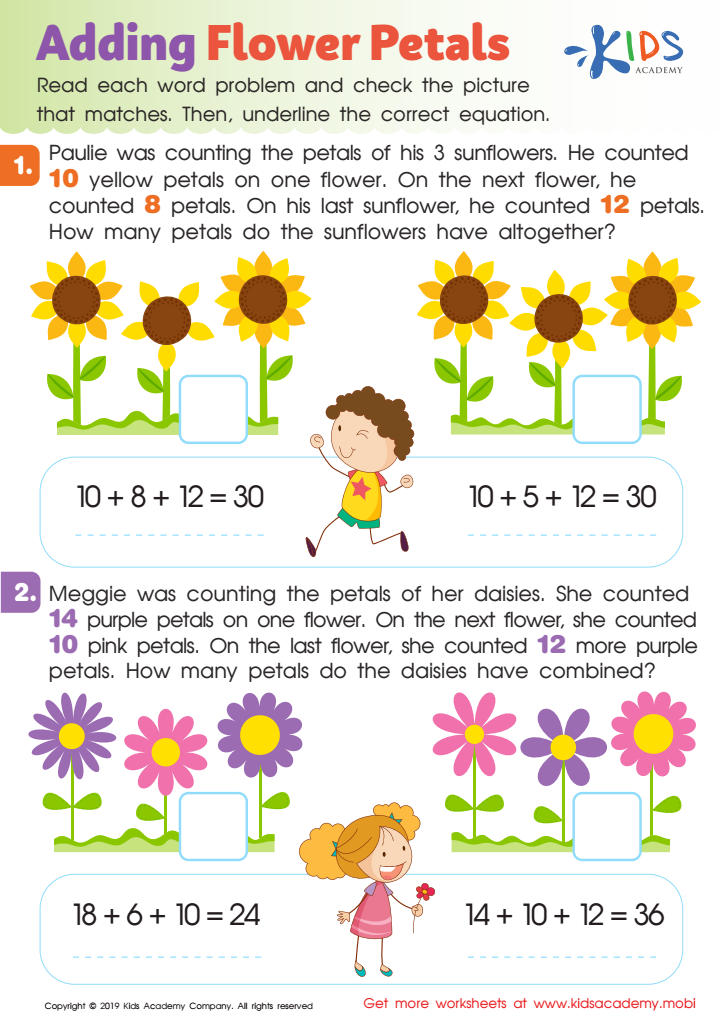
Adding Flower Petals Worksheet
This free worksheet helps little mathematicians learn to understand word problems. They'll read each one and match it to the corresponding picture. Important info is highlighted, teaching kids to look for key info when solving problems. Then they'll underline the correct number equation that matches the picture. A great way to practice problem-solving skills!
 Assign to My Students
Adding Flower Petals Worksheet
Worksheet
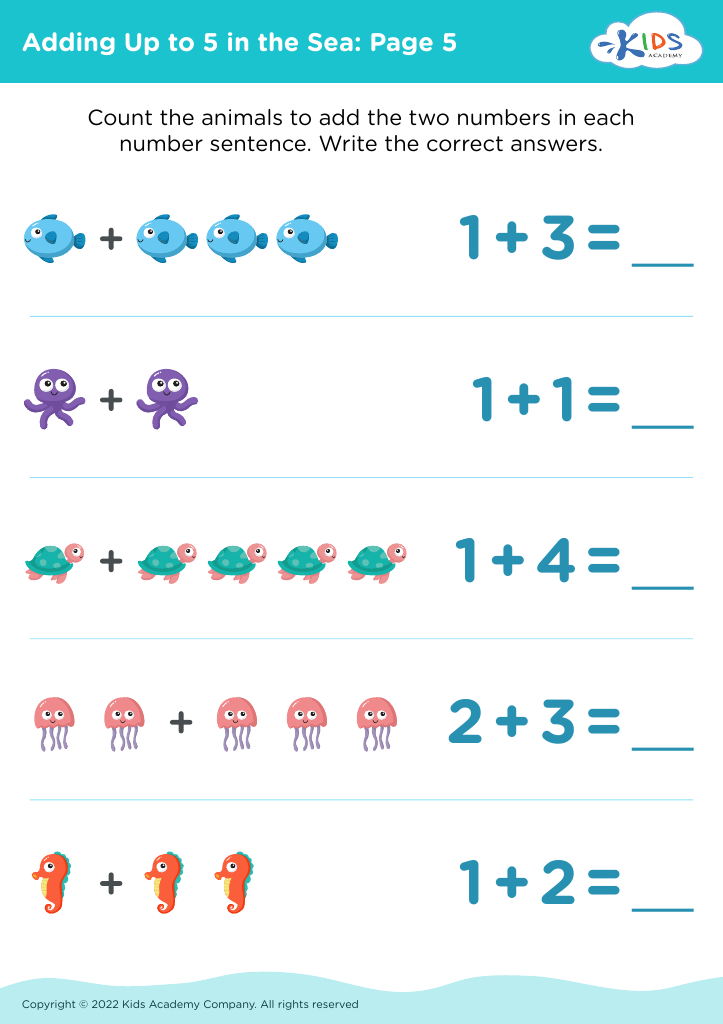
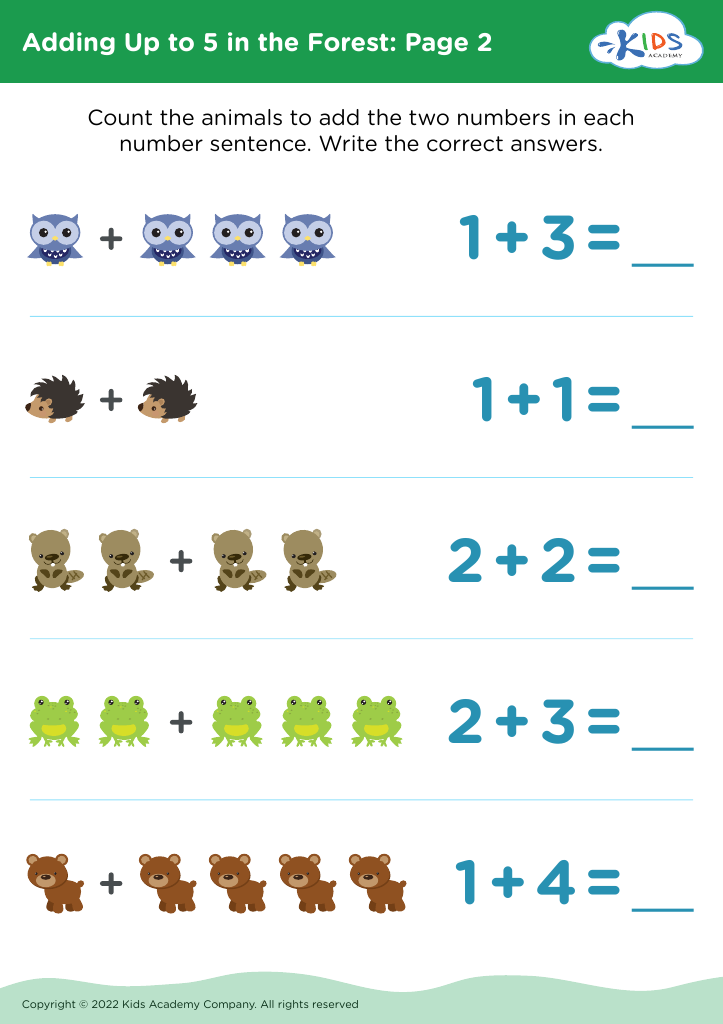
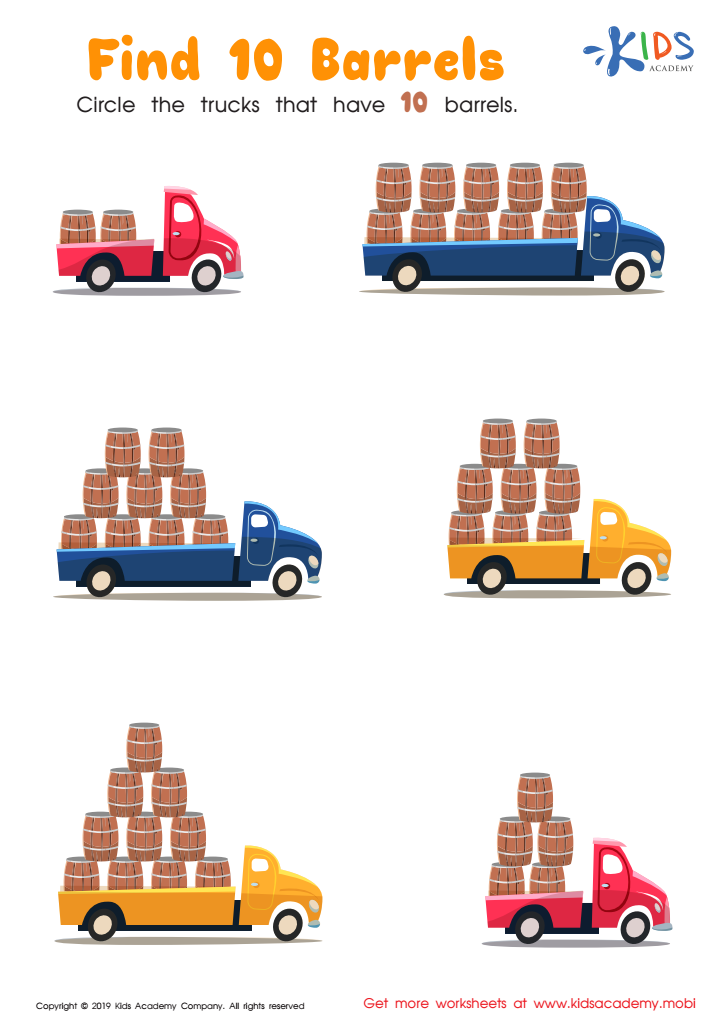
Find 10 Barrels Worksheet
Help your kids learn to count with 1, 2 and 3, then progress to tens and hundreds. Supplied with educational materials and colorful worksheets, they'll be counting as high as they can. Together, count the barrels on the trucks in the printout and encourage them to circle the ones with 10 barrels.
Find 10 Barrels Worksheet
Worksheet
Join Kids Academy for Free
Who is primarily going to use this learning content?








Visual perception plays a crucial role in a child's early mathematical development, particularly in addition and subtraction. For parents and teachers of 4-year-olds, understanding this concept helps in recognizing how children interpret and interact with numerical information through visual means. At this age, children are typically developing their ability to recognize shapes, patterns, and spatial relationships, all of which are foundational for mathematical concepts.
Strong visual perception skills enable children to visualize numbers as quantities, making it easier for them to grasp basic addition and subtraction. For example, when they see five apples arranged in a row, they learn to associate this visual representation with the quantity "five." This concrete understanding paves the way for more advanced math while encouraging problem-solving skills through visual aids and manipulatives.
Moreover, children with developed visual perception skills often perform better academically as they progress through school. Therefore, educators and parents should engage their little ones in fun, interactive activities that enhance these skills, such as number games, puzzles, or counting activities using real objects. By prioritizing visual perception, adults help foster a solid mathematical foundation that will benefit children's future learning experiences in addition and subtraction and beyond.








