Visual Perception Skills Addition & Subtraction Worksheets for 4-Year-Olds
5 filtered results
-
From - To
Enhance your child's mathematics journey with Visual Perception Skills Addition & Subtraction Worksheets designed specifically for 4-year-olds. These worksheets from Kids Academy blend core math concepts with engaging activities to strengthen visual perception. They aim to develop young learners' ability to identify numbers, understand basic arithmetic, and recognize patterns through visually stimulating content. By utilizing vibrant images and interactive exercises, these worksheets make learning fun and effective, fostering early math skills and cognitive development. Give your child a head start with these expertly crafted resources that inspire confidence and a love for math!
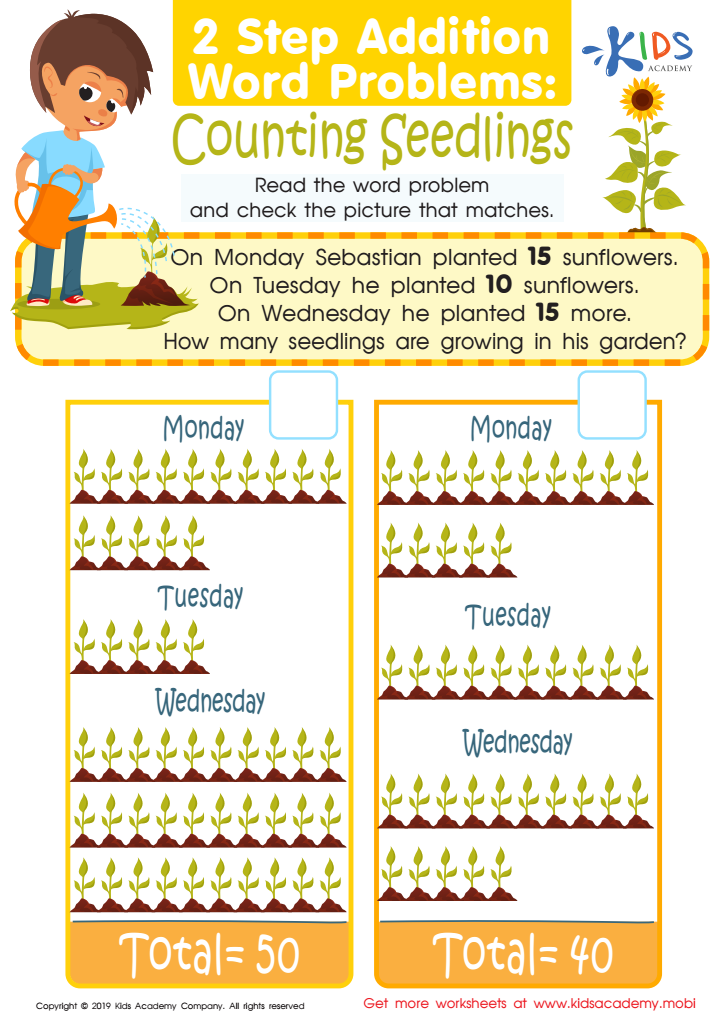
Counting Seedlings Worksheet
 Assign to My Students
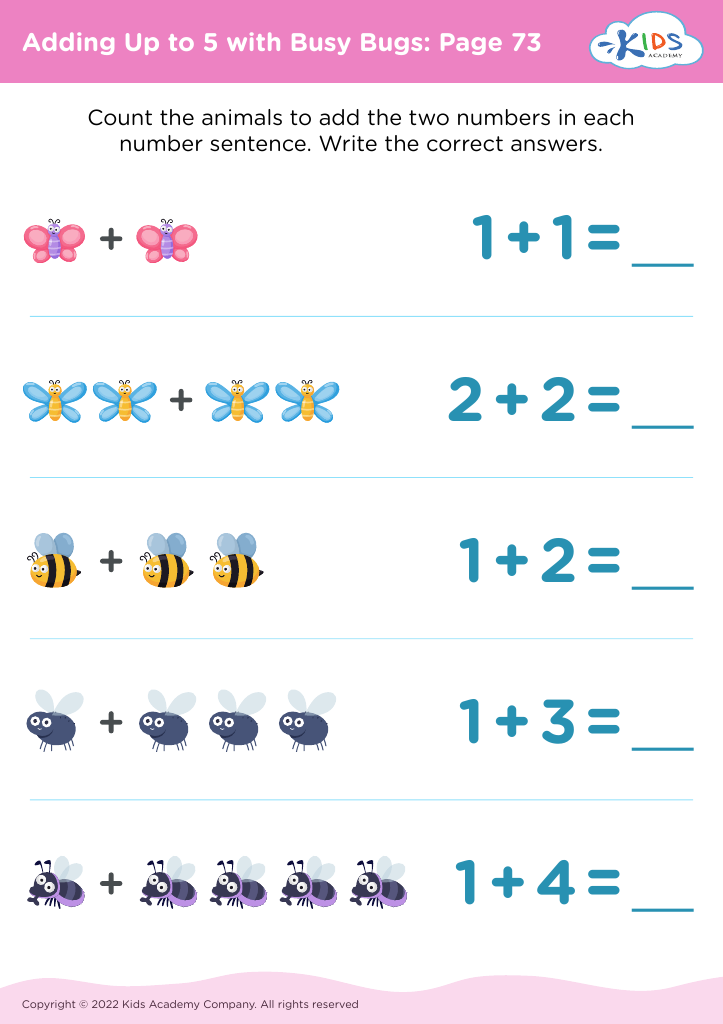
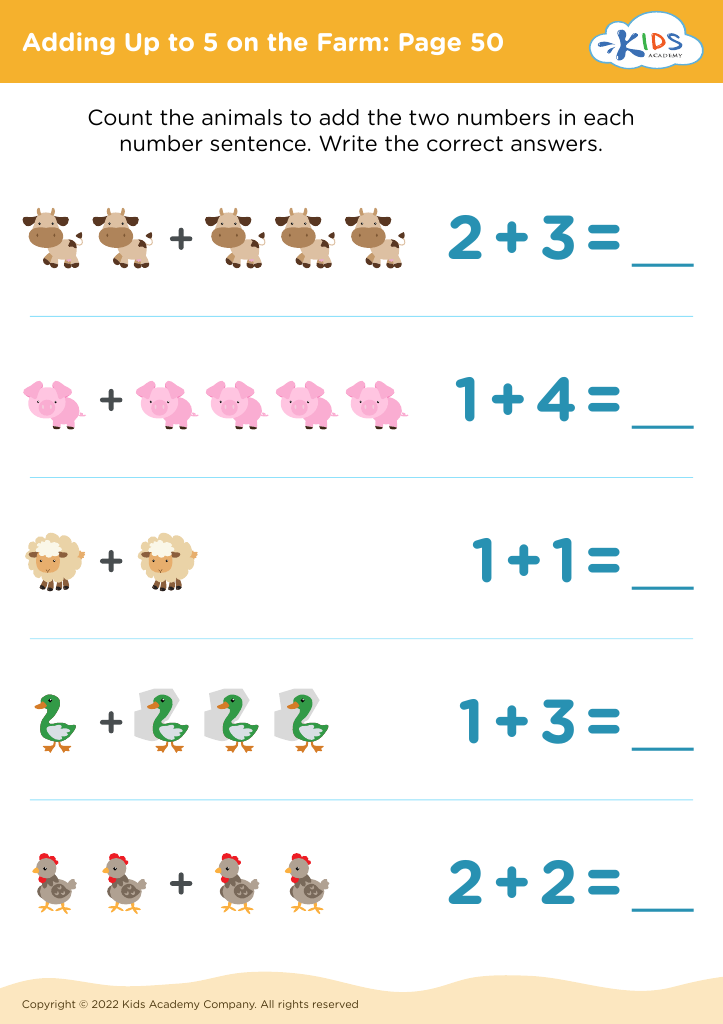
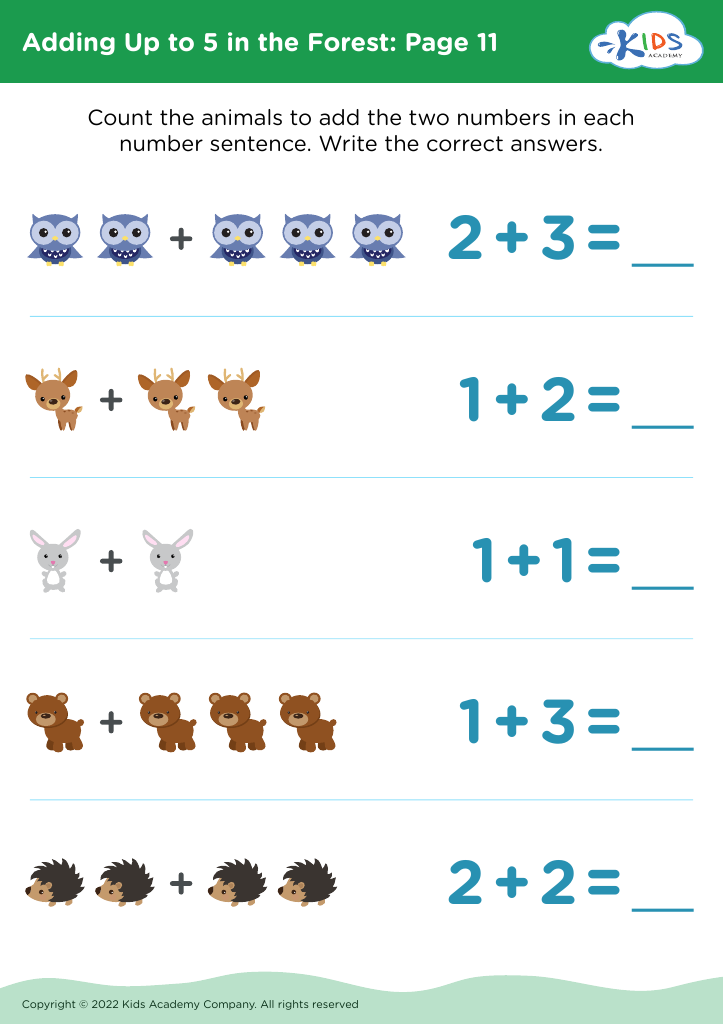
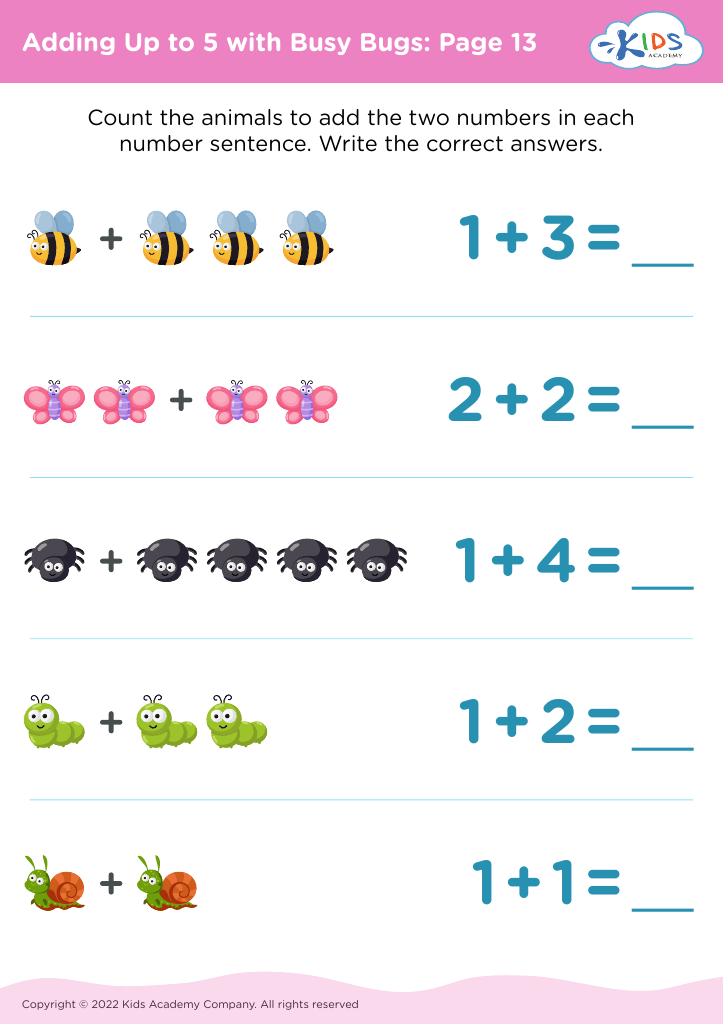








Visual perception skills are fundamentally important for young children, particularly when it comes to understanding the concepts of addition and subtraction. At four years old, children are rapidly developing and refining their cognitive abilities, which include the capability to process and interpret visual information. Visual perception skills help children recognize numbers, understand quantities, and see relationships between different sets of objects – crucial for basic arithmetic.
For instance, visual discrimination enables children to differentiate between numbers, while visual memory helps them recall number symbols and their associated values. Developing spatial relationships aids children in understanding how numbers are added together or taken away within physical arrangements. When children use manipulatives – such as counting objects or visual aids – to practice addition and subtraction, they are, literally, seeing math in action. This visual and tactile experience reinforces their numerical comprehension and problem-solving skills.
For parents and teachers, supporting the development of these skills translates to nurturing confidence and competence in math. Activities like puzzles, matching games, and number-based crafts boost visual perception capabilities while making learning fun and engaging. Paying attention to this development in early childhood fosters a strong mathematical foundation, driving academic success and enhancing lifelong learning abilities. Nurturing visual perception skills in math is an investment in a child’s educational journey and overall cognitive development.








