Attention to Detail Addition Worksheets for 4-Year-Olds
3 filtered results
-
From - To
Explore our engaging Attention to Detail Addition Worksheets designed specifically for 4-year-olds! These interactive resources help young learners hone their addition skills while focusing on important details. Each worksheet features vibrant graphics and age-appropriate problems that encourage kids to practice early math in an enjoyable way. By integrating attention to detail exercises, children boost their observation skills alongside their arithmetic abilities. Download our printable worksheets today to provide your little ones with a fun and educational learning experience that sets the foundation for future academic success! perfect for at-home learning or as supplementary material in preschool curriculums.
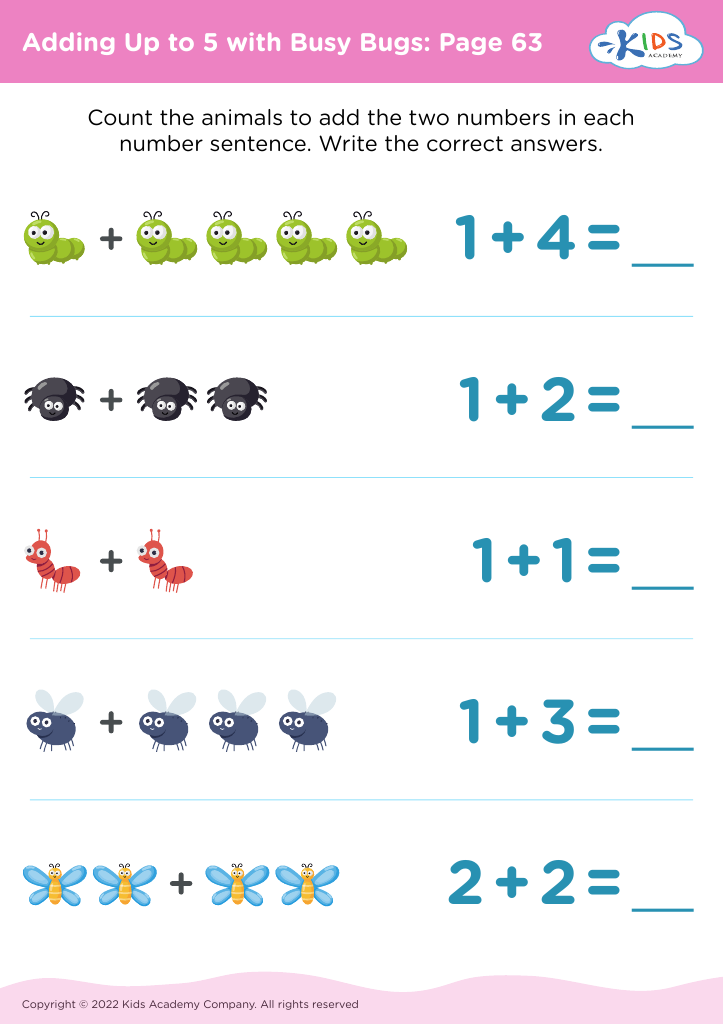
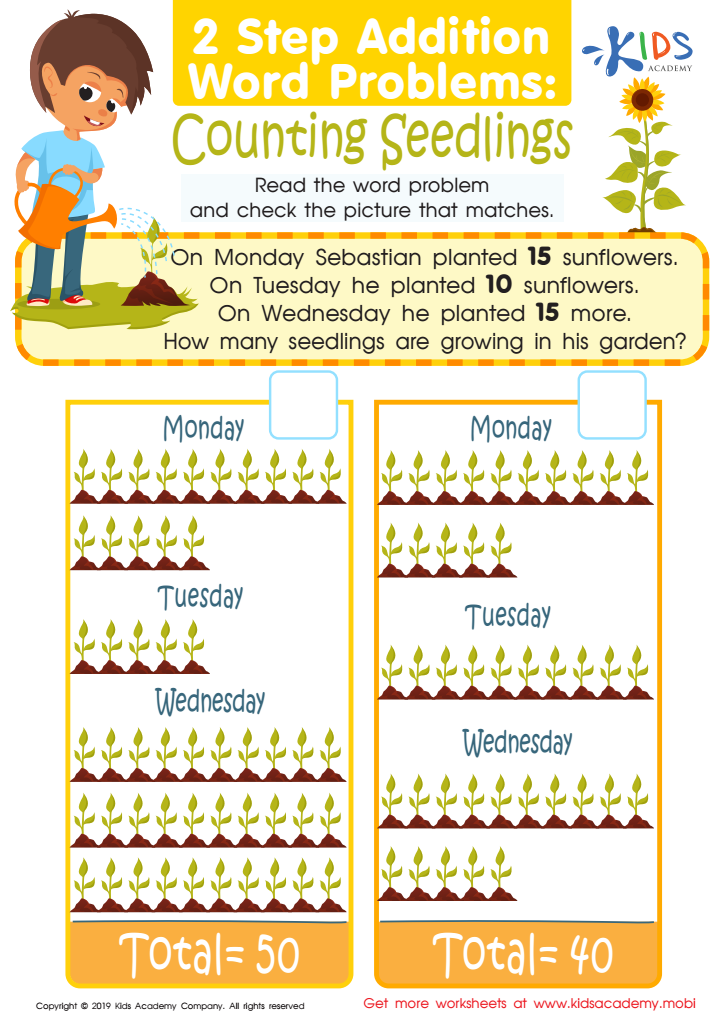
Counting Seedlings Worksheet
 Assign to My Students
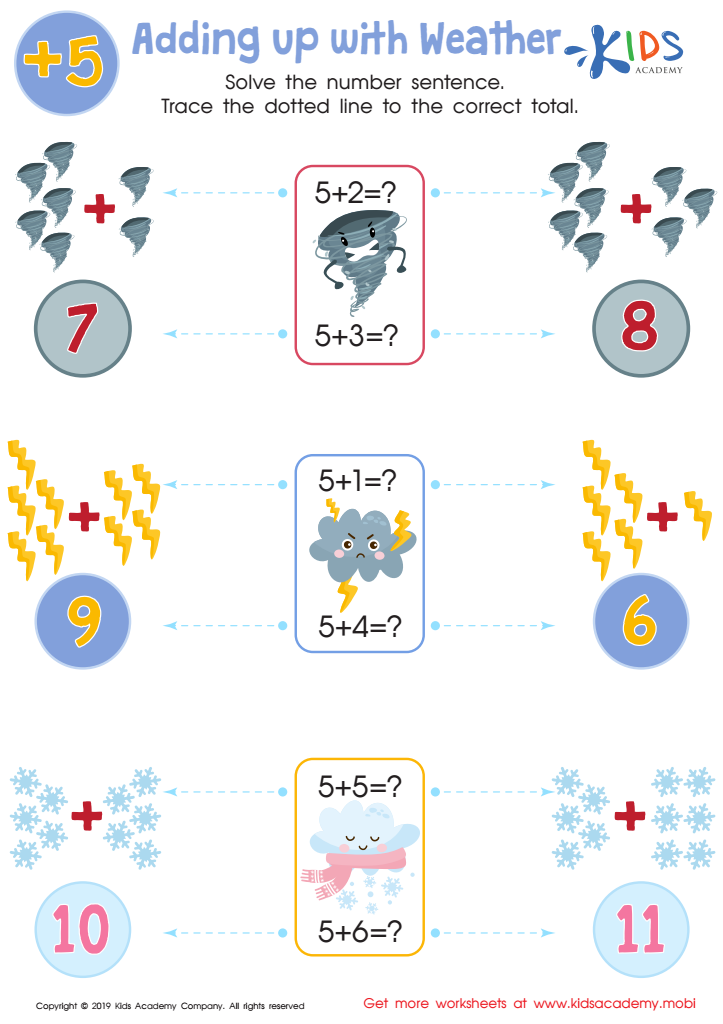
Adding up With Water Worksheet








Attention to Detail Addition for 4-year-olds is crucial because it lays the foundation for effective learning in mathematics and beyond. At this age, children are developing their cognitive skills, and focusing on details helps enhance their observational abilities and critical thinking. When children learn to pay attention to details in addition, they become better problem solvers as they start recognizing patterns and relationships between numbers.
Moreover, mastering attention to detail promotes fine motor skills, especially when working with hands-on materials like blocks or counters. This tactile experience aids kinesthetic learners who require physical interaction to grasp abstract concepts. It also encourages persistence, as children learn to approach challenges with patience and care.
From a broader perspective, developing attention to detail supports literacy and emotional intelligence. As children learn to focus on the smaller components of math, they simultaneously strengthen their ability to focus on letters, sounds, and the emotions of others, leading to well-rounded development.
Overall, fostering attention to detail through structured addition exercises serves to build confidence, cultivate curiosity, and prepare children for more complex mathematical concepts later on, ensuring they have a solid academic foundation as they progress in their education.








