Problem-Solving Skills Addition Worksheets for 4-Year-Olds - Page 3
54 filtered results
-
From - To
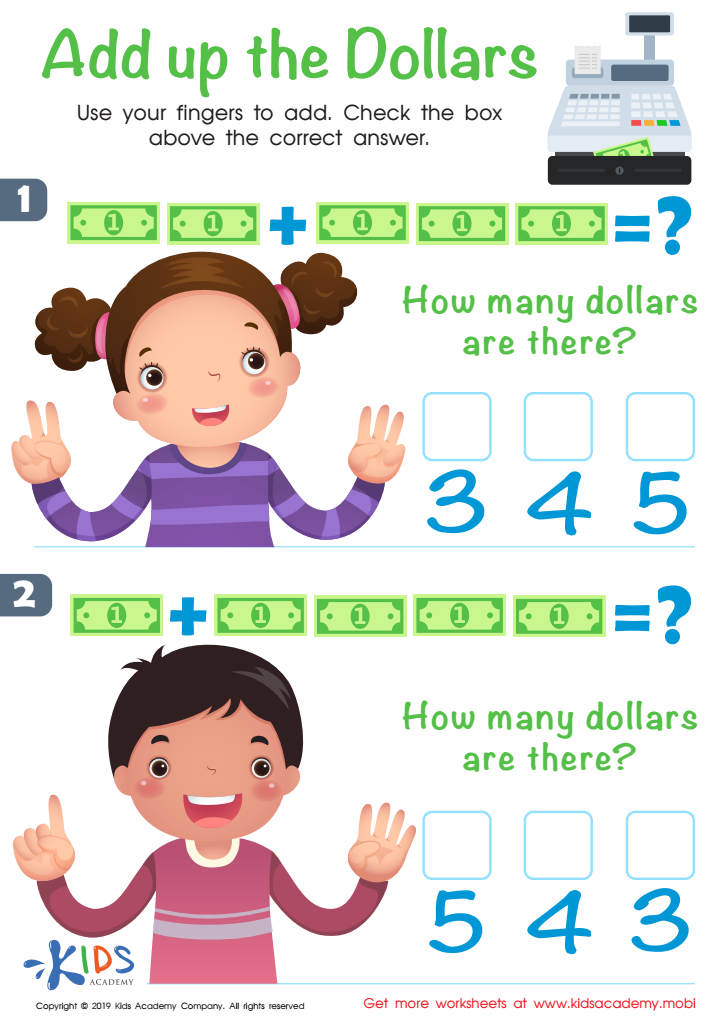
Add up the Dollars Worksheet
 Assign to My Students
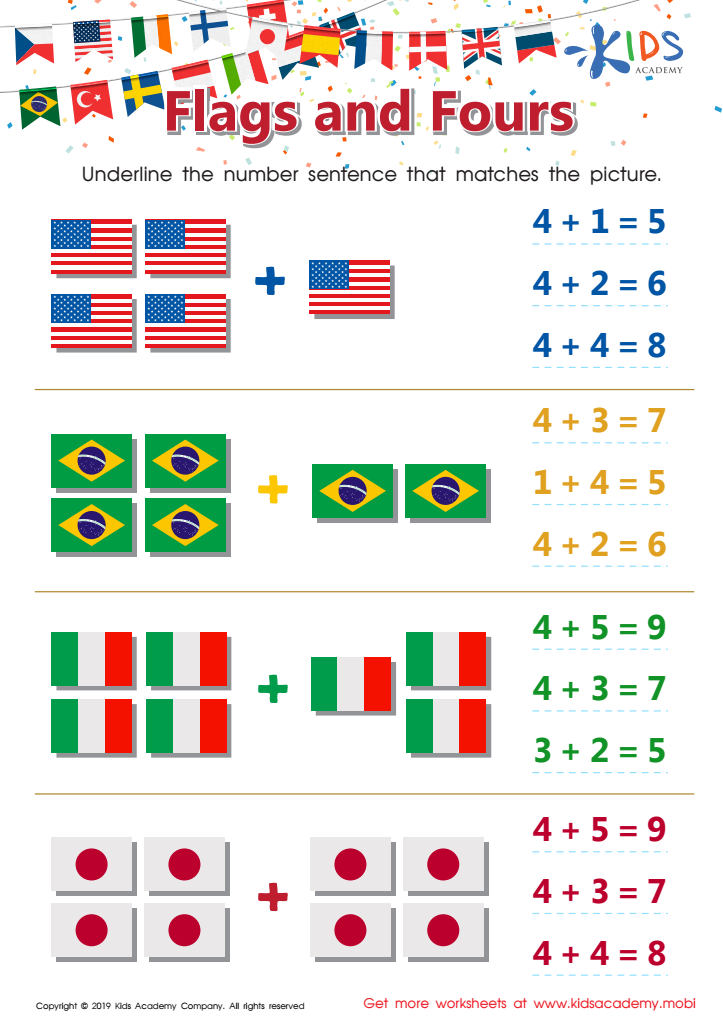
Flags and Fours Worksheet






.jpg)

Problem-solving skills are fundamental for the cognitive and social development of 4-year-olds, making it essential for parents and teachers to prioritize their nurturing. At this age, children are naturally curious and eager to explore; fostering their problem-solving abilities sets the groundwork for critical thinking and adaptability in tackling challenges throughout their lives.
Engaging in problem-solving activities enables children to think creatively, develop reasoning skills, and recognize relationships between concepts. For instance, when they face puzzles, they learn to evaluate options, plan strategies, and persist until they find a solution. This process not only enhances their intellectual abilities but also boosts confidence and resilience.
Additionally, learning to solve problems collaboratively, as often happens in group settings or with parents, helps children build social skills. They understand the importance of communicating ideas, listening to others, and appreciating diverse perspectives, all of which are essential in maintaining healthy relationships.
Moreover, problem-solving lays the foundation for future academic success. As children approach formal education, these skills will empower them to comprehend complex subjects, navigate home and classroom dynamics, and foster a lifelong love for learning. Therefore, investing in these abilities is beneficial for both parents and teachers dedicated to holistic child development.








