Underwater animal identification Addition Worksheets for 4-Year-Olds
3 filtered results
-
From - To
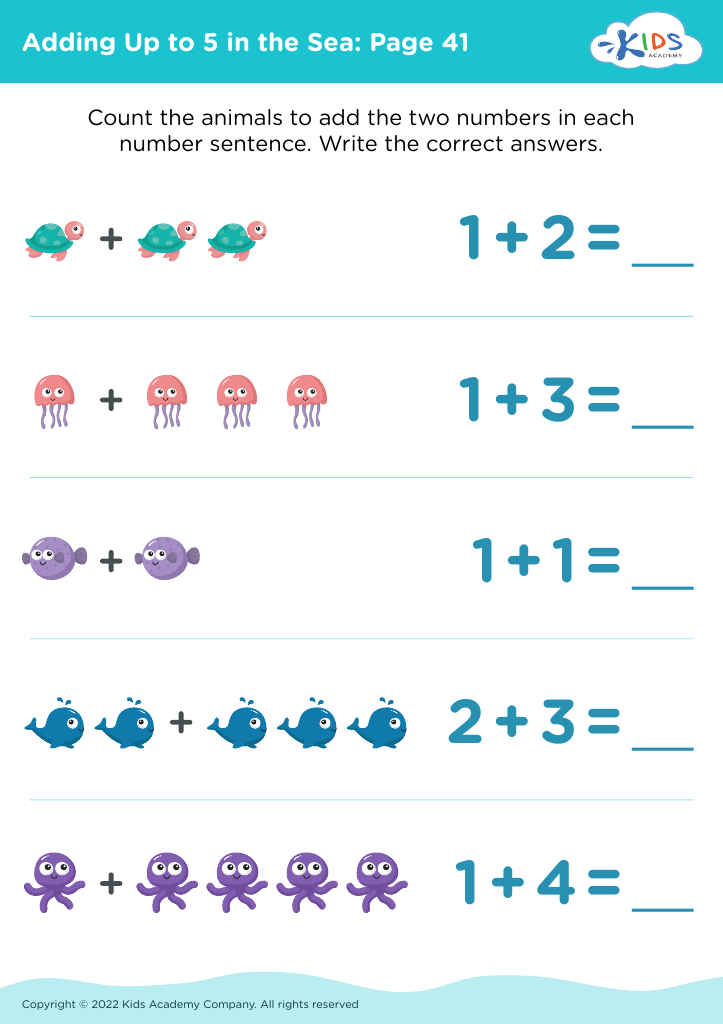
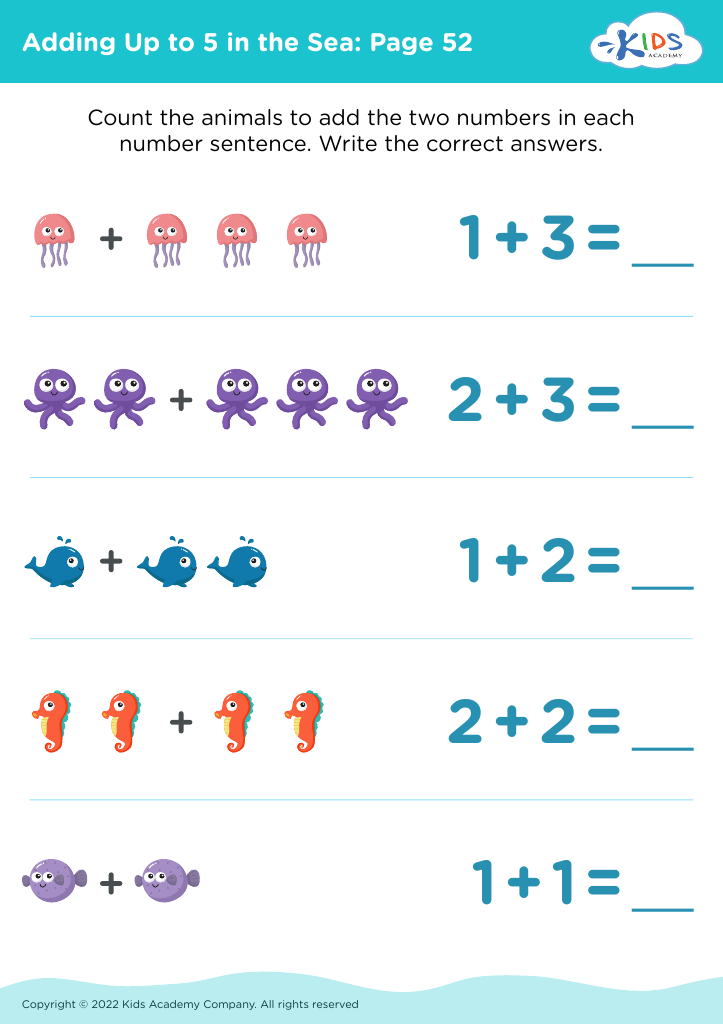
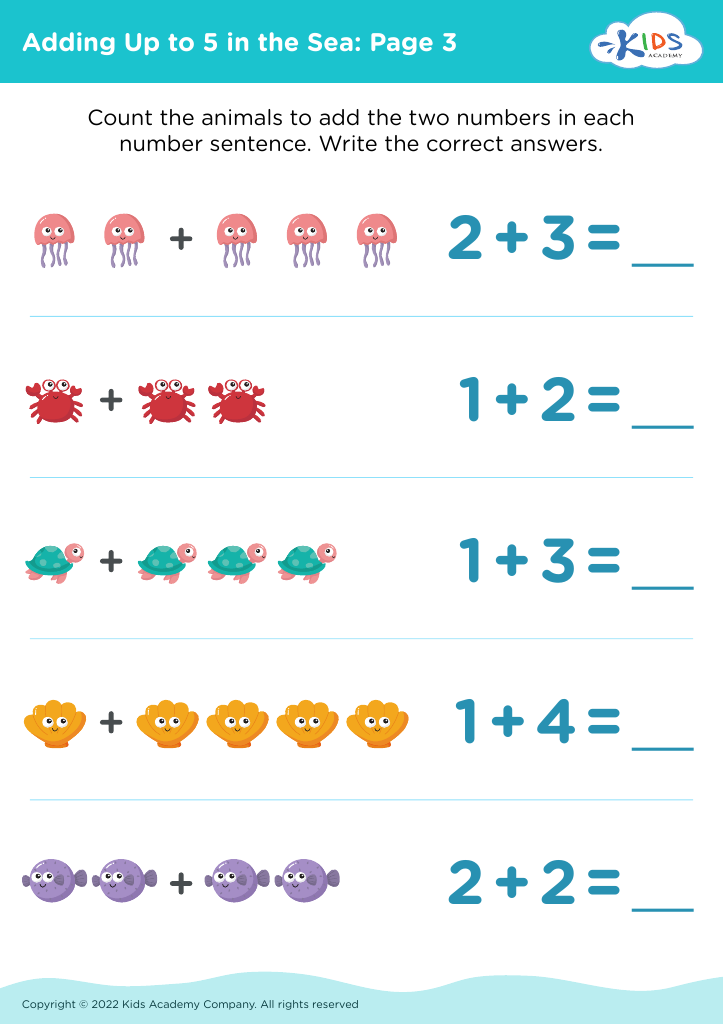
Dive into learning with our "Underwater Animal Identification Addition Worksheets for 4-Year-Olds"! These engaging worksheets combine math skills and marine life fun, helping young learners practice addition while identifying adorable underwater animals. Each colorful page features easy-to-follow instructions and charming illustrations, making math practice an exciting adventure. Designed specifically for 4-year-olds, our worksheets boost counting skills, enhance number recognition, and encourage a love for learning. Ideal for both homeschool and classroom settings, this activity set lays a strong foundation in math and discovers the wonders beneath the sea. Join us for a splash of educational excitement today!




.jpg)


Understanding underwater animal identification and incorporating it into activities for 4-year-olds offers several developmental benefits for young children. First, it cultivates curiosity and fosters a sense of wonder about the natural world, encouraging an early interest in science and exploration. Introducing kids to diverse marine life broadens their understanding of biodiversity and the importance of conservation, laying the groundwork for responsible environmental stewardship.
Cognitively, matching animals with their names and characteristics enhances memory and recall skills. It also builds vocabulary as children learn new words and concepts, expanding their linguistic and cognitive abilities. When done through interactive games or hands-on activities, these lessons engage multiple senses, aiding in better retention and understanding.
Moreover, such activities often require children to use observation and analytical skills, as they compare and contrast different animals. This kind of problem-solving exercise is foundational for later complex thinking and reasoning. Socially and emotionally, studying marine animals — like any form of learning through play — improves patience, focus, and confidence as children achieve mastery in recognizing and identifying various creatures.
In an increasingly interconnected world where digital and environmental literacy is crucial, starting young with fun, educational content like underwater animal identification provides a balanced, enriching early learning experience.








