Visualization skills Addition Worksheets for 4-Year-Olds
3 filtered results
-
From - To
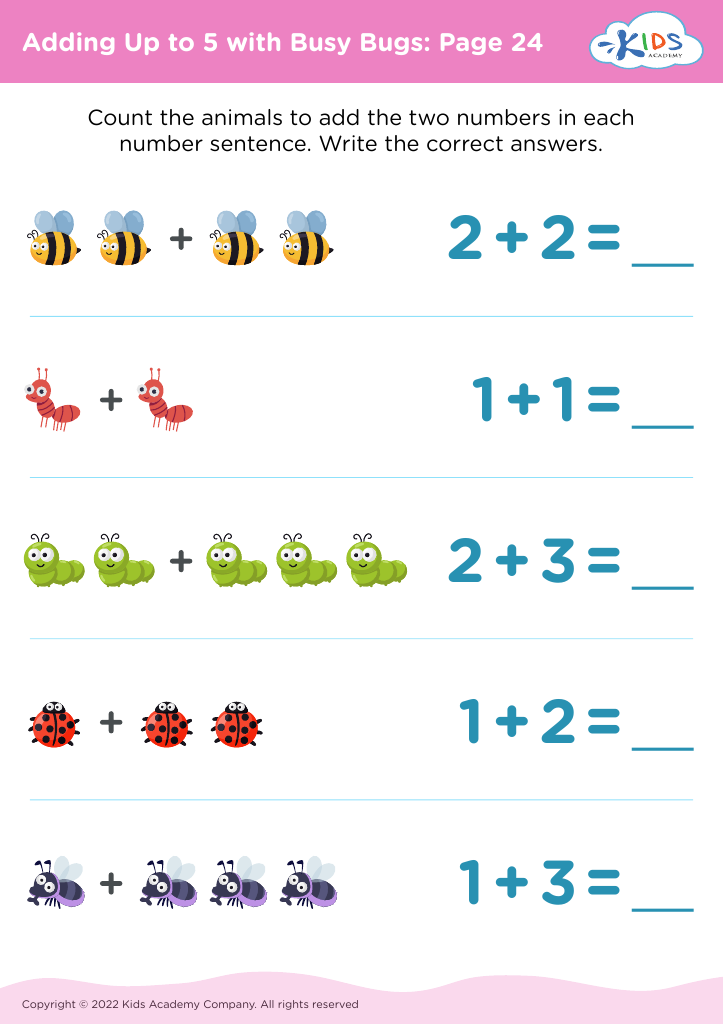
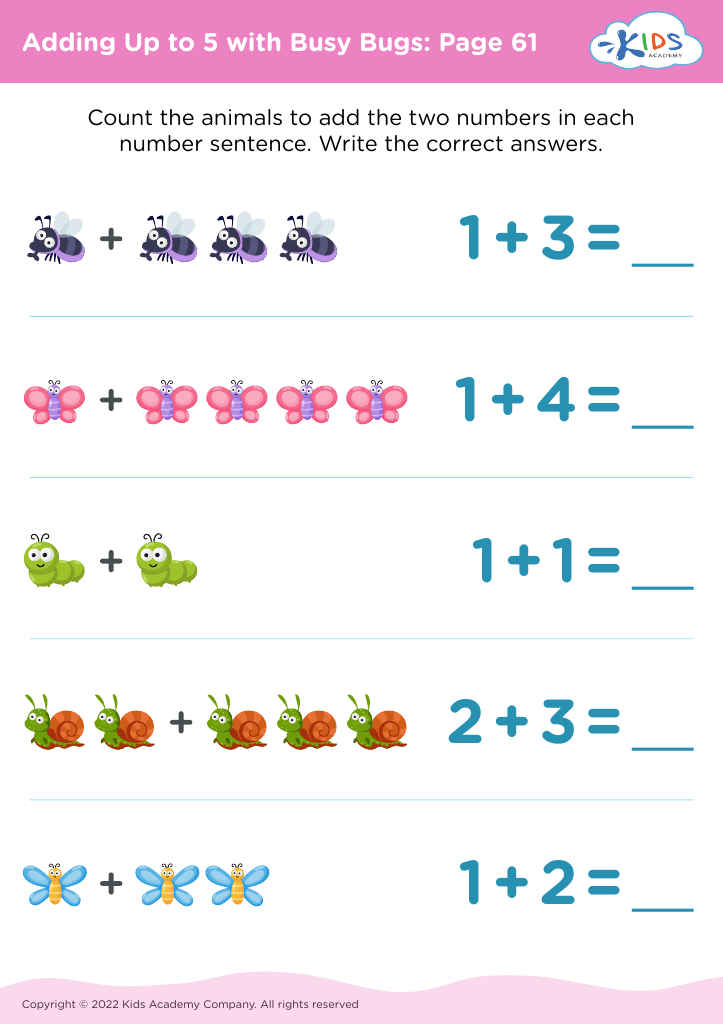
Enhance your 4-year-old's learning experience with ourVisualization Skills Addition Worksheets! These engaging, printable activities are designed to boost young learners' math comprehension through visual aids. By incorporating colorful images and interactive exercises, your child will not only master basic addition concepts but also improve their visualization skills, enabling them to better understand numbers and mathematical relationships. Each worksheet is tailored to promote fun learning, making math enjoyable and accessible. Ideal for parents and educators looking to support early math skills, our resources foster confidence and curiosity, setting the foundation for future academic success. Explore our diverse math sheets today!
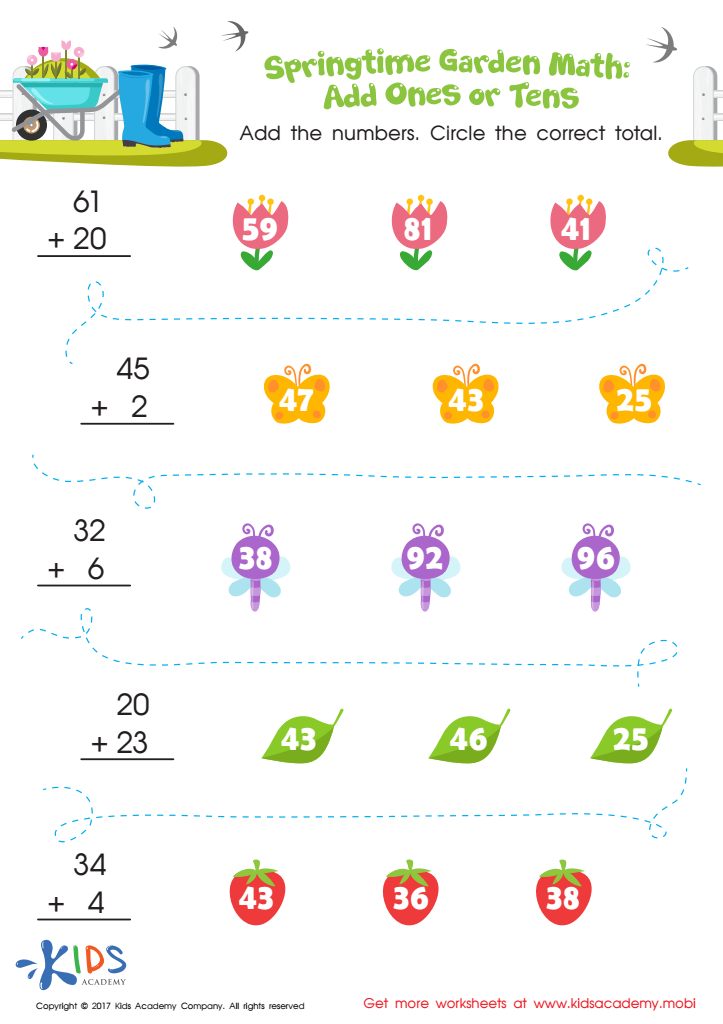
Springtime Garden Math Worksheet
 Assign to My Students








Visualization skills play a crucial role in the cognitive development of 4-year-olds, especially concerning mathematics, such as addition. Parents and teachers should care about these skills because they provide a foundation for analytical thinking and problem-solving. Visualization helps children form mental images of numbers and quantities, which is essential for understanding basic mathematical concepts.
When children learn to visualize numbers, they can better comprehend addition as a concept of combining quantities. For example, when faced with the problem "What is 2 + 3?", a child guided in visualization can imagine two apples and three apples coming together, ultimately leading to the insight that they make five apples in total. This mental imagery not only makes learning more engaging but also promotes a deeper understanding of mathematics.
Furthermore, strong visualization skills can impact other areas of learning, enhancing spatial awareness, creativity, and memory retention. By fostering these skills early, parents and teachers equip children with tools to tackle more complex mathematical concepts in the future. Encouraging playful activities that promote visualization—like counting games with physical objects—can prevent math anxiety and foster a love for learning. Ultimately, visualization lays the groundwork for academic success in math and beyond.








