
Division practice Division Worksheets for 4-Year-Olds
4 filtered results
Difficulty Level
Grade
Age
-
From - To
Subject
Activity
Standards
Simplify division for young learners with our Division Practice Worksheets for 4-Year-Olds. Designed to introduce the basics of division in a fun and accessible way, these worksheets blend engaging visuals with easy-to-follow instructions. Our resources help kids grasp foundational math skills through playful exercises and colorful illustrations, fostering a love for learning from an early age. Carefully curated to suit preschoolers' developmental stages, these worksheets make mastering division an enjoyable experience. Enhance your child’s early math skills and boost their confidence with these expertly crafted division practice sheets. Visit us and discover the joy of early math success.
Favorites
With answer key
Interactive
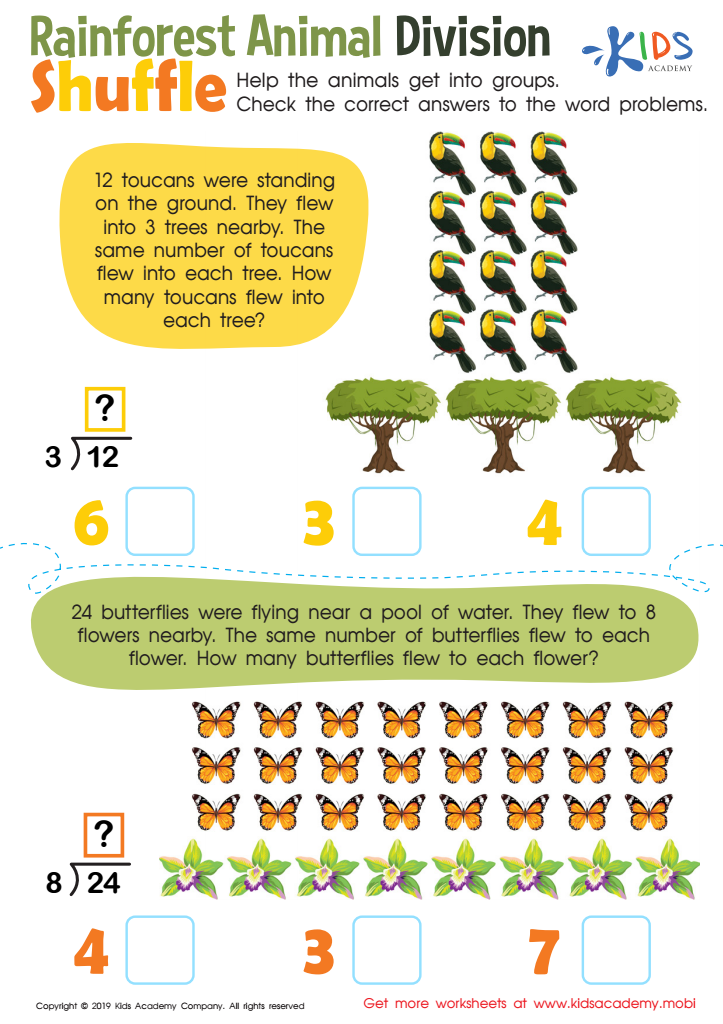
Rainforest Animal Division Worksheet
Children can save the rainforest and learn about division with this worksheet! It helps kids understand that division involves creating equal groups of specific numbers, and with its visual representation, they can grasp the concept more easily. They'll have fun learning about their place in the world and their role in protecting the environment.
 Assign to My Students
Rainforest Animal Division Worksheet
Worksheet
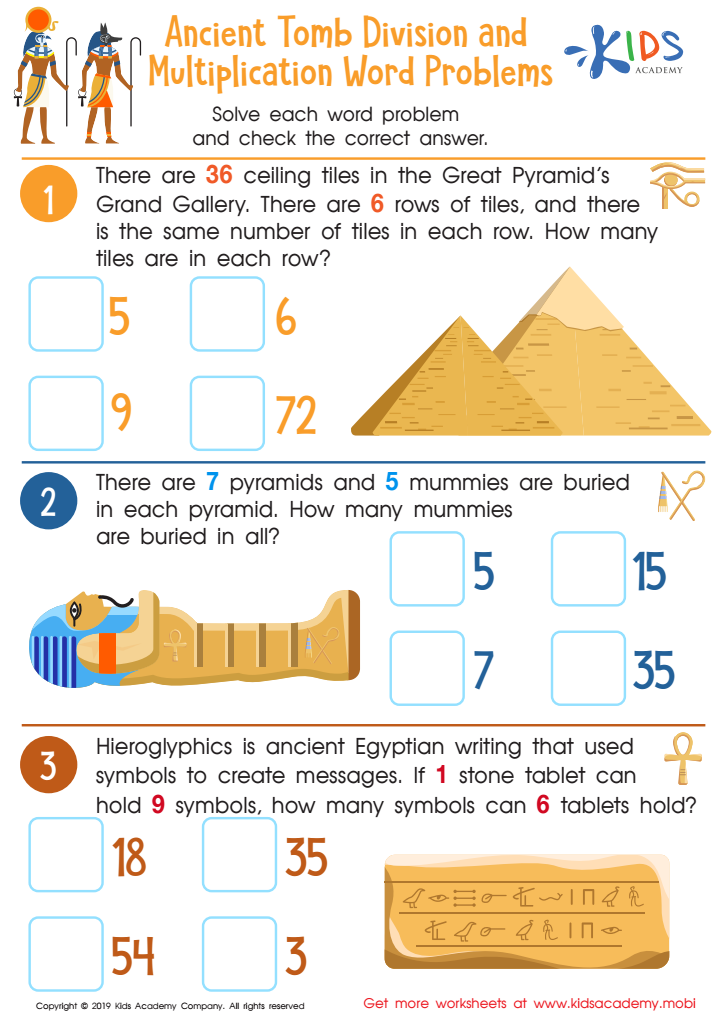
Ancient Tomb Division and Multiplication Word Problems Worksheet
This worksheet teaches kids math, plus a bit about ancient Egypt. Read the text and point to the pictures to explain them. There are three word problems - help kids interpret and solve each one, then find and check the answer. 80 words
Ancient Tomb Division and Multiplication Word Problems Worksheet
Worksheet
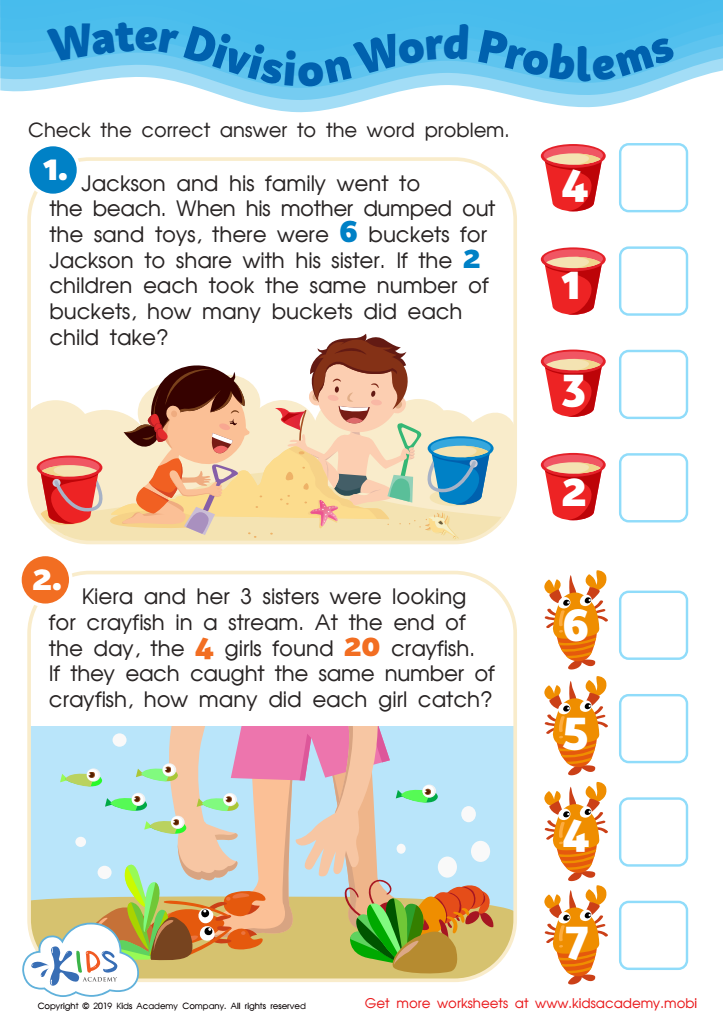
Water Division Word Problems Worksheet
Kids can sharpen their math skills with this fun PDF! They'll see pictures of friends at the beach, plus bold numbers and colorful pictures. All they need to do is read and understand the problem to find the answer - without even realizing they're doing division. A great way to make math enjoyable!
Water Division Word Problems Worksheet
Worksheet
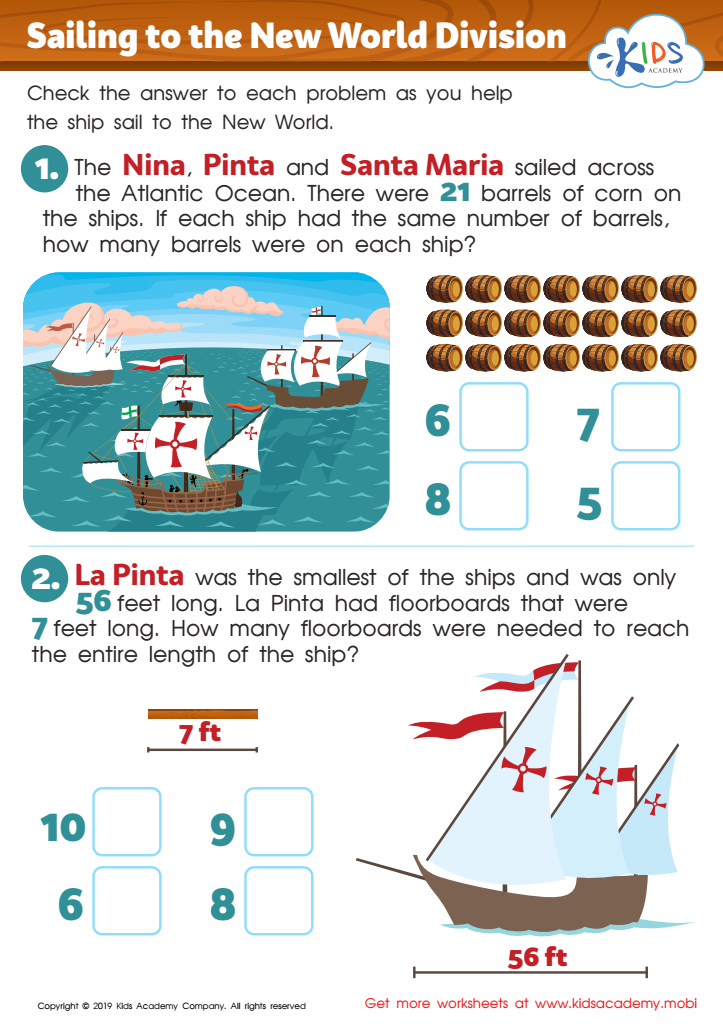
Sailing to the New World Division Worksheet
This worksheet combines history and math, helping kids make sense of problem-solving. Christopher Columbus sailing the ocean blue is combined with picture representations of division word problems in bold colors and highlighted numbers. Kids can learn while having fun figuring out the problems, regardless of whether it's math or history.
Sailing to the New World Division Worksheet
Worksheet
Join Kids Academy for Free
Who is primarily going to use this learning content?







Caring about division practice for 4-year-olds can have numerous developmental benefits. While formal division may seem advanced for young children, introducing basic division concepts through playful activities can significantly foster their cognitive growth. Early exposure to division helps children develop critical thinking and problem-solving skills, which are essential for their overall academic success. By breaking problems into simpler parts, children learn the value of analysis and strategic thinking.
Introducing division in age-appropriate ways, such as sharing toys or distributing snacks evenly, can make abstract concepts more concrete. These practical experiences build a strong mathematical foundation and reinforce the importance of fairness and sharing, promoting social development. Furthermore, children’s early math skills are highly predictive of future academic achievement, making it crucial to invest in these foundational years.
Parents and teachers play a vital role in this process. Their engagement and encouragement can boost a child's confidence and interest in math. By cultivating a positive attitude towards learning, adults can help children approach challenging tasks with curiosity and persistence. Therefore, incorporating division practice for young children, through engaging and hands-on methods, not only enhances their math abilities but also supports their broader developmental well-being.








