Problem-solving abilities Geometry Worksheets for 4-Year-Olds
3 filtered results
-
From - To
Enhance your child's problem-solving abilities with our engaging Geometry Worksheets designed specifically for 4-year-olds! These printable activities encourage young learners to explore shapes, patterns, and spatial reasoning in a fun and interactive way. Each worksheet is crafted to stimulate critical thinking and develop problem-solving skills essential for early math success. Your little one will enjoy identifying, sorting, and comparing various geometrical shapes while fostering creativity and logical reasoning. Perfect for both home and classroom settings, these worksheets provide an excellent foundation for future mathematical skills. Download now and watch your child's confidence grow as they tackle exciting geometric challenges!
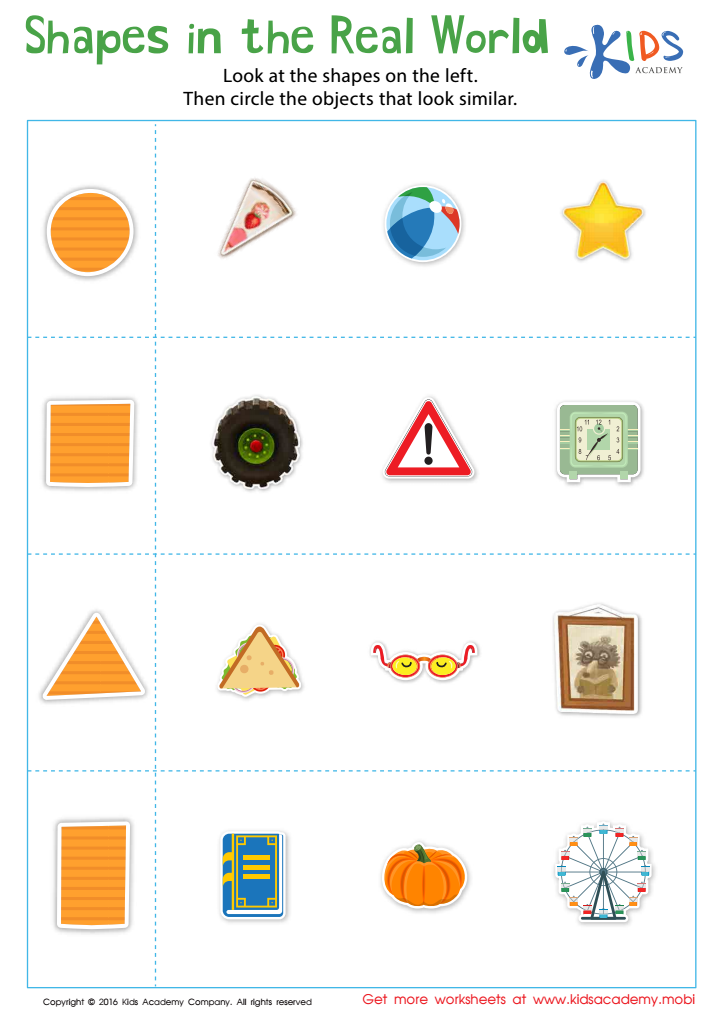
Shapes in the Real World Worksheet
 Assign to My Students











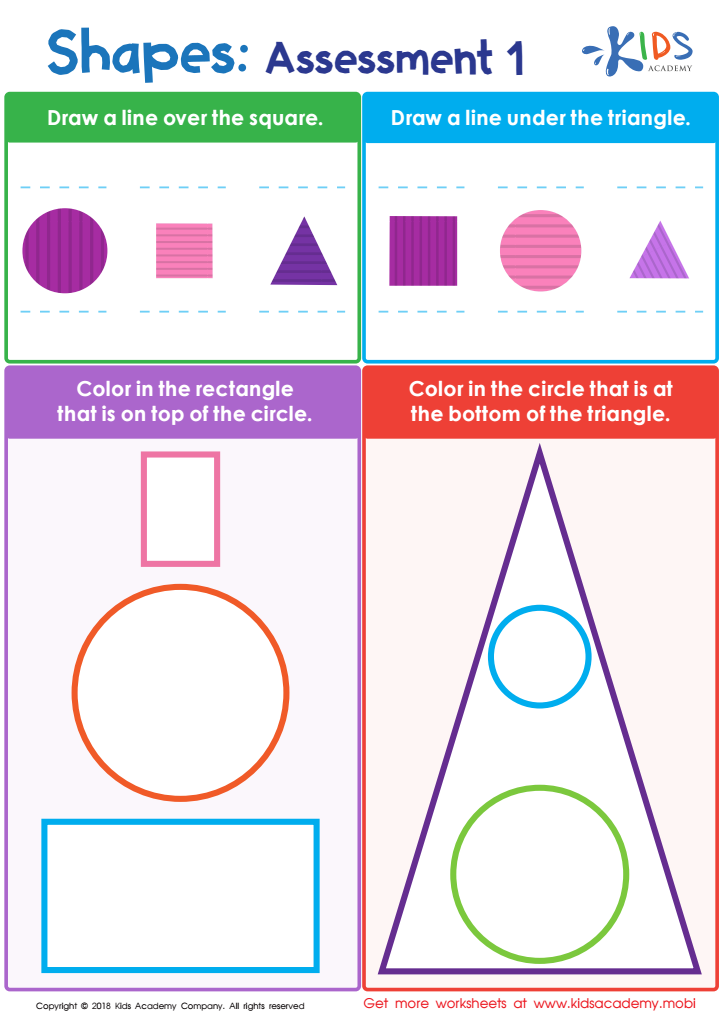
Shapes: Assessment 1 Worksheet
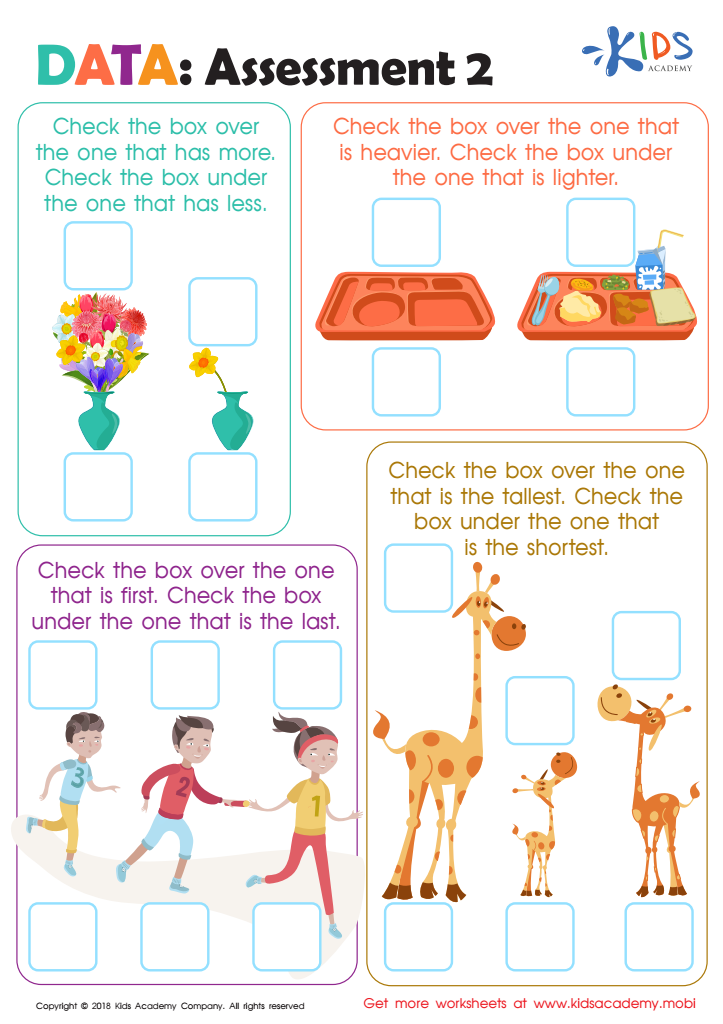
Data: Assessment 2 Worksheet








Parents and teachers should prioritize problem-solving abilities in geometry for 4-year-olds as it lays the foundation for critical thinking and cognitive development. At this age, children are naturally curious and eager to explore their environment, making it an optimal time to introduce geometric concepts. Engaging children in geometry helps them recognize shapes, understand spatial relationships, and develop reasoning skills that are essential for future learning.
By incorporating geometric problem-solving activities—such as puzzles, shape sorting, and block construction—children enhance their cognitive skills while also nurturing creativity and imagination. These activities promote not just mathematical understanding, but also perseverance as they learn to approach challenges, devise strategies, and realize that mistakes are opportunities for learning.
Moreover, early exposure to geometry supports various areas of development, including fine motor skills and language skills, as children discuss shapes and their properties. This foundational knowledge aids in higher-level math and science skills they will encounter in later years. By fostering strong problem-solving abilities in geometry from a young age, parents and teachers can empower children with the confidence to tackle more complex challenges in school, ultimately equipping them with the skills necessary for lifelong learning.








