Spatial reasoning Numbers Worksheets for 4-Year-Olds
3 filtered results
-
From - To
Boost your child's spatial reasoning skills with our engaging Worksheets for 4-Year-Olds! Designed to make learning fun, these worksheets introduce essential concepts of shape, size, and position through colorful, interactive activities. Young learners will explore various spatial relationships, helping them develop critical thinking and problem-solving skills while enhancing their number recognition. Each worksheet is tailored to spark curiosity, encouraging creativity and exploration in math. Ideal for preschool and kindergarten settings, these printable resources are perfect for parents and teachers seeking to enrich early math education. Start fostering your child's cognitive development today with our easy-to-use spatial reasoning worksheets!
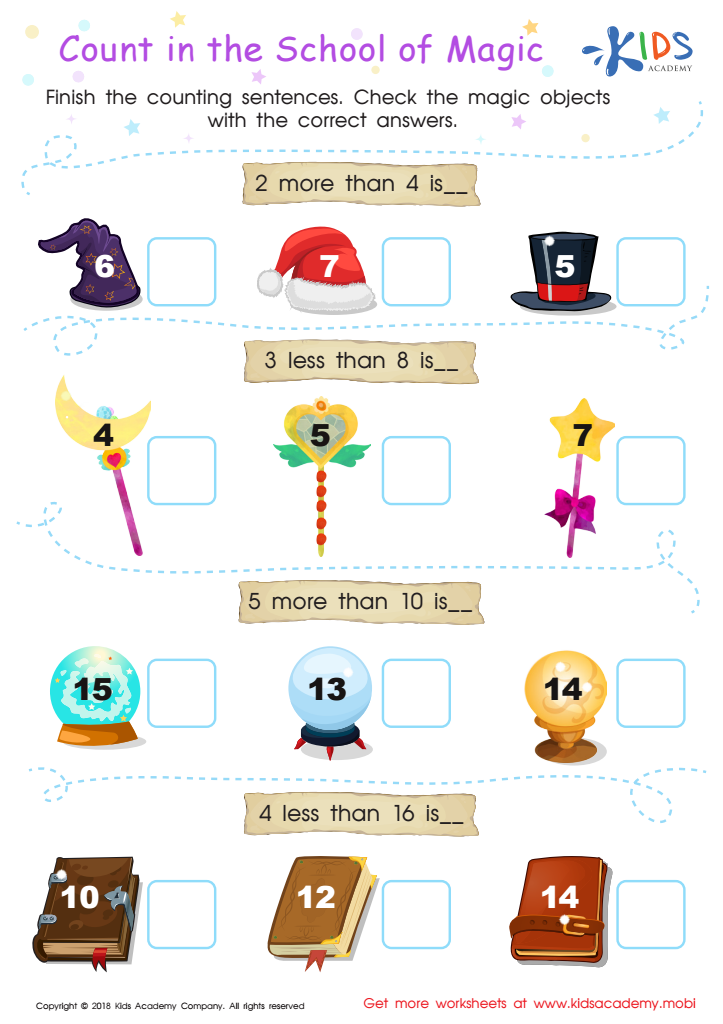
Count in the School of Magic Worksheet
 Assign to My Students
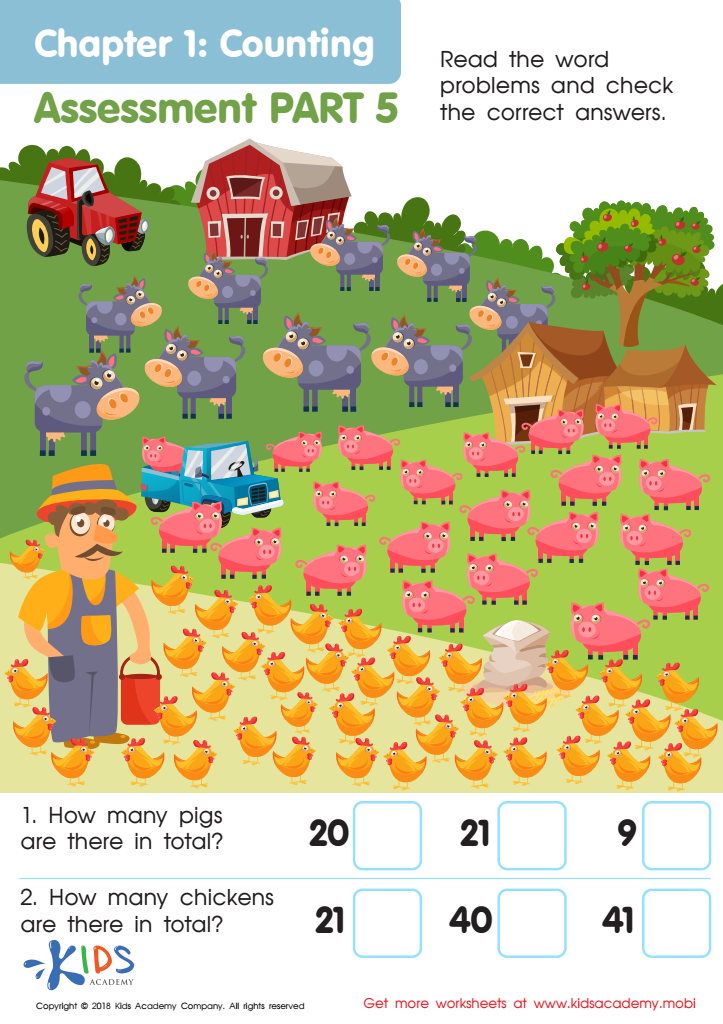
Counting: Assessment 5 Worksheet
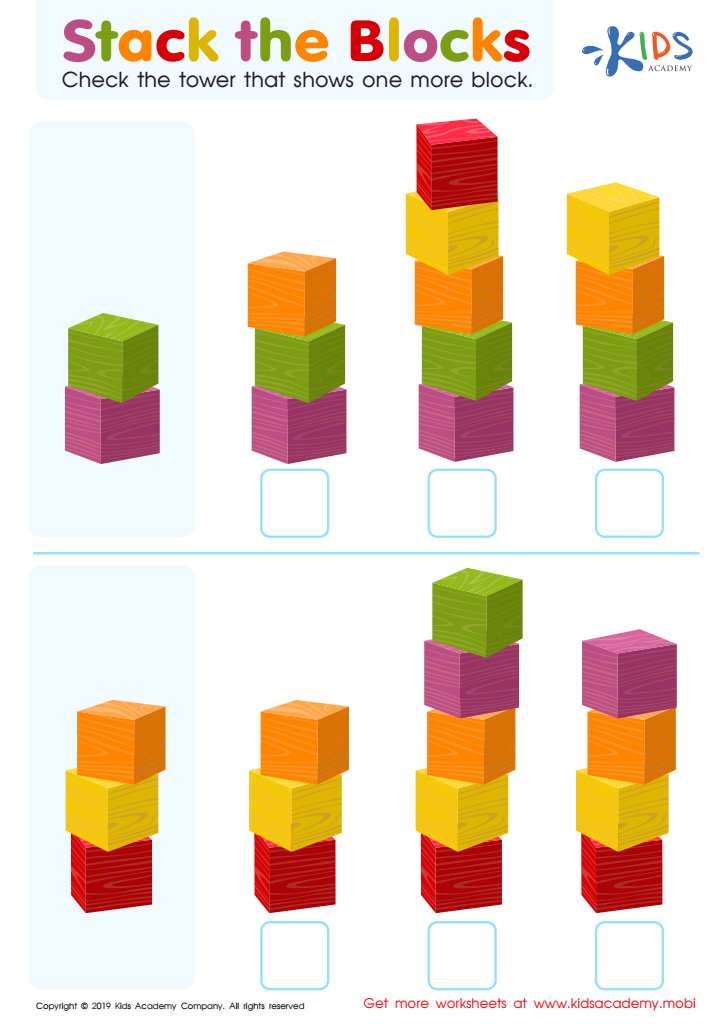
Stack the Blocks Worksheet







Spatial reasoning is a crucial aspect of early childhood development that significantly impacts a child's overall learning and problem-solving abilities. For 4-year-olds, cultivating strong spatial reasoning skills can lay the foundation for future success in subjects such as mathematics, science, and engineering. These skills involve understanding how objects relate to each other in space, visualizing shapes and their properties, and recognizing patterns.
Parents and teachers should prioritize spatial reasoning activities, as they enhance cognitive development. Engaging young children in hands-on activities, such as building with blocks, sorting shapes, or playing puzzle games, fosters these skills while making learning enjoyable. Research indicates that children with strong spatial abilities tend to perform better in school, particularly in math-related subjects, later in life.
Furthermore, spatial reasoning supports critical thinking and creative problem-solving. Skilled spatial thinkers can analyze complex information, make connections between ideas, and approach challenges from multiple perspectives. By caring about and incorporating spatial reasoning exercises into daily routines, parents and teachers can provide 4-year-olds with essential tools that prepare them for academic success and enrich their everyday experiences. Ultimately, nurturing these skills promotes confidence, curiosity, and a lifelong love of learning.








