Comparing object weights Math Worksheets for 4-Year-Olds
3 filtered results
-
From - To
Explore our engaging "Comparing Object Weights" math worksheets designed specifically for 4-year-olds! These interactive worksheets help young learners develop essential math skills by comparing the weights of various objects. With colorful illustrations and simple activities, children will practice identifying heavier and lighter items, enhancing their understanding of weight concepts. Perfect for preschool or kindergarten settings, these worksheets promote hands-on learning and critical thinking. Whether at home or in the classroom, our resources make math fun and accessible, setting a solid foundation for future learning. Download your worksheets today and watch your little ones confidently master the concept of comparing weights!
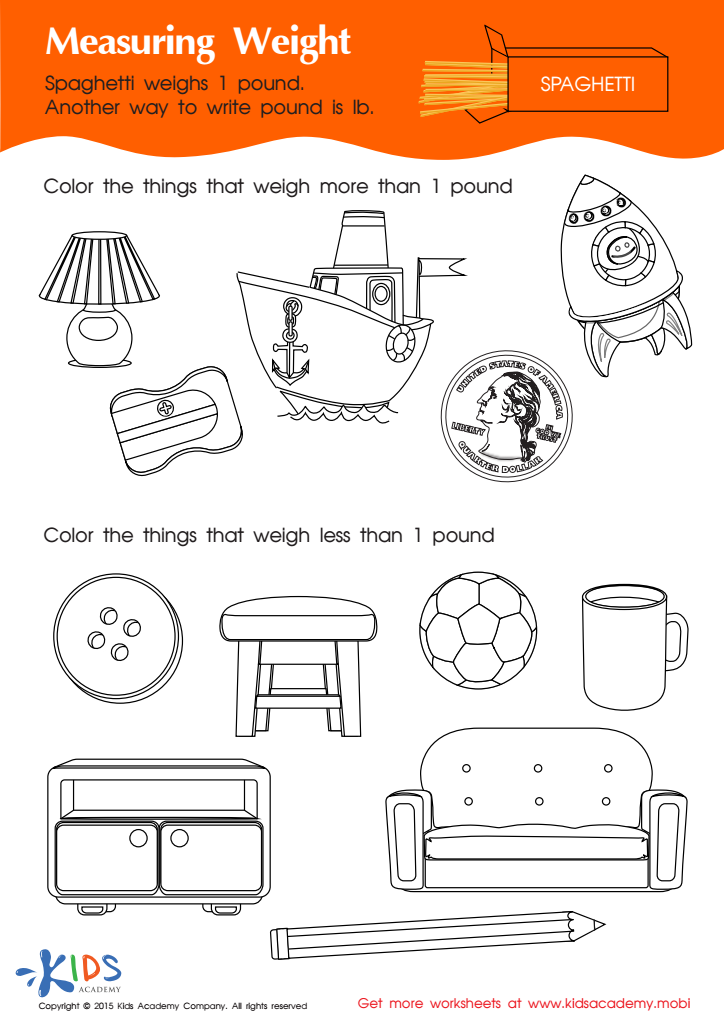
 Assign to My Students
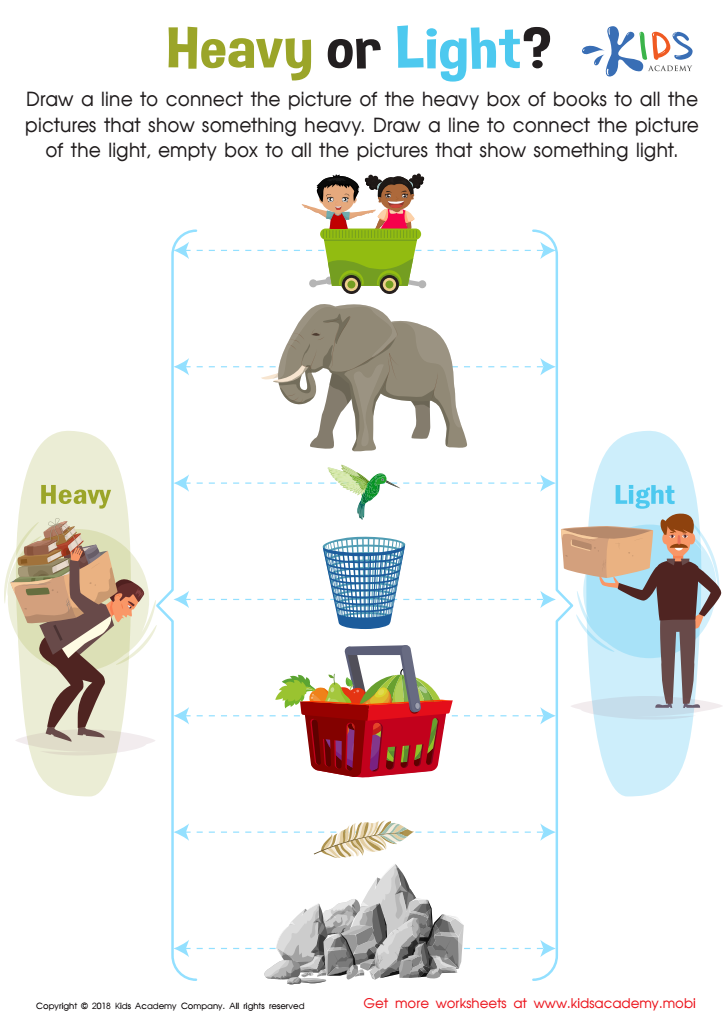
Heavy or Light? Worksheet
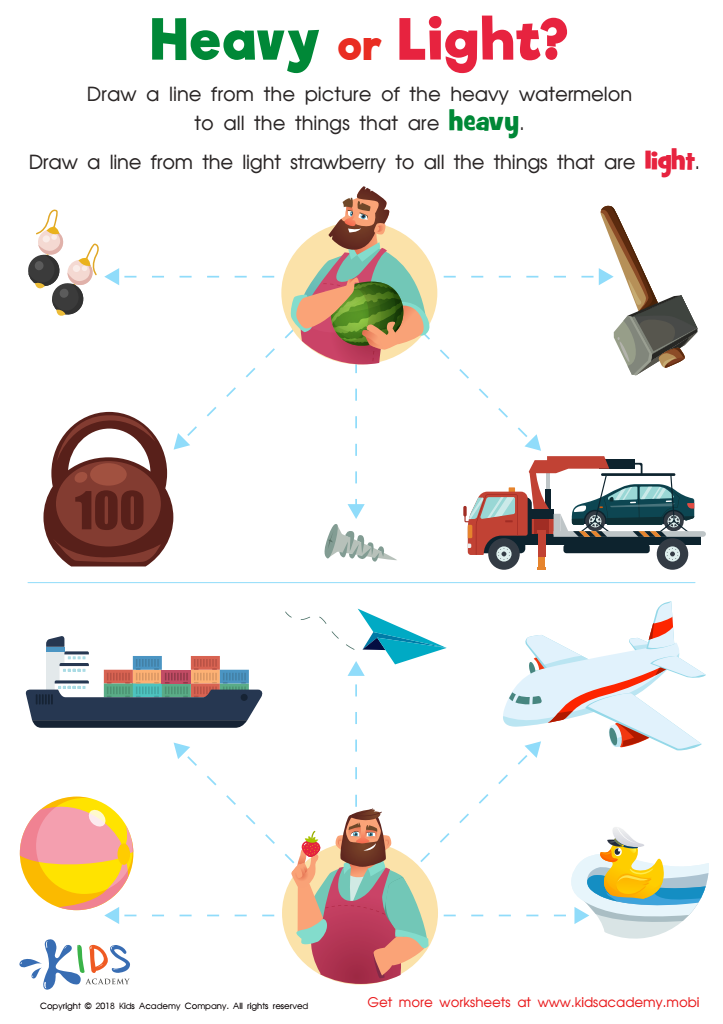
Heavy or Light? Worksheet





Comparing object weights is a fundamental math concept that holds significant importance for 4-year-olds, and it's essential for both parents and teachers to engage in this activity. At this age, children are naturally curious and eager to explore their environment, making it an ideal time to introduce them to foundational math skills.
When children compare weights, they develop critical thinking and problem-solving abilities. They learn to use descriptive language, such as "heavier," "lighter," and "equal," enhancing their vocabulary. This hands-on approach to learning also promotes fine motor skills as they lift, balance, and manipulate objects, improving coordination and dexterity.
Moreover, comparing weights incorporates concepts of measurement, which are vital in early education. It fosters an understanding of balance and gravity, encourages scientific inquiry, and introduces basic math principles in a fun and engaging way. By participating in these activities, parents and teachers support a positive attitude toward learning math, laying the groundwork for future mathematical concepts.
Ultimately, by incorporating weight comparison into everyday play and learning, parents and teachers can make math relatable and enjoyable, helping children to grasp essential concepts that set the stage for lifelong mathematical understanding.








