
Comparing quantities Math Worksheets for 4-Year-Olds
5 filtered results
Difficulty Level
Grade
Age
-
From - To
Subject
Activity
Standards
Introducing our "Comparing Quantities Math Worksheets for 4-Year-Olds," a delightful and engaging way for young learners to grasp foundational math concepts. Our expertly designed worksheets focus on honing counting, number recognition, and basic comparison skills through fun, interactive activities. Featuring colorful illustrations and kid-friendly themes, each worksheet provides ample opportunities for practice, helping children differentiate between 'more,' 'less,' and 'equal.' Perfect for both classroom settings and at-home learning, these resources are crafted to build a strong mathematical foundation while keeping little minds interested and excited to learn. Visit our page to download and print today!
Favorites
With answer key
Interactive
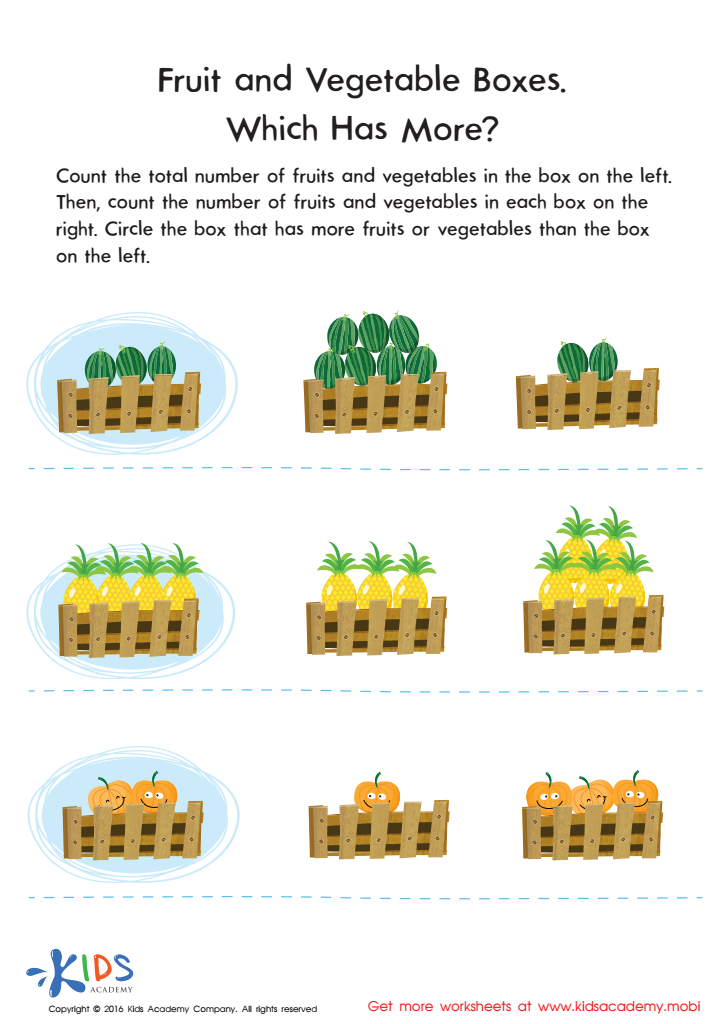
Which Has More? Size Worksheet
This worksheet is perfect for your child to practice critical thinking and logical reasoning. Your child will count and compare the fruits and veggies in the crates to decide which one has more. They will use complex cognitive skills and practice following precise rules. Guide them through the directions and help keep their focus, while enjoying the images.
 Assign to My Students
Which Has More? Size Worksheet
Worksheet
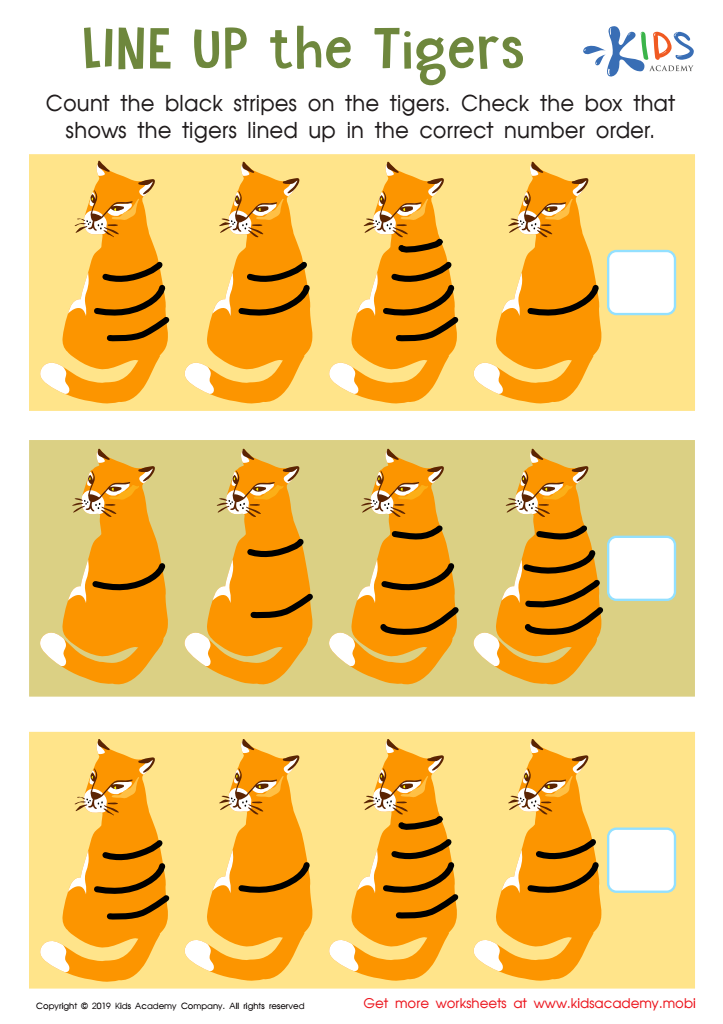
Line up the Tigers Worksheet
Give your preschoolers the right tools to succeed in math. Show them pictures of animals, then have them count the stripes and check the box that shows the tigers lined up in the right order. This will help them understand and make their journey easier.
Line up the Tigers Worksheet
Worksheet
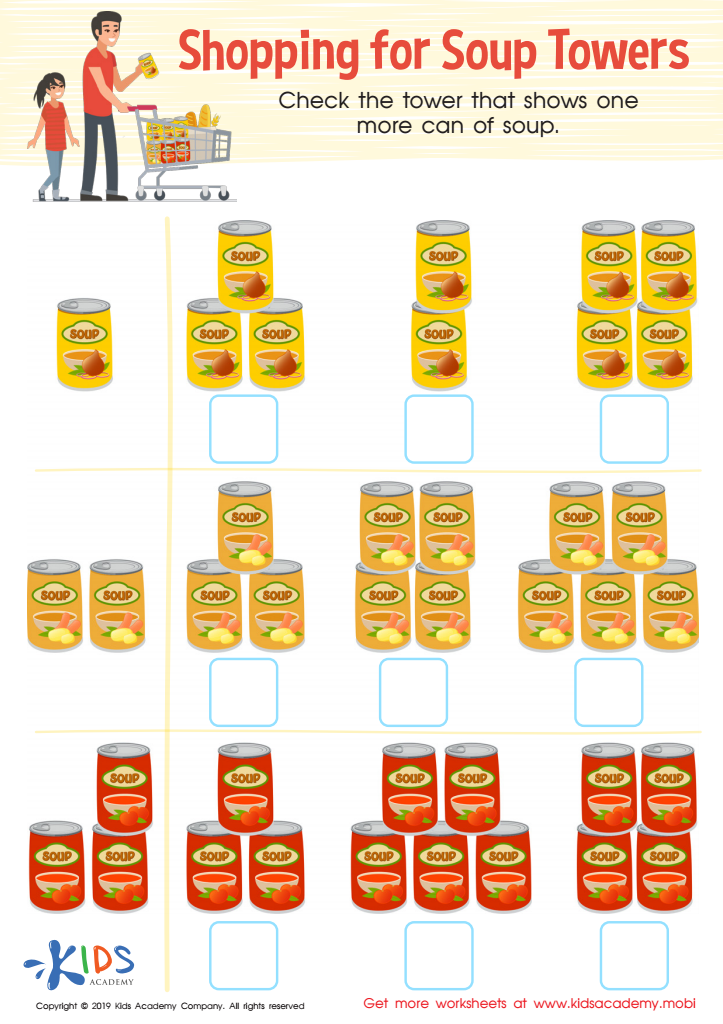
Soup Towers Worksheet
Do your kids come shopping? Transform it into a learning experience! Point out items and ask your kids what they are. Count each stack of cans, and have them check the tower with an extra can of soup. It's a great way to teach them counting and counting up!
Soup Towers Worksheet
Worksheet
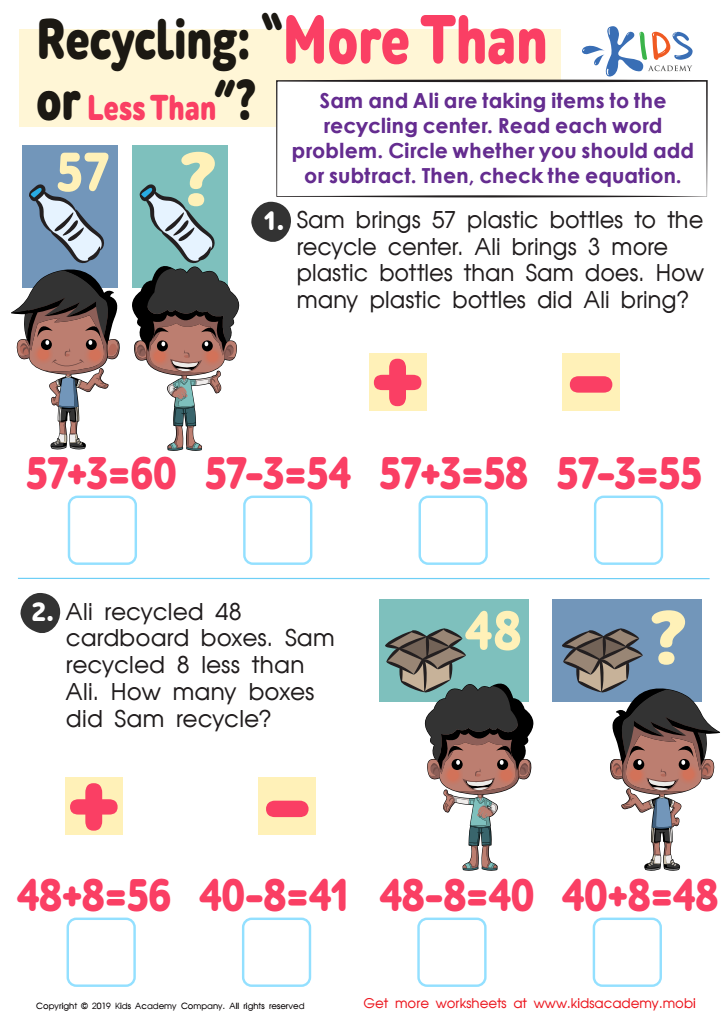
Recycling - More or Less Worksheet
Your child can compare numbers and solve word problems with this free worksheet. Help them understand what's being asked as Sam and Ali take items to the recycling center. They can choose the correct equation to match the word problem and apply their skills in reading and pulling out the appropriate information.
Recycling - More or Less Worksheet
Worksheet
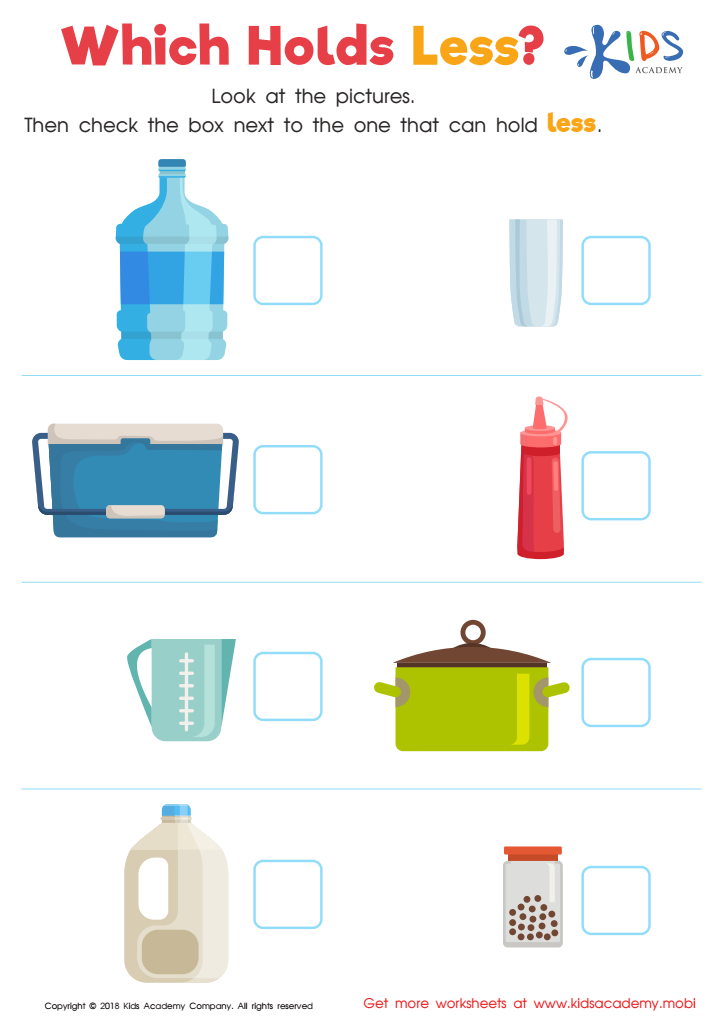
Which Holds Less? Worksheet
Students may find it hard to grasp volume without a visual aid. This free, downloadable worksheet helps with understanding by providing pictures of familiar objects. It allows students to practice comparing volumes and deciding which container holds less. It's a great introduction before they move onto using greater than and less than symbols.
Which Holds Less? Worksheet
Worksheet
Join Kids Academy for Free
Who is primarily going to use this learning content?






Comparing quantities is a foundational math skill for 4-year-olds, setting the stage for more complex mathematical concepts. At this age, children are naturally curious and beginning to develop an awareness of numbers and basic math principles. Engaging them in activities that involve comparing quantities helps foster this emerging numerical literacy.
Parents and teachers should care about comparing quantities because it cultivates critical thinking and problem-solving skills. When children compare quantities, they learn to identify more, less, or the same, which builds their understanding of relation and order. This ability is crucial not only for math but also for daily decision-making. For example, comparing quantities teaches them to judge how many toys they have versus how many their friend has, fostering early social skills such as sharing and fairness.
Additionally, early exposure to math concepts enhances cognitive development. Research shows that early math skills are a strong predictor of later academic success, more so than early reading skills. By encouraging activities like sorting, counting, and comparing groups of objects, parents and teachers build a solid foundation for more advanced topics like addition and subtraction.
Thus, paying attention to comparing quantities in early childhood equips kids with essential skills, promoting lifelong learning and easing the transition into formal schooling and complex mathematical reasoning.








