Differentiating shapes Math Worksheets for 4-Year-Olds
3 filtered results
-
From - To
Discover our engaging Differentiating Shapes Math Worksheets for 4-Year-Olds! Designed to introduce young learners to the fascinating world of shapes, these worksheets provide fun, interactive activities that help children identify and differentiate basic geometric shapes, such as circles, squares, triangles, and rectangles. With colorful illustrations and age-appropriate exercises, your little ones will enhance their visual discrimination skills while developing foundational math concepts. Our worksheets are perfect for preschool classrooms, playdates, or at-home learning, ensuring that learning shapes is both enjoyable and educational. Help your child build confidence in their shape recognition abilities today with our versatile and printable resources!
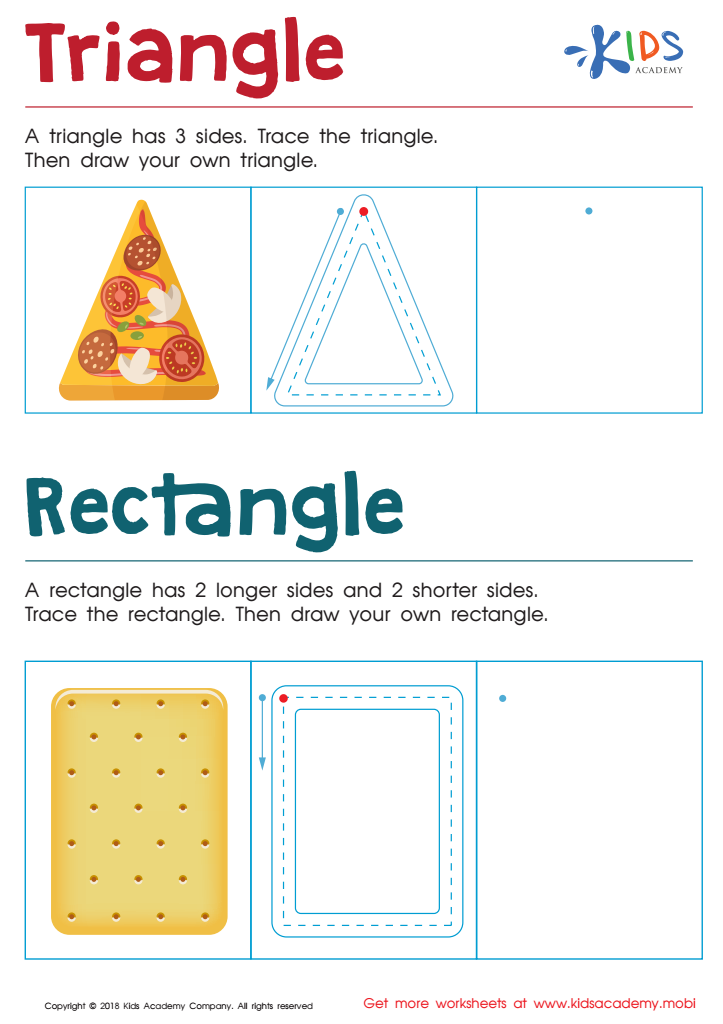
Triangle Rectangle Worksheet
 Assign to My Students
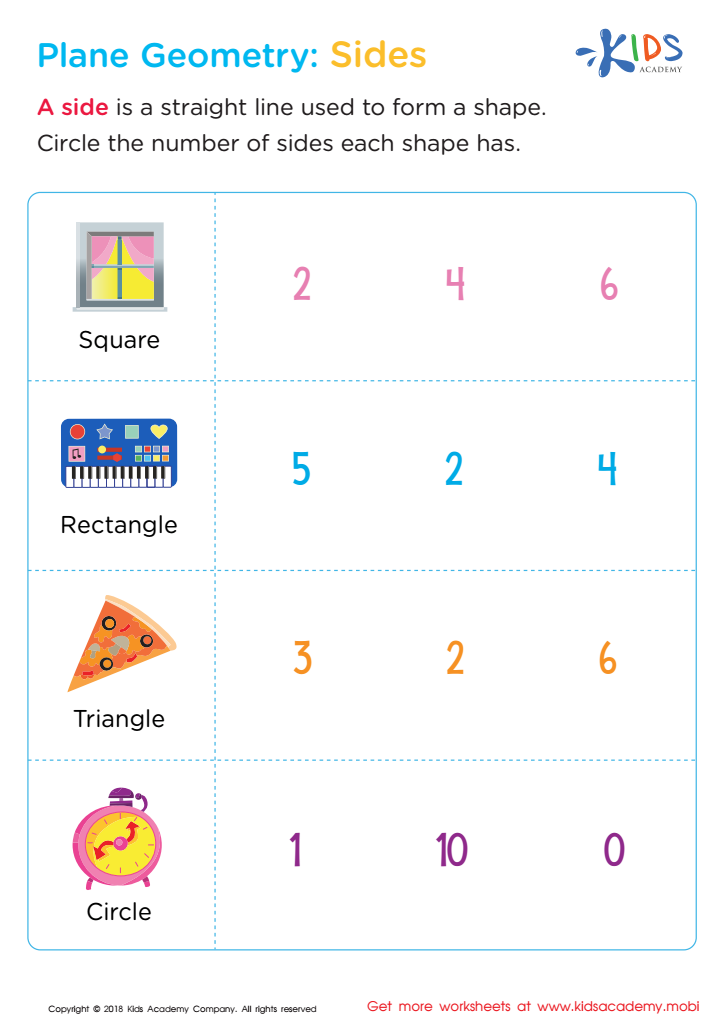
Plane Geometry: Sides Worksheet
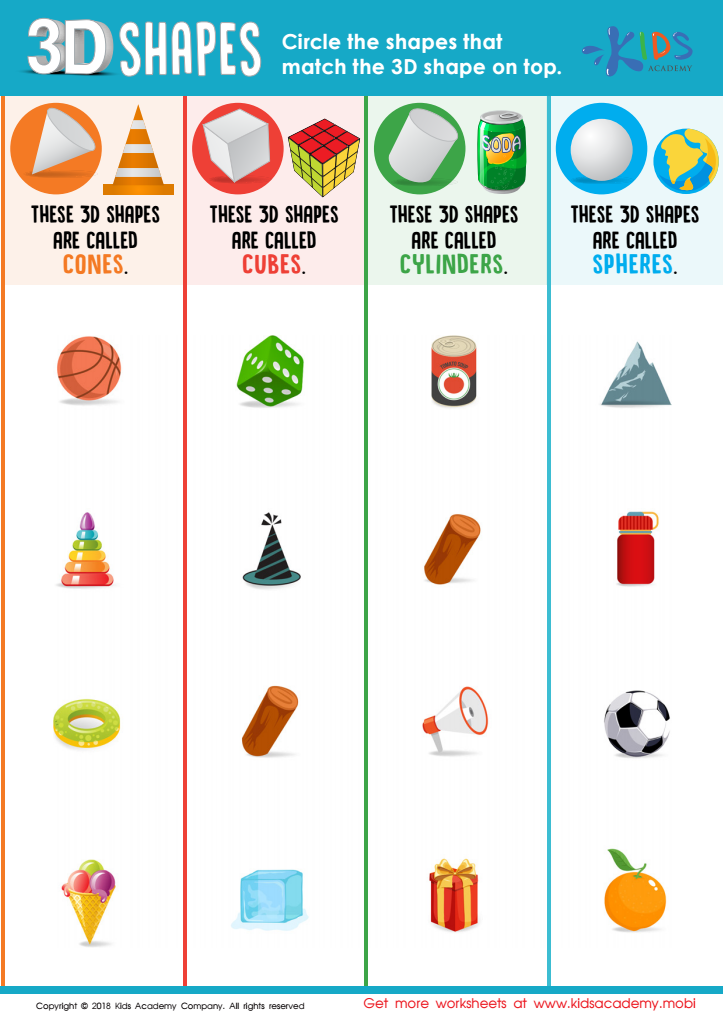
3D Shapes Worksheet








Differentiating shapes for 4-year-olds is crucial for their cognitive development and foundational math skills. At this age, children are naturally curious and eager to explore their environment. By introducing them to various shapes, parents and teachers can foster critical thinking, Problem-Solving, and spatial awareness. Differentiation—tailoring instruction to meet the individual needs of each child—ensures that all learners can engage meaningfully with shape concepts, regardless of their starting point.
Understanding shapes helps children develop their observational skills and enhances their ability to categorize and connect ideas. Identifying and manipulating shapes can lead to improved creativity and fine motor skills as children engage in sorting, drawing, and building activities. Furthermore, shape recognition forms the groundwork for more complex mathematical concepts such as geometry, patterns, and measurement that they will encounter later in school.
Valuing this foundational aspect of learning encourages a lifelong positive attitude toward math, helping to reduce anxiety around the subject as they grow. By focusing on differentiating shapes, educators and parents create a supportive learning environment that honors each child's unique learning journey, ultimately setting the stage for future academic success.








