Mental arithmetic Math Worksheets for 4-Year-Olds
4 filtered results
-
From - To
Discover engaging and fun mental arithmetic math worksheets designed specifically for 4-year-olds at Kids Academy! Our expertly crafted worksheets not only introduce young learners to fundamental math concepts; they also enhance problem-solving and critical thinking skills. Each activity incorporates colorful visuals and interactive exercises to make learning enjoyable and effective. Ideal for both classroom and home use, these worksheets offer a wide range of topics such as counting, basic addition, and subtraction. Ensure your little one's success in math with our age-appropriate and skill-building resources. Visit Kids Academy to prepare your child for a bright mathematical future!
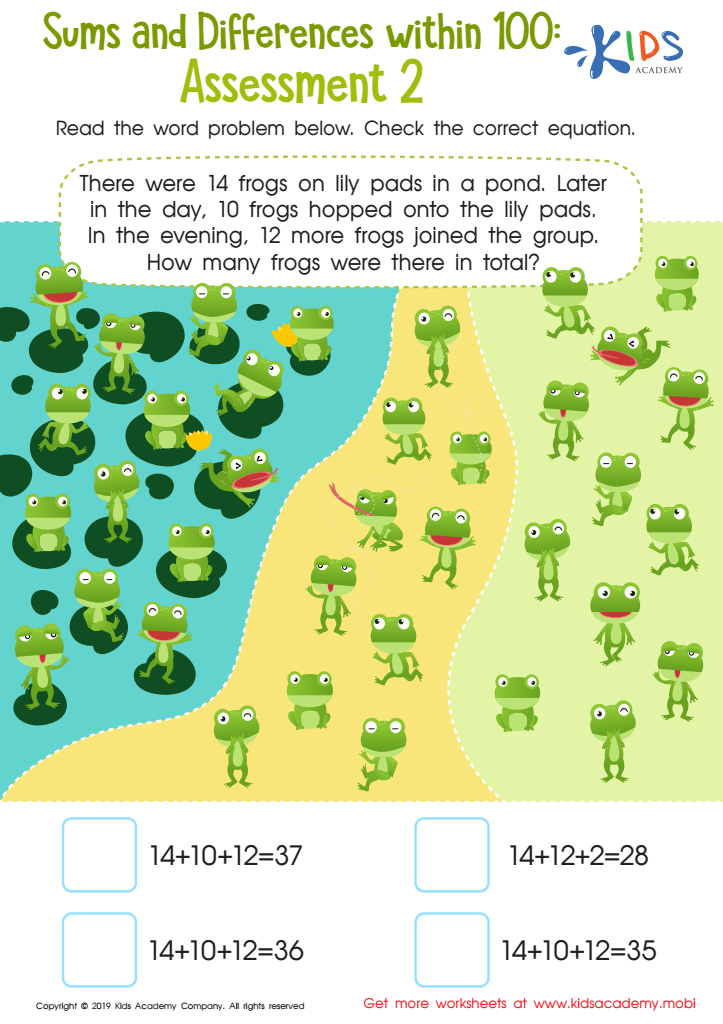
Sums and Differences Within 1 - Assessment 2 Worksheet
 Assign to My Students
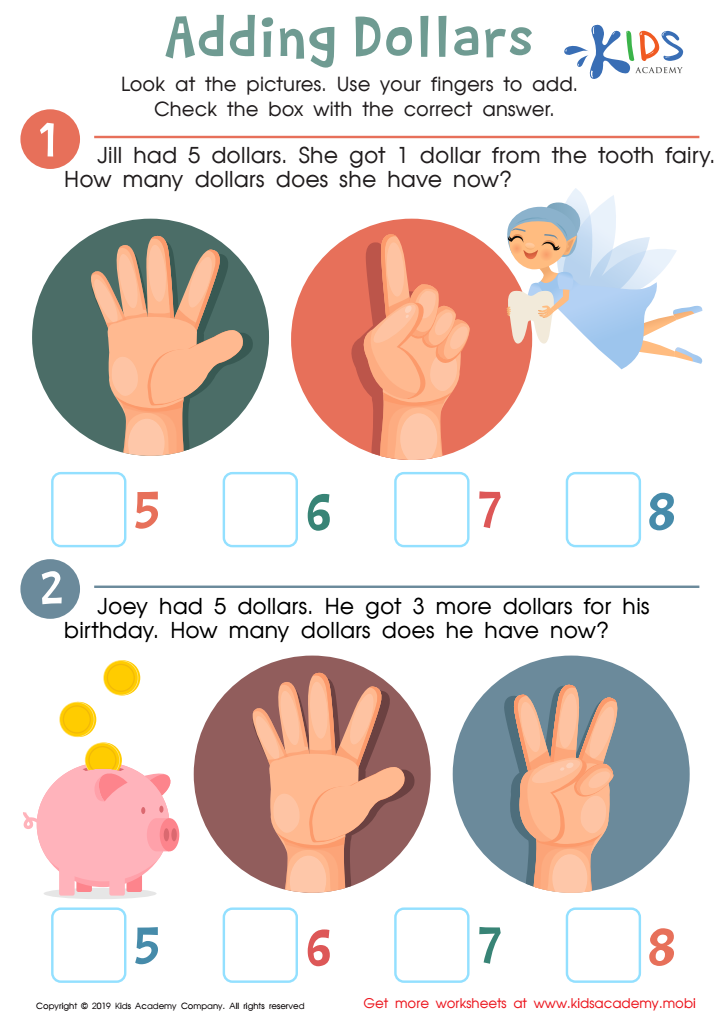
Tooth Fairy Addition Worksheet
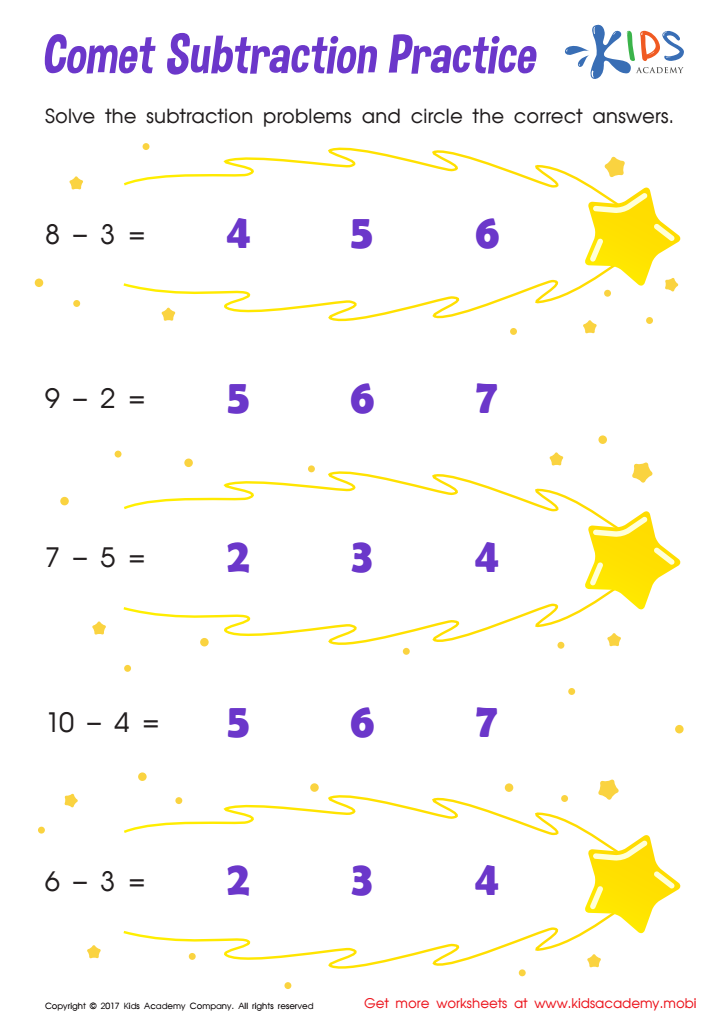
Comet Subtraction Practice Substraction Worksheet
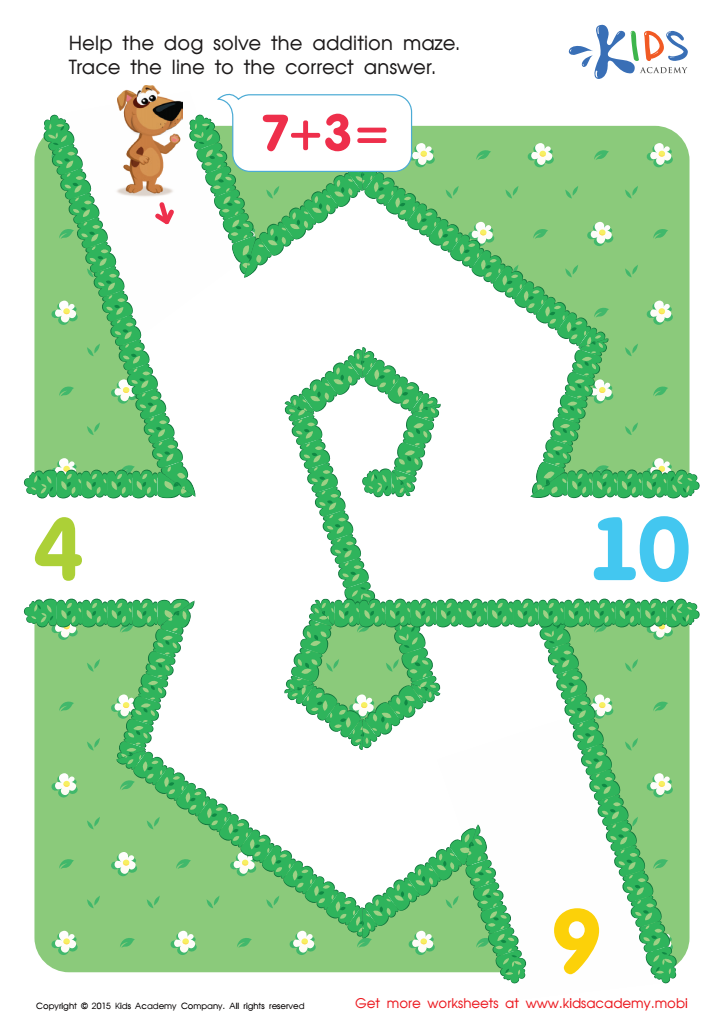
Seven Plus Three Worksheet




.jpg)

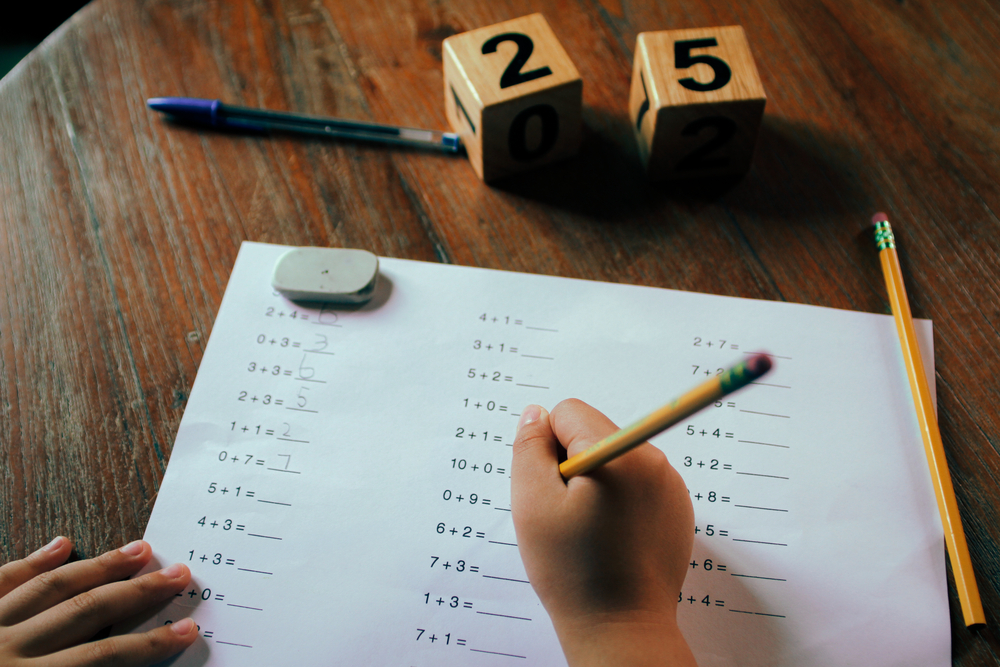
Parents and teachers should care about mental arithmetic for 4-year-olds because it plays a crucial role in early cognitive development and sets the foundation for future academic success. At this age, children's brains are highly receptive to new information and learning methods. Mental arithmetic helps develop essential skills such as logical thinking, memory, concentration, and problem-solving.
Introducing mental arithmetic at a young age helps children become fluent with numbers and basic mathematical concepts, giving them a significant advantage as they progress through school. It encourages a positive attitude towards math by making it a fun and integral part of their daily routine, reducing math anxiety later in life. Mental arithmetic also strengthens neural pathways, improving overall cognitive function and adaptability.
Additionally, mastering basic arithmetic early on fosters self-confidence and independence. When children feel competent in math, they're more likely to tackle new challenges with enthusiasm and persistence. Beyond academics, the mental discipline acquired through arithmetic extends to other life skills, like planning and decision-making.
In conclusion, early exposure to mental arithmetic equips children with a solid intellectual foundation, promotes a love for learning, and enhances both their academic performance and everyday decision-making abilities. It's an investment in their future that parents and teachers should prioritize.








