
Color Identification Matching Worksheets for 4-Year-Olds
3 filtered results
Difficulty Level
Grade
Age
-
From - To
Subject
Activity
Standards
Explore our engaging Color Identification Matching Worksheets designed specifically for 4-year-olds! These fun and colorful activities encourage young learners to develop their color recognition skills through interactive matching games. Each worksheet features vibrant illustrations that captivate children's attention, making learning enjoyable. Ideal for preschool and kindergarten settings, these worksheets help reinforce essential cognitive skills while promoting fine motor development. Your little ones will love identifying and matching colors, boosting their confidence and creativity in the process. Download and print our Color Identification Matching Worksheets for a playful and educational experience that inspires a love for learning from an early age!
Favorites
With answer key
Interactive
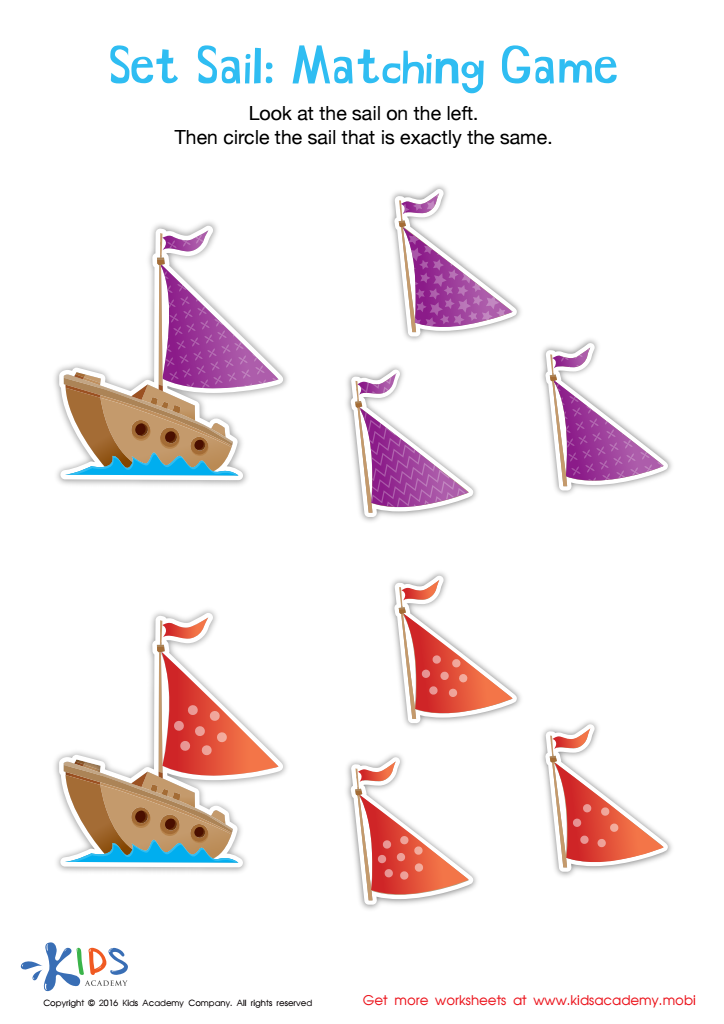
Set Sail Worksheet
Set sail with this fun matching game for toddlers! Kids will love finding the same pattern on the sails, improving their problem-solving and counting skills. Enjoy this bright and engaging worksheet!
 Assign to My Students
Set Sail Worksheet
Worksheet
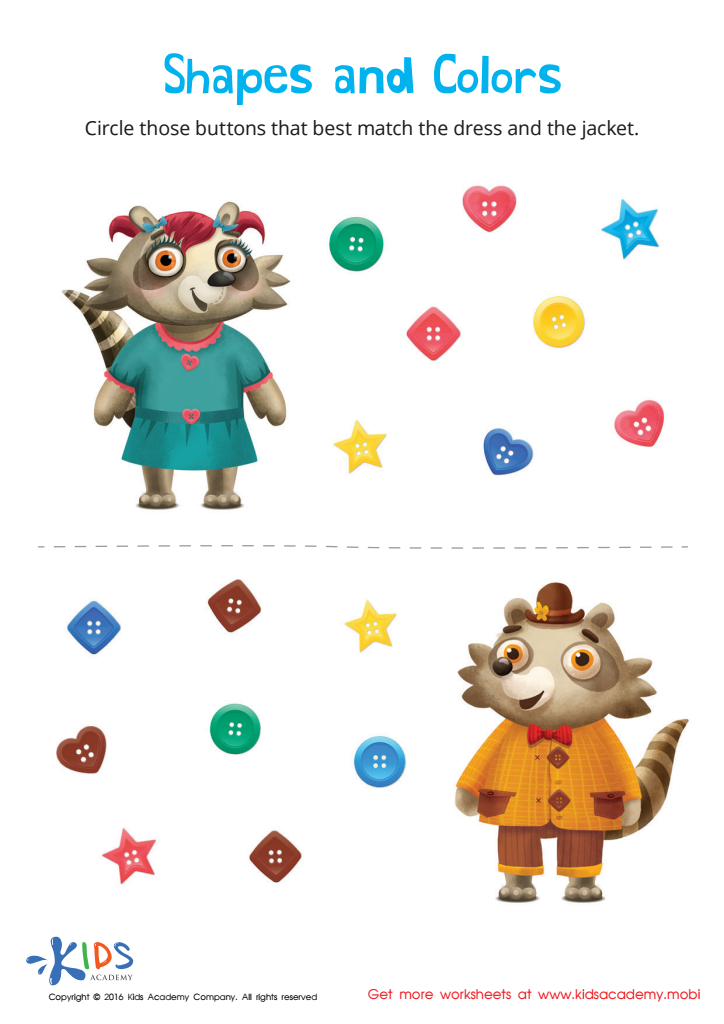
Matching: Shapes and Colors Worksheet
Help Mr. and Mrs. Raccoon find the right buttons to match their shirts! Kids will identify shapes and colors and learn to match them correctly.
Matching: Shapes and Colors Worksheet
Worksheet
Join Kids Academy for Free
Who is primarily going to use this learning content?







Color identification is a crucial developmental milestone for 4-year-olds, influencing various aspects of their learning and growth. First and foremost, it enhances cognitive development, as children begin to categorize and differentiate objects in their environment. Recognizing colors aids in building a foundation for more complex concepts, such as sorting and classifying, essential skills in mathematics and science.
Additionally, color identification supports language development. As children learn to name and describe colors, they expand their vocabulary, improving communication skills. Engaging in discussions about colors allows for enhanced expression and creativity.
Social skills also benefit from color identification. When children play together and coordinate color-based activities, they learn teamwork and sharing, essential for healthy social interactions. Furthermore, recognizing colors can boost confidence and independence as kids navigate their worlds, selecting clothes, art supplies, or identifying items during play.
Finally, color matching activities can be easily integrated into daily routines and learning environments, providing opportunities for fun and interactive learning. By prioritizing color identification, parents and teachers can lay the groundwork for a child's academic success, fostering essential skills in a playful and engaging manner. Ultimately, embracing color identification as a point of focus supports holistic development in young children.








