
Vocabulary development Matching Worksheets for 4-Year-Olds
3 filtered results
Difficulty Level
Grade
Age
-
From - To
Subject
Activity
Standards
Enhance your 4-year-old's vocabulary with our engaging Vocabulary Development Matching Worksheets! These fun, interactive activities are designed to support early language skills as children connect words with corresponding images. By encouraging matching, kids will expand their understanding of vocabulary in a playful and effective way. Each worksheet features brightly colored illustrations and age-appropriate terms, making learning exciting and accessible. Perfect for parents and teachers, our worksheets can be easily printed for at-home use or learning in classrooms. Foster a love for words while building essential language skills with these entertaining and educational resources that encourage cognitive growth and creativity!
Favorites
With answer key
Interactive
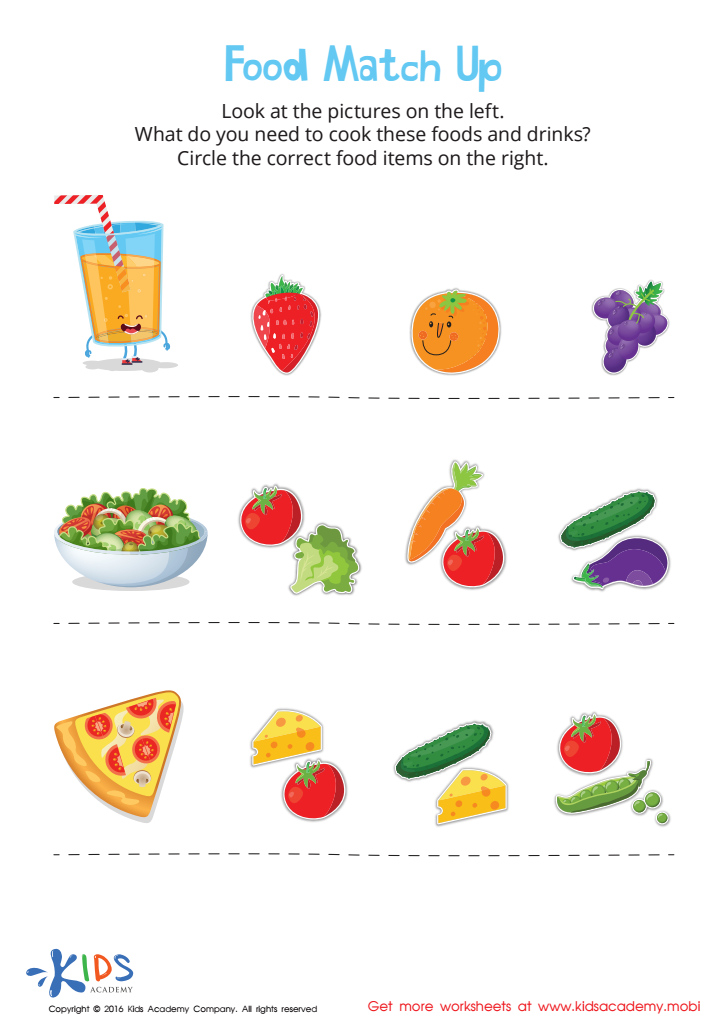
Food Match Up Worksheet
This worksheet will help your preschooler develop early math and cognitive skills. It challenges them to pay attention to details, understand how smaller parts make a whole, and increase important matching skills. Use it to give them a hands-on learning experience in the kitchen, and watch them understand how ingredients come together to make something delicious!
 Assign to My Students
Food Match Up Worksheet
Worksheet
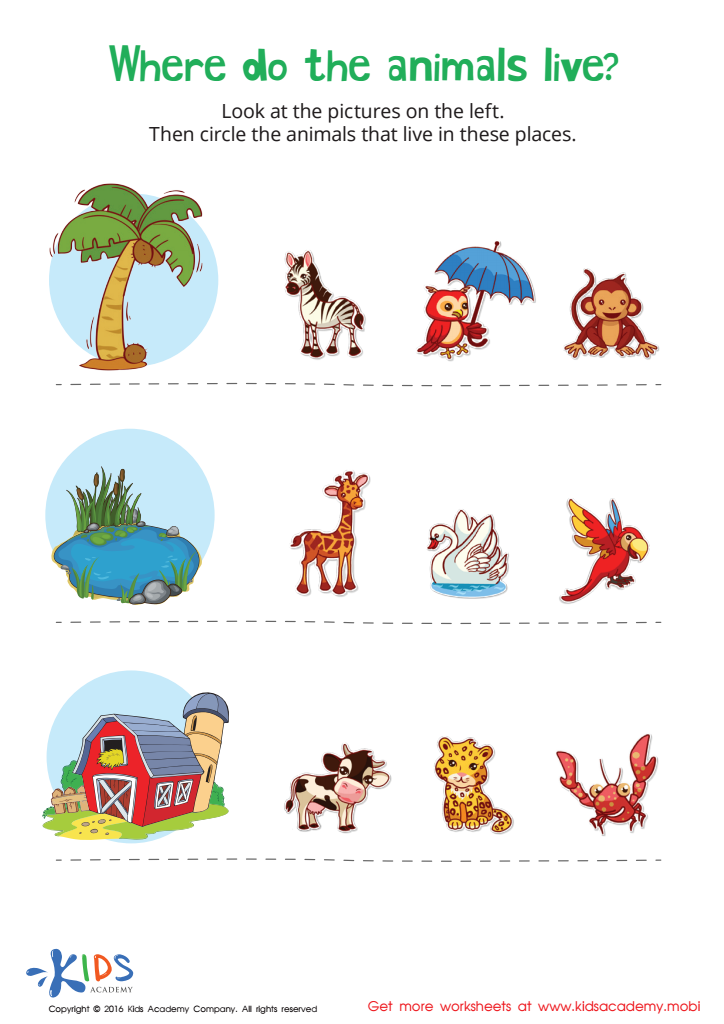
Where Animals Live Worksheet
Teaching early reading and math skills is important, but don't forget about science. With the Where Animals Live PDF worksheet, kids can identify their favorite animals and the environments they live in. Ask them what type of environment the animals like and introduce them to geography. It's great for logical reasoning and classification skills. Your kid will practice with their favorite animals and love the trip to the zoo afterwards!
Where Animals Live Worksheet
Worksheet
Join Kids Academy for Free
Who is primarily going to use this learning content?








Vocabulary development is crucial for 4-year-olds as it lays the foundation for future learning and communication. At this age, children are increasingly engaging with language, absorbing new words, and experimenting with sounds. Parents and teachers should prioritize vocabulary development because a robust vocabulary enhances reading comprehension, critical thinking, and social interactions as the child progresses into later grades.
Engaging in vocabulary-matching activities—where children associate words with their meanings, pictures, or other words—can effectively boost their word knowledge. It promotes cognitive skills, encourages memory retention, and fosters an enthusiasm for language. Moreover, matched vocabulary activities can be enjoyable, turning learning into a playful experience that increases confidence and curiosity.
Further, a rich vocabulary helps children express themselves more clearly and engage effectively with others, reducing frustration that can arise from miscommunication. Early mastery of vocabulary can also lead to better academic outcomes, allowing children to access curriculum materials more readily and contribute to classroom discussions.
Ultimately, investing time in vocabulary development ensures that children are equipped with the linguistic tools necessary for success, nurturing lifelong learners and effective communicators. Thus, parents and teachers play a vital role in facilitating rich language experiences for young children.








