Understanding opposites Measurement Worksheets for 4-Year-Olds
3 filtered results
-
From - To
Cultivate essential early math skills with our "Understanding Opposites Measurement Worksheets" tailored for 4-year-olds. These engaging printable worksheets help young learners grasp fundamental concepts of measurement and opposites through fun, hands-on activities. Perfectly designed for little hands and curious minds, the exercises guide children in comparing sizes, lengths, weights, and more, fostering critical thinking and observational skills. Ideal for preschoolers, these worksheets make learning enjoyable and interactive. Set the foundation for future math success and boost your child's confidence with our expertly crafted educational resources. Start your child's learning journey today!
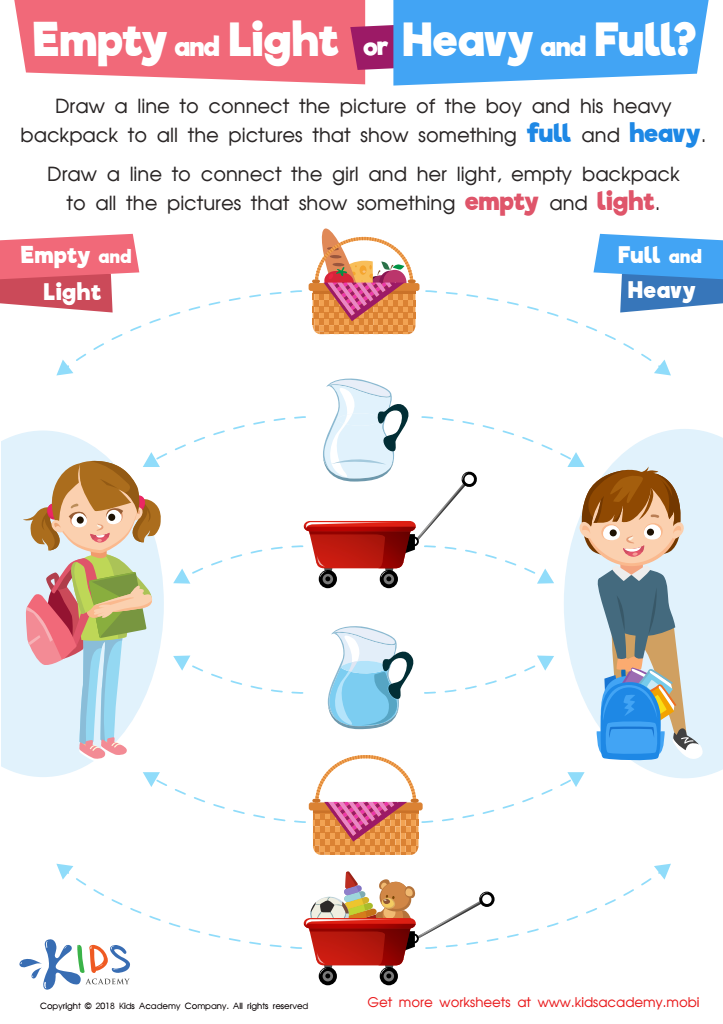
Empty and Light or Heavy and Full? Worksheet
 Assign to My Students
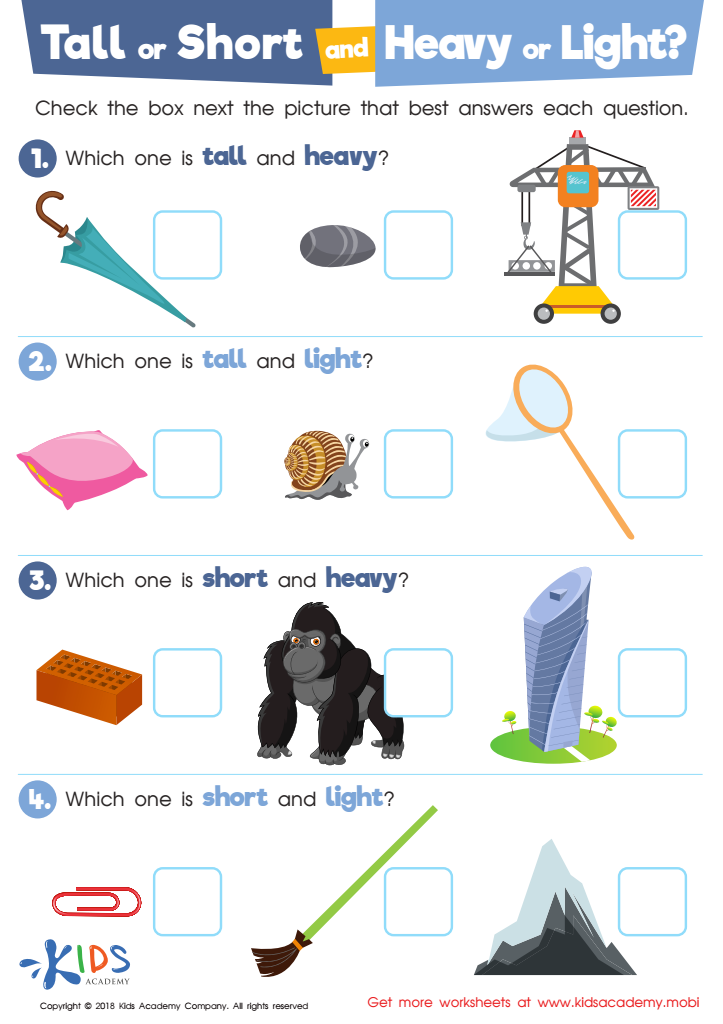
Tall or Short and Heavy or Light? Worksheet
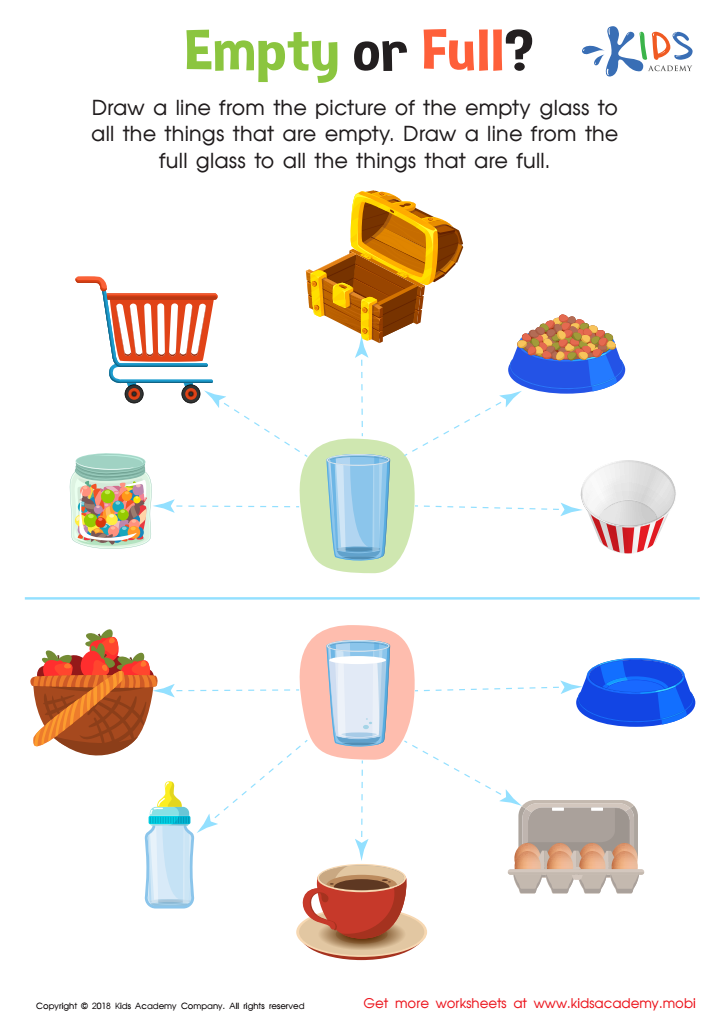
Empty or Full? Worksheet








Understanding opposites and measurement concepts at a young age plays a vital role in preschoolers’ cognitive and language development. For parents and teachers of 4-year-olds, fostering these skills has profound benefits.
Firstly, grasping opposites helps children enhance their vocabulary by learning pairs of words with different meanings, like hot and cold or big and small. This not only enriches their language skills but also aids in better comprehension and communication, allowing them to describe the world around them more accurately.
Secondly, early exposure to measurement concepts, such as length, weight, or volume, lays the foundation for mathematical thinking. When children understand terms like "shorter than" or "heavier than," they start to make comparisons and develop reasoning skills that are crucial for problem-solving. Engaging with measurement activities, like pouring water into different containers, helps them grasp the ideas of quantity and space and promotes hands-on learning.
Moreover, these skills are interconnected with everyday experiences. Recognizing opposites and making measurements help children with routine tasks, such as dressing appropriately for different weather conditions or setting the table by understanding the big versus small plates. Supporting young learners in these areas boosts their confidence and independence, providing a strong groundwork for future academic and life skills.








