Identifying shapes Building Vocabulary Worksheets for 4-Year-Olds
5 filtered results
-
From - To
Unlock the fun in learning with our "Identifying Shapes Building Vocabulary Worksheets for 4-Year-Olds". These engaging printables help young learners recognize shapes while expanding their vocabulary, laying a strong foundation in both geometry and language skills. Designed with vibrant illustrations and simple activities, each worksheet captures children's attention, making learning enjoyable and effective. Ideal for parents and educators, these resources support early reading and comprehension, encouraging kids to identify, name, and describe different shapes. Foster a love for learning and enhance vocabulary skills with our expertly crafted, age-appropriate worksheets that turn everyday learning into an exciting adventure.











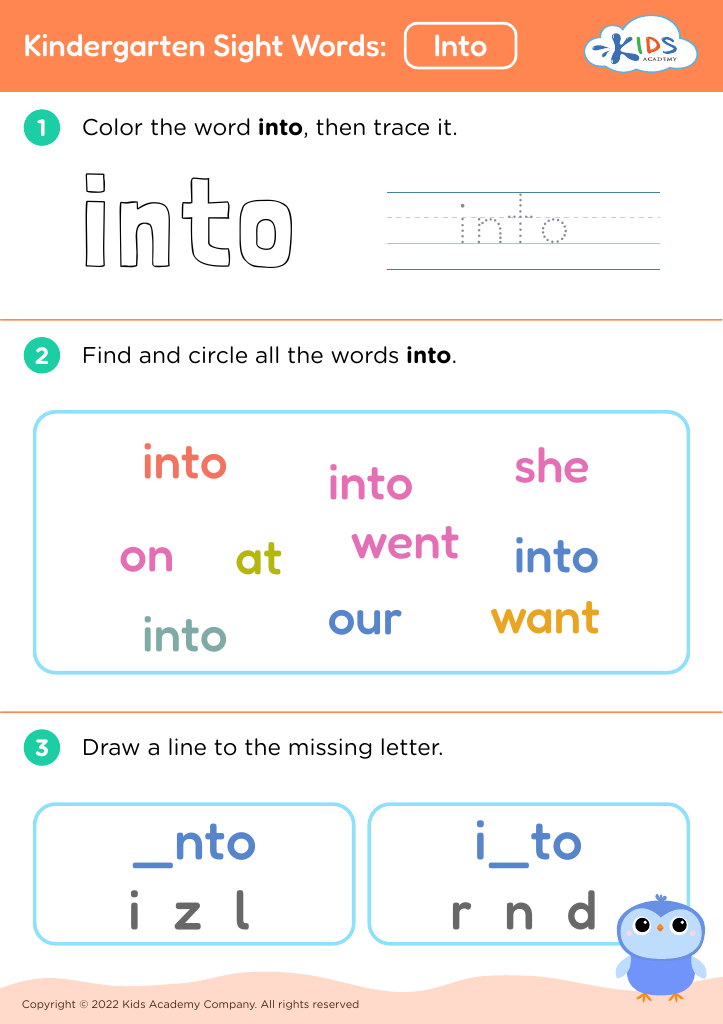








Identifying shapes and building vocabulary are foundational skills for 4-year-olds that significantly impact their cognitive development and future academic success. Firstly, recognizing shapes enhances children's spatial awareness and problem-solving abilities, which are critical in early math skills like geometry and measurements. When children can identify shapes, they start to grasp more complex concepts such as patterns, symmetry, and spatial relationships.
Building vocabulary, on the other hand, enriches children's communication skills, enabling them to express their thoughts and emotions more precisely. A robust vocabulary is the cornerstone of literacy; children with strong language skills are better prepared to read and understand text as they progress in school. Moreover, a broad vocabulary fosters critical thinking by helping children categorize and make sense of the world around them.
For parents and teachers, investing time in these areas means creating a supportive environment that nurtures curiosity and a love for learning. Using everyday activities to point out shapes and introduce new words not only makes learning practical but also engaging. Books, puzzles, and interactive games can make this a fun process, ensuring that foundational skills are developed in a memorable and enjoyable way. By prioritizing these skills, parents and teachers lay a concrete foundation for children's future academic and personal achievements.








