
Sight word recognition Building Vocabulary Worksheets for 4-Year-Olds
6 filtered results
Difficulty Level
Grade
Age
-
From - To
Subject
Activity
Standards
Boost your 4-year-old's reading skills with our engaging Sight Word Recognition Building Vocabulary Worksheets! Designed to enhance preschool vocabulary, these worksheets provide fun and interactive activities that help young learners recognize and remember essential sight words. Each worksheet combines vibrant pictures and easy-to-follow exercises, making learning enjoyable and effective. By practicing with our printable materials, children develop strong reading foundations, gain confidence, and achieve early literacy milestones. Perfect for both classroom and home use, our sight word recognition worksheets are an exciting step towards lifelong learning for your little ones.
Favorites
With answer key
Interactive
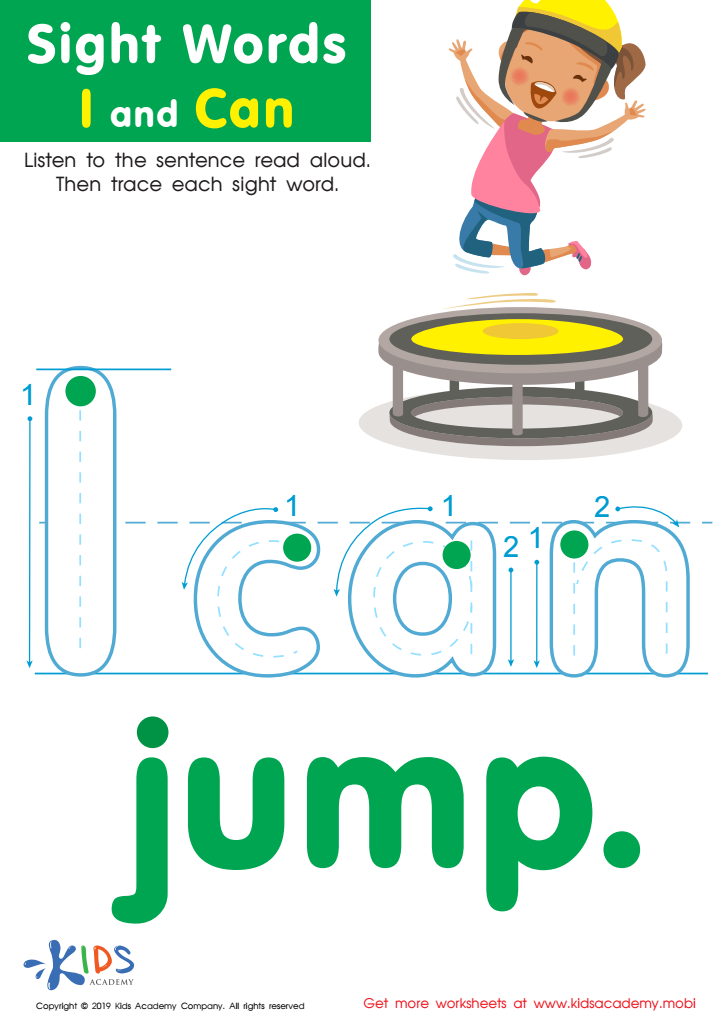
Sight Words I Can Worksheet
Emerging readers can build confidence and improve reading skills with this free worksheet! They'll trace the lines to complete the "I Can" phrase then use the picture clue to decode the last word. This activity encourages reading and writing, and is empowering for kids as they explore all the things they can do!
 Assign to My Students
Sight Words I Can Worksheet
Worksheet











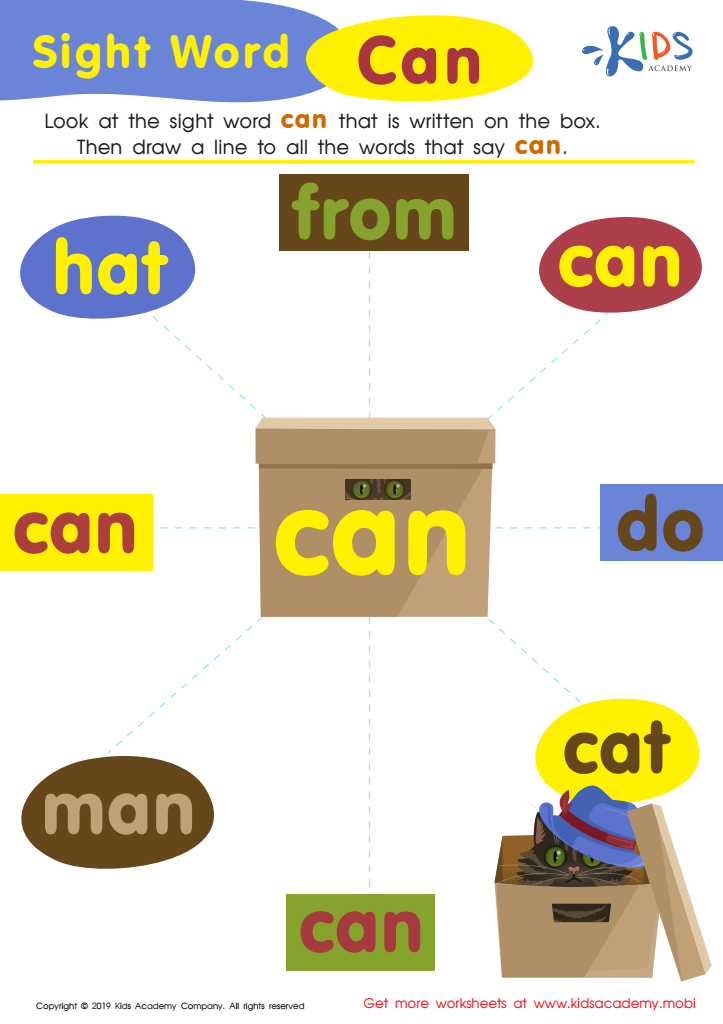
Sight Word Can Worksheet
Learning sight words is key for strong readers. Kids with large word bases find reading simpler, since they don't have to decode words they already know. This free worksheet uses the word 'can' to help kids improve their visual discrimination and refine motor skills, while providing pictures to help them along.
Sight Word Can Worksheet
Worksheet
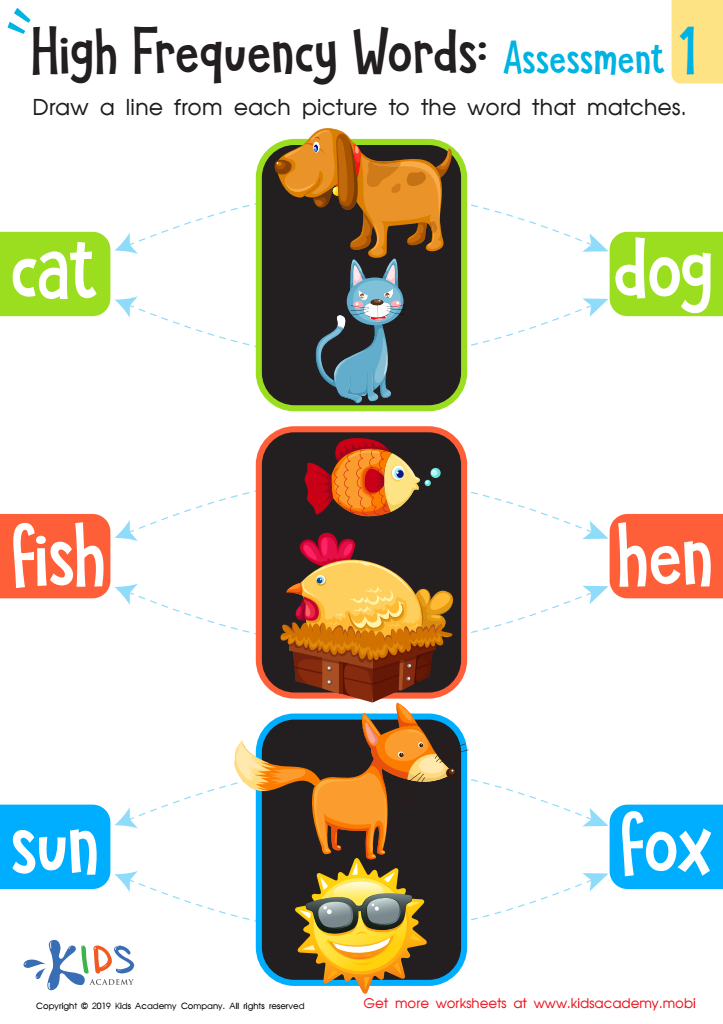
High Frequency Words: Assessment 1 Worksheet
Emergent readers need to know high-frequency words accurately and quickly to develop fluency. Connecting these words to colorful, fun pictures helps reading prosody. This assessment worksheet uses traceable lines to help learners match pictures to words.
High Frequency Words: Assessment 1 Worksheet
Worksheet
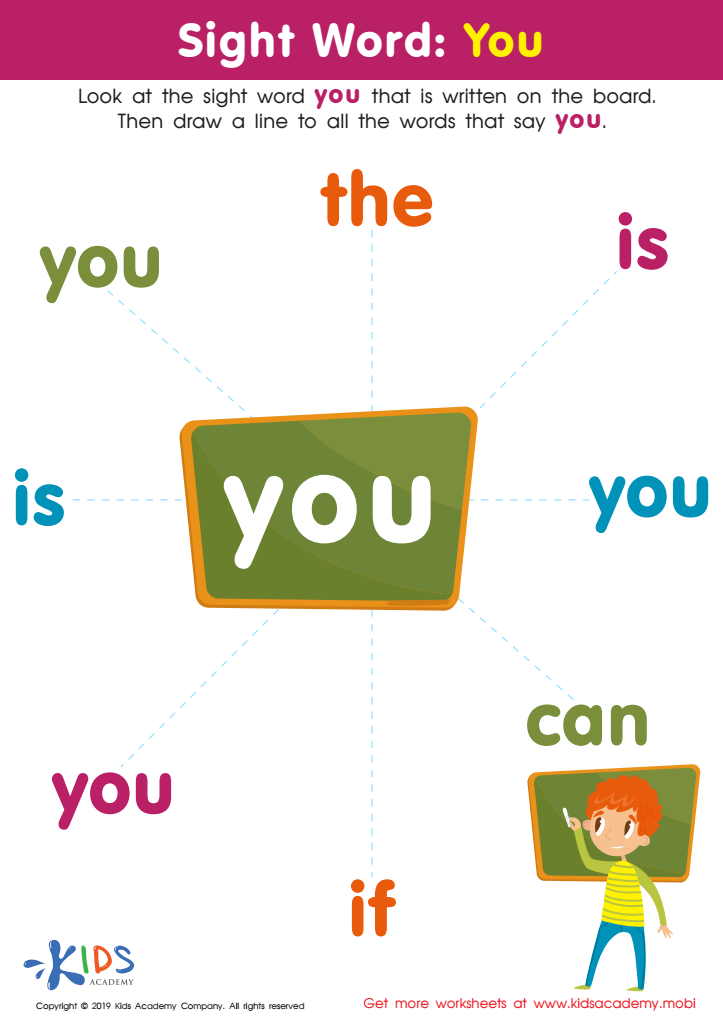
Sight Word You Worksheet
This free worksheet features the word 'you' and helps beginning readers practice visual-discriminatory skills. Using traceable lines and different colored words, it's an easy way to reinforce their identification of the word and build fluency.
Sight Word You Worksheet
Worksheet
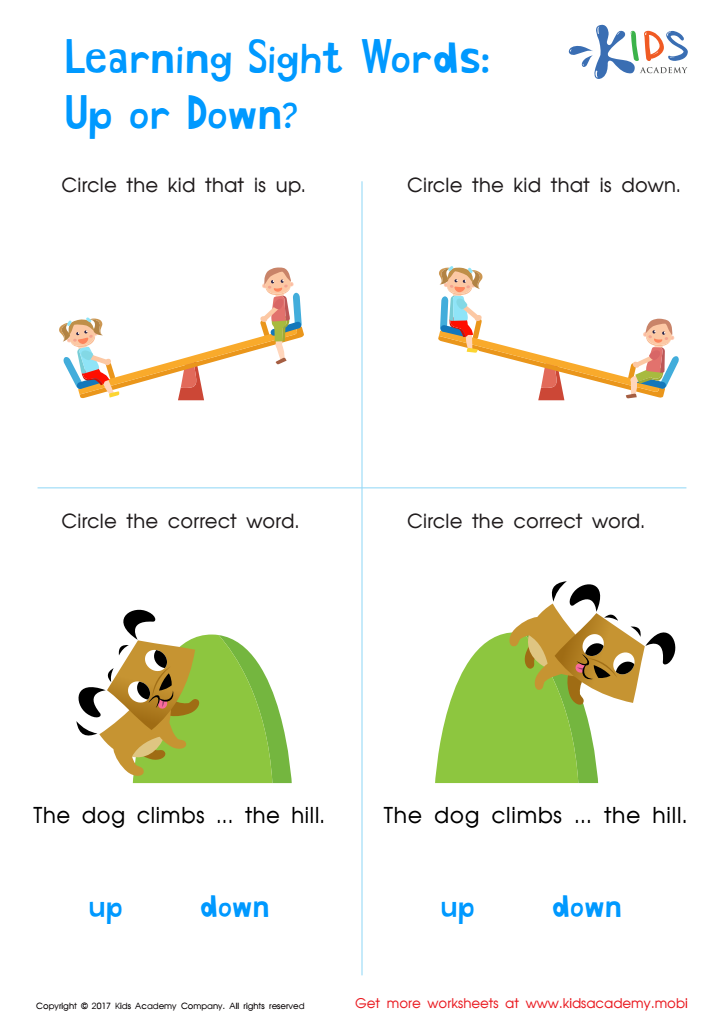
Up or Down Printable Sight Words Worksheet
Help your child identify up and down in print with this sight words worksheet. It has simple sentences, vibrant images and easy-to-read language that allow your little learner to practice these essential sight words. Perfect for early readers!
Help your early reader identify and read up and down with this sight words worksheet. It provides simple sentences, clear language and vibrant images to help them practice these essential sight words. Perfect for toddlers!
Up or Down Printable Sight Words Worksheet
Worksheet
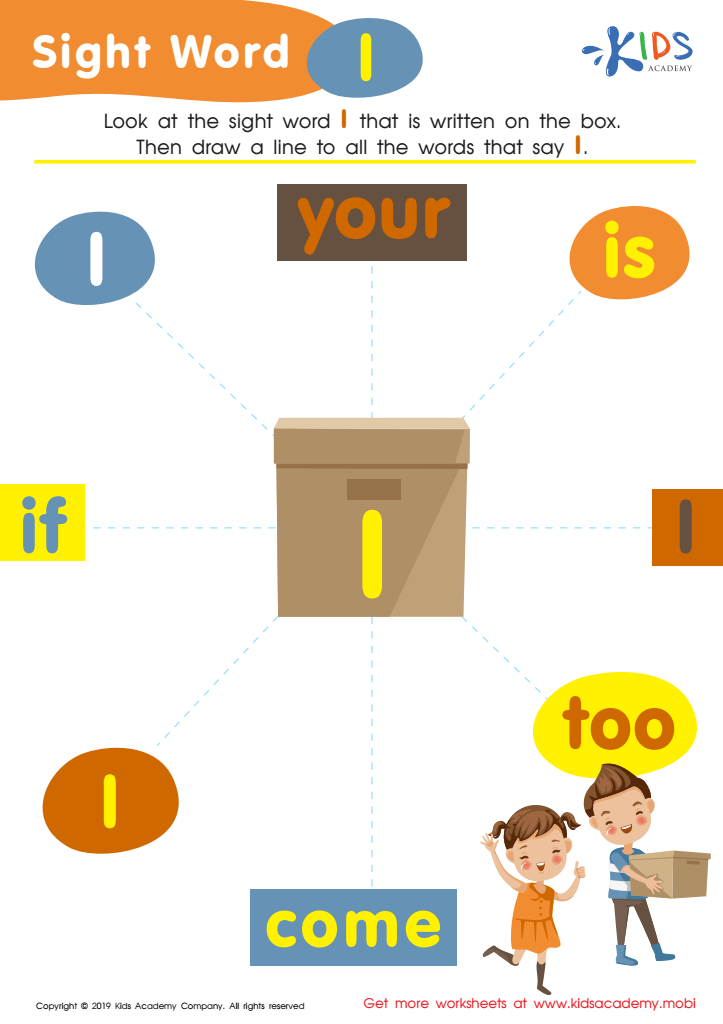
Sight Word I Worksheet
Recognizing the sight word 'I' is harder than it looks! When kids are learning to read, they understand 'I' by its sound, not as a word. This free worksheet gives them practice with 'I', letting them work on their fine motor skills too. They'll join 'I' to shapes containing the same letter. It's a great way to give kids confidence in their reading skills!
Sight Word I Worksheet
Worksheet
Join Kids Academy for Free
Who is primarily going to use this learning content?


.jpg)

.jpg)



Sight word recognition and vocabulary building for 4-year-olds are foundational elements that benefit children's early literacy and language development. Sight words are frequently occurring words that children are encouraged to recognize by sight, without needing to sound them out. By being able to swiftly recognize such words, young learners can read more fluently and with greater comprehension.
First, early recognition of sight words builds confidence. When preschoolers identify words quickly, they feel successful, eager to read more, and are more likely to develop a lifelong love for reading. Second, a strong vocabulary allows children to express themselves more effectively, fostering better communication skills. An expansive vocabulary equips kids with the tools to describe their thoughts, feelings, and experiences uniquely and clearly, improving social interactions.
Moreover, the process of learning sight words and new vocabulary stimulates cognitive development. As children memorize and understand words, their memory, focus, and problem-solving skills get a workout, enhancing overall brain function. Early vocabulary development is also strongly correlated with future academic success. Children who enter kindergarten with a rich bundle of words are better prepared for complex instructions, writing tasks, and the learning curve ahead.
Investing time in sight word recognition and vocabulary for young children sets a strong foundation for their academic achievements, self-esteem, and future communication skills.








