Understanding suffixes Reading Worksheets for 4-Year-Olds
3 filtered results
-
From - To
Introduce your child to the world of words with our "Understanding Suffixes Reading Worksheets for 4-Year-Olds" from Kids Academy. Designed to enhance early reading skills, these fun worksheets help preschoolers grasp the concept of suffixes. By adding endings to familiar words, kids can expand their vocabulary and improve their word comprehension. Our engaging activities not only promote learning but also boost confidence in reading. Perfect for young learners, these worksheets pave the way for successful literacy development. Visit Kids Academy today and start your child's educational journey with our expertly crafted resources!
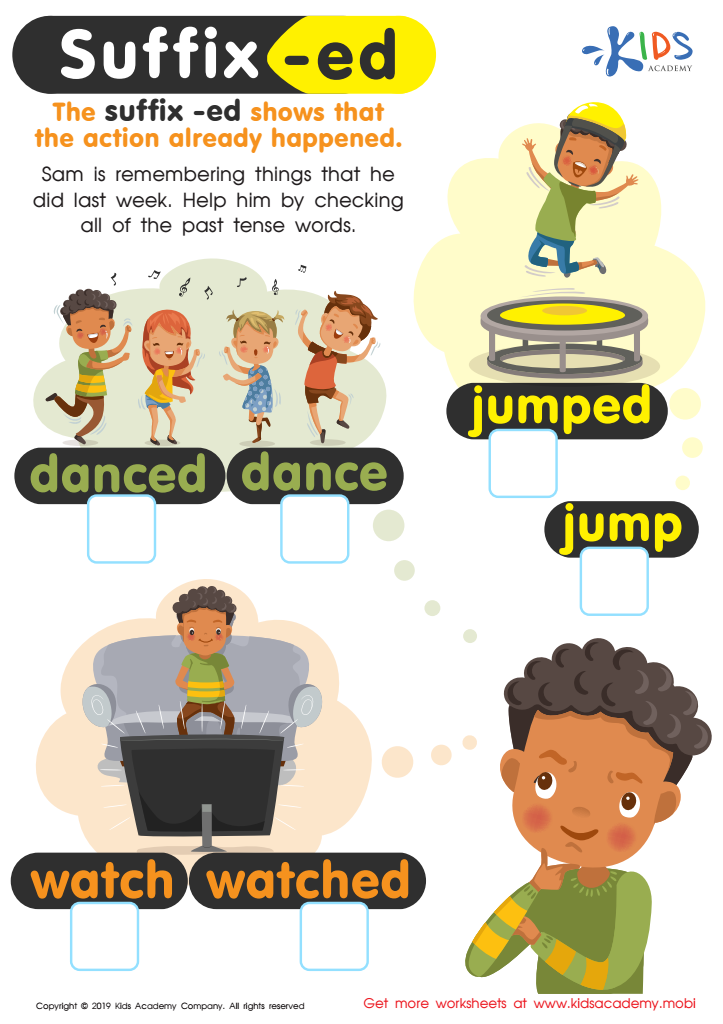
Suffix-ed Worksheet
 Assign to My Students
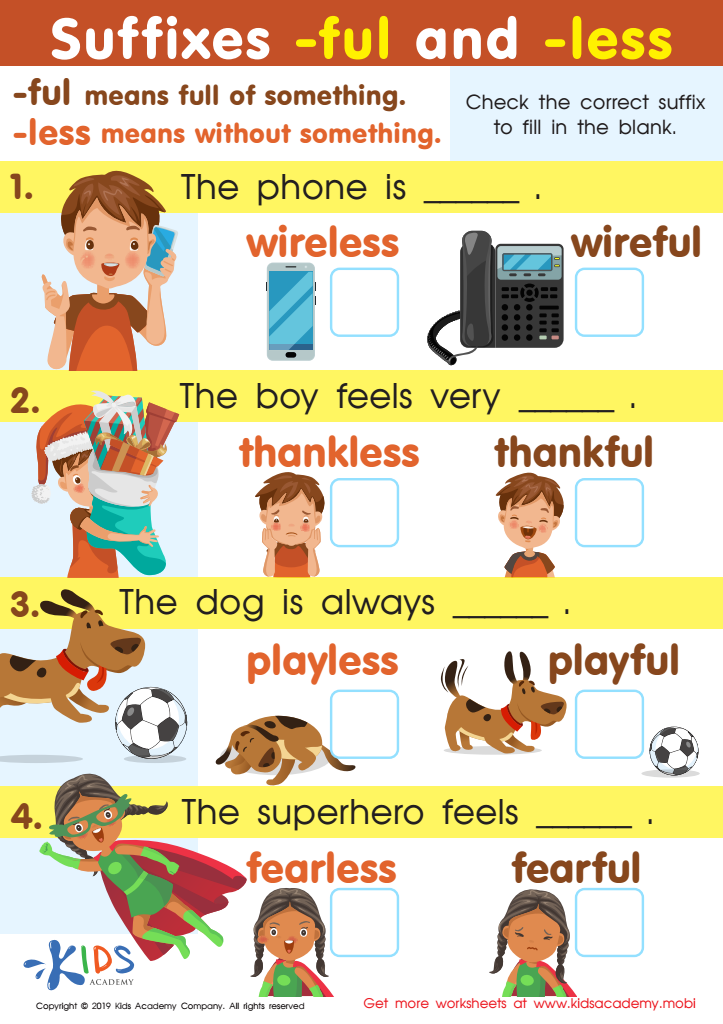
Suffixes –ful and –less Worksheet
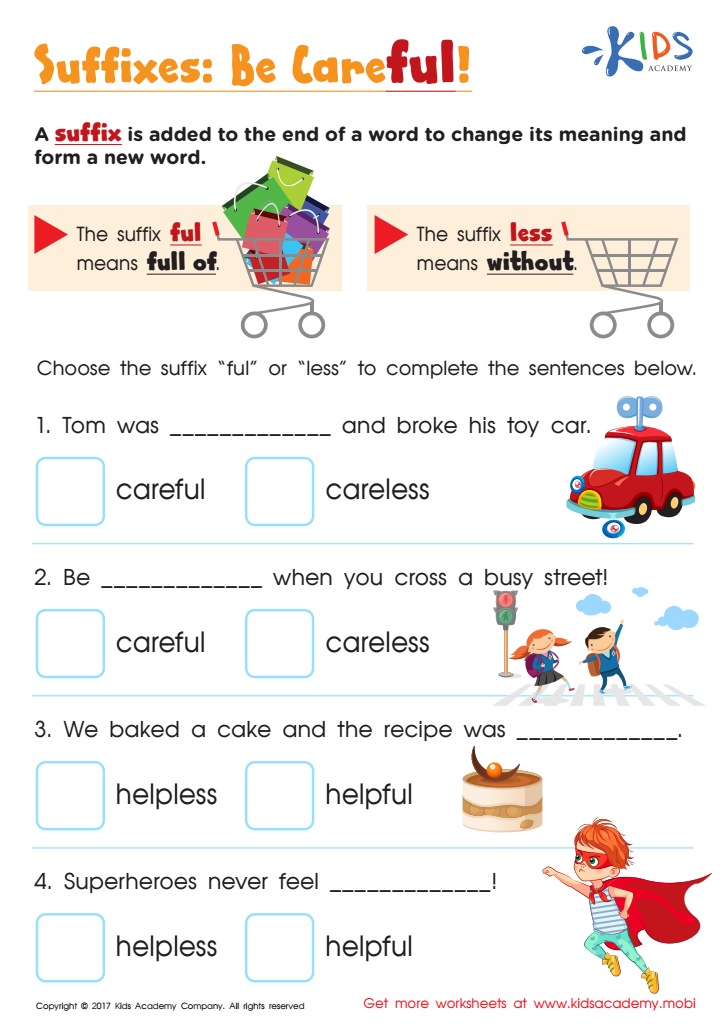
Suffixes Ful and Less Worksheet







Understanding suffixes is important for 4-year-olds as it forms a key part of early literacy skills that benefit language development and reading comprehension. When children grasp the concept of suffixes, such as "-ing," "-ed," or "-ly," they start to recognize patterns in words, aiding in decoding new vocabulary. This early exposure helps build a strong foundation for fluent reading, as they can identify word meanings and grammatical roles more easily.
Moreover, understanding suffixes enhances a child's ability to construct sentences and improves overall communication skills. For instance, by knowing that adding "-ing" to "play" forms "playing," children can start to speak and write more complex thoughts.
Parents and teachers should note that fostering this understanding early boosts confidence as children enter more formal education settings. It supports their writing abilities and keeps them engaged in learning by demystifying how words are formed and used. Incorporating fun activities, such as reading simple books with repetitive suffixes or playing word-matching games, can make learning this concept enjoyable and impactful. Overall, focusing on suffixes for 4-year-olds is a crucial step in their journey to becoming proficient readers and effective communicators.








