Reading Skills Reading Fiction Worksheets for 4-Year-Olds
5 filtered results
-
From - To
Introduce your 4-year-olds to the enchanting world of stories with our Reading Fiction Worksheets, designed to enhance reading skills. Through engaging activities, children will develop crucial abilities such as identifying characters, understanding sequences, and grasping simple narratives. Each worksheet is crafted to capture the attention of young learners, promoting a love for reading while fostering cognitive development. Perfect for both classroom and home use, our worksheets are a fun, educational resource that lays the foundation for lifelong reading success. Help your little ones embark on an exciting literary adventure with Kids Academy's expertly designed reading fiction worksheets.
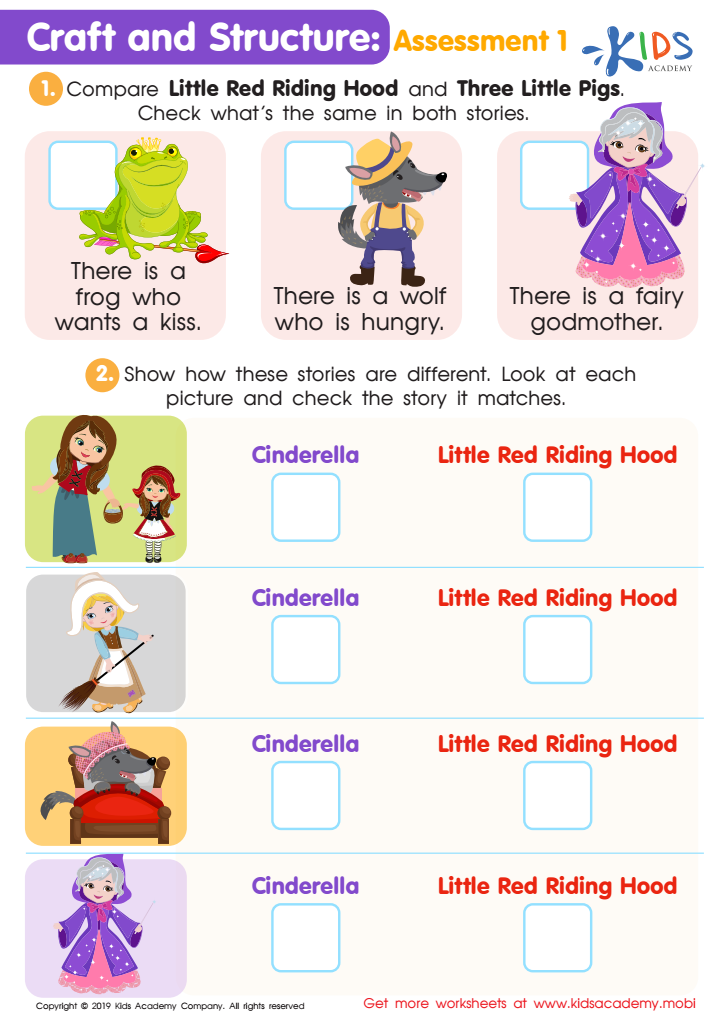
Craft and Structure: Assessment 1 Worksheet
 Assign to My Students
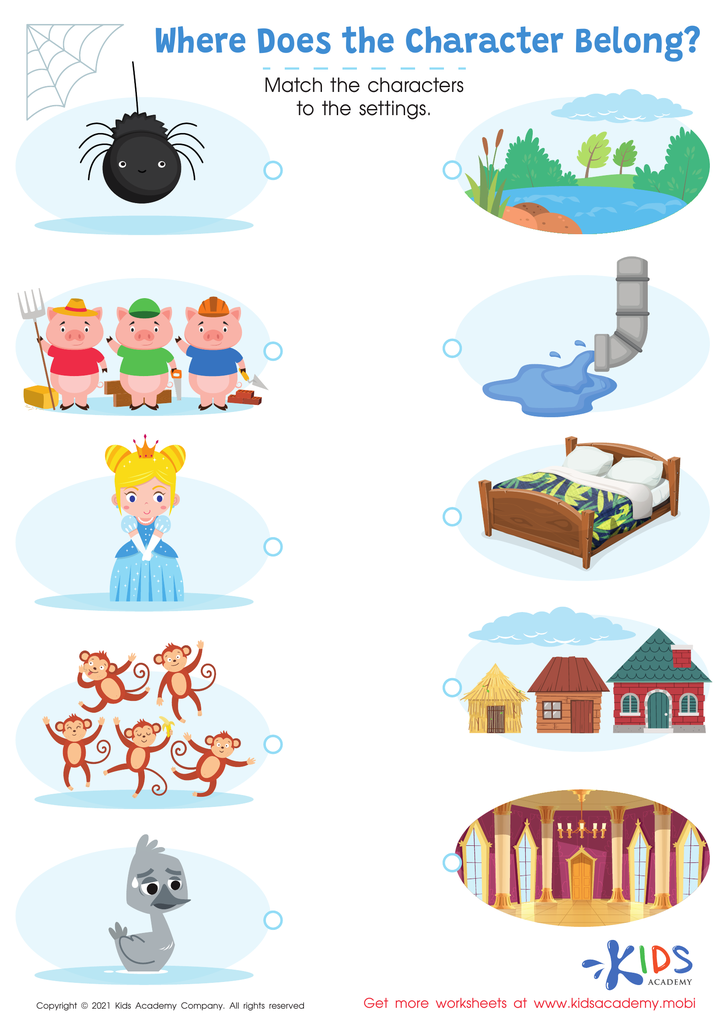
Where Does the Character Belong? Worksheet
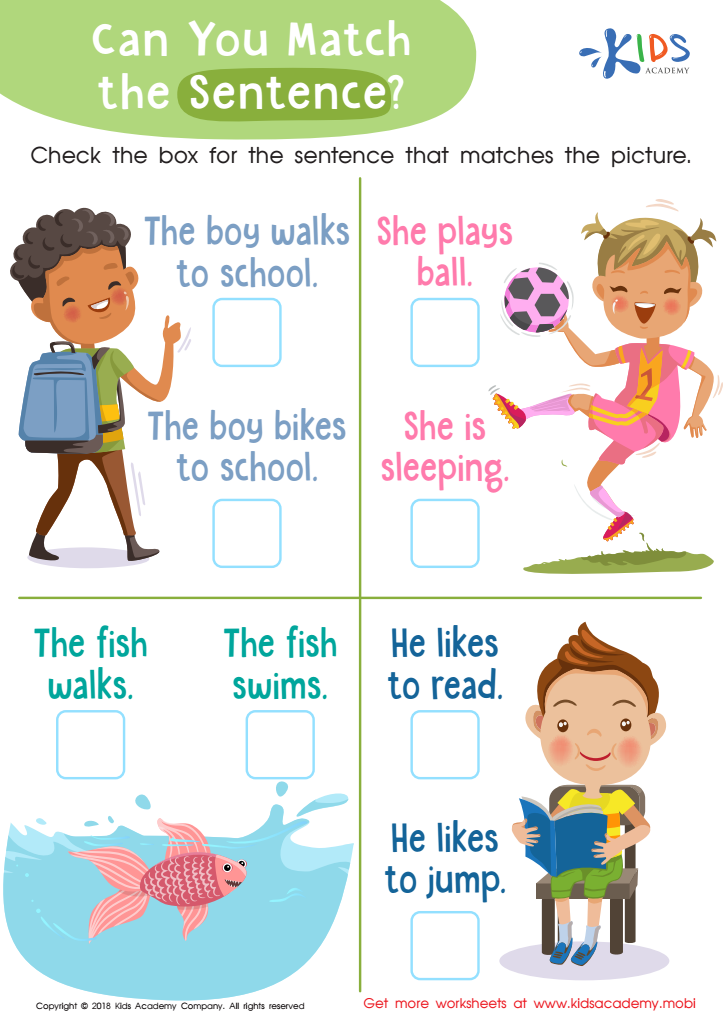
Can You Match the Sentence? Worksheet
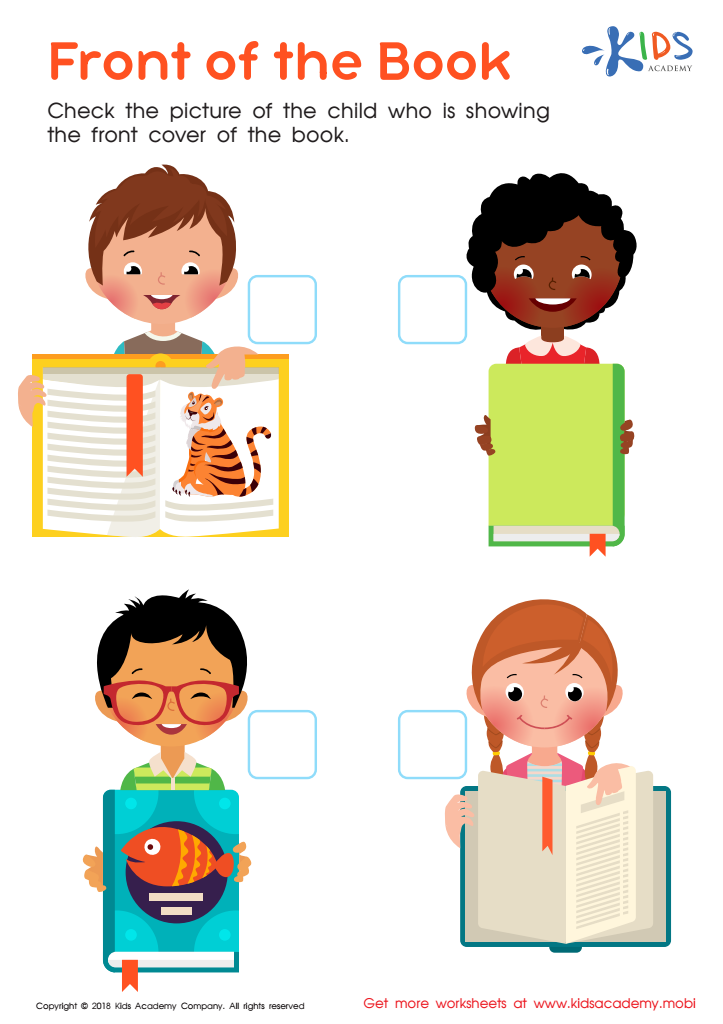
Front of the Book Worksheet
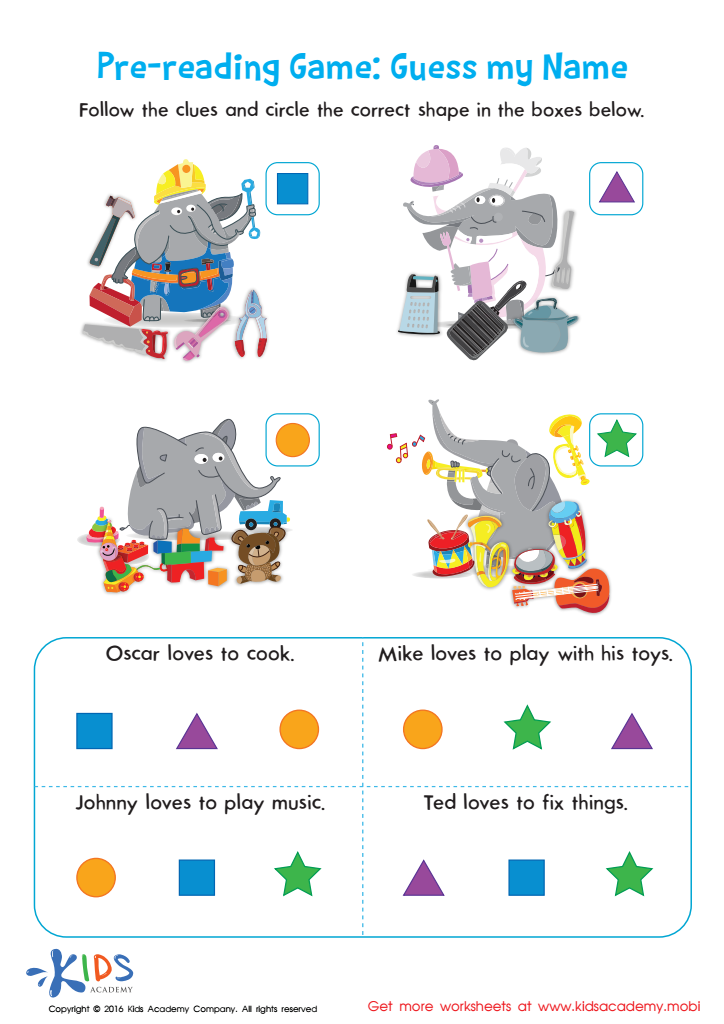
Pre Reading Worksheet Guess My Name








Developing reading skills and engaging with fiction at the age of four is crucial for a child's growth and development and should be a priority for parents and teachers. Firstly, early reading skills establish the foundation for literacy. At a young age, children absorb language, sounds, and narrative structures, which are essential for their ability to read and write later in life.
Reading fiction stimulates imagination and creativity. Stories featuring diverse characters and adventures expose children to different worlds and perspectives, helping them understand and appreciate human emotions and situations. This nurtures empathy, as children learn to consider and understand feelings other than their own.
Moreover, shared reading experiences foster strong emotional bonds between adults and children. As parents or teachers read aloud, they model proper pronunciation, rhythms of language, and storytelling techniques. This shared activity also provides an opportunity for children to ask questions, enhancing their comprehension and critical thinking skills.
Additionally, reading fiction enhances a child’s vocabulary and language skills. Encountering new words in context helps young learners to expand their vocabulary naturally and meaningfully.
Lastly, developing an early love for reading can turn into a lifelong habit, contributing to continuous learning and cognitive development throughout a child's life. Thus, reading skills and fiction exposure at four are vital stepping stones for academic success and personal growth.








