
Vocabulary development Reading Fiction Worksheets for 4-Year-Olds
4 filtered results
Difficulty Level
Grade
Age
-
From - To
Subject
Activity
Standards
Enhance your 4-year-old's vocabulary with our engaging Vocabulary Development Reading Fiction Worksheets. Designed specifically for young learners, these worksheets combine fun storytelling with essential vocabulary-building exercises. Children will explore delightful fictional tales, improving their language skills through interactive activities that foster comprehension and word recognition. Our resources encourage a love for reading and creativity, making learning a joyous experience. Each worksheet is crafted to nurture critical thinking and listening skills while promoting early literacy. Ideal for both home and classroom use, these worksheets provide a solid foundation for your child's language development. Start your child’s journey towards confident communication today!
Favorites
With answer key
Interactive
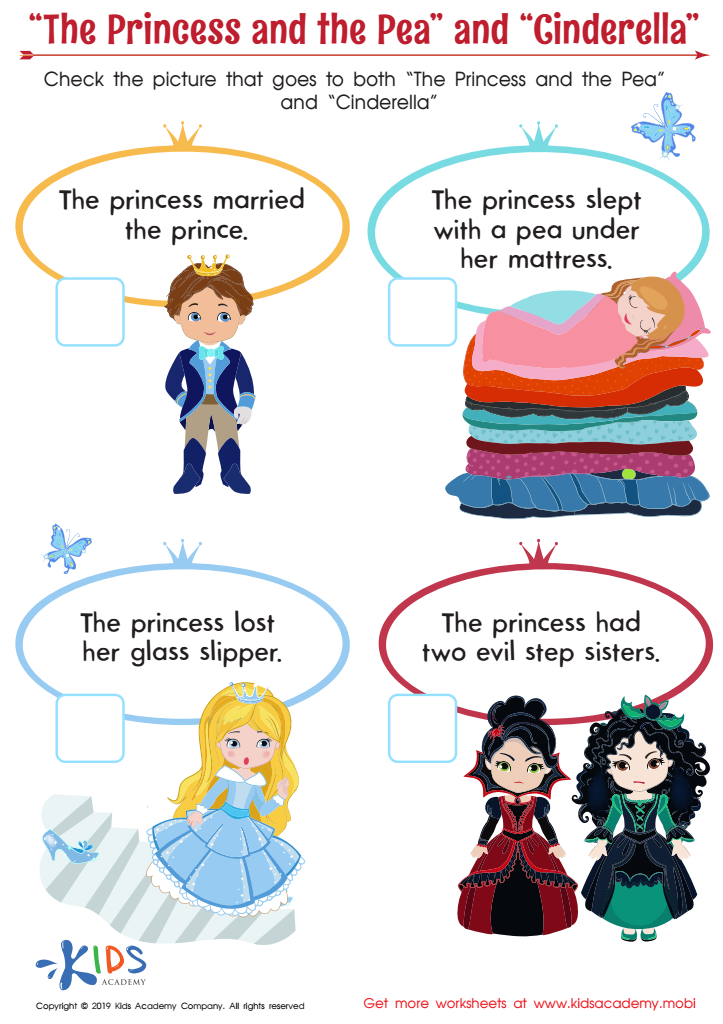
“The Princess and the Pea” and “Cinderella” Worksheet
Read "Cinderella" and "The Princess and the Pea" to your little ones. Ask them what their favorite parts were and what similarities they found in the princesses. This worksheet has four pictures of scenes from the stories. Ask your kids which picture goes with both tales.
 Assign to My Students
“The Princess and the Pea” and “Cinderella” Worksheet
Worksheet
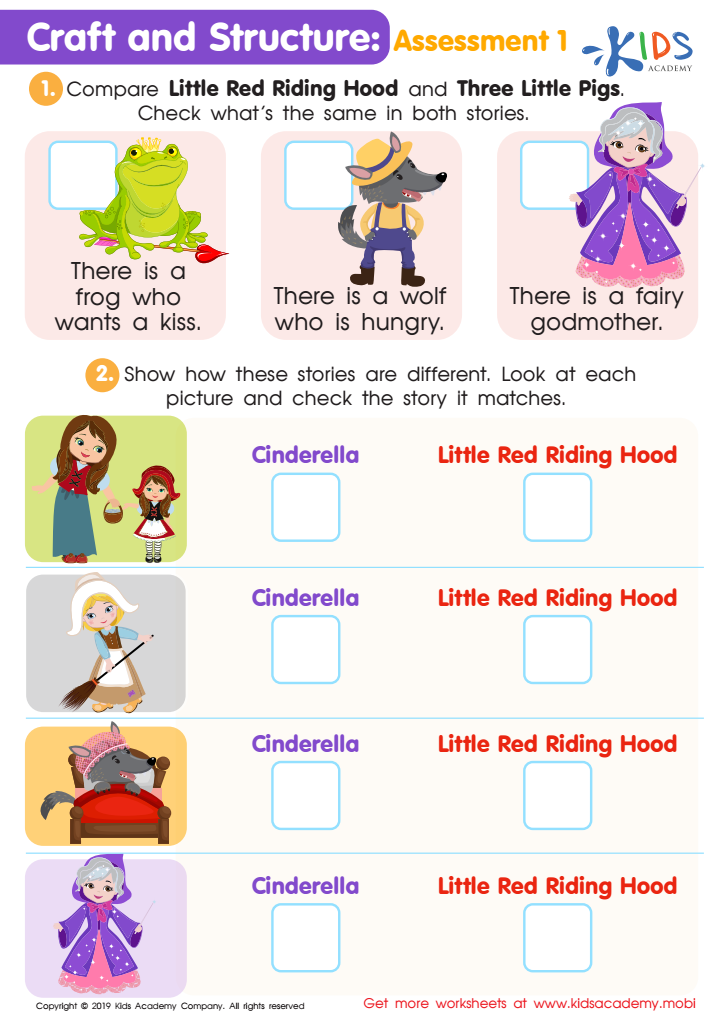
Craft and Structure: Assessment 1 Worksheet
Fairytales are a great way to bond with your kids while teaching them. Popular stories include Little Red Riding Hood and Three Little Pigs. Test how well they understood these two with this assessment worksheet. Ask them to compare the two stories and check what is the same. Doing this will help kids learn new words and sentence construction, as well as teaching them life lessons.
Craft and Structure: Assessment 1 Worksheet
Worksheet
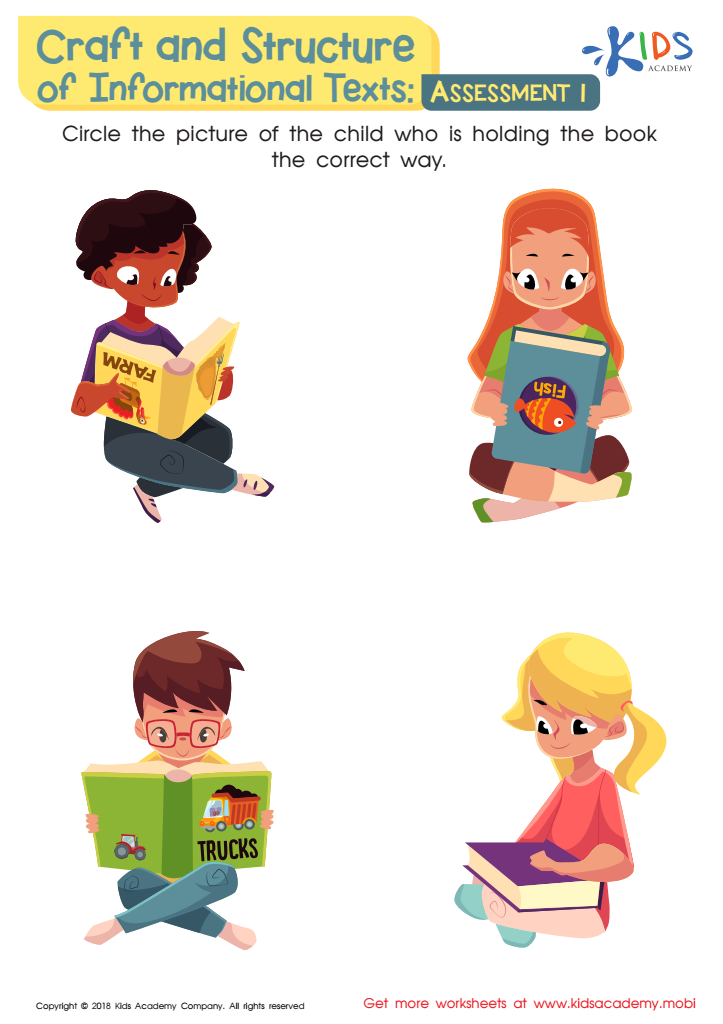
Craft and Structure of Informational Texts: Assessment 1 Worksheet
Young children need to know how to hold books correctly when they start reading. This assessment worksheet helps them show they know what to do. They'll look at the pictures and circle the child who is holding the book correctly. It's a great way to tell they are well on their way to becoming lifetime readers!
Craft and Structure of Informational Texts: Assessment 1 Worksheet
Worksheet
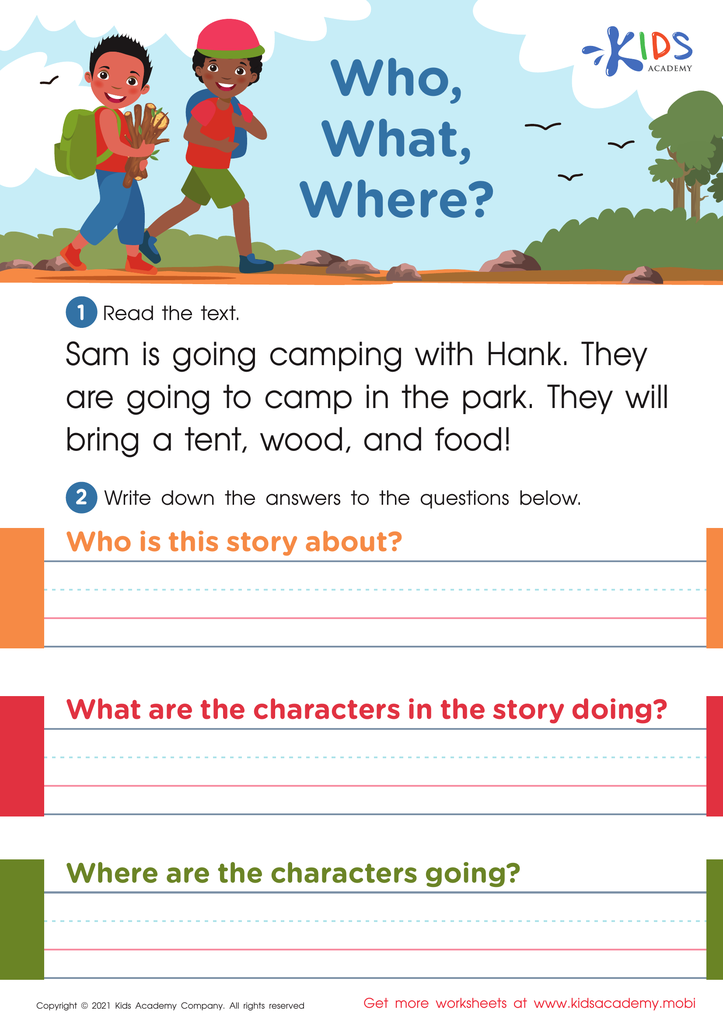
Who, What, Where? Worksheet
The availability of technology has changed the way students learn and interact with their environment in a very meaningful way.
Technology has revolutionized learning and interaction for students. It offers an array of opportunities to engage with their surroundings, leading to a more meaningful educational experience.
Who, What, Where? Worksheet
Worksheet
Join Kids Academy for Free
Who is primarily going to use this learning content?








Vocabulary development through reading fiction is crucial for 4-year-olds, as it sets the foundation for literacy and communication skills. At this age, children are naturally curious and absorb language like sponges. Fictional stories introduce them to new words, phrases, and grammatical structures in a context they can understand and enjoy. This enhances comprehension and encourages them to express their thoughts and feelings with increasing complexity.
Moreover, reading fiction fosters imagination and creativity, allowing children to explore different perspectives and ideas. Engaging with stories can also strengthen emotional intelligence, as young readers relate to characters, explore their emotions, and understand social dynamics. This is essential for developing empathy and social skills.
Parents and teachers play a vital role in this process. By prioritizing reading, they demonstrate the importance of language, which can inspire a lifelong love for books. Interactive reading sessions, where adults engage children in discussions about the story, further enrich vocabulary acquisition.
In summary, emphasizing vocabulary development through reading fiction at an early age not only enhances language skills but also nurtures emotional growth, creativity, and critical thinking. These fundamental skills will serve as tools for effective learning and communication throughout a child’s life.








