Alphabet Recognition Grammar Worksheets for 4-Year-Olds
3 filtered results
-
From - To
Enhance your child's early literacy skills with our engaging Alphabet Recognition Grammar Worksheets designed specifically for 4-year-olds! These worksheets are a fun and interactive way to introduce young learners to the alphabet, building their recognition skills through vibrant illustrations and simple exercises. Each worksheet focuses on identifying letters, understanding letter sounds, and developing fine motor skills through tracing activities. Kids will enjoy completing the activities as they reinforce grammar fundamentals in a playful format. Perfect for at-home learning or classroom use, these worksheets support early education goals while keeping little ones excited about learning. Start their literacy journey with us today!
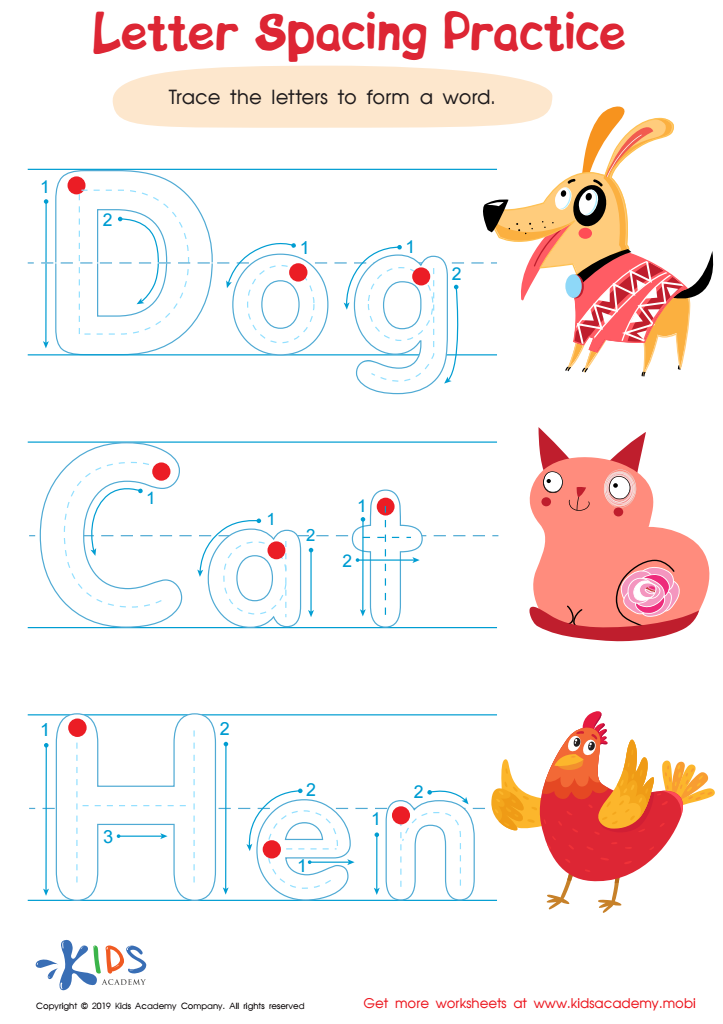
Letter Spacing Practice Worksheet
 Assign to My Students
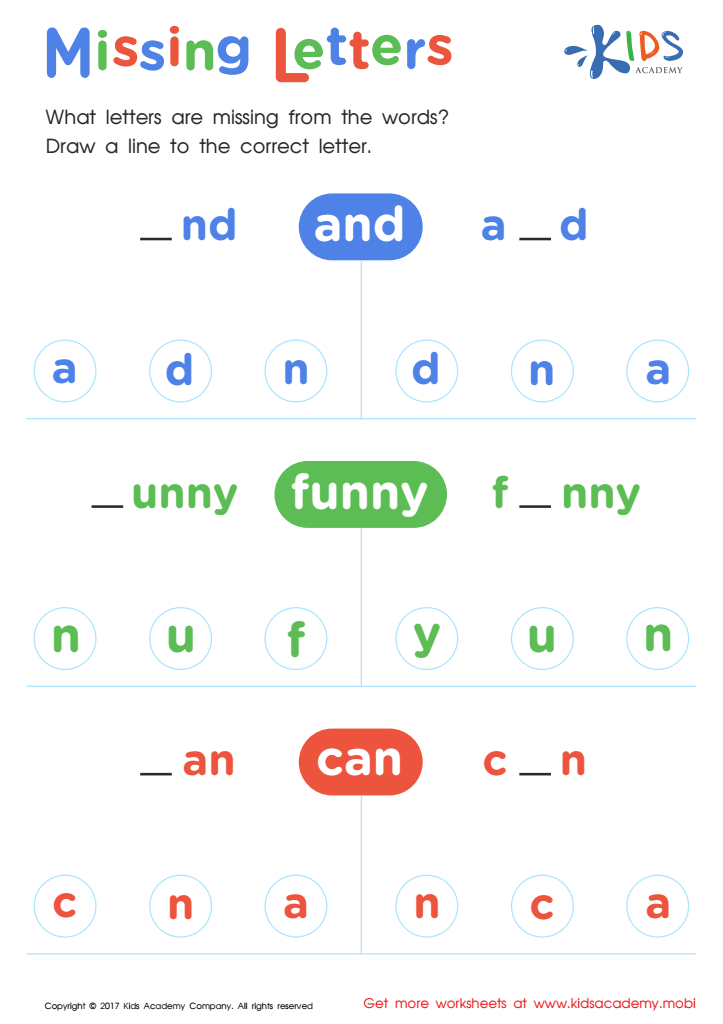
Missing Letters Worksheet
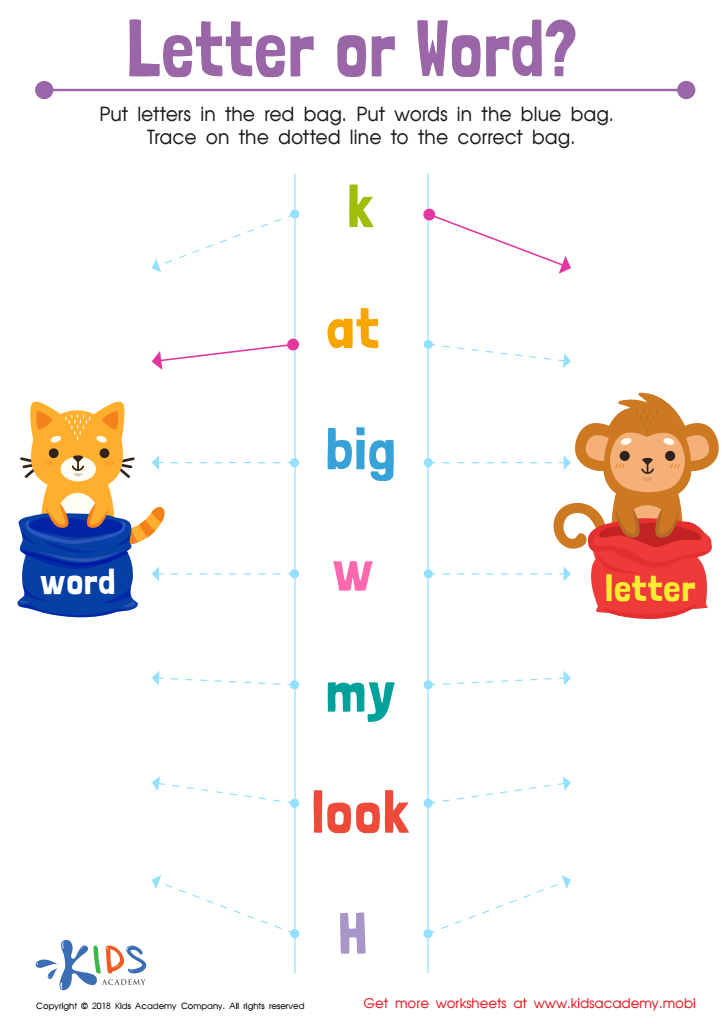
Letter or Word? Worksheet







Alphabet recognition is a foundational skill critical for young learners, particularly for 4-year-olds. It lays the groundwork for literacy and affects future academic success. Parents and teachers should care about this early development because recognizing letters is the first step to reading and writing. Children who can identify letters are better equipped to decode words, which enhances vocabulary and comprehension skills.
Moreover, early recognition of letters boosts a child's confidence in their ability to read. This confidence encourages a lifelong love of learning and literature. Engaging children in activities that promote alphabet recognition, like interactive games, songs, and storytelling, creates a joyful learning environment, fostering a positive relationship with education.
Additionally, a strong grasp of the alphabet can help improve a child's communication skills and expressiveness, crucial for their social development. Understanding how letters form words is not just an academic task; it enhances a child's ability to articulate thoughts, share ideas, and interact with peers.
Ultimately, investing time in alphabet recognition during this crucial developmental stage not only equips children with essential literacy skills but also nurtures intellectual curiosity and engagement with language, setting them on a path for lifelong success.








