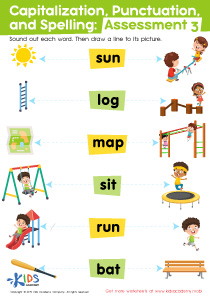
Reading Skills Grammar Worksheets for 4-Year-Olds
3 filtered results
-
From - To
Discover our engaging Reading Skills Grammar Worksheets designed specifically for 4-year-olds! These fun and educational printables are perfect for sparking a love of reading while building essential grammar fundamentals. Our worksheets are packed with colorful images and age-appropriate activities that help young learners recognize early language patterns, enhance vocabulary, and improve sentence structure. Make learning enjoyable and productive for your little ones with these expertly crafted resources. Browse our selection today and give your child a head start on their reading journey! Visit Kids Academy for more information and to download our worksheets.
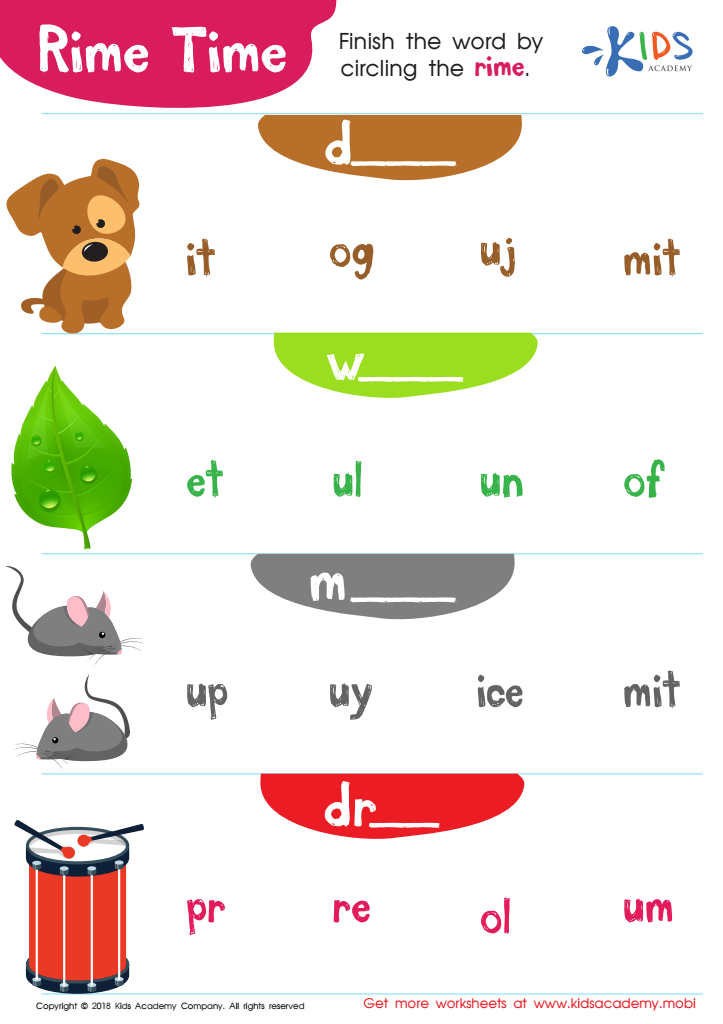
Rime Time Worksheet
 Assign to My Students
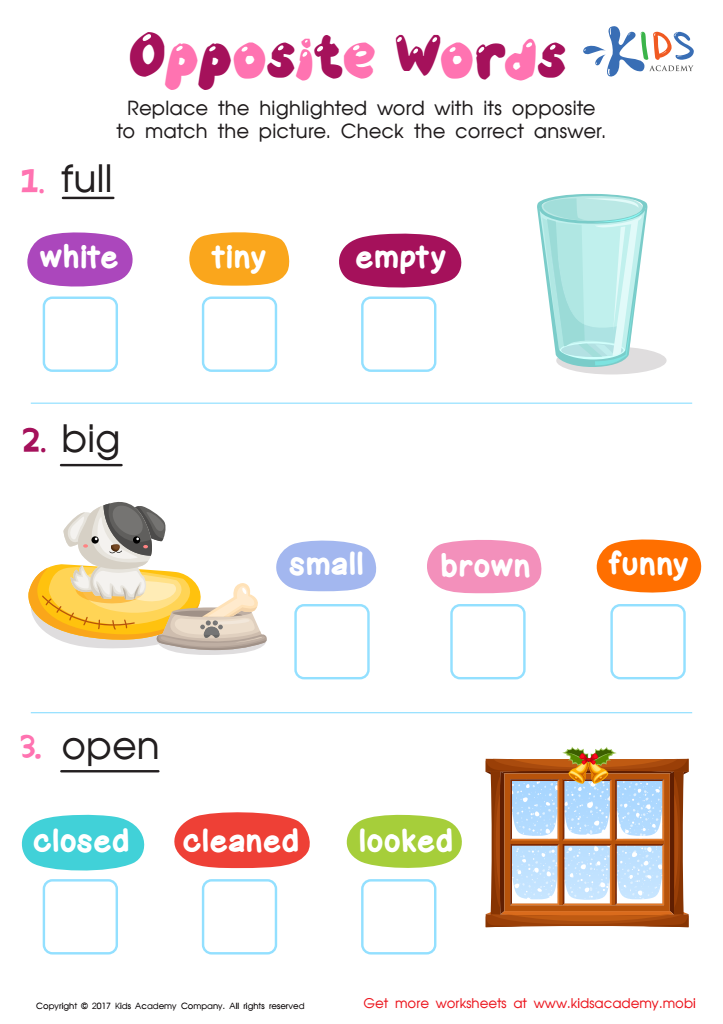
Opposite Words Worksheet
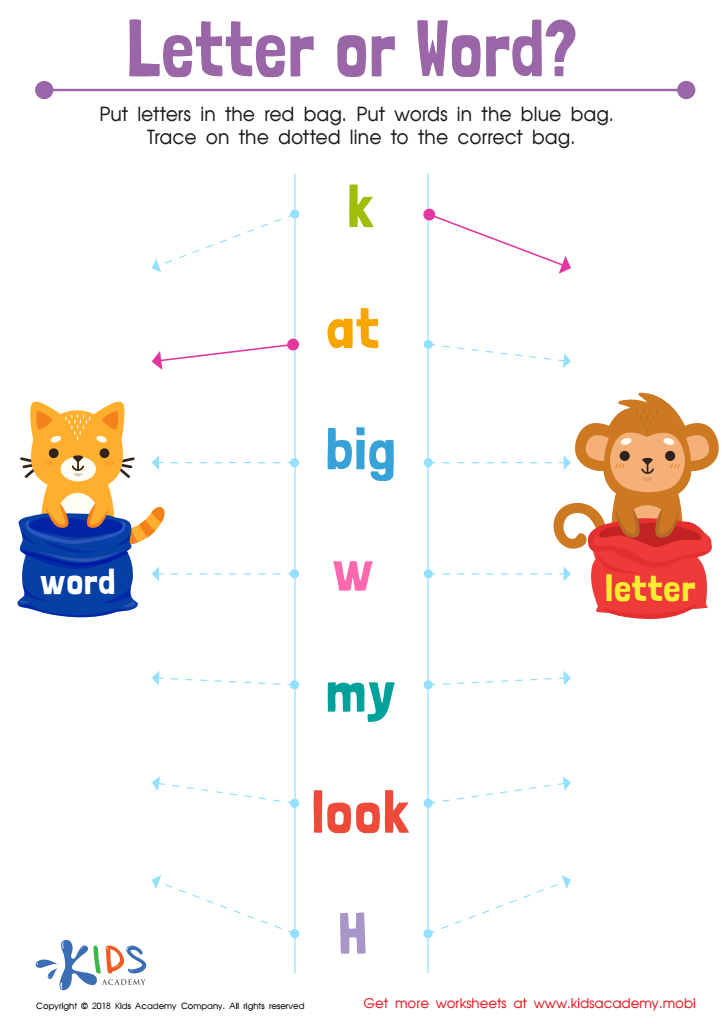
Letter or Word? Worksheet








Parents and teachers should care about reading skills and grammar for 4-year-olds because these early years are critical for language development. At this age, children's brains are like sponges, rapidly absorbing information and forming neural connections that can set the foundation for future learning. Introducing reading skills early on helps foster a love for books and storytelling, which is crucial for developing literacy. Through stories, children are exposed to a variety of vocabulary and sentence structures, enhancing their language comprehension.
Grammar, on the other hand, provides the rules and patterns kids need to make sense of this new vocabulary. Understanding grammar helps children form coherent sentences, enabling effective communication both verbally and in writing. Early exposure to proper grammatical structure helps inculcate good linguistic habits that will benefit them in academia and everyday interactions.
Moreover, early reading and grammar skills contribute enormously to cognitive development—boosting memory, concentration, and critical thinking abilities. For children, mastering these skills can lead not only to improved academic performance across subjects but also increased self-confidence.
Ensuring that children have robust reading and grammar skills by age four positions them better for success in kindergarten and beyond, setting them on a path for lifelong learning and achievement.