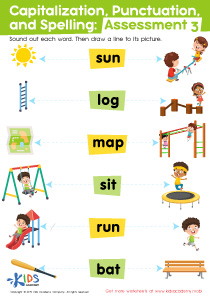
Verb identification Writing Worksheets for 4-Year-Olds
3 filtered results
-
From - To
Introduce your 4-year-old to the world of verbs with our engaging "Verb Identification Writing Worksheets"! These educational worksheets are designed specifically for young learners, combining colorful illustrations with simple exercises to help them recognize and understand action words in sentences. Each worksheet is crafted to make learning fun and interactive, encouraging early writing skills and language development. With a focus on age-appropriate activities, your child will build a solid foundation in grammar while enjoying the process. Perfect for preschoolers, our verb identification worksheets are an excellent resource for both parents and early grade teachers.
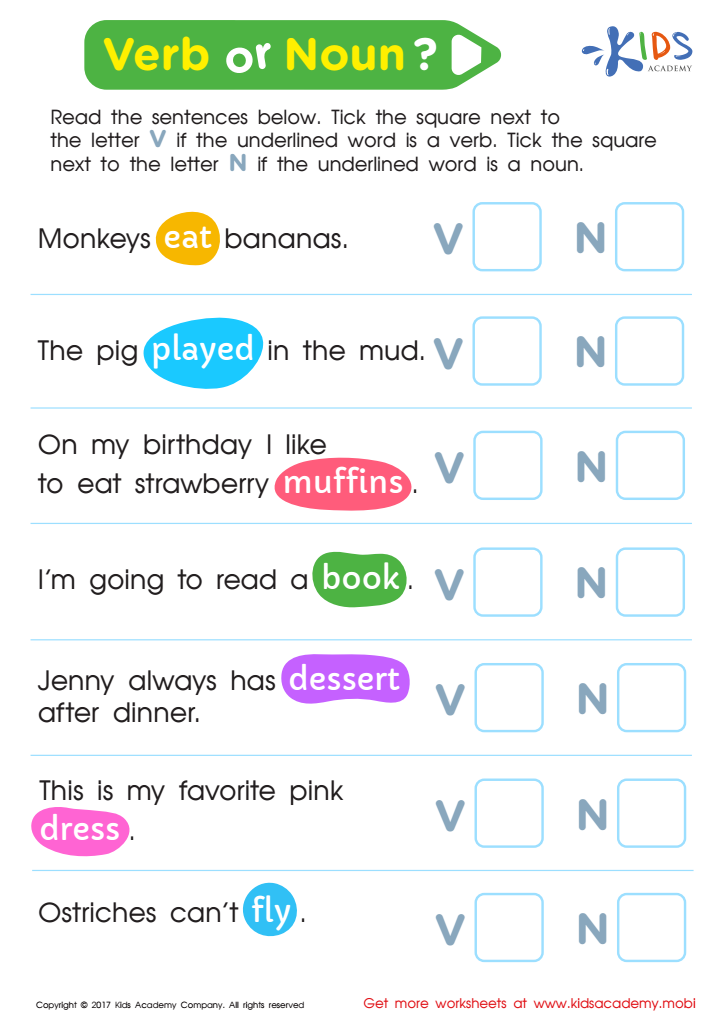
Verb or Noun Worksheet
 Assign to My Students
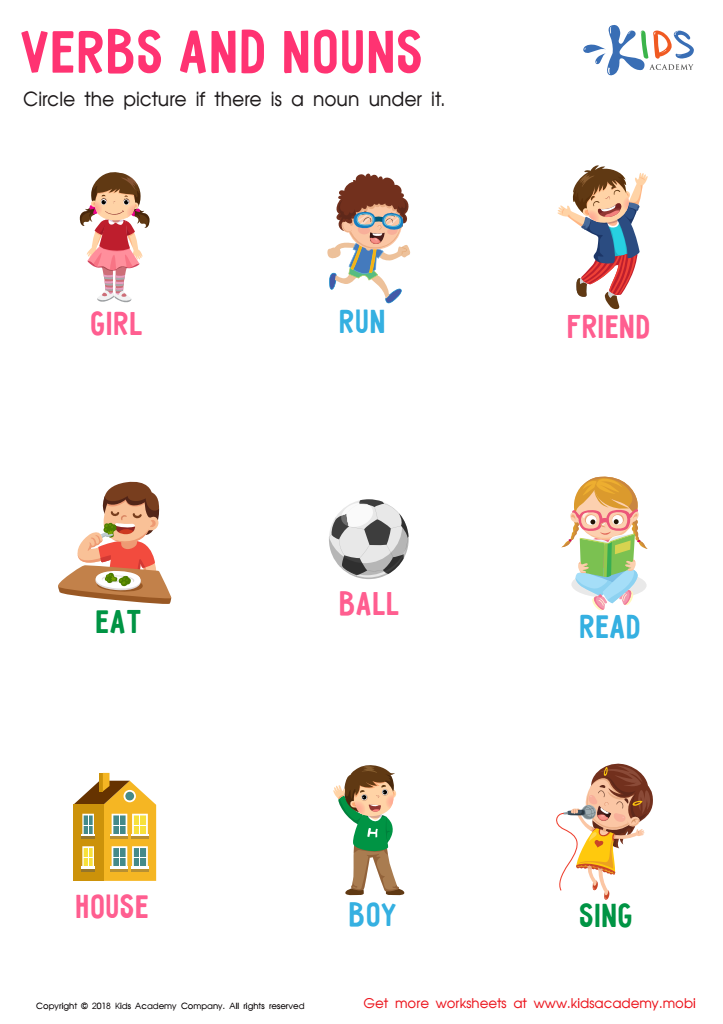
Verbs and Nouns Worksheet
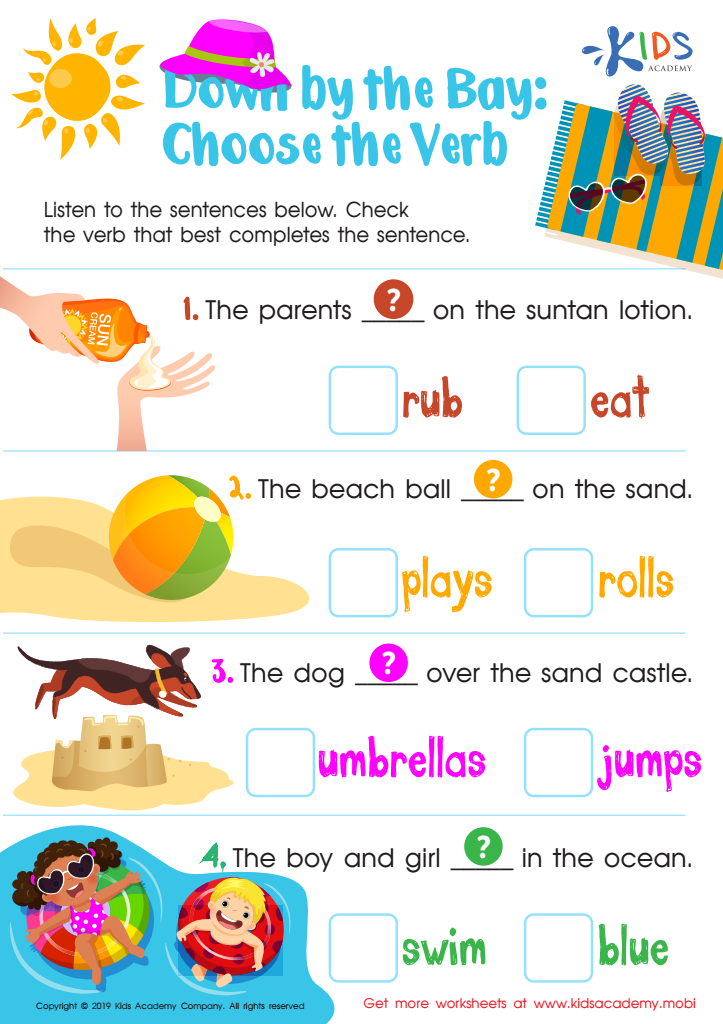
Down by the Bay: Choose the Verb Worksheet








Understanding verb identification in early writing sets a strong foundation for children's language development. For 4-year-olds, recognizing and using verbs enhances both their expressive and receptive language skills. Verbs are action words that form the core of sentences, enabling children to describe actions and happenings around them. When parents and teachers emphasize verb identification, they help children develop essential communication skills.
Early verb recognition aids in vocabulary expansion. By learning action words, children can better articulate their thoughts and experiences. This is crucial for storytelling, sentence formation, and general conversation skills. With a rich vocabulary, children can express themselves more clearly, boosting their confidence and social interactions.
Additionally, early verb instruction aligns with cognitive development stages, improving critical thinking and comprehension. Through interactive activities like reading stories, playing language games, and engaging in conversations that highlight verbs, children enhance their understanding of how words function in context.
Teachers integrate verb-focused activities to create a structured language-learning environment, while parents can reinforce these lessons at home. By collaborating, both ensure a consistent and supportive approach to language development. Prioritizing verb identification not only improves early writing skills but also lays the groundwork for future academic success, making it a vital aspect of early education.