Filters

31 filtered results

Clear all filters
Favorites
With answer key
Interactive

31 filtered results

Difficulty Level

Grade


Check out this FREE Trial Lesson on ABC Letters for age 5-6!

H

Favorites
With answer key
Interactive
  • 5-6
  • Alphabet Recognition
  • ABC Letters
letter e worksheets
letter e worksheets

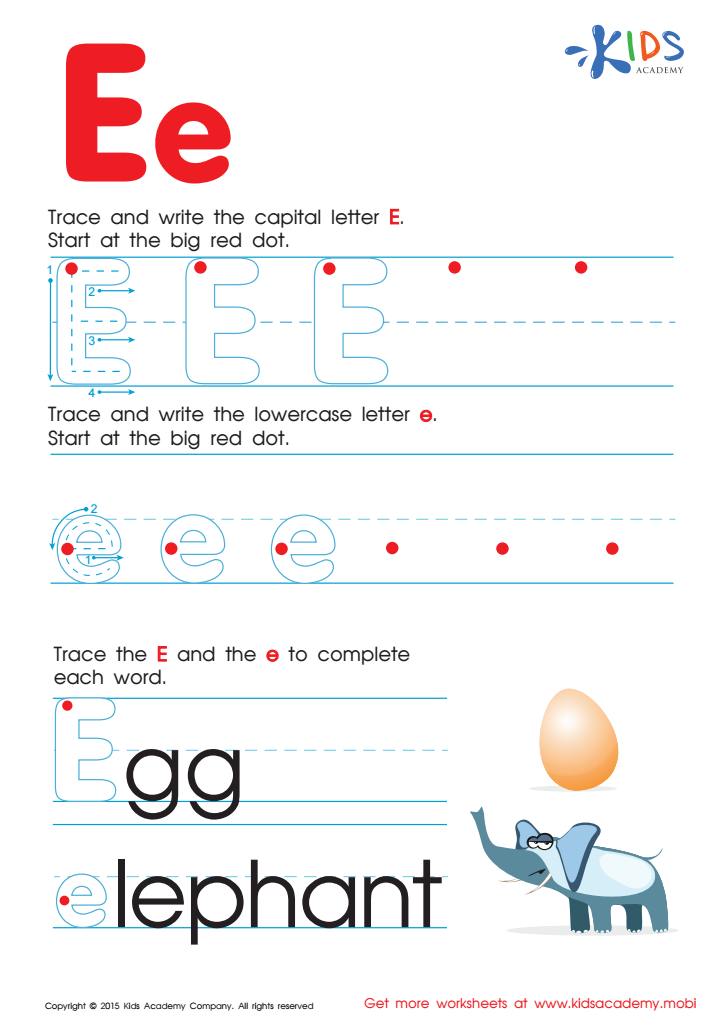
Letter E Tracing Page

Trace and write the uppercase and lowercase "E" starting at the big red dot. Complete words to perfect letter writing. Egg and Elephant must be written carefully. More alphabet worksheets for kindergarten are available for download to spend more time with your children learning.
Letter E Tracing Page
Worksheet
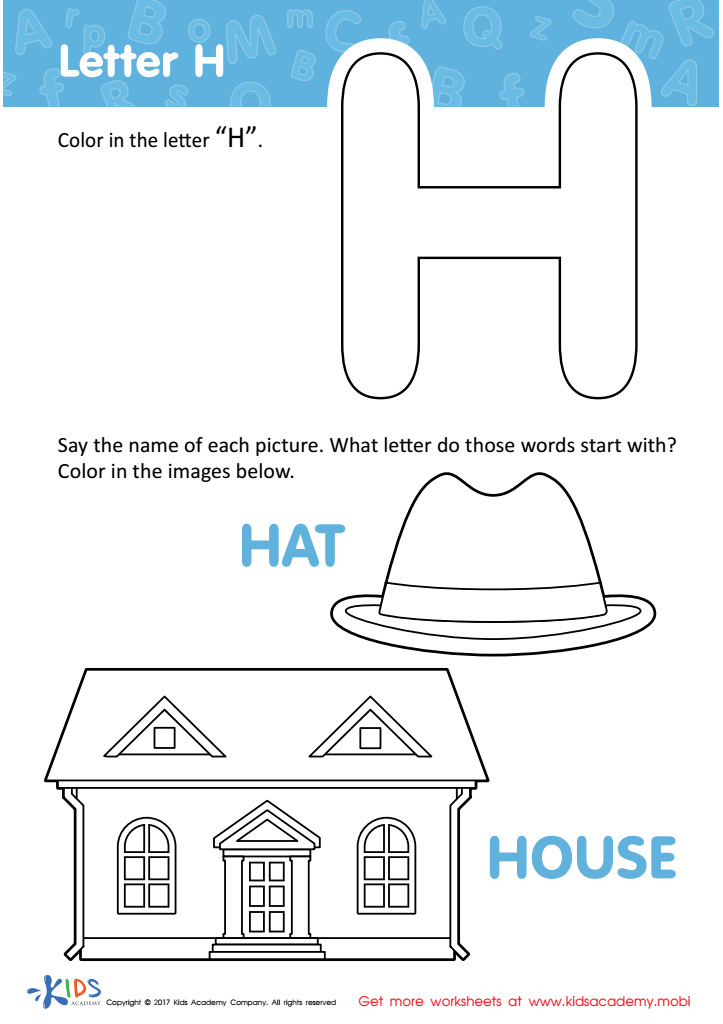
Letter H Coloring Page

Letter H Coloring Sheet

This fun "H" coloring page will help your child recognize the letter and sound of "H"! With a hat and house to color, your little learner will have a blast picking colors and creating designs, all while learning about the letter "H"!
Download (PDF)
Assign to My Students
Letter H Coloring Sheet
Worksheet
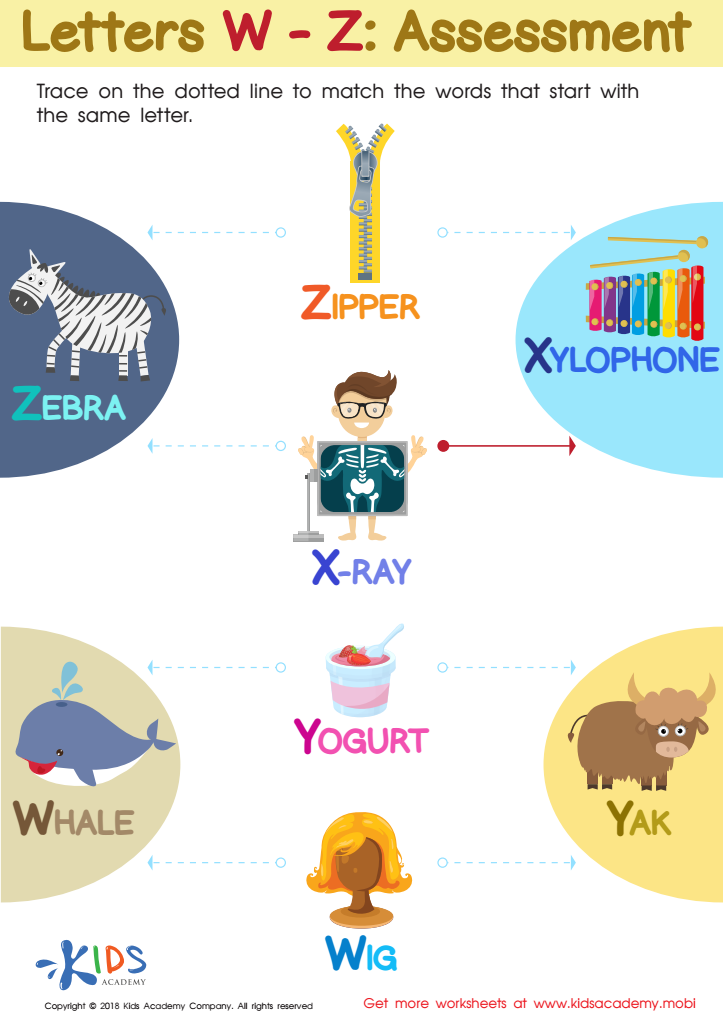
Letters W-Z Tracing  Worksheet Preview

Letters W–Z Tracing Worksheet

Kids will draw a line between words that start with the same letter, like 'Zipper' and 'Zebra', or 'Xylophone'. This worksheet strengthens their reading and letter W-Z recognition skills. Children can sound out each word to figure out the correct match, boosting their confidence in letter sounds.
Letters W–Z Tracing Worksheet
Worksheet
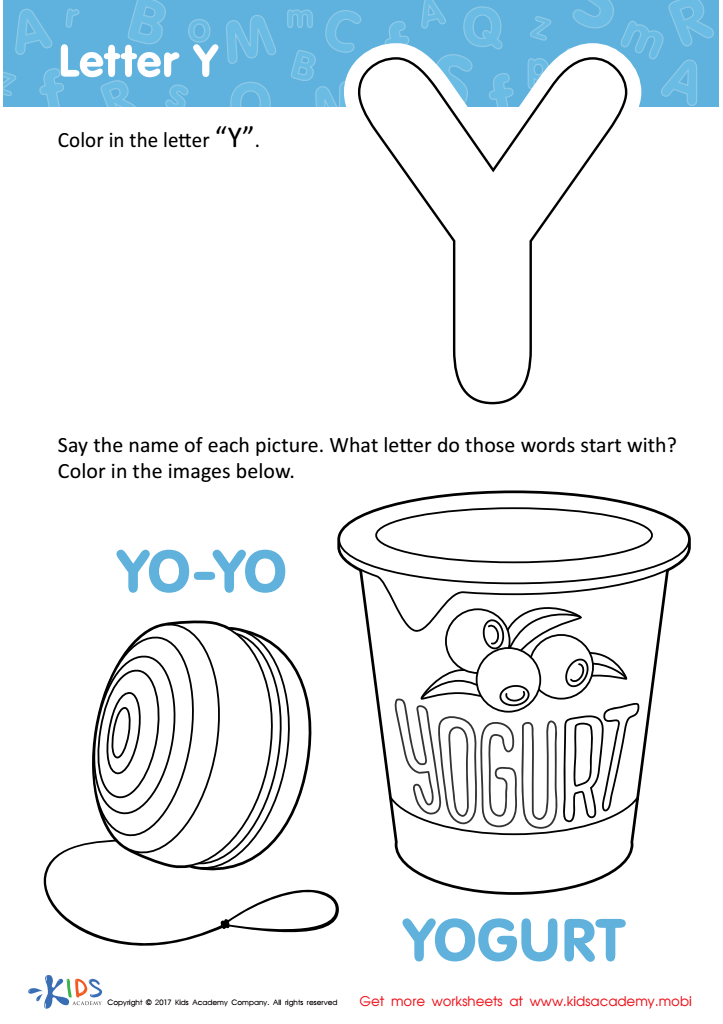
Letter Y Coloring Page

Letter Y Coloring Sheet

Let's celebrate letter "Y"! Here's a fun coloring page that'll help your child learn this end-of-the alphabet letter. It's packed with familiar objects that'll help build their art and literacy skills. So let's say "Yay"!
Download (PDF)
Assign to My Students
Letter Y Coloring Sheet
Worksheet
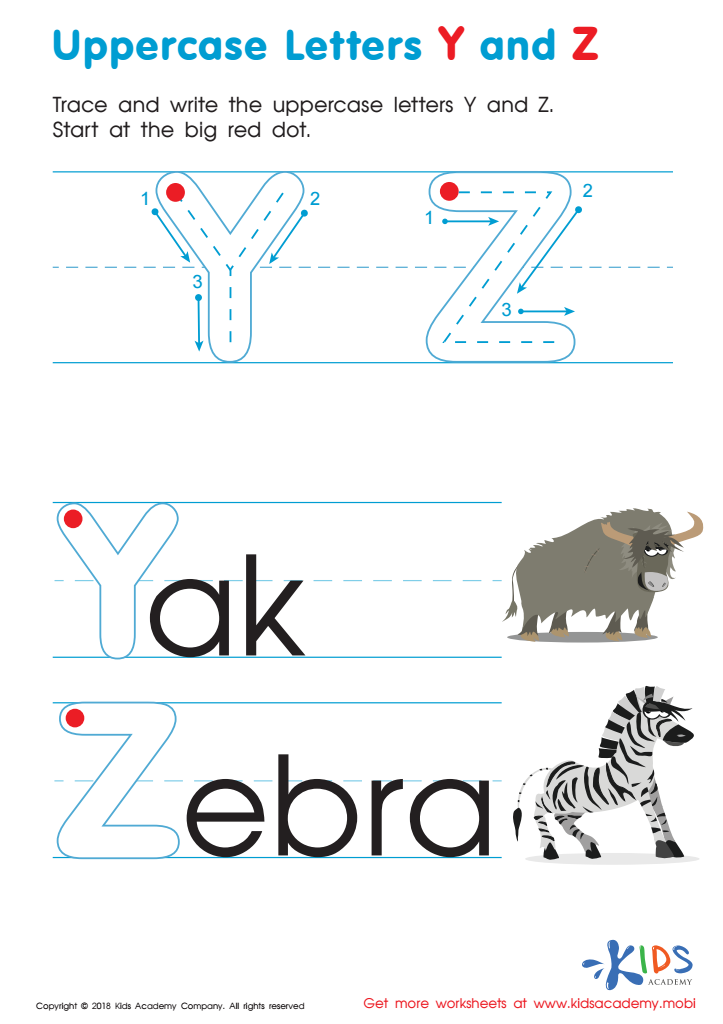
Uppercase Letters Y Z Worksheet

Uppercase Letters Y Z Worksheet

Help your child learn their ABCs with this fun tracing activity! They must trace and write Y and Z in uppercase form, starting from the red dot. Kids will love the fun images for extra engagement. Guiding their hand carefully will help them practice and perfect their writing skills.
Uppercase Letters Y Z Worksheet
Worksheet
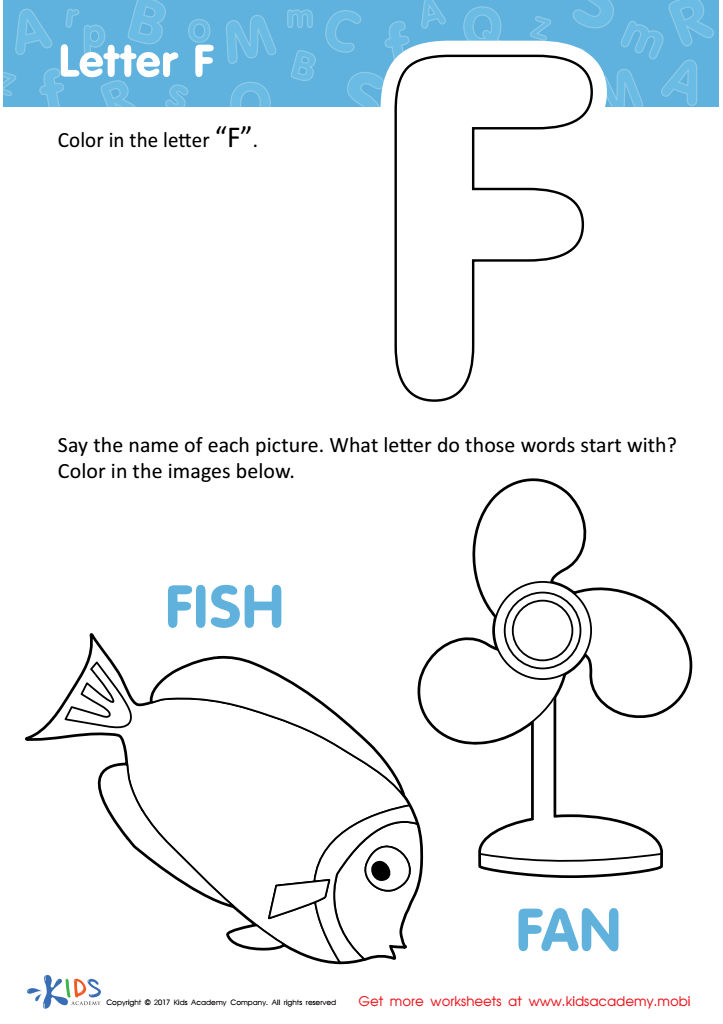
Letter A Coloring Page

Letter F Coloring Sheet

Coloring pages help kids learn to recognize letters and sounds. Our "F" page has kids color a fish and a fan. It's a great way to introduce them to the letter "F" using words they already know.
Download (PDF)
Assign to My Students
Letter F Coloring Sheet
Worksheet
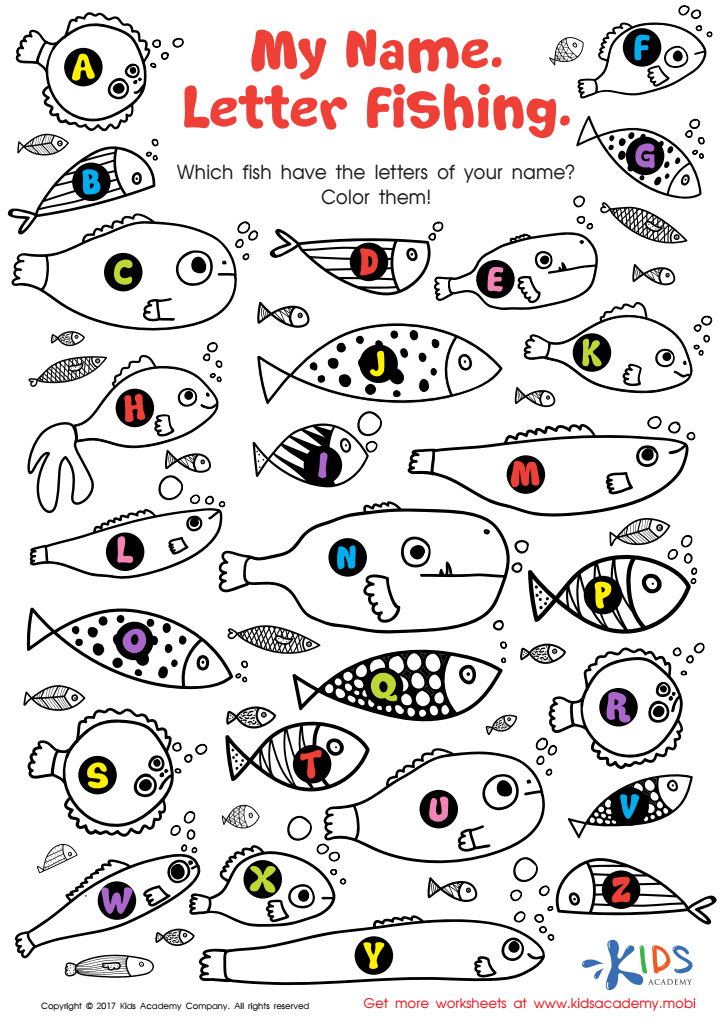
My Name: Letter Fishing Worksheet

My Name: Letter Fishing Worksheet

Dive into the deep sea and search for fish with a letter on them. Can you find all the letters from your name? Color your favorite fish with crayons and be creative! On the other side, use the letters you found to write your name. Have fun coloring and finding the letters of your name! (80 words)
Download (PDF)
Assign to My Students
My Name: Letter Fishing Worksheet
Worksheet


Alphabet recognition is the foundation of literacy, serving as a critical precursor to reading and writing skills. For parents and teachers of children aged 5-6, focusing on this skill is essential for several key reasons:

Firstly, knowing the letters of the alphabet is essential for developing phonemic awareness—an understanding that words are made up of individual sounds. This awareness is crucial in learning to decode words, a fundamental aspect of reading. When children can recognize letters and associate them with their corresponding sounds, they can begin to blend these sounds to form words.

Secondly, familiarity with the alphabet boosts children's confidence and makes them more eager to engage with reading materials, promoting a positive attitude towards learning. This early exposure helps establish a strong literacy foundation, making the transition to more advanced reading and writing tasks smoother as they progress through their education.

Additionally, alphabet recognition enhances other cognitive skills, including memory and attention to detail, fostering overall academic readiness. It also supports the development of fine motor skills when children learn to write each letter, which is an integral part of early childhood education.

Therefore, a strong grasp of the alphabet sets the stage for future success in literacy, making it a priority for parents and teachers to cultivate this skill in young learners.