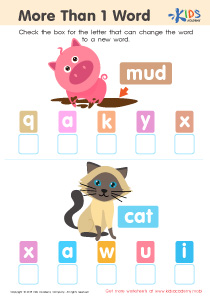
Sound recognition Consonants Worksheets for Ages 5-6
5 filtered results
Difficulty Level
Grade
Age
-
From - To
Subject
Activity
Standards
Boost your child's phonics skills with our Sound Recognition Consonants Worksheets for Ages 5-6! These engaging, educational printables from Kids Academy are designed to help young learners identify and differentiate between various consonant sounds. Packed with fun activities, these worksheets enhance auditory discrimination and reinforce the basics of reading. Whether it’s through matching games, tracing exercises, or interactive listening tasks, kids will develop their foundational literacy skills while having fun. Perfect for kindergarten classrooms or at-home learning, these resources empower children to build strong reading skills from an early age. Explore our collection today!
Favorites
With answer key
Interactive
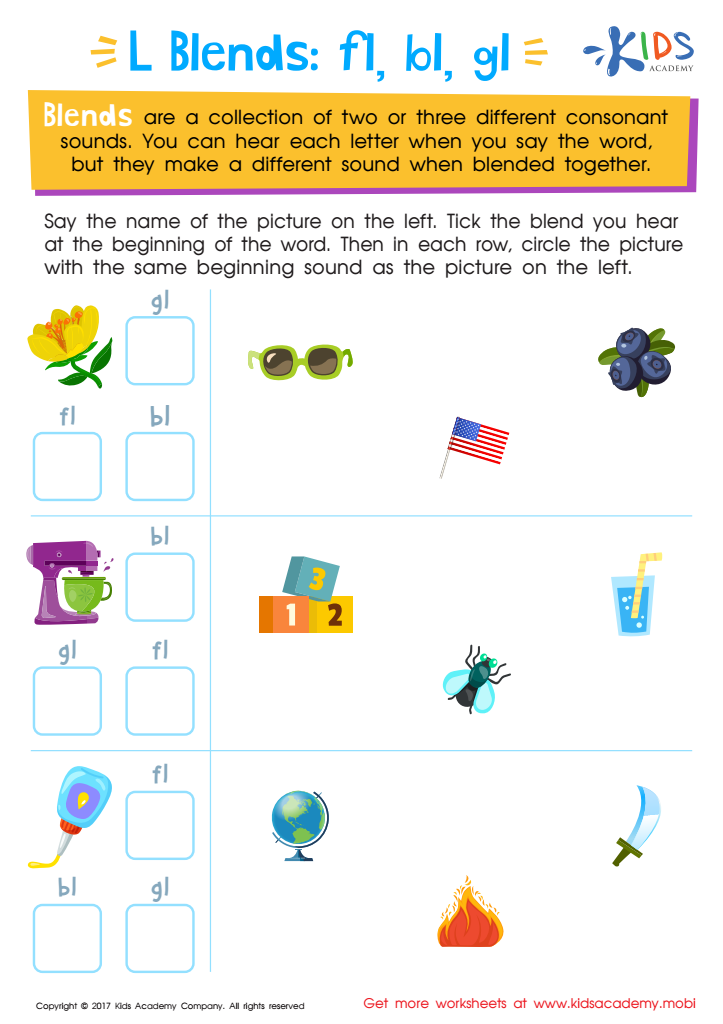
Blending Consonants: "Fl", "Bl" and "Gl" Printable
Help your child master consonant blends Fl, Bl, and Gl with this printable worksheet. Find words associated with the pictures and learn to better understand the difference between consonant blends. Vibrant images motivate and aid in learning. Download now for improved phonics success!
 Assign to My Students
Blending Consonants: "Fl", "Bl" and "Gl" Printable
Worksheet
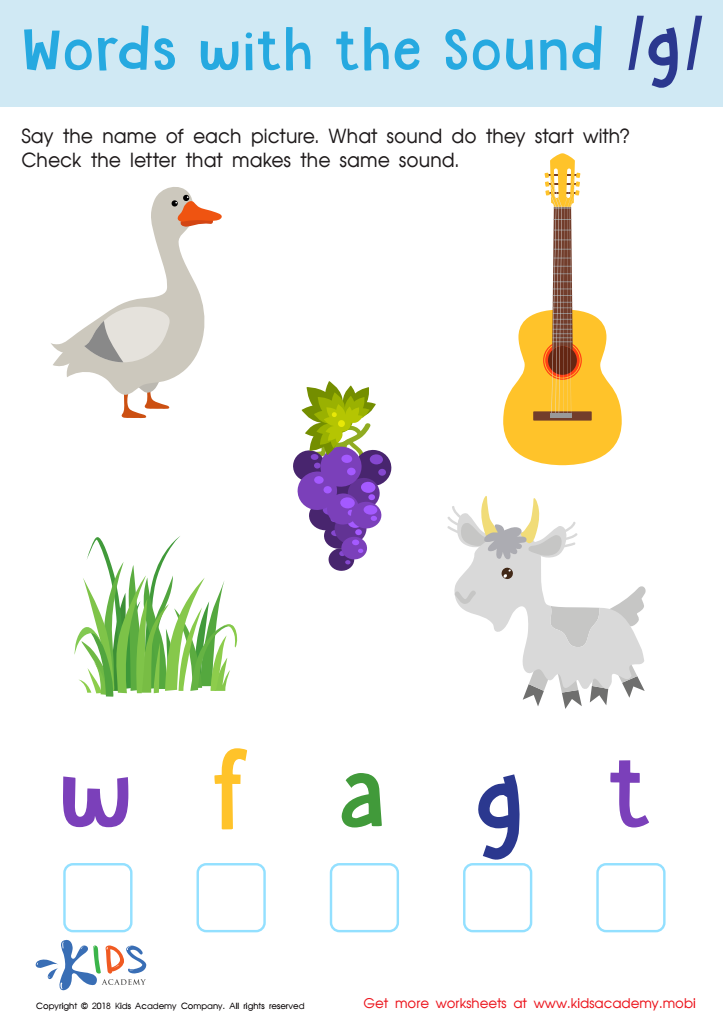
Words with sound g Reading Worksheet
Help your child learn the soft "g" sound with this phonics worksheet. Ask them to name each picture, then identify the letter sound it begins with. If it's "g", they can check the box. Have them repeat each word, listening for the soft "g" sound before moving on to the next page.
Words with sound g Reading Worksheet
Worksheet
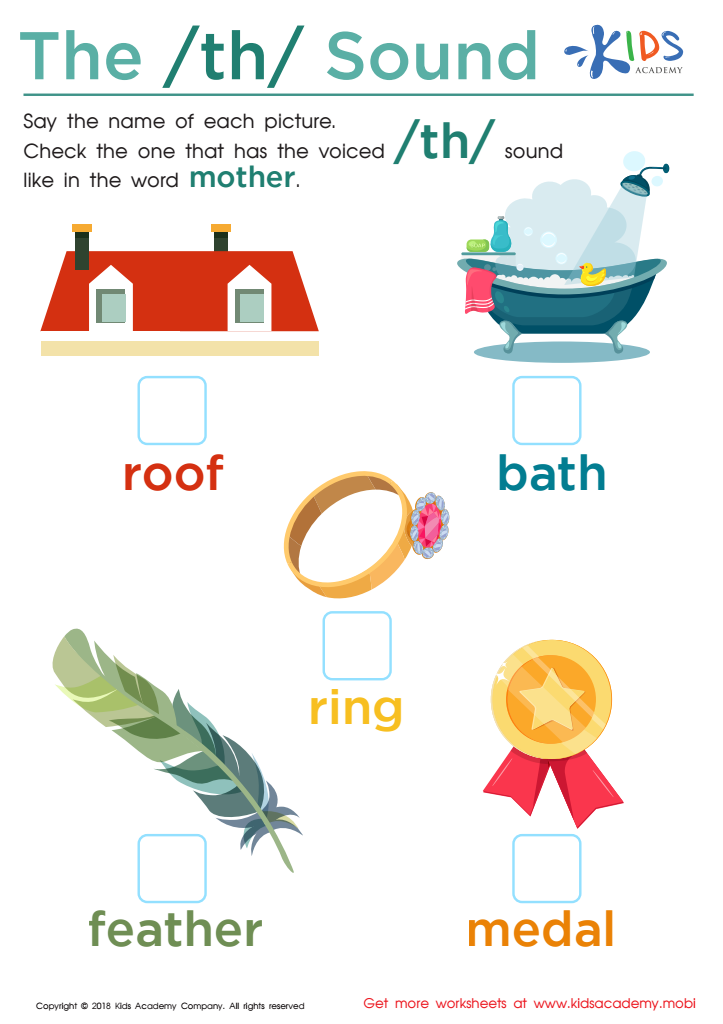
The /th/ Sound Worksheet
Confuse your students no more: have them use this worksheet to understand the /th/ sound and its two variants. With pictures, ask them to say the name of each one. Help them identify the voiced /th/ sound, like in 'mother', by having them say it aloud. Download the pdf to get started.
The /th/ Sound Worksheet
Worksheet
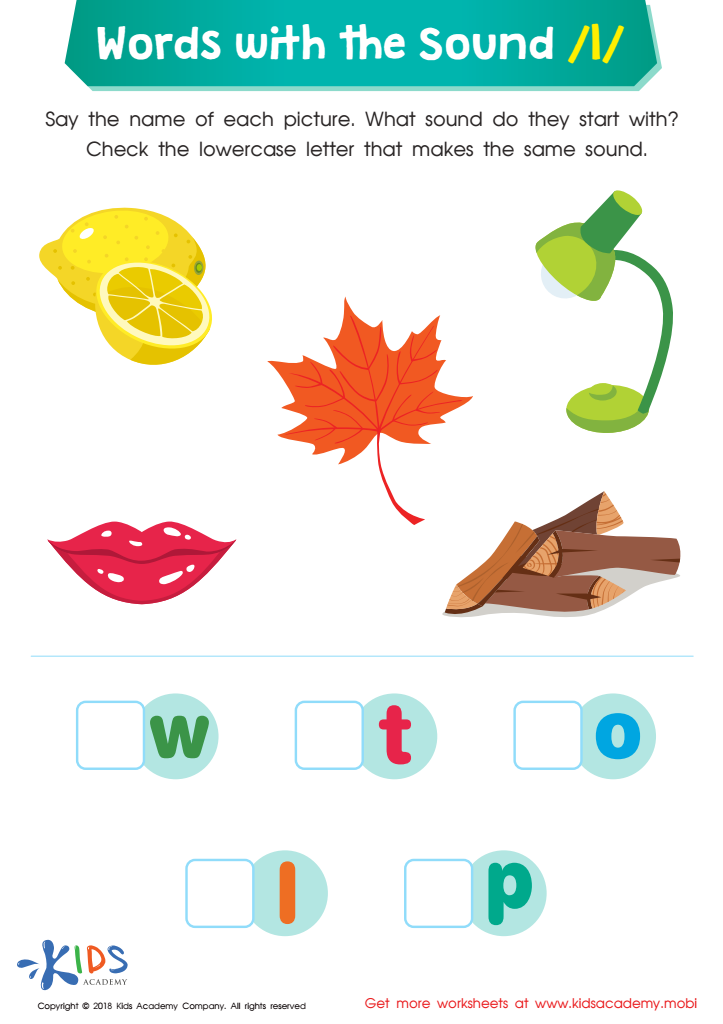
Words with Sound L Reading Worksheet
This PDF worksheet is great for helping emerging readers isolate initial sounds. Kids name familiar pictures, then identify the correct letter for the "l" sound. This worksheet strengthens fine motor skills, plus builds visual discernment. It's fun and colorful too!
Words with Sound L Reading Worksheet
Worksheet
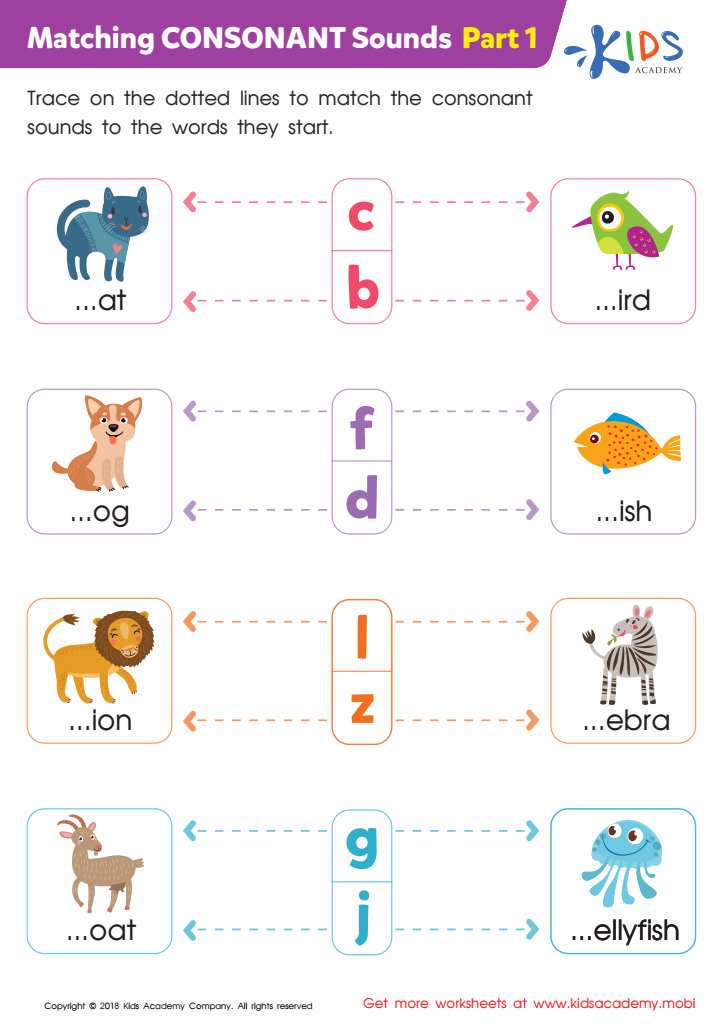
Matching Consonant Sounds: Part 1 Worksheet
Decide which letter matches each word and picture in this fun phonics worksheet. Slide your finger over each word, trying out each letter to check for matches. Once each pair is solved, trace the dotted lines with pencil to complete the printable. Who knew learning could be so enjoyable?
Matching Consonant Sounds: Part 1 Worksheet
Worksheet
Join Kids Academy for Free
Who is primarily going to use this learning content?



Sound recognition of consonants is critical for children aged 5-6 because it forms the foundation for their reading and writing skills. During these early ages, children's brains are highly receptive to learning language patterns and sounds. By recognizing consonant sounds, children can begin to decode words, enhancing their phonological awareness — an essential skill for reading fluency.
Teachers and parents play an important role by creating engaging and interactive environments that foster sound recognition. For instance, activities like rhyming games, phonics songs, and letter-sound matching exercises can make learning enjoyable and effective. Knowing consonant sounds also helps children with spelling and writing, allowing them to phonetically spell words, which is a crucial step towards conventional spelling.
Early familiarity with consonants can significantly ease the transition into more complex literacy skills. If children don't develop a solid understanding of these basic building blocks, they may struggle with more advanced reading and writing tasks, leading potentially to a longer-term academic setback. Teachers and parents can monitor progress and provide additional support to children who may need it, ensuring every child has the opportunity to succeed in their literacy journey. Therefore, investing time in teaching consonant sounds contributes substantially to a child's overall academic growth and confidence.