
Reading comprehension Elementary Phonics Worksheets for Ages 5-6
7 filtered results
Difficulty Level
Grade
Age
-
From - To
Subject
Activity
Standards
Enhance your child's literacy skills with our engaging Reading Comprehension Elementary Phonics Worksheets designed for ages 5-6! These interactive worksheets foster reading comprehension through fun phonics activities, helping young learners master letter sounds and words essential for their reading journey. Each worksheet is tailored to develop critical thinking and reinforce understanding, allowing children to explore stories and answer questions confidently. With a variety of exercises, your child will improve their reading fluency while enjoying the process. Perfect for classroom or home use, our worksheets provide the essential tools to strengthen your child's foundation in reading. Start promoting their love for reading today!
Favorites
With answer key
Interactive
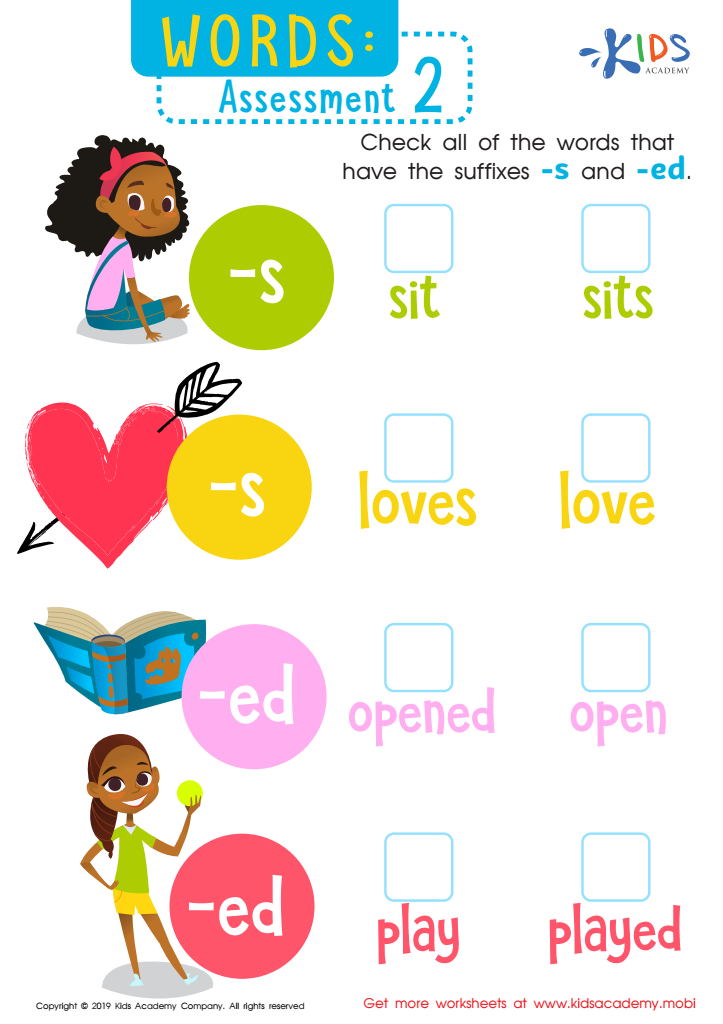
Words: Assessment 2 Worksheet
Test your child’s knowledge of -s and -ed word endings with this fun worksheet! They'll look at images and read the words, then choose the correct suffix to finish each one. Vivid illustrations make this an enjoyable learning experience!
Words: Assessment 2 Worksheet
Worksheet
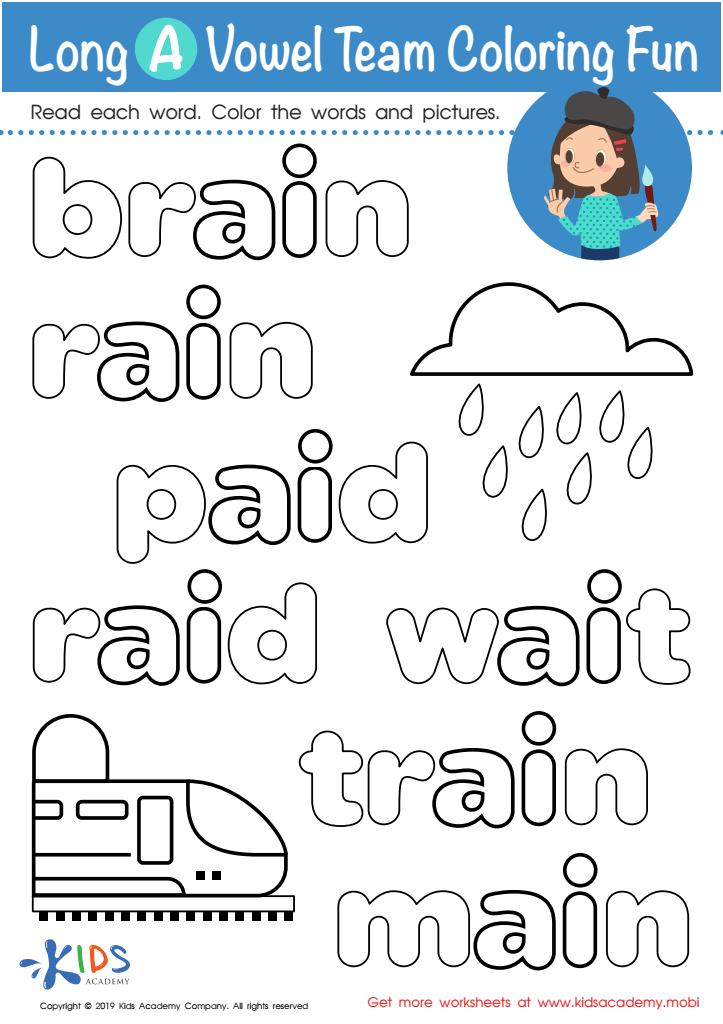
Long A Vowel Team Coloring Fun Worksheet
Divide your class into teams, give each a printout, then have them read aloud words with a long "A" sound (e.g. brain, paid). As they listen, let them reinforce this lesson by coloring in the words and pictures. Make phonics fun and interactive with this great coloring page!
Download (PDF)
 Assign to My Students
Assign to My Students
Long A Vowel Team Coloring Fun Worksheet
Worksheet
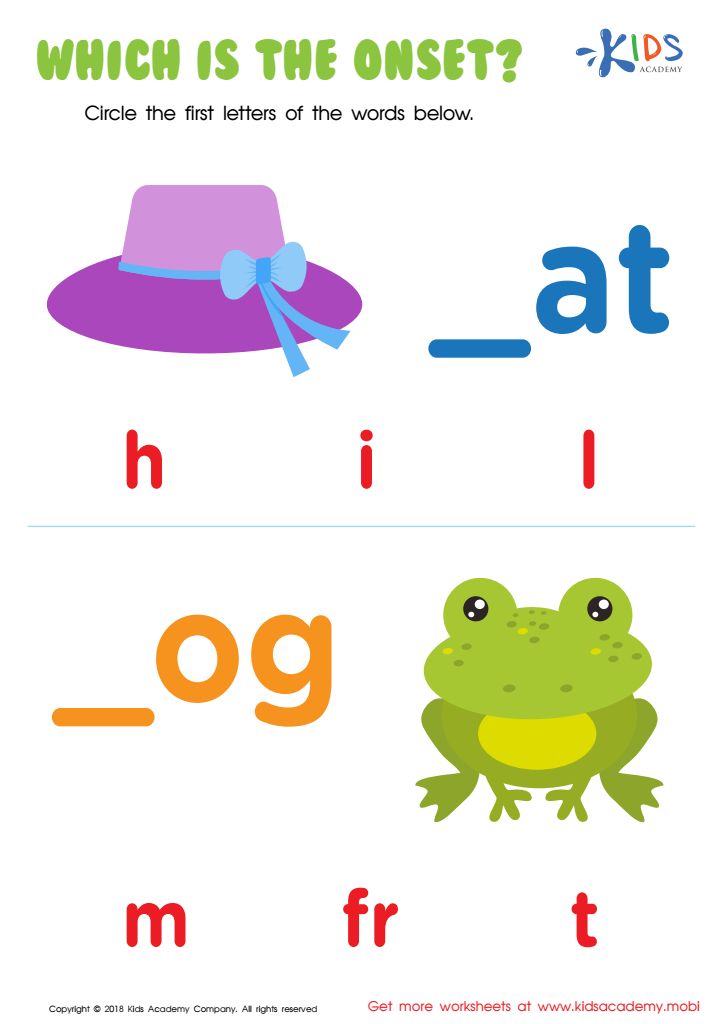
Which Is the Onset? Worksheet
Help your children learn to spell with this bright, fun worksheet. Struggling with spelling small words can make reading and writing sentences difficult. Encourage them to look at the pictures, say the names aloud and circle the correct first letter from the options. They will soon overcome any reluctance to spell.
Which Is the Onset? Worksheet
Worksheet
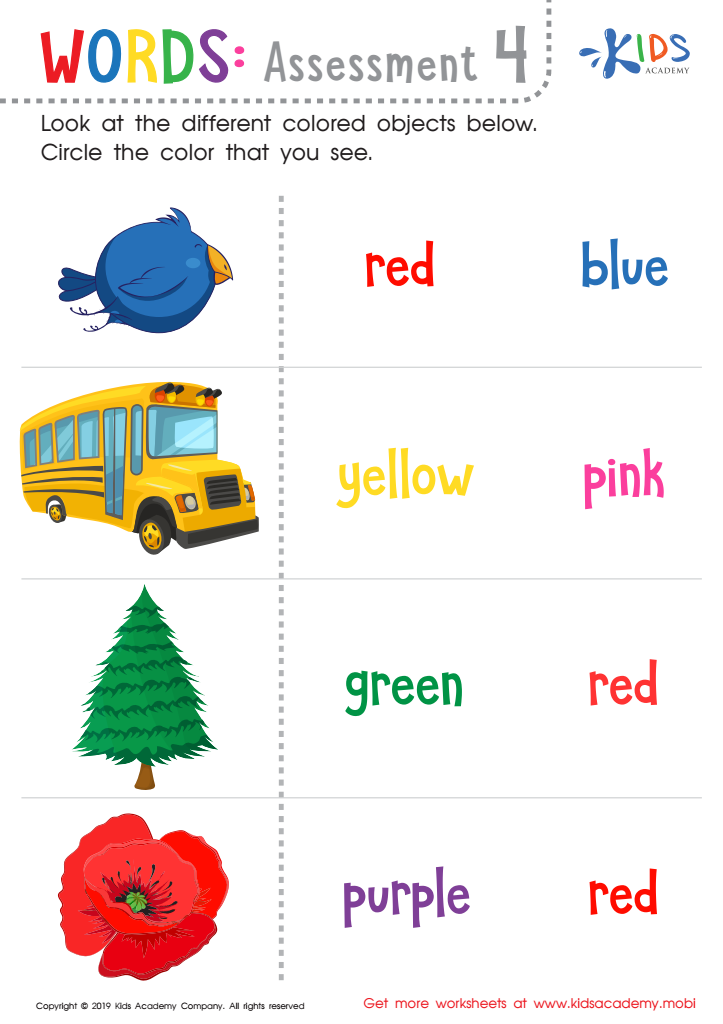
Words: Assessment 4 Worksheet
Look at the pictures and have your child circle the color they see. This free worksheet is great for assessing their knowledge of vocabulary words. It offers familiar images with words for kids to read and match with the colors. Help your child build their reading and understanding skills with this fun activity!
Words: Assessment 4 Worksheet
Worksheet
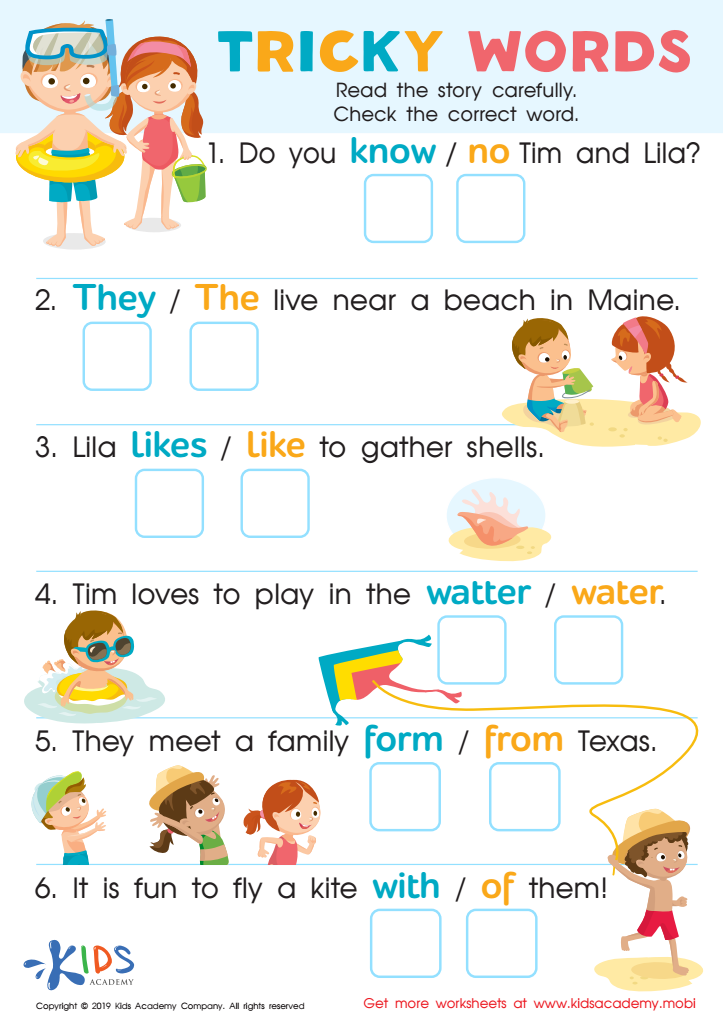
Tricky Words Worksheet
Reading can be tricky to start with, but this worksheet helps kids learn the basics of editing and strengthens their attention to detail. They'll select the right word from tricky choices, improving their reading and grammar skills.
Tricky Words Worksheet
Worksheet
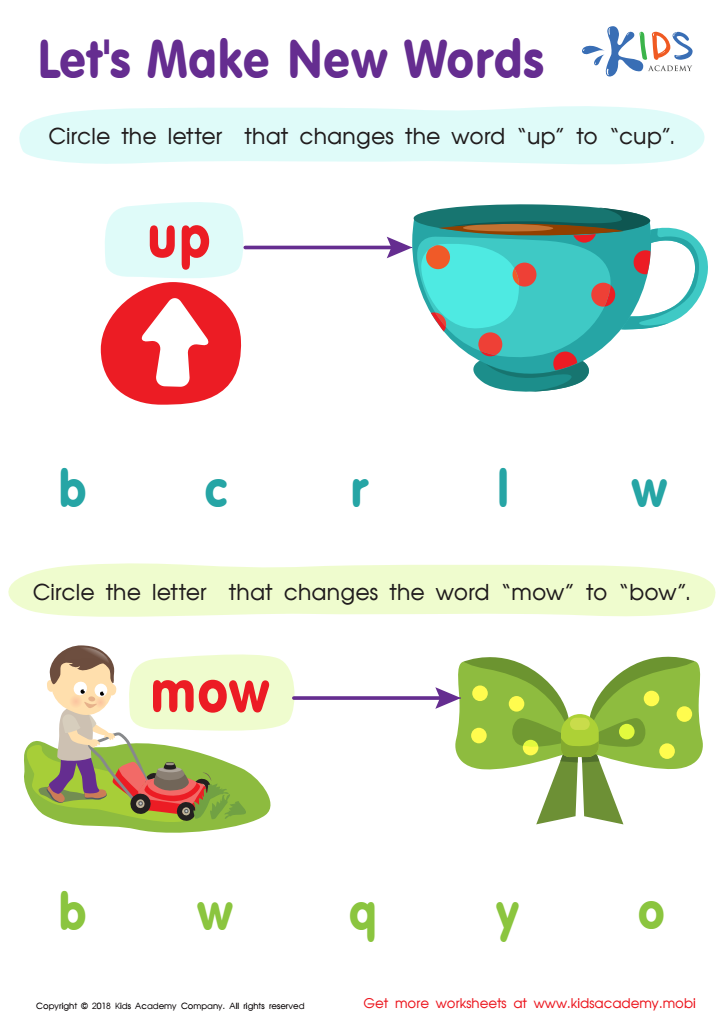
Let's Make New Words Worksheet
This fun and colorful downloadable worksheet is perfect for helping young readers to build confidence and practice their skills. They'll circle the letters to magically make new words, while developing fine motor skills. It'll be so much fun, they won't even realize they're honing their reading skills!
Let's Make New Words Worksheet
Worksheet

Long and Short E Worksheet
This fun printout makes learning phonics enjoyable for Grade 3 students. Get them to read the words “tree” and “bed” to recognize the different sounds of the letter “E”. After hearing the words they can color the words and the pictures to understand differences between long and short vowels.
Download (PDF)
Assign to My Students
Assign to My Students
Long and Short E Worksheet
Worksheet
Join Kids Academy for Free
Who is primarily going to use this learning content?




Reading comprehension and phonics are foundational elements in the literacy development of children aged 5-6. At this crucial stage, children begin to connect sounds with letters, which forms the basis of their reading abilities. Understanding phonics allows them to decode words, enhancing their ability to read fluently and with confidence.
Parents and teachers should prioritize reading comprehension and phonics because early literacy skills significantly impact a child’s academic journey. Strong phonics capabilities lead to better reading abilities, which in turn influences overall academic success across subjects. By developing these skills early on, children are more likely to experience positive attitudes toward reading and learning as they grow.
Moreover, reading comprehension helps children grasp the meaning behind what they read, fostering critical thinking and imagination. Engaging in discussions about stories, characters, and settings enables them to connect their experiences with the material, enhancing retention and understanding.
Investing time and resources into developing these skills encourages children to become lifelong readers and learners. As children progress, they build a solid foundation for advanced literacy, contributing to their self-esteem, creativity, and overall cognitive development. Ultimately, promoting phonics and comprehension equips young learners with the tools to navigate their educational landscape effectively.







