Sound identification Elementary Phonics Worksheets for Ages 5-6
4 filtered results
-
From - To
Discover engaging Sound Identification Elementary Phonics Worksheets designed specifically for ages 5-6! These worksheets help young learners master phonetic sounds through fun, interactive activities. Each worksheet focuses on associating sounds with letters, enhancing their understanding of phonics and building a strong foundation for reading. Kids will enjoy colorful exercises that promote sound recognition and improve their listening skills. Perfect for classroom or home use, these worksheets provide a valuable resource for teachers and parents alike. Make learning exciting and effective with our Sound Identification worksheets, nurturing confident readers and fostering a love for language in early learners!
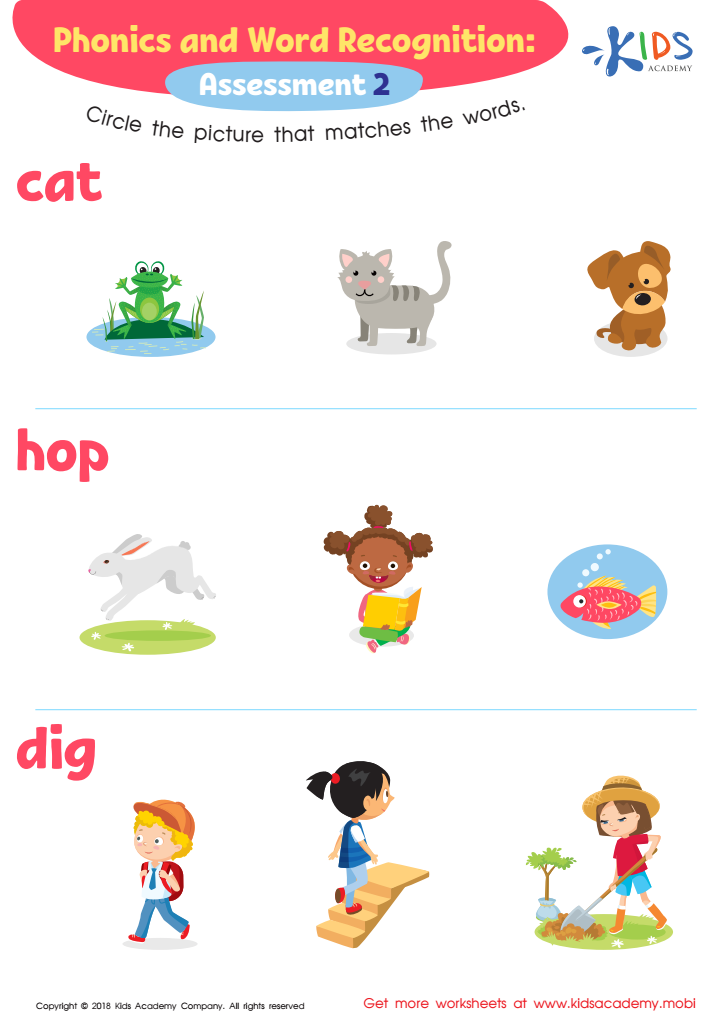
Phonological Awareness: Assessment 2 ELA Worksheet
 Assign to My Students
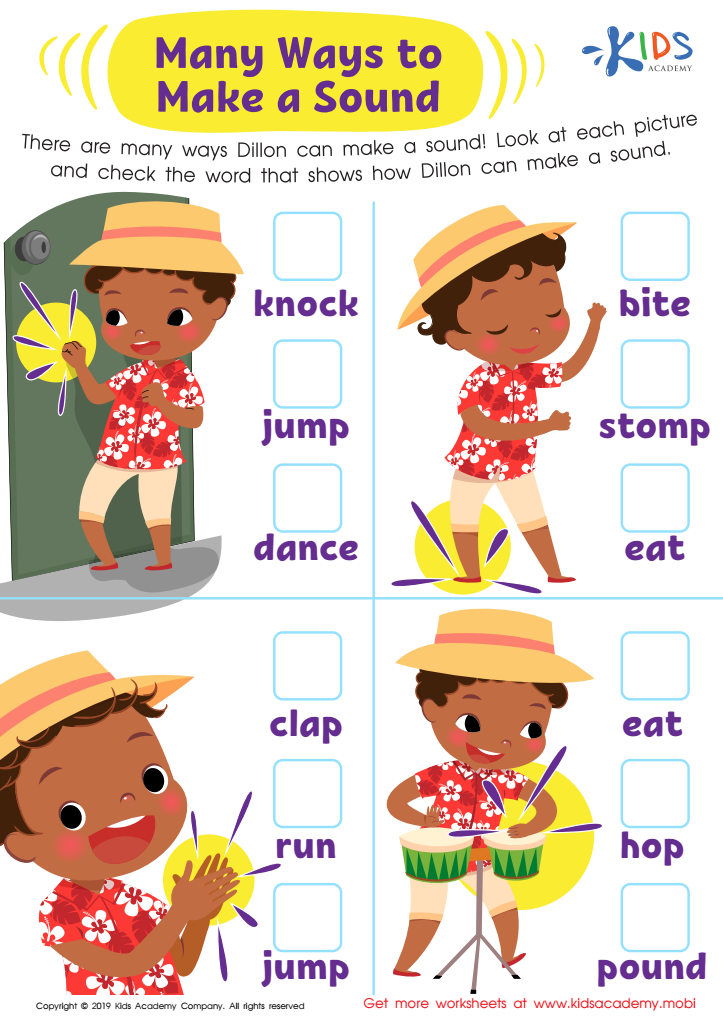
Many Ways to Make a Sound Worksheet
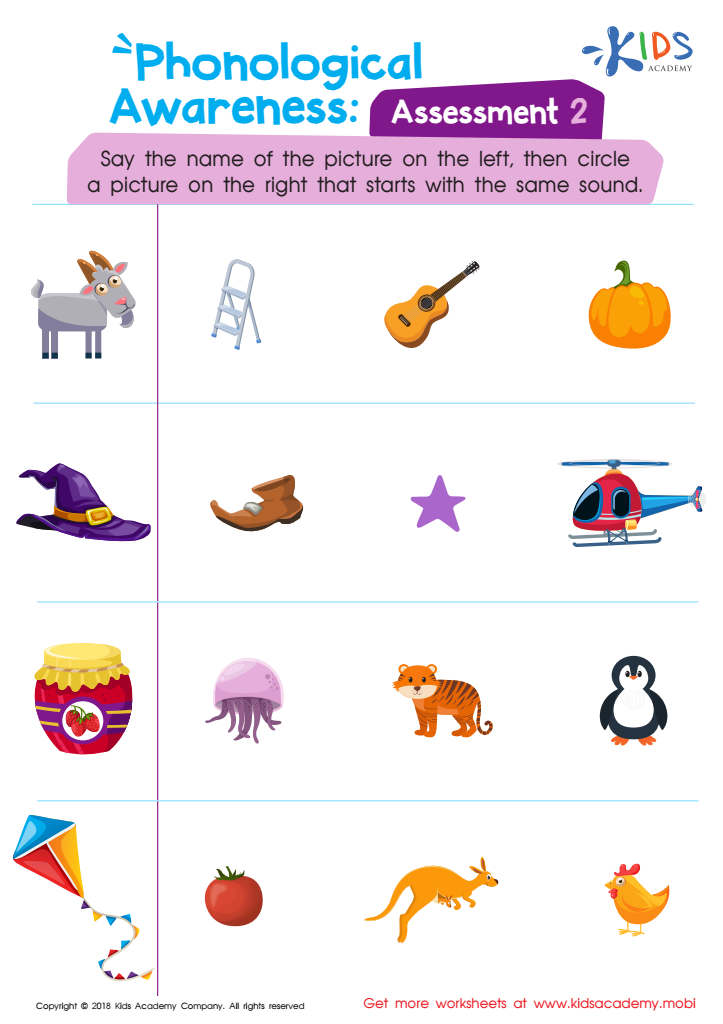
Phonological Awareness: Assessment 2 Worksheet
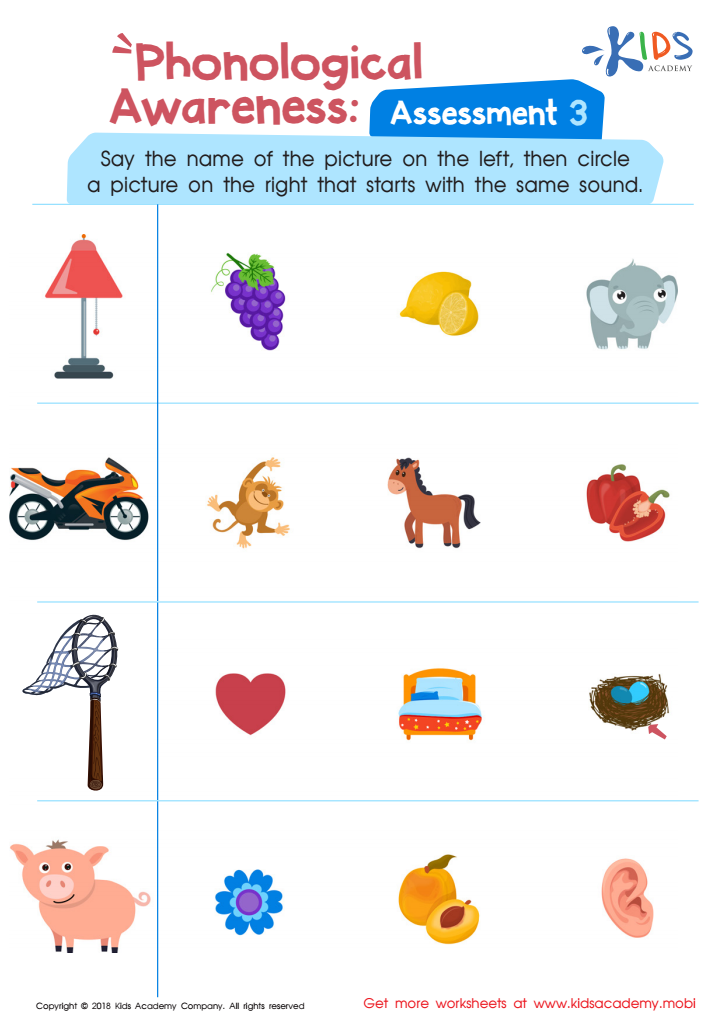
Phonological Awareness: Assessment 3 Worksheet




Sound identification is a foundational skill in early literacy, particularly in phonics for children ages 5-6. This stage is crucial as it serves as the stepping stone for reading development and overall language acquisition. Parents and teachers should care deeply about sound identification because it helps children recognize the relationship between letters and sounds, allowing them to decode words effectively. This skill not only enhances reading fluency but also boosts children's confidence as they begin to engage independently with texts.
Moreover, sound identification fosters phonemic awareness, enabling children to manipulate sounds—playing an essential role in spelling and vocabulary development. When children learn to isolate, blend, and segment sounds, they become active participants in their learning process. This empowerment is particularly important in cultivating a love for reading, which can have lifelong benefits.
Supporting sound identification efforts ensures that children are not only equipped with the necessary tools to become proficient readers but are also more likely to succeed in other subjects reliant on reading comprehension. By prioritizing phonics and sound identification, parents and teachers lay a strong foundation for their children's educational journey, ensuring they remain engaged and motivated learners.







